第15章心理的障害
15.5 Obsessive-Compulsive and Related Disorders15.5 強迫性障害および関連障害群
Learning Objectives学習目標
By the end of this section, you will be able to:
この節を学び終えると、次のことができるようになる。
- Describe the main features and prevalence of obsessive-compulsive disorder, body dysmorphic disorder, and hoarding disorder強迫性障害、身体醜形障害、ためこみ障害の主な特徴と有病率を説明する
- Understand some of the factors in the development of obsessive-compulsive disorder強迫性障害の発症にかかわる要因のいくつかを理解する
Obsessive-compulsive and related disorders are a group of overlapping disorders that generally involve intrusive, unpleasant thoughts and repetitive behaviors. Many of us experience unwanted thoughts from time to time (e.g., craving games when studying), and many of us engage in repetitive behaviors on occasion (e.g., pacing when nervous). However, obsessive-compulsive and related disorders elevate the unwanted thoughts and repetitive behaviors to a status so intense that these cognitions and activities disrupt daily life. Included in this category are obsessive-compulsive disorder (OCD), body dysmorphic disorder, and hoarding disorder.
英語のヒント
強迫性障害および関連障害群は、互いに重なり合う障害の一群であり、一般に、侵入的で不快な思考と反復的な行動を伴う。私たちの多くは、望まない思考をときどき経験するし(たとえば、勉強中にゲームがしたくてたまらなくなる)、反復的な行動をときおりとることもある(たとえば、緊張すると行ったり来たりする)。しかし、強迫性障害および関連障害群は、望まない思考や反復的な行動を、こうした認知や活動が日常生活を乱すほど強い状態にまで高めてしまう。このカテゴリーには、強迫性障害(OCD)、身体醜形障害、ためこみ障害が含まれる。
Obsessive-Compulsive Disorder強迫性障害
People with obsessive-compulsive disorder (OCD) experience thoughts, mental images, fears, sensations, and/or urges that are intrusive and unwanted (obsessions) and/or the need to engage in repetitive behaviors or mental acts (compulsions). A person with this disorder might, for example, spend hours each day washing his hands or constantly checking and rechecking to make sure that a stove, faucet, or light has been turned off.
英語のヒント
強迫性障害(OCD)の人は、侵入的で望まない思考や心的イメージ、恐怖、感覚、衝動(強迫観念)と、反復的な行動や心的行為をせずにはいられない欲求(強迫行為)の、一方または両方を経験する。たとえば、この障害を持つ人は、毎日何時間もかけて手を洗ったり、コンロや照明を消したか、蛇口を閉めたかを確かめるために、絶えず確認と再確認を繰り返したりすることがある。
Obsessions are more than just unwanted thoughts that seem to randomly jump into our head from time to time, such as recalling an insensitive remark a coworker made recently, and they are more significant than day-to-day worries we might have, such as justifiable concerns about being laid off from a job. Rather, obsessions are characterized as persistent, unintentional, and unwanted thoughts that are highly intrusive, unpleasant, and distressing (APA, 2013). Common obsessions include concerns about germs and contamination, doubts (“Did I turn the water off?”), order and symmetry (“I need all the spoons in the tray to be arranged a certain way”), and others ranging from feelings of overwhelming responsibility, perfectionism, or moral obligations. Usually, the person knows that such thoughts and feelings are irrational and thus tries to suppress or ignore them, but has an extremely difficult time doing so. These obsessive symptoms sometimes overlap, such that someone might have both contamination and perfectionist obsessions (Abramowitz & Siqueland, 2013).
英語のヒント
強迫観念は、ときどきふと頭に飛び込んでくるように思える望まない思考、たとえば同僚が最近口にした無神経な言葉を思い出すといったものにとどまらない。また、私たちが抱くかもしれない日々の心配事、たとえば解雇されるのではないかというもっともな懸念よりも重大なものである。むしろ強迫観念は、持続的で、意図せずに生じる、望まない思考であり、きわめて侵入的で不快で、苦痛をもたらすものとして特徴づけられる(APA, 2013)。よく見られる強迫観念には、細菌や汚染についての心配、疑念(「水を止めただろうか」)、順序や対称性(「トレーのスプーンは全部、決まった並べ方になっていないといけない」)のほか、圧倒されるほどの責任感、完璧主義、道徳的な義務の感覚などにわたるものがある。通常、本人はそうした思考や感情が不合理だと分かっており、そのためそれを抑えつけたり無視したりしようとするが、そうするのはきわめて難しい。こうした強迫症状はときに重なり合い、そのため一人の人が汚染の強迫観念と完璧主義の強迫観念の両方を持つこともある(Abramowitz & Siqueland, 2013)。
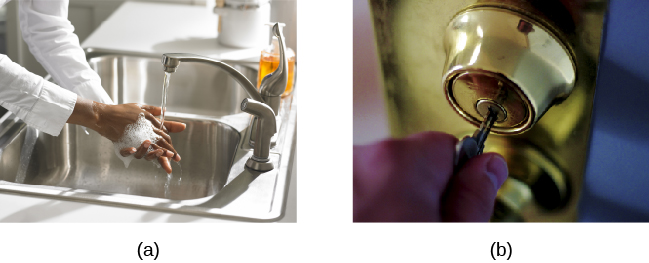
Compulsions are repetitive and ritualistic acts that are typically carried out primarily as a means to minimize the distress that obsessions trigger or to reduce the likelihood of a feared event (APA, 2013). Compulsions often include such behaviors as repeated and extensive hand washing, cleaning, checking (e.g., that a door is locked), and ordering (e.g., lining up all the pencils in a particular way), and they also include such mental acts as counting, praying, or reciting something to oneself (Figure 15.11). Compulsions characteristic of OCD are not performed out of pleasure, nor are they connected in a realistic way to the source of the distress or feared event. Not every ritualistic, repetitive, or intensive activity is a compulsion; for example, repetitive hand washing after being near a person with the flu is not likely a symptom of OCD. Also, many people use the word "obsession" or even refer to OCD in a casual manner, which can be insensitive to people experiencing it. Approximately 2.3% of the U.S. population will experience OCD in their lifetime (Ruscio, Stein, Chiu, & Kessler, 2010) and, if left untreated, OCD tends to be a chronic condition creating lifelong interpersonal and psychological problems (Norberg, Calamari, Cohen, & Riemann, 2008).
英語のヒント
強迫行為とは、反復的で儀式的な行為であり、典型的には、主として強迫観念が引き起こす苦痛を最小限にするための手段として、あるいは恐れている出来事が起こる可能性を減らすための手段として行われる(APA, 2013)。強迫行為には、何度も念入りに手を洗う、掃除をする、確認する(たとえば、ドアに鍵がかかっているかどうか)、順序よく並べる(たとえば、すべての鉛筆を特定のやり方で並べる)といった行動が含まれることが多く、数を数える、祈る、心の中で何かを唱えるといった心的行為も含まれる(図15.11)。OCDに特徴的な強迫行為は、快楽のために行われるのではなく、苦痛の源や恐れている出来事と現実的なかたちで結びついているわけでもない。儀式的、反復的、あるいは集中的な活動がすべて強迫行為だというわけではない。たとえば、インフルエンザにかかった人の近くにいたあとで繰り返し手を洗うことは、OCDの症状である可能性は低い。また、多くの人が「強迫観念」という言葉を、さらにはOCDという病名までも、気軽に口にするが、それはOCDを経験している人々に対して無神経なことになりうる。アメリカの人口の約2.3%が生涯のうちにOCDを経験する(Ruscio, Stein, Chiu, & Kessler, 2010)。そして、治療されないままだと、OCDは慢性の状態になりやすく、生涯にわたる対人関係上の問題や心理的な問題を生む(Norberg, Calamari, Cohen, & Riemann, 2008)。
OpenStax, Rice University; Psychology 2e. (credit a: modification of work by the USDA; credit b: modification of work by Bradley Gordon) Embedded rights notice: Property of U.S. Department of Agriculture · CC BY 4.0 · Source出典

Figure 15.11図 15.11
(a) Repetitive hand washing and (b) checking (e.g., that a door is locked) are common compulsions among those with obsessive-compulsive disorder. (credit a: modification of work by the USDA; credit b: modification of work by Bradley Gordon)
(a)繰り返し手を洗うことや、(b)確認すること(たとえば、ドアに鍵がかかっているかどうか)は、強迫性障害の人によく見られる強迫行為である。(出典a:USDAの作品を改変、出典b:Bradley Gordonの作品を改変)
Body Dysmorphic Disorder身体醜形障害
An individual with body dysmorphic disorder is preoccupied with a perceived flaw in physical appearance that is either nonexistent or barely noticeable to other people (APA, 2013). These perceived physical defects cause people to think they are unattractive, ugly, hideous, or deformed. These preoccupations can focus on any bodily area, but they typically involve the skin, face, or hair. The preoccupation with imagined physical flaws drives the person to engage in repetitive and ritualistic behavioral and mental acts, such as constantly looking in the mirror, trying to hide the offending body part, comparisons with others, and, in some extreme cases, cosmetic surgery (Phillips, 2005). An estimated 2.4% of the adults in the United States meet the criteria for body dysmorphic disorder, with slightly higher rates in women than in men (APA, 2013).
英語のヒント
身体醜形障害の人は、本人には外見上の欠点と感じられるものにとらわれている。その欠点は、実際には存在しないか、他人にはほとんど気づかれない程度のものである(APA, 2013)。身体にこうした欠陥があると感じているために、その人は自分を、魅力がない、醜い、見るに堪えない、形がいびつだ、などと考えるようになる。こうしたとらわれは体のどの部位にも向きうるが、典型的には皮膚、顔、髪にかかわる。想像上の身体的欠点へのとらわれに駆り立てられて、その人は反復的で儀式的な行動や心的行為を行う。たとえば、絶えず鏡を見る、気になる体の部位を隠そうとする、他人と比べる、そして一部の極端な例では美容整形手術を受ける、といったものである(Phillips, 2005)。アメリカの成人の推定2.4%が身体醜形障害の診断基準を満たしており、その割合は男性より女性でわずかに高い(APA, 2013)。