第15章心理的障害
15.3 Perspectives on Psychological Disorders15.3 心理的障害についての観点
Learning Objectives学習目標
By the end of this section, you will be able to:
この節を学び終えると、次のことができるようになる。
- Discuss supernatural perspectives on the origin of psychological disorders, in their historical context心理的障害の起源についての超自然的観点を、その歴史的文脈の中で論じる
- Describe modern biological and psychological perspectives on the origin of psychological disorders心理的障害の起源についての、現代の生物学的観点と心理学的観点を説明する
- Identify which disorders generally show the highest degree of heritability一般にどの障害が最も高い遺伝率を示すかを特定する
- Describe the diathesis-stress model and its importance to the study of psychopathology素因ストレスモデルと、精神病理の研究にとってのその重要性を説明する
Scientists, mental health professionals, and cultural healers may adopt different perspectives in attempting to understand or explain the underlying mechanisms that contribute to the development of a psychological disorder. The specific perspective used in explaining a psychological disorder is extremely important. Each perspective explains psychological disorders, their causes or etiology, and effective treatments from a different viewpoint. Different perspectives provide alternate ways for how to think about the nature of psychopathology.
英語のヒント
科学者、精神保健の専門家、そして文化に根ざした治療者は、心理的障害の発症に寄与する根底にあるメカニズムを理解したり説明したりしようとする際に、それぞれ異なる観点をとることがある。心理的障害を説明するときにどの観点を用いるかは、きわめて重要である。それぞれの観点は、心理的障害そのもの、その原因すなわち病因、そして効果的な治療を、異なる視点から説明する。異なる観点は、精神病理の本質について考えるための、それぞれ別の方法を提供するのである。
Supernatural Perspectives of Psychological Disorders心理的障害についての超自然的観点
For centuries, psychological disorders were viewed from a supernatural perspective: attributed to a force beyond scientific understanding. Those afflicted were thought to be practitioners of black magic or possessed by spirits (Figure 15.6) (Maher & Maher, 1985). For example, convents throughout Europe in the 16th and 17th centuries reported hundreds of nuns falling into a state of frenzy in which the afflicted foamed at the mouth, screamed and convulsed, sexually propositioned priests, and confessed to having carnal relations with devils or Christ. Although, today, these cases would suggest serious mental illness; at the time, these events were routinely explained as possession by devilish forces (Waller, 2009a). Similarly, grievous fits by young girls are believed to have precipitated the witch panic in New England late in the 17th century (Demos, 1983). Such beliefs in supernatural causes of mental illness are still held in some societies today; for example, beliefs that supernatural forces cause mental illness are common in some cultures in modern-day Nigeria (Aghukwa, 2012).
英語のヒント
何世紀にもわたって、心理的障害は超自然的観点からとらえられていた。つまり、科学的な理解を超えた力によるものとされていたのである。障害に苦しむ人々は、黒魔術を行う者であるか、霊に取り憑かれていると考えられた(図15.6)(Maher & Maher, 1985)。たとえば16世紀と17世紀には、ヨーロッパ各地の修道院から、何百人もの修道女が狂乱状態に陥ったという報告があった。その状態に陥った者たちは、口から泡を吹き、叫び声を上げてけいれんし、司祭に性的な誘いをかけ、悪魔やキリストと肉体関係を持ったと告白した。今日であれば、こうした事例は重い精神疾患をうかがわせるだろう。しかし当時は、こうした出来事は決まって、悪魔の力による憑依として説明されていた(Waller, 2009a)。同様に、17世紀後半にニューイングランドで起きた魔女パニックは、少女たちの激しい発作がきっかけになったと考えられている(Demos, 1983)。精神疾患の原因を超自然的なものに求めるこうした信念は、今日でも一部の社会で抱かれている。たとえば現代のナイジェリアの一部の文化では、超自然的な力が精神疾患を引き起こすという信念が一般的である(Aghukwa, 2012)。

Figure 15.6図 15.6
In The Extraction of the Stone of Madness, a 15th century painting by Hieronymus Bosch, a practitioner is using a tool to extract an object (the supposed “stone of madness”) from the head of an afflicted person.
ヒエロニムス・ボスが描いた15世紀の絵画『狂気の石の切除』では、施術者が道具を使って、苦しんでいる人の頭から物体(「狂気の石」とされたもの)を取り出そうとしている。
Biological Perspectives of Psychological Disorders心理的障害についての生物学的観点
The biological perspective views psychological disorders as linked to biological phenomena, such as genetic factors, chemical imbalances, and brain abnormalities; it has gained considerable attention and acceptance in recent decades (Wyatt & Midkiff, 2006). Evidence from many sources indicates that most psychological disorders have a genetic component; in fact, there is little dispute that some disorders are largely due to genetic factors. The graph in Figure 15.8 shows heritability estimates for schizophrenia.
英語のヒント
生物学的観点は、心理的障害を、遺伝的要因、化学的な不均衡、脳の異常といった生物学的な現象と結びついたものとみなす。この観点は、ここ数十年で大きな注目を集め、多くの支持を得てきた(Wyatt & Midkiff, 2006)。多くの情報源から得られた証拠は、ほとんどの心理的障害に遺伝的な要素があることを示している。実際、一部の障害が主に遺伝的要因によるものだということには、ほとんど異論がない。図15.8のグラフは、統合失調症の遺伝率の推定値を示している。
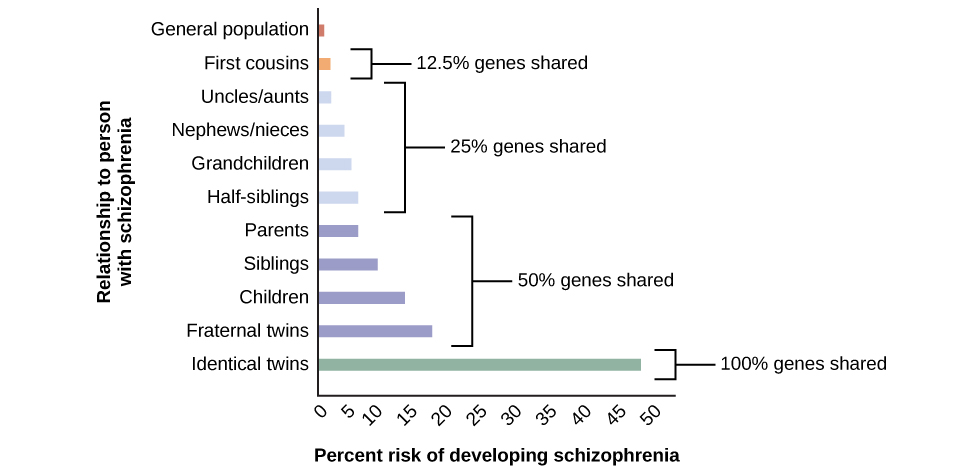


Figure 15.8図 15.8
A person’s risk of developing schizophrenia increases if a relative has schizophrenia. The closer the genetic relationship, the higher the risk.
親族に統合失調症の人がいる場合、本人が統合失調症を発症するリスクは高まる。遺伝的な関係が近いほど、リスクは高くなる。
Findings such as these have led many of today’s researchers to search for specific genes and genetic mutations that contribute to mental disorders. Also, sophisticated neural imaging technology in recent decades has revealed how abnormalities in brain structure and function might be directly involved in many disorders, and advances in our understanding of neurotransmitters and hormones have yielded insights into their possible connections. The biological perspective is currently thriving in the study of psychological disorders.
英語のヒント
このような知見を受けて、今日の多くの研究者は、精神障害の一因となる特定の遺伝子や遺伝子の突然変異を探すようになった。また、ここ数十年のあいだに、高度な神経画像技術によって、脳の構造と機能の異常が多くの障害にどのように直接かかわっている可能性があるのかが明らかになってきた。そして、神経伝達物質とホルモンについての理解が進んだことで、それらと障害との関連の可能性についての洞察も得られている。心理的障害の研究において、生物学的観点は現在、隆盛をきわめている。