第15章心理的障害
15.1 What Are Psychological Disorders?15.1 心理的障害とは何か
Learning Objectives学習目標
By the end of this section, you will be able to:
この節を学び終えると、次のことができるようになる。
- Understand the problems inherent in defining the concept of psychological disorder心理的障害という概念を定義することに内在する問題を理解する
- Describe what is meant by harmful dysfunction有害な機能不全とは何を意味するかを説明する
- Identify the formal criteria that thoughts, feelings, and behaviors must meet to be considered abnormal and, thus, symptomatic of a psychological disorder思考、感情、行動が異常であり、したがって心理的障害の症状であるとみなされるために満たさなければならない正式な基準を挙げる
According to the American Psychiatric Association, a psychological disorder, or mental disorder, is “a syndrome characterized by clinically significant disturbance in an individual's cognition, emotion regulation, or behavior that reflects a dysfunction in the psychological, biological, or developmental processes underlying mental functioning. Mental disorders are usually associated with significant distress in social, occupational, or other important activities” (2013). Psychopathology is the study of psychological disorders, including their symptoms, etiology (i.e., their causes), and treatment. The term psychopathology can also refer to the manifestation of a psychological disorder. Although consensus can be difficult, it is extremely important for mental health professionals to agree on what kinds of thoughts, feelings, and behaviors are truly abnormal in the sense that they genuinely indicate the presence of psychopathology. Certain patterns of behavior and inner experience can easily be labeled as abnormal and clearly signify some kind of psychological disturbance. The person who washes their hands 40 times per day and the person who claims to hear the voices of demons exhibit behaviors and inner experiences that most would regard as abnormal: beliefs and behaviors that suggest the existence of a psychological disorder. But, consider the nervousness a young man feels when talking to an attractive person or the loneliness and longing for home a first-year student experiences during her first semester of college—these feelings may not be regularly present, but they fall in the range of normal. So, what kinds of thoughts, feelings, and behaviors represent a true psychological disorder? Psychologists work to distinguish psychological disorders from inner experiences and behaviors that are merely situational, idiosyncratic, or unconventional.
英語のヒント
アメリカ精神医学会によれば、心理的障害、すなわち精神障害とは、「個人の認知、感情調節、または行動における臨床的に意味のある乱れを特徴とする症候群であり、その乱れは、精神機能の基盤にある心理学的、生物学的、または発達的な過程の機能不全を反映している。精神障害は通常、社会的、職業的、またはほかの重要な活動における著しい苦痛と関連している」(2013)。精神病理学とは、心理的障害について、その症状、病因(すなわち原因)、治療を含めて研究する学問である。また、精神病理学という語は、心理的障害の発現を指すこともある。合意は難しいこともあるが、どのような思考、感情、行動が、精神病理の存在を本当に示しているという意味で真に異常なのかについて、精神保健の専門家が合意することはきわめて重要である。行動や内的経験のパターンの中には、たやすく異常と判断でき、何らかの心理的な乱れを明らかに示しているものもある。1日に40回手を洗う人や、悪魔の声が聞こえると言う人は、たいていの人が異常とみなすような行動や内的経験を示している。それは、心理的障害の存在をうかがわせる信念や行動である。しかし、若い男性が魅力的な相手と話すときに感じる緊張や、1年生の女子学生が大学の最初の学期に経験する孤独や家を恋しく思う気持ちを考えてみよう。こうした感情はいつもあるものではないかもしれないが、正常の範囲に収まる。では、どのような思考、感情、行動が、本当の心理的障害に当たるのだろうか。心理学者は、心理的障害を、単に状況によるもの、その人特有のもの、あるいは型にはまらないものにすぎない内的経験や行動から区別しようと努めている。
Mental health issues are often incorrectly viewed as less important than physical illnesses, and sometimes people are blamed or otherwise stigmatized for their condition. People with mental illnesses did not choose or create their illness, and cannot simply manage it through positive thinking or other attitudinal changes. Diagnosis, treatment, and support are all necessary, and all must be considered with respect and sensitivity to the extremely challenging nature of mental illness. While not everyone experiencing difficulty has a psychological disorder, mental health is critical to our ability to function in our relationships, education, and work. It is important that people talk with qualified professionals if they are having persistent feelings or experiences in line with the descriptions below; the discussion may or may not lead to a diagnosis, but as with physical illnesses, one has a better chance at success if they raise the issues with doctors or other experts.
英語のヒント
メンタルヘルスの問題は、身体の病気ほど重要ではないと誤ってみなされることが多く、ときには、その状態のことで当人が責められたり、そのほかの形でスティグマを負わされたりする。精神疾患のある人は、自分でその病気を選んだわけでもつくり出したわけでもなく、前向きな考え方やそのほかの心構えの変化によって簡単に対処できるわけでもない。診断、治療、支援はいずれも必要であり、そのどれについても、敬意を払い、精神疾患がきわめて困難な性質を持つことに十分配慮して考えなければならない。困難を抱えている人の誰もが心理的障害を持っているわけではないが、メンタルヘルスは、私たちが人間関係、教育、仕事の中で機能するために欠かせないものである。以下の説明に沿った感情や経験が続いている場合には、資格を持つ専門家に相談することが大切である。その話し合いが診断につながることもあれば、つながらないこともある。しかし身体の病気と同じく、医師やほかの専門家に問題を打ち明けたほうが、うまくいく見込みは高くなる。
Definition of a Psychological Disorder心理的障害の定義
Perhaps the simplest approach to conceptualizing psychological disorders is to label behaviors, thoughts, and inner experiences that are atypical, distressful, dysfunctional, and sometimes even dangerous, as signs of a disorder. For example, if you ask a classmate for a date and you are rejected, you probably would feel a little dejected. Such feelings would be normal. If you felt extremely depressed—so much so that you lost interest in activities, had difficulty eating or sleeping, felt utterly worthless, and contemplated suicide—your feelings would be atypical, would deviate from the norm, and could signify the presence of a psychological disorder. Just because something is atypical, however, does not necessarily mean it is disordered.
英語のヒント
心理的障害をとらえるための、おそらく最も単純なアプローチは、非典型的で、苦痛を伴い、機能不全を起こしていて、ときには危険でさえある行動、思考、内的経験を、障害の兆候とみなすことである。たとえば、クラスメートをデートに誘って断られたら、おそらく少し落ち込むだろう。そうした気持ちは正常なものだろう。もし、活動への興味を失い、食事や睡眠がうまくとれず、自分にはまったく価値がないと感じ、自殺を考えるほどひどく落ち込んだとしたら、その気持ちは非典型的であり、標準から外れたものだろう。心理的障害が存在することを示している可能性もある。とはいえ、何かが非典型的だからといって、それが必ずしも障害であるとはかぎらない。
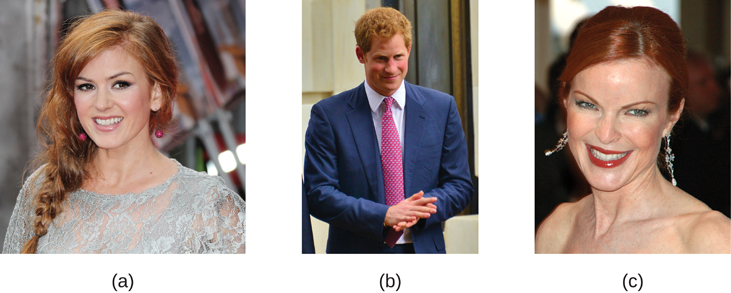
For example, only about 4% of people in the United States have red hair, so red hair is considered an atypical characteristic (Figure 15.2), but it is not considered disordered, it’s just unusual. And it is less unusual in Scotland, where approximately 13% of the population has red hair (“DNA Project Aims,” 2012). As you will learn, some disorders, although not exactly typical, are far from atypical, and the rates at which they appear in the population are surprisingly high.
英語のヒント
たとえば、アメリカで赤毛の人は約4%にすぎないので、赤毛は非典型的な特徴とみなされる(図15.2)。しかし、赤毛は障害とはみなされない。ただ珍しいだけである。しかも、スコットランドでは赤毛はそれほど珍しくない。人口のおよそ13%が赤毛だからである(“DNA Project Aims,” 2012)。これから学ぶように、障害の中には、典型的とまではいえないものの非典型的というにはほど遠く、人口の中に現れる率が驚くほど高いものもある。
OpenStax, Rice University; Psychology 2e. (credit a: modification of work by Richard Goldschmidt; credit b: modification of work by Glyn Lowe; credit c: modification of work by Kirk Weaver) · CC BY 4.0 · Source出典

Figure 15.2図 15.2
Red hair is considered unusual, but not abnormal. (a) Isla Fischer, (b) Prince Harry, and (c) Marcia Cross are three natural redheads. (credit a: modification of work by Richard Goldschmidt; credit b: modification of work by Glyn Lowe; credit c: modification of work by Kirk Weaver)
赤毛は珍しいとみなされるが、異常とはみなされない。(a)アイラ・フィッシャー、(b)ヘンリー王子、(c)マーシャ・クロスは、生まれつき赤毛の3人である。(出典a:Richard Goldschmidtの作品を改変、出典b:Glyn Loweの作品を改変、出典c:Kirk Weaverの作品を改変)
If we can agree that merely being atypical is an insufficient criterion for a having a psychological disorder, is it reasonable to consider behavior or inner experiences that differ from widely expected cultural values or expectations as disordered? Using this criterion, a person who walks around a subway platform wearing a heavy winter coat in July while screaming obscenities at strangers may be considered as exhibiting symptoms of a psychological disorder. Their actions and clothes violate socially accepted rules governing appropriate dress and behavior; these characteristics are atypical.
英語のヒント
単に非典型的であるというだけでは、心理的障害があるとする基準として不十分だという点で合意できるなら、広く期待されている文化的な価値観や期待から外れた行動や内的経験を、障害とみなすのは妥当だろうか。この基準を用いると、7月に厚手の冬用コートを着て地下鉄のホームを歩き回り、見知らぬ人に向かって卑猥な言葉をわめき散らしている人は、心理的障害の症状を示しているとみなされるかもしれない。その人の行動と服装は、ふさわしい服装と振る舞いを定める、社会的に受け入れられた規則に反している。こうした特徴は非典型的である。