第11章独占と反トラスト政策
Cost-Plus versus Price Cap Regulationコストプラス規制と価格上限規制
Regulators of public utilities for many decades followed the general approach of attempting to choose a point like F in Figure 11.3. They calculated the average cost of production for the water or electricity companies, added in an amount for the normal rate of profit the firm should expect to earn, and set the price for consumers accordingly. This method was known as cost-plus regulation.
英語のヒント
公益事業の規制担当者は数十年にわたり、図11.3の点Fのような点を選ぼうとする一般的な方法に従っていた。水道会社や電力会社の平均生産費用を計算し、その企業が通常得られると期待すべき利潤率に相当する額を加え、それに応じて消費者向けの価格を設定した。この方法はコストプラス規制として知られていた。
Cost-plus regulation raises difficulties of its own. If producers receive reimbursement for their costs, plus a bit more, then at a minimum, producers have less reason to be concerned with high costs—because they can just pass them along in higher prices. Worse, firms under cost-plus regulation even have an incentive to generate high costs by building huge factories or employing many staff, because what they can charge is linked to the costs they incur.
英語のヒント
コストプラス規制は、それ自体の難しさを生む。生産者が費用に少し上乗せした額を受け取れるなら、少なくとも高い費用を気にする理由が弱くなる。高い価格に転嫁すればよいからである。さらに悪いことに、設定できる価格が発生した費用と結びつくため、コストプラス規制下の企業は、巨大工場を建てたり大勢の職員を雇ったりして、費用を高くする誘因さえ持つ。
Thus, in the 1980s and 1990s, some public utility regulators began to use price cap regulation, where the regulator sets a price that the firm can charge over the next few years. A common pattern was to require a price that declined slightly over time. If the firm can find ways of reducing its costs more quickly than the price caps, it can make a high level of profits. However, if the firm cannot keep up with the price caps or suffers bad luck in the market, it may suffer losses. A few years down the road, the regulators will then set a new series of price caps based on the firm’s performance.
英語のヒント
そこで1980年代と1990年代に、一部の公益事業規制担当者は価格上限規制を使い始めた。これは、今後数年間に企業が設定できる価格を規制担当者が定めるものである。時間とともに少しずつ低下する価格を要求する方式がよく使われた。企業が価格上限の低下より速く費用を削減する方法を見つければ、高水準の利潤を得られる。しかし、価格上限に追いつけないか、市場で不運に見舞われれば、損失を被ることもある。数年後、規制担当者は企業の実績を踏まえて、新たな一連の価格上限を設定する。
Price cap regulation requires delicacy. It will not work if the price regulators set the price cap unrealistically low. It may not work if the market changes dramatically so that the firm is doomed to incurring losses no matter what it does—say, if energy prices rise dramatically on world markets, then the company selling natural gas or heating oil to homes may not be able to meet price caps that seemed reasonable a year or two ago. However, if the regulators compare the prices with producers of the same good in other areas, they can, in effect, pressure a natural monopoly in one area to compete with the prices charged in other areas. Moreover, the possibility of earning greater profits or experiencing losses—instead of having an average rate of profit locked in every year by cost-plus regulation—can provide the natural monopoly with incentives for efficiency and innovation.
英語のヒント
価格上限規制には慎重な調整が必要である。価格規制担当者が非現実的に低い上限を設定すれば、うまく働かない。市場が劇的に変化して、何をしても企業が損失を免れない場合にも、うまく働かないかもしれない。たとえば、世界市場でエネルギー価格が大幅に上がると、家庭に天然ガスや暖房用燃料油を販売する会社は、1〜2年前には妥当だった価格上限を守れなくなる場合がある。しかし、規制担当者が他地域で同じ財を生産する企業の価格と比較すれば、事実上、ある地域の自然独占企業に、他地域の価格と競争する圧力をかけられる。さらに、コストプラス規制によって毎年平均的な利潤率が保証される代わりに、より大きな利潤を得たり損失を被ったりする可能性を持たせれば、自然独占企業に効率化と革新への誘因を与えられる。
With natural monopoly, market competition is unlikely to take root, so if consumers are not to suffer the high prices and restricted output of an unrestricted monopoly, government regulation will need to play a role. In attempting to design a system of price cap regulation with flexibility and incentive, government regulators do not have an easy task.
英語のヒント
自然独占では市場競争が根づきにくいため、制約のない独占の高価格と生産量制限を消費者が被らないようにするには、政府の規制が役割を果たす必要がある。柔軟性と誘因を備えた価格上限規制の制度を設計しようとする政府の規制担当者の仕事は、容易ではない。
Key Concepts and Summary重要概念とまとめ
In the case of a natural monopoly, market competition will not work well and so, rather than allowing an unregulated monopoly to raise price and reduce output, the government may wish to regulate price and/or output. Common examples of regulation are public utilities, the regulated firms that often provide electricity and water service.
英語のヒント
自然独占の場合、市場競争はうまく働かない。そのため政府は、規制のない独占が価格を上げ生産量を減らすことを認めるよりも、価格や生産量、またはその両方を規制しようとすることがある。規制の一般的な例は、電気や水道のサービスを提供することの多い、規制された企業である公益事業者である。
Cost-plus regulation refers to government regulating a firm which sets the price that a firm can charge over a period of time by looking at the firm’s accounting costs and then adding a normal rate of profit. Price cap regulation refers to government regulation of a firm where the government sets a price level several years in advance. In this case, the firm can either earn high profits if it manages to produce at lower costs or sell a higher quantity than expected or suffer low profits or losses if costs are high or it sells less than expected.
英語のヒント
コストプラス規制とは、政府が企業の会計上の費用に通常の利潤率を加えて、一定期間に企業が設定できる価格を定める規制である。価格上限規制とは、数年前もって政府が価格水準を定める企業規制である。この場合、企業は予想より低い費用で生産したり、多い数量を販売したりできれば高い利潤を得るが、費用が高かったり、販売が予想を下回ったりすれば、利潤が少なくなるか損失を被る。
Self-Check Questions理解度確認問題
Exercises 21–22練習問題 21–22
Exercise 21問題 21
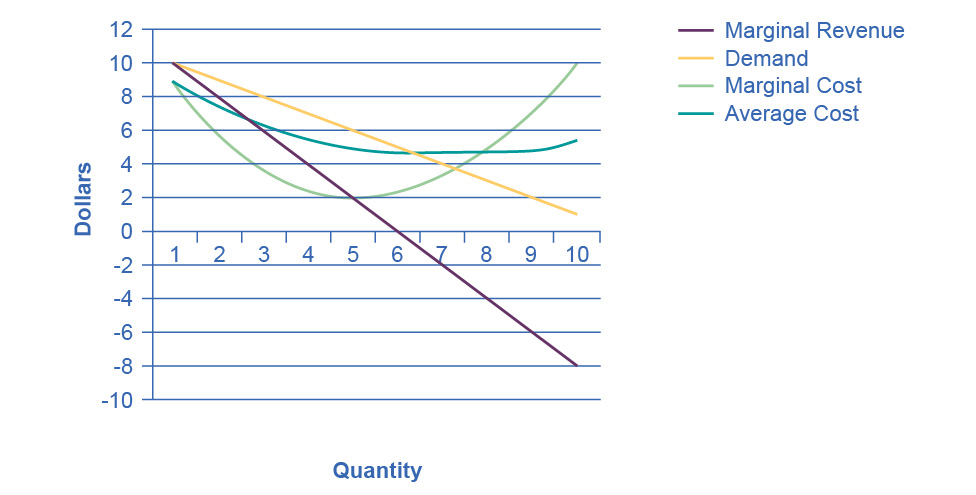
Urban transit systems, especially those with rail systems, typically experience significant economies of scale in operation. Consider the transit system data in Table 11.6. Note that the quantity is in millions of riders.
英語のヒント
都市の公共交通機関、特に鉄道を含むものには、通常、運営上の大きな規模の経済がある。表11.6の公共交通機関のデータを考えよう。数量は利用者数を百万人単位で示していることに注意しよう。
Demand: 需要: |
Quantity 数量 |
1 |
2 |
3 |
4 |
5 |
6 |
7 |
8 |
9 |
10 |
Price 価格 |
10 |
9 |
8 |
7 |
6 |
5 |
4 |
3 |
2 |
1 |
|
Marginal Revenue 限界収入 |
10 |
8 |
6 |
4 |
2 |
0 |
–2 |
–4 |
–6 |
–8 |
|
Costs: 費用: |
Marginal Cost 限界費用 |
9 |
6 |
5 |
3 |
2 |
3 |
4 |
5 |
7 |
10 |
Average Cost 平均費用 |
9 |
7.5 |
6.7 |
5.8 |
5 |
4.7 |
4.6 |
4.6 |
4.9 |
5.4 |
Draw the demand, marginal revenue, marginal cost, and average cost curves. Do they have the normal shapes?
英語のヒント
需要曲線、限界収入曲線、限界費用曲線、平均費用曲線を描きなさい。通常の形をしているか。

Exercise 22問題 22
From the graph you drew to answer Exercise 21, would you say this transit system is a natural monopoly? Justify.
英語のヒント
演習21の解答として描いたグラフから、この公共交通機関は自然独占だと言えるか。根拠を述べなさい。
Solution解き方
Yes it is a natural monopoly because average costs decline over the range that satisfies the market demand. For example, at the point where the demand curve and the average cost curve meet, there are economies of scale.
英語のヒント
はい、市場需要を満たす範囲で平均費用が低下するため、自然独占である。たとえば、需要曲線と平均費用曲線が交わる点では、規模の経済がある。