第13章正の外部性と公共財
13.2 How Governments Can Encourage Innovation13.2 政府はどのように革新を促せるか
Learning Objectives学習目標
Learning Objectives学習目標
By the end of this section, you will be able to:
英語のヒント
この節を学ぶと、次のことができるようになる。
- Explain the effects of intellectual property rights on social and private rates of return.
英語のヒント
知的財産権が社会的収益率と私的収益率に与える影響を説明する。 - Identify three U.S. Government policies and explain how they encourage innovation
英語のヒント
米国政府の3つの政策を挙げ、それぞれがどのように革新を促すかを説明する。
A number of different government policies can increase the incentives to innovate, including: guaranteeing intellectual property rights, government assistance with the costs of research and development, and cooperative research ventures between universities and companies.
英語のヒント
知的財産権の保証、研究開発費への政府支援、大学と企業の共同研究事業など、さまざまな政府の政策が、革新への誘因を強められる。
Intellectual Property Rights知的財産権
One way to increase new technology is to guarantee the innovator an exclusive right to that new product or process. Intellectual property rights include patents, which give the inventor the exclusive legal right to make, use, or sell the invention for a limited time, and copyright laws, which give the author an exclusive legal right over works of literature, music, film/video, and pictures. For example, if a pharmaceutical firm has a patent on a new drug, then no other firm can manufacture or sell that drug for 20 years, unless the firm with the patent grants permission. Without a patent, the pharmaceutical firm would have to face competition for any successful products, and could earn no more than a normal rate of profit. With a patent, a firm is able to earn monopoly profits on its product for a period of time—which offers an incentive for research and development. In general, how long can “a period of time” be? The Clear It Up discusses patent and copyright protection timeframes for some works you might know.
英語のヒント
新技術を増やす方法の1つは、その新製品や工程への排他的権利を革新者に保証することである。知的財産権には、一定期間、発明の製造・使用・販売に関する排他的な法的権利を発明者に与える特許と、文学、音楽、映画・映像、画像の作品に排他的な法的権利を著作者に与える著作権法が含まれる。たとえば製薬企業が新薬の特許を持つなら、その企業が許可しないかぎり、他社は20年間その薬を製造・販売できない。特許がなければ、成功した製品はどれも競争にさらされ、製薬企業は通常の利潤率を超えて稼げない。特許があれば、一定期間、その製品から独占利潤を得られ、研究開発への誘因となる。一般に「一定期間」はどのくらい長くなりうるか。「疑問を解こう」では、なじみのある作品について、特許と著作権の保護期間を論じる。
Figure 13.4 illustrates how the total number of patent applications filed with the U.S. Patent and Trademark Office, as well as the total number of patents granted, surged in the mid-1990s with the invention of the internet, and is still going strong today.
英語のヒント
図13.4は、米国特許商標庁への特許出願総数と特許付与総数が、インターネットの発明に伴って1990年代半ばに急増し、現在も高水準で推移していることを示す。
Patents Filed and Granted, 1990–2020特許の出願と付与、1990〜2020年
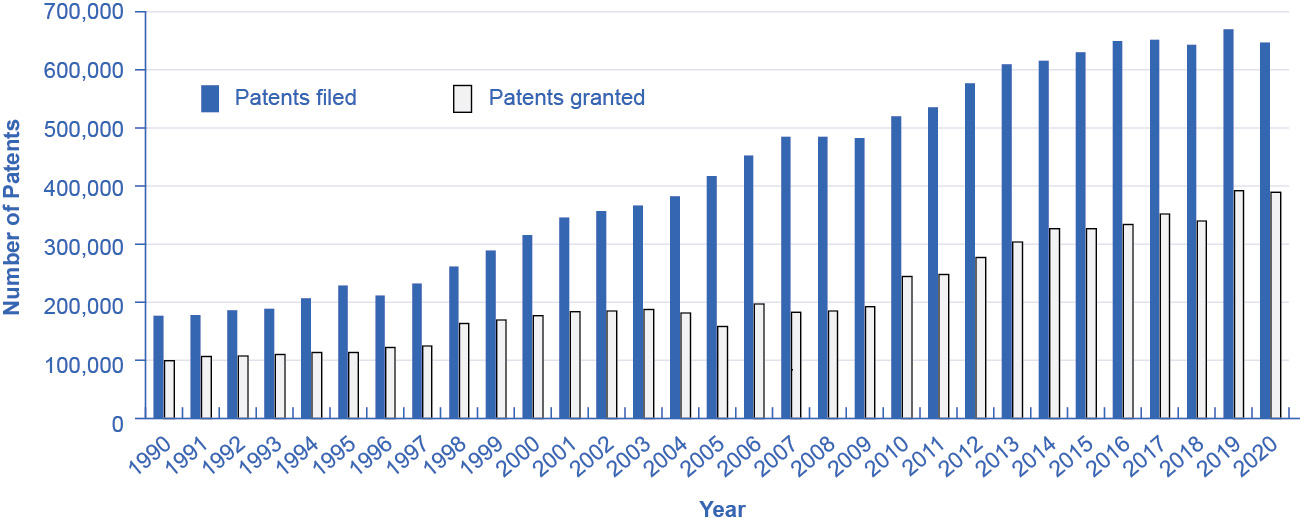

Figure 13.4図 13.4
The number of applications filed for patents increased substantially beginning in the 1990s, due in part to the invention of the internet. The internet led to many other inventions, but also made it much easier to copy, steal, or "pirate" intellectual property, which led to the 1998 Copyright Term Extension Act. (Source: http://www.uspto.gov/web/offices/ac/ido/oeip/taf/us_stat.htm)
英語のヒント
特許出願数は、インターネットの発明も一因となり、1990年代以降大幅に増加した。インターネットは多くの他の発明を生んだ一方、知的財産の複製、窃取、「海賊版」の作成もはるかに容易にし、1998年の著作権期間延長法につながった。(出典:http://www.uspto.gov/web/offices/ac/ido/oeip/taf/us_stat.htm)
While patents provide an incentive to innovate by protecting the innovator, they are not perfect. For example:
英語のヒント
特許は革新者を保護して革新への誘因を与えるが、完全ではない。たとえば次のような点がある。
- In countries that already have patents, economic studies show that inventors receive only one-third to one-half of the total economic value of their inventions.
英語のヒント
すでに特許制度がある国でも、経済研究によれば、発明者が受け取るのは発明の総経済価値の3分の1から2分の1にすぎない。 - In a fast-moving high-technology industry like biotechnology or semiconductor design, patents may be almost irrelevant because technology is advancing so quickly.
英語のヒント
バイオテクノロジーや半導体設計のような変化の速い先端技術産業では、技術が非常に速く進むため、特許はほとんど意味を持たないことがある。 - Not every new idea can be protected with a patent or a copyright—for example, a new way of organizing a factory or a new way of training employees.
英語のヒント
新しいアイデアがすべて特許や著作権で保護されるわけではない。たとえば工場の新しい組織方法や、従業員の新しい訓練方法がある。 - Patents may sometimes cover too much or be granted too easily. In the early 1970s, Xerox had received over 1,700 patents on various elements of the photocopy machine. Every time Xerox improved the photocopier, it received a patent on the improvement.
英語のヒント
特許の範囲が広すぎたり、付与が容易すぎたりすることもある。1970年代初め、Xeroxは複写機のさまざまな要素について1700件を超える特許を取得していた。複写機を改良するたびに、その改良の特許を得た。 - The 20-year time period for a patent is somewhat arbitrary. Ideally, a patent should cover a long enough period of time for the inventor to earn a good return, but not so long that it allows the inventor to charge a monopoly price permanently.
英語のヒント
特許の20年という期間には、いくらか恣意的な面がある。理想的には、発明者が十分な収益を得られるほど長く、しかし独占価格を恒久的に課せるほど長くはない期間を保護すべきである。
Because patents are imperfect and do not apply well to all situations, alternative methods of improving the rate of return for inventors of new technology are desirable. The following sections describe some of these possible alternative policies.
英語のヒント
特許は不完全で、すべての状況にうまく適用できるわけではないため、新技術の発明者の収益率を高める別の方法が望まれる。次の項目では、そのような代替政策のいくつかを説明する。