第30章宇宙の生命Life in the Universe
SETI outside the Radio Realm電波以外の領域でのSETI
For the reasons discussed above, most SETI programs search for signals at radio wavelengths. But in science, if there are other approaches to answering an unsolved question, we don’t want to neglect them. So astronomers have been thinking about other ways we could pick up evidence for the existence of technologically advanced civilizations.
英語のヒント
すでに述べた理由から、SETI計画の大部分は電波の波長で信号を探す。しかし科学では、未解決の問いに答える別の方法があるなら、それを見過ごしたくはない。そこで天文学者は、技術的に進んだ文明の存在の証拠を捉える、ほかの方法も考えてきた。
Recently, technology has allowed astronomers to expand the search into the domain of visible light. You might think that it would be hopeless to try to detect a flash of visible light from a planet given the brilliance of the star it orbits. This is why we usually cannot measure the reflected light of planets around other stars. The feeble light of the planet is simply swamped by the “big light” in the neighborhood. So another civilization would need a mighty strong beacon to compete with their star.
英語のヒント
最近の技術により、天文学者は探索を可視光の領域へ広げられるようになった。惑星が回る恒星のまぶしさを考えると、その惑星からの可視光の閃光を検出するのは、望みのない試みに思えるかもしれない。それが、ほかの恒星を回る惑星の反射光を、通常は測定できない理由である。惑星の弱い光は、近くの「大きな光」にすっかりかき消される。そのため他文明には、自分たちの恒星に対抗する、非常に強力なビーコンが必要となる。
However, in recent years, human engineers have learned how to make flashes of light brighter than the Sun. The trick is to “turn on” the light for a very brief time, so that the costs are manageable. But ultra-bright, ultra-short laser pulses (operating for periods of a billionth of a second) can pack a lot of energy and can be coded to carry a message. We also have the technology to detect such short pulses—not with human senses, but with special detectors that can be “tuned” to hunt automatically for such short bursts of light from nearby stars.
英語のヒント
しかし近年、人間の技術者は、太陽より明るい閃光を作る方法を身に付けた。工夫は、ごく短い時間だけ光を「つけ」、費用を扱える範囲に抑えることである。10億分の1秒という時間だけ発する、極めて明るく短いレーザーパルスなら、大量のエネルギーを詰め込めるし、メッセージを伝えるように符号化することもできる。私たちは、そのような短いパルスを検出する技術も持っている。人間の感覚を使うのではなく、近くの恒星からの短い光の発射を自動で探すよう「調整」できる、特別な検出器を使うのである。
Why would any civilization try to outshine its own star in this way? It turns out that the cost of sending an ultra-short laser pulse in the direction of a few promising stars can be less than the cost of sweeping a continuous radio message across the whole sky. Or perhaps they, too, have a special fondness for light messages because one of their senses evolved using light. Several programs are now experimenting with “optical SETI” searches, which can be done with only a modest telescope. (The term optical here means using visible light.)
英語のヒント
なぜ文明が、このように自分たちの恒星より明るく輝こうとするのだろうか。有望な少数の恒星へ向けて極短レーザーパルスを送る費用は、全天を掃くように連続的な電波メッセージを送る費用より、安くなることがある。また、相手も私たちと同じように、感覚の一つが光を使って進化したため、光によるメッセージを特に好むのかもしれない。現在、いくつかの計画で「光学SETI」の探索が試みられている。これは、比較的小規模な望遠鏡でも実施できる。ここでの「光学」は、可視光を使うという意味である。
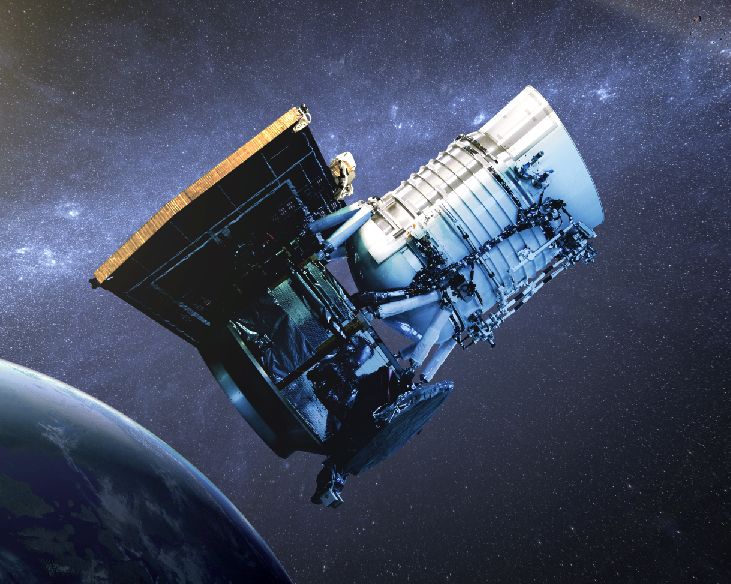
If we let our imaginations expand, we might think of other technosignatures—signs of technology from other civilizations. For example, what if a truly advanced civilization should decide to (or need to) renovate its planetary system to maximize the area for life? It could do so by breaking apart some planets or moons and building a ring of solid material that surrounds or encloses the star and intercepts some or all of its light. This huge artificial ring or sphere might glow very brightly at infrared wavelengths, as the starlight it receives is eventually converted to heat and re-radiated into space. That infrared radiation could be detected by our instruments, and searches for such unusual infrared sources are also underway (Figure 30.22).
英語のヒント
想像力を広げれば、他文明の技術の痕跡、テクノシグナチャーはほかにも考えられる。たとえば、真に発達した文明が、生命のための面積を最大にするために、惑星系を改造すると決めたら、あるいはそうする必要に迫られたら、どうだろうか。惑星や衛星の一部を解体し、恒星を取り囲んだり包み込んだりして、その光の一部または全部を受け止める、固体物質の環を造るかもしれない。この巨大な人工の環や球は、赤外線で非常に明るく輝くだろう。受け取った恒星光は、最終的に熱へ変換され、宇宙空間へ再び放射されるからである。その赤外線は私たちの機器で検出できる可能性があり、そのような異常な赤外線源を探す研究も進んでいる(図30.22)。
Wide-Field Infrared Survey Explorer (WISE).広視野赤外線探査機WISE。
credit: modification of work by NASA/JPL-Caltech · JPL image use policy
Figure 30.22 Astronomers have used this infrared satellite to search for infrared signatures of enormous construction projects by very advanced civilizations, but their first survey did not reveal any. (credit: modification of work by NASA/JPL-Caltech)
図30.22 天文学者は、この赤外線衛星を使って、非常に発達した文明の巨大建設計画が残す赤外線の痕跡を探した。しかし最初の探査では、そのようなものは見つからなかった。(クレジット:NASA/JPL-Caltechの作品を改変)
Another approach suggested by some astronomers is inspired by how we humans have begun our exploration of other worlds. We “visit” distant planets and moons in our solar system by using robot probes that send information back to Earth. What if advanced civilizations among the stars (with many more resources at their disposal) send such probes to a number of other star systems, and one or more of these probes has been in our neighborhood? Could we perhaps find it, as our own probes explore the Moon or the asteroid belt or another location?
英語のヒント
一部の天文学者が提案した別の方法は、私たち人類がほかの天体の探索をどう始めたかに着想を得ている。私たちは、情報を地球へ送り返す無人探査機を使い、太陽系の遠い惑星や衛星を「訪問」する。では、私たちよりはるかに多くの資源を使える、星々の間の発達した文明が、そうした探査機をいくつもの恒星系へ送り、その一つ以上が私たちの近所に来ていたらどうだろうか。私たち自身の探査機で月や小惑星帯、あるいは別の場所を調べるうちに、それを見つけられるかもしれないだろうか。
Should We Transmit in Addition to Listening?受信に加えて、送信もすべきか
Our planet has some leakage of radio waves into space, from FM radio, television, military radars, and communication between Earth and our orbiting spacecraft. However, such leakage radiation is still quite weak, and therefore difficult to detect at the distances of the stars, at least with the radio technology we have. So at the present time our attempts to communicate with other civilizations that may be out there mostly involve trying to receive messages, but not sending any ourselves.
英語のヒント
地球からは、FMラジオ、テレビ、軍用レーダー、地球と周回する宇宙機との通信などによって、電波が宇宙へ漏れ出している。しかし、その漏れる放射はまだかなり弱く、少なくとも私たちが持つ電波技術では、恒星間の距離から検出するのは難しい。そのため現在、存在するかもしれない他文明との通信の試みは、主としてメッセージの受信であり、私たち自身から送ることではない。
Some scientists, however, think that it is inconsistent to search for beacons from other civilizations without announcing our presence in a similar way. (We discussed earlier the problem that if every other civilization confined itself to listening, no one would ever get in touch.) So, should we be making regular attempts at sending easily decoded messages into space? Some scientists warn that our civilization is too immature and defenseless to announce ourselves at this early point in our development. The decision whether to transmit or not turns out to be an interesting reflection of how we feel about ourselves and our place in the universe.
英語のヒント
しかし一部の科学者は、自分たちの存在を同じ方法で知らせずに、他文明のビーコンを探すのは一貫しないと考えている。すべての文明が受信だけに限れば、誰も連絡を取り合えないという問題は、先に述べたとおりである。それなら、解読しやすいメッセージを宇宙へ送る試みを、定期的に行うべきだろうか。私たちの文明はまだ未熟で無防備なので、発達のこんな早い段階で存在を知らせるべきではない、と警告する科学者もいる。送信するかどうかの決定は、私たちが自分自身と宇宙での自分の位置をどう捉えているかを、興味深い形で映し出す。
Discussions of transmission also raise the question of who should speak for planet Earth. Today, anyone and everyone can broadcast radio signals, and many businesses, religious groups, and governments do. It would be a modest step for the same organizations to use or build large radio telescopes and begin intentional transmissions that are much stronger than the signals that leak from Earth today. And if we intercept a signal from an alien civilization, then the issue arises whether to reply.
英語のヒント
送信についての議論は、誰が地球を代表して発言すべきかという問いも生む。現在は誰でも電波信号を送信でき、多くの企業、宗教団体、政府が実際に送信している。同じ組織が大型の電波望遠鏡を利用または建設し、現在地球から漏れている信号よりはるかに強い意図的な送信を始めるのは、それほど大きな飛躍ではないだろう。また、異星文明からの信号を受け取れば、返事をするかどうかという問題も生じる。
Who should make the decision about whether, when, and how humanity announces itself to the cosmos? Is there freedom of speech when it comes to sending radio messages to other civilizations? Do all the nations of Earth have to agree before we send a signal strong enough that it has a serious chance of being received at the distances of the stars? Who speaks for Earth? How our species reaches a decision about these kinds of questions may well be a test of whether or not there is intelligent life on Earth.
英語のヒント
人類が宇宙へ自らの存在を知らせるかどうか、いつ、どのように知らせるかは、誰が決めるべきだろうか。他文明へ電波メッセージを送る場合にも、言論の自由はあるのだろうか。恒星間の距離で受信される現実的な可能性があるほど強い信号を送る前に、地球のすべての国が同意しなければならないのだろうか。誰が地球を代表して話すのか。私たちの種が、この種の問いにどう結論を出すかは、地球に知的生命が存在するかどうかを試すことになるのかもしれない。