第3章軌道と重力Orbits and Gravity
Thinking Aheadまず考えてみよう
International Space Station.国際宇宙ステーション
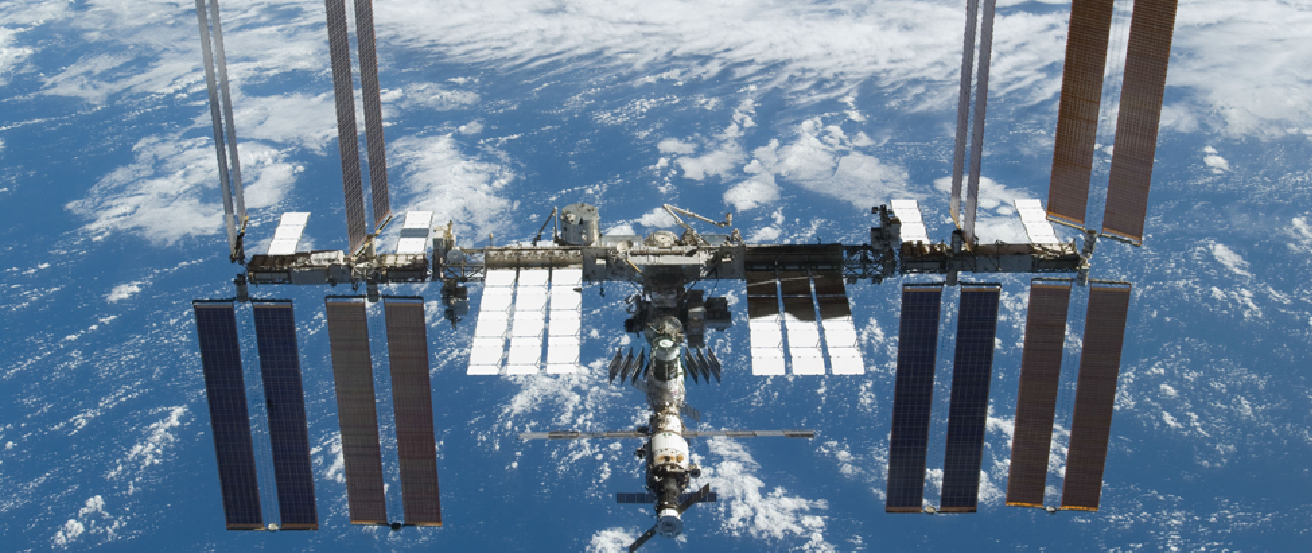
credit: modification of work by NASA · NASA media use guidelines
Figure 3.1 This space habitat and laboratory orbits Earth once every 90 minutes. (credit: modification of work by NASA)
図3.1 この宇宙の居住施設兼実験室は、90分ごとに地球を一周する。(クレジット:NASAの作品を改変)
How would you find a new planet at the outskirts of our solar system that is too dim to be seen with the unaided eye and is so far away that it moves very slowly among the stars? This was the problem confronting astronomers during the nineteenth century as they tried to pin down a full inventory of our solar system.
英語のヒント
太陽系の外縁部にある新しい惑星を、どうやって見つければよいだろうか。肉眼では見えないほど暗く、しかも遠すぎて恒星の間を非常にゆっくりとしか動かない惑星である。これは19世紀の天文学者が、太陽系を構成するものの完全な一覧を確定しようとして、直面した問題であった。
If we could look down on the solar system from somewhere out in space, interpreting planetary motions would be much simpler. But the fact is, we must observe the positions of all the other planets from our own moving planet. Scientists of the Renaissance did not know the details of Earth’s motions any better than the motions of the other planets. Their problem, as we saw in Observing the Sky: The Birth of Astronomy, was that they had to deduce the nature of all planetary motion using only their earthbound observations of the other planets’ positions in the sky. To solve this complex problem more fully, better observations and better models of the planetary system were needed.
英語のヒント
宇宙のどこかから太陽系を見下ろせたなら、惑星の運動の解釈はずっと簡単だろう。しかし実際には、私たちは、自分たちの動いている惑星から、ほかのすべての惑星の位置を観測しなければならない。ルネサンスの科学者は、ほかの惑星の運動と同様に、地球の運動の詳細も十分には知らなかった。「空を観測する――天文学の誕生」で見たように、彼らの問題は、地上から観測した、空でのほかの惑星の位置だけを使って、すべての惑星の運動の性質を推論しなければならなかったことである。この複雑な問題をさらに十分に解くには、より良い観測と、惑星系のより良いモデルが必要であった。