第8章惑星としての地球Earth as a Planet
Thinking Aheadまず考えてみよう
Active Geology.活発な地質活動。
credit: modification of work by NASA · NASA media use guidelines
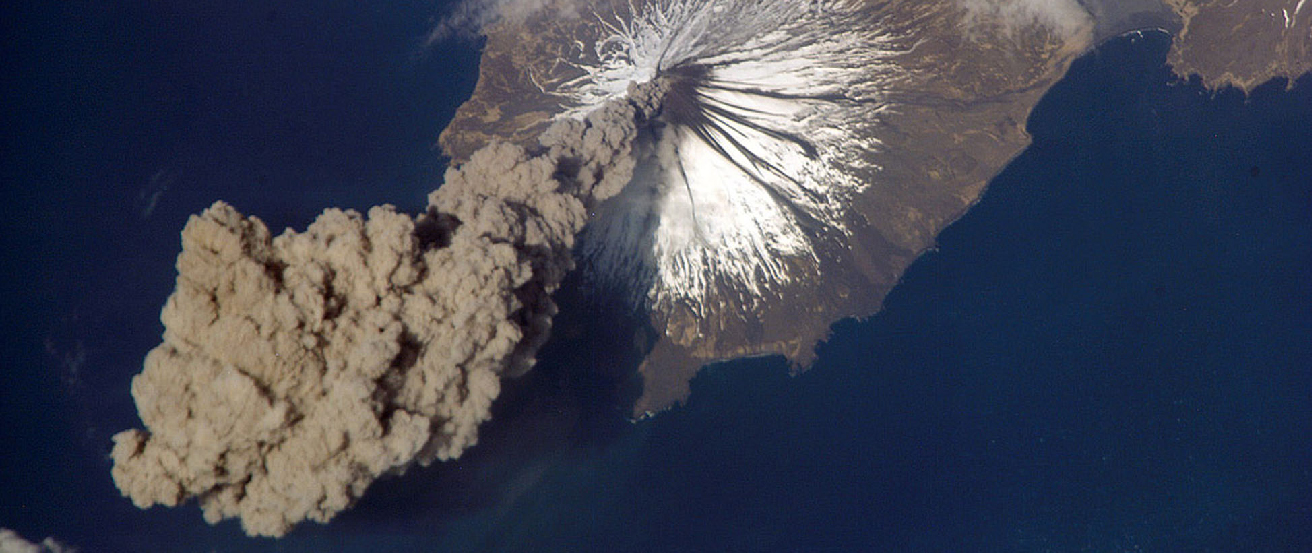
Figure 8.1 This image, taken from the International Space Station in 2006, shows a plume of ash coming from the Cleveland Volcano in the Aleutian Islands. Although the plume was only visible for around two hours, such events are a testament to the dynamic nature of Earth’s crust. (credit: modification of work by NASA)
図8.1 2006年に国際宇宙ステーションから撮影したこの画像には、アリューシャン列島のクリーブランド火山から上がる火山灰の噴煙が写っている。噴煙が見えたのは約2時間だけだったが、こうした出来事は、地球の地殻が活発に動く性質を持つ証拠である。(提供:NASAの作品を改変)
Airless worlds in our solar system seem peppered with craters large and small. Earth, on the other hand, has few craters, but a thick atmosphere and much surface activity. Although impacts occurred on Earth at the same rate, craters have since been erased by forces in the planet’s crust and atmosphere. What can the comparison between the obvious persistent cratering on so many other worlds, and the different appearance of Earth, tell us about the history of our planet?
英語のヒント
太陽系の大気のない世界には、大小のクレーターがびっしり散らばっているように見える。一方、地球にはクレーターは少ないが、厚い大気と、活発な表面の活動がある。地球にも同じ頻度で衝突は起きたが、クレーターはその後、地殻や大気で働く力によって消されてきた。多くのほかの世界では衝突の跡がはっきりと残り続けているのに、地球の姿は違っている。この比較から、地球の歴史について何がわかるだろうか。
As our first step in exploring the solar system in more detail, we turn to the most familiar planet, our own Earth. The first humans to see Earth as a blue sphere floating in the blackness of space were the astronauts who made the first voyage around the Moon in 1968. For many people, the historic images showing our world as a small, distant globe represent a pivotal moment in human history, when it became difficult for educated human beings to view our world without a global perspective. In this chapter, we examine the composition and structure of our planet with its envelope of ocean and atmosphere. We ask how our terrestrial environment came to be the way it is today, and how it compares with other planets.
英語のヒント
太陽系をさらに詳しく探究する最初の一歩として、最もなじみ深い惑星、私たちの地球へ目を向けよう。暗黒の宇宙に浮かぶ青い球として地球を初めて見た人間は、1968年に初めて月を一周した宇宙飛行士たちだった。私たちの世界を小さな遠い球として示す、この歴史的な画像は、多くの人にとって、人類史の大きな転換点を表している。教養ある人々が、地球規模の視点なしに自分たちの世界を見ることは、難しくなったのである。この章では、海と大気に包まれた地球の組成と構造を調べる。地球の環境はどのようにして現在の姿になったのか、また、ほかの惑星とはどのように比べられるのかを考える。