第9章クレーターに覆われた世界Cratered Worlds
Thinking Aheadまず考えてみよう
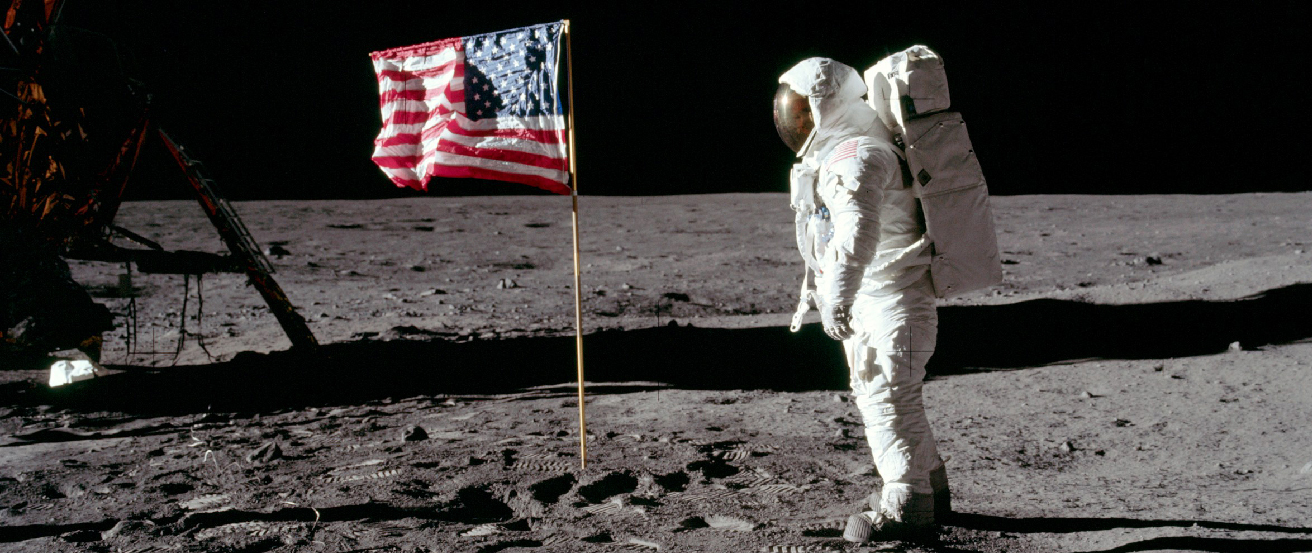
Apollo 11 Astronaut Edwin “Buzz” Aldrin on the Surface of the Moon.月面に立つアポロ11号の宇宙飛行士、エドウィン・「バズ」・オルドリン。
credit: modification of work by NASA/ Neil A. Armstrong · NASA media use guidelines
Figure 9.1 Because there is no atmosphere, ocean, or geological activity on the Moon today, the footprints you see in the image will likely be preserved in the lunar soil for millions of years. The flag, by the way, was made of nylon and held open by a horizontal rod that did not extend fully. That’s why it looks like it’s waving; there is no atmosphere on the Moon and, thus, no wind that can make a flag flutter. (credit: modification of work by NASA/ Neil A. Armstrong)
図9.1 現在の月には大気も海洋も地質活動もないため、画像に見える足跡は、月の土壌に数百万年にわたって残る可能性が高い。ちなみに、この旗はナイロン製で、横棒で広げて支えられていたが、その棒が十分には伸びきらず、しわが残った。そのため、はためいているように見える。月には大気がなく、したがって旗をはためかせる風もない。(提供:NASA/ニール・A・アームストロングの作品を改変)
The Moon is the only other world human beings have ever visited. What is it like to stand on the surface of our natural satellite? And what can we learn from going there and bringing home pieces of a different world?
英語のヒント
月は、人間がこれまでに訪れた地球以外の唯一の世界である。私たちの天然の衛星の表面に立つと、どのように感じるのだろうか。そして、そこへ行き、別の世界のかけらを持ち帰ることで、何を学べるのだろうか。
We begin our discussion of the planets as cratered worlds with two relatively simple objects: the Moon and Mercury. Unlike Earth, the Moon is geologically dead, a place that has exhausted its internal energy sources. Because its airless surface preserves events that happened long ago, the Moon provides a window on earlier epochs of solar system history. The planet Mercury is in many ways similar to the Moon, which is why the two are discussed together: both are relatively small, lacking in atmospheres, deficient in geological activity, and dominated by the effects of impact cratering. Still, the processes that have molded their surfaces are not unique to these two worlds. We shall see that they have acted on many other members of the planetary system as well.
英語のヒント
クレーターに覆われた世界として惑星を考えるにあたり、まず月と水星という、比較的単純な二つの天体から始めよう。地球と違い、月は地質学的には死んだ天体、つまり内部のエネルギー源を使い果たした場所である。大気のない月の表面には、遠い昔の出来事が保存されている。このため、月は太陽系の歴史の初期をのぞく窓になる。水星は多くの点で月に似ている。それが、この二つを一緒に取り上げる理由である。どちらも比較的小さく、大気に乏しく、地質活動が少なく、衝突クレーターを作る作用が表面を大きく支配している。とはいえ、その表面を形作ってきた過程は、この二つの世界だけに固有のものではない。そうした過程が、太陽系のほかの多くの天体にも働いてきたことを見ていく。