第9章クレーターに覆われた世界Cratered Worlds
9.1 General Properties of the Moon9.1 月の基本的な性質
Learning Objectives学習の目標
By the end of this section, you will be able to:
この節を学び終えると、次のことができるようになる。
Discuss what has been learned from both manned and robotic lunar exploration
有人・無人の月探査から明らかになったことを論じる。
Describe the composition and structure of the Moon
月の組成と構造を説明する。
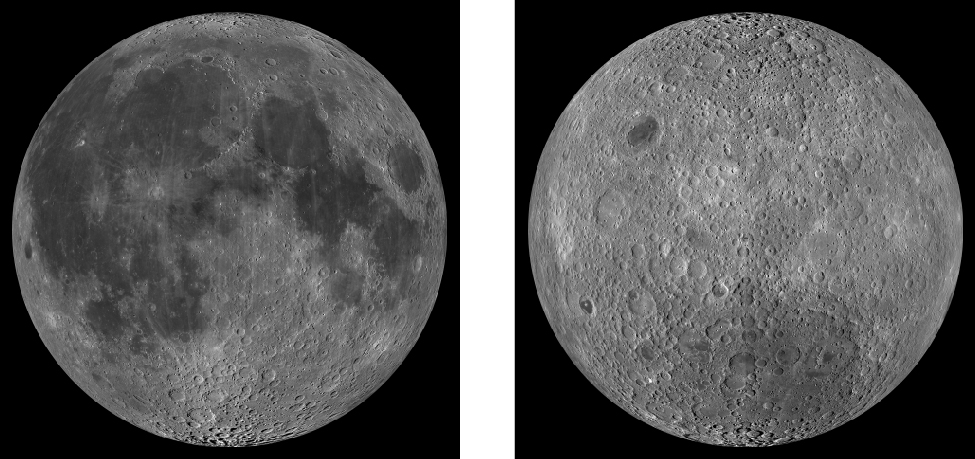
The Moon has only one-eightieth the mass of Earth and about one-sixth Earth’s surface gravity—too low to retain an atmosphere (Figure 9.2). Moving molecules of a gas can escape from a planet just the way a rocket does, and the lower the gravity, the easier it is for the gas to leak away into space. While the Moon can acquire a temporary atmosphere from impacting comets, this atmosphere is quickly lost by freezing onto the surface or by escape to surrounding space. The Moon today is dramatically deficient in a wide range of volatiles, those elements and compounds that evaporate at relatively low temperatures. Some of the Moon’s properties are summarized in Table 9.1, along with comparative values for Mercury.
英語のヒント
月の質量は地球のわずか80分の1、表面重力は約6分の1であり、大気を保持するには弱すぎる(図9.2)。動き回る気体の分子は、ロケットと同じように惑星から脱出できる。重力が弱いほど、気体は宇宙へ逃げやすい。彗星の衝突によって、月が一時的な大気を得ることはあるが、その大気は表面に凍りつくか、周囲の宇宙へ逃げることによって、すぐに失われる。現在の月には、比較的低い温度で蒸発する元素や化合物、すなわち揮発性物質が、広い範囲にわたって著しく不足している。月の性質のいくつかを、水星との比較値とともに表9.1にまとめた。
Two Sides of the Moon.月の表と裏。
credit: modification of work by NASA/GSFC/Arizona State University · NASA media use guidelines
Figure 9.2 The left image shows part of the hemisphere that faces Earth; several dark maria are visible. The right image shows part of the hemisphere that faces away from Earth; it is dominated by highlands. The resolution of this image is several kilometers, similar to that of high-powered binoculars or a small telescope. (credit: modification of work by NASA/GSFC/Arizona State University)
図9.2 左の画像は地球を向く半球の一部を示し、暗い海がいくつか見える。右の画像は地球と反対側を向く半球の一部を示し、高地が大部分を占めている。この画像の分解能は数kmで、高倍率の双眼鏡や小型望遠鏡と同程度である。(提供:NASA/GSFC/アリゾナ州立大学の作品を改変)
Properties of the Moon and Mercury 月と水星の性質 |
||
|---|---|---|
Property 性質 |
Moon 月 |
Mercury 水星 |
Mass (Earth = 1) 質量(地球=1) |
0.0123 | 0.055 |
Diameter (km) 直径(km) |
3476 | 4878 |
Density (g/cm3) 密度(g/cm³) |
3.3 | 5.4 |
Surface gravity (Earth = 1) 表面重力(地球=1) |
0.17 | 0.38 |
Escape velocity (km/s) 脱出速度(km/s) |
2.4 | 4.3 |
Rotation period (days) 自転周期(日) |
27.3 | 58.65 |
Surface area (Earth = 1) 表面積(地球=1) |
0.074 0.074 |
0.147 0.147 |
Exploration of the Moon月の探査
Most of what we know about the Moon today derives from the US Apollo program, which sent nine piloted spacecraft to our satellite between 1968 and 1972, landing 12 astronauts on its surface (Figure 9.1). Before the era of spacecraft studies, astronomers had mapped the side of the Moon that faces Earth with telescopic resolution of about 1 kilometer, but lunar geology hardly existed as a scientific subject. All that changed beginning in the early 1960s. Initially, the Soviet Union took the lead in lunar exploration with Luna 3, which returned the first photos of the lunar far side in 1959, and then with Luna 9, which landed on the surface in 1966 and transmitted pictures and other data to Earth. However, these efforts were overshadowed on July 20, 1969, when the first American astronaut set foot on the Moon.
英語のヒント
現在の月に関する知識の大部分は、アメリカのアポロ計画から得られた。この計画は1968年から1972年にかけて、9機の有人宇宙船を月へ送り、12人の宇宙飛行士を月面に着陸させた(図9.1)。宇宙機による研究の時代に先立ち、天文学者は約1 kmの分解能を持つ望遠鏡観測によって、月の地球を向く側を地図にしていた。しかし、科学分野としての月の地質学は、ほとんど存在していなかった。この状況は、1960年代初めから一変した。当初、ソ連は1959年に月の裏側の初の写真を送ったルナ3号、続いて1966年に月面に着陸して画像などのデータを地球へ送ったルナ9号によって、月探査を先導した。しかし、1969年7月20日にアメリカの宇宙飛行士が初めて月に足を踏み入れると、これらの成果はその陰に隠れた。
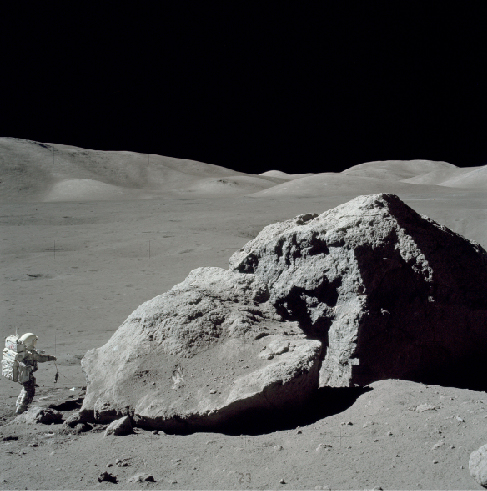
Table 9.2 summarizes the nine Apollo flights: six that landed and three others that circled the Moon but did not land. The initial landings were on flat plains selected for safety reasons. But with increasing experience and confidence, NASA targeted the last three missions to more geologically interesting locales. The level of scientific exploration also increased with each mission, as the astronauts spent longer times on the Moon and carried more elaborate equipment. Finally, on the last Apollo landing, NASA included one scientist, geologist Jack Schmitt, among the astronauts (Figure 9.3).
英語のヒント
表9.2は、着陸した6回と、月を回ったが着陸しなかった3回を合わせた、9回のアポロ飛行をまとめている。初期の着陸は、安全上の理由から選ばれた平坦な平原で行われた。しかし、経験と自信が増すにつれ、NASAは最後の3回のミッションで、地質学的により興味深い場所を目指した。宇宙飛行士が月に滞在する時間が延び、より高度な機器を持ち込むにつれて、科学探査の水準もミッションのたびに高まった。ついに最後のアポロ着陸では、NASAは宇宙飛行士に1人の科学者、地質学者のジャック・シュミットを加えた(図9.3)。
Apollo Flights to the Moon 月へのアポロ飛行 |
|||
|---|---|---|---|
Flight 飛行 |
Date 年月 |
Landing Site 着陸地点 |
Main Accomplishment 主な成果 |
Apollo 8 アポロ8号 |
Dec. 1968 1968年12月 |
— | First humans to fly around the Moon 人類初の月周回飛行 |
Apollo 10 アポロ10号 |
May 1969 1969年5月 |
— | First spacecraft rendezvous in lunar orbit 月周回軌道で初の宇宙機のランデブー |
Apollo 11 アポロ11号 |
July 1969 1969年7月 |
Mare Tranquillitatis 静かの海 |
First human landing on the Moon; 22 kilograms of samples returned 人類初の月面着陸。22 kgの試料を持ち帰った |
Apollo 12 アポロ12号 |
Nov. 1969 1969年11月 |
Oceanus Procellarum 嵐の大洋 |
First Apollo Lunar Surface Experiment Package (ALSEP); visit to Surveyor 3 lander 初のアポロ月面実験装置群(ALSEP)。サーベイヤー3号着陸機を訪問 |
Apollo 13 アポロ13号 |
Apr. 1970 1970年4月 |
— | Landing aborted due to explosion in service module 機械船での爆発のため着陸を中止 |
Apollo 14 アポロ14号 |
Jan. 1971 1971年1月 |
Fra Mauro フラ・マウロ高地 |
First “rickshaw” on the Moon 月面初の「人力車」 |
Apollo 15 アポロ15号 |
July 1971 1971年7月 |
Mare Imbrium/Hadley 雨の海/ハドレー |
First “rover;” visit to Hadley Rille; astronauts traveled 24 kilometers 初の「探査車」。ハドレー谷を訪問。宇宙飛行士は24 kmを移動 |
Apollo 16 アポロ16号 |
Apr. 1972 1972年4月 |
Descartes デカルト |
First landing in highlands; 95 kilograms of samples returned 初の高地への着陸。95 kgの試料を持ち帰った |
Apollo 17 アポロ17号 |
Dec. 1972 1972年12月 |
Taurus-Littrow highlands タウルス・リットロー高地 |
Geologist among the crew; 111 kilograms of samples returned 乗組員に地質学者が参加。111 kgの試料を持ち帰った |
Scientist on the Moon.月面の科学者。
OpenStax / Rice University · CC BY 4.0
Figure 9.3 Geologist (and later US senator) Harrison “Jack” Schmitt in front of a large boulder in the Littrow Valley at the edge of the lunar highlands. Note how black the sky is on the airless Moon. No stars are visible because the surface is brightly lit by the Sun, and the exposure therefore is not long enough to reveal stars.
英語のヒント
図9.3 月の高地の縁にあるリットロー谷で、大岩の前に立つ地質学者、ハリソン・「ジャック」・シュミット。後にアメリカの上院議員になった。大気のない月では、空がどれほど黒いかに注目しよう。表面が太陽に明るく照らされているため、露光時間が星を写せるほど長くなく、星は見えていない。
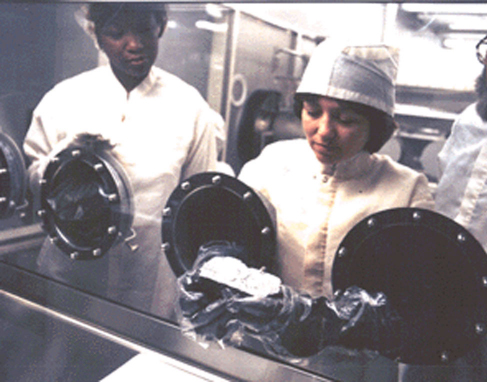
In addition to landing on the lunar surface and studying it at close range, the Apollo missions accomplished three objectives of major importance for lunar science. First, the astronauts collected nearly 400 kilograms of samples for detailed laboratory analysis on Earth (Figure 9.4). These samples have revealed as much about the Moon and its history as all other lunar studies combined. Second, each Apollo landing after the first one deployed an Apollo Lunar Surface Experiment Package (ALSEP), which continued to operate for years after the astronauts departed. Third, the orbiting Apollo command modules carried a wide range of instruments to photograph and analyze the lunar surface from above.
英語のヒント
アポロの各ミッションは、月面に着陸して間近に調べることに加え、月の科学にとって大きな重要性を持つ三つの目標を達成した。第一に、宇宙飛行士は地球の実験室で詳しく分析するため、400 kg近い試料を集めた(図9.4)。これらの試料から、月とその歴史について、ほかの月研究をすべて合わせたのと同じくらい多くのことが明らかになった。第二に、最初を除くアポロの月面着陸では、毎回、アポロ月面実験装置群(ALSEP)が設置され、宇宙飛行士が去った後も何年にもわたって動作し続けた。第三に、月を周回するアポロの司令船には、上空から月面を撮影・分析するための、幅広い機器が搭載されていた。
Handling Moon Rocks.月の岩石を扱う。
credit: NASA JSC · NASA media use guidelines
Figure 9.4 Lunar samples collected in the Apollo Project are analyzed and stored in NASA facilities at the Johnson Space Center in Houston, Texas. Here, a technician examines a rock sample using gloves in a sealed environment to avoid contaminating the sample. (credit: NASA JSC)
図9.4 アポロ計画で採取された月の試料は、テキサス州ヒューストンのジョンソン宇宙センターにあるNASAの施設で分析・保管されている。ここでは、試料の汚染を避けるため、技術者が密閉された環境で手袋を使って岩石試料を調べている。(提供:NASA JSC)
The last human left the Moon in December 1972, just a little more than three years after Neil Armstrong took his “giant leap for mankind.” The program of lunar exploration was cut off midstride due to political and economic pressures. It had cost just about $100 per American, spread over 10 years—the equivalent of one large pizza per person per year. Yet for many people, the Moon landings were one of the central events in twentieth-century history.
英語のヒント
ニール・アームストロングが「人類にとっての大きな飛躍」を成し遂げてから、わずか3年余り後の1972年12月、最後の人間が月を後にした。月探査計画は、政治的・経済的圧力により、道半ばで打ち切られた。費用は10年間にわたってアメリカ人1人当たり約100ドルにすぎず、1人につき年1枚の大きなピザに相当した。それでも、多くの人々にとって、月面着陸は20世紀の歴史の中心的な出来事の一つだった。
The giant Apollo rockets built to travel to the Moon were left to rust on the lawns of NASA centers, although recently, some have at least been moved indoors to museums. It has been more than 50 years since astronauts landed on the Moon, but now there is increased interest in both the United States and China in future human lunar flights. NASA has established a program called Artemis, named for the twin of the ancient Greek god Apollo, which plans to place astronauts in lunar orbit in the next few years. The first test flight of the huge new Space Launch System rocket sent an uncrewed vehicle around the Moon and back in late 2022. Artemis will focus on landings near the lunar poles, and NASA will include both women and people of color in the astronaut crews. China is one other country that has expressed interest in sending humans to the Moon, and in late 2022, they completed their own space station in Earth orbit as a first step.
英語のヒント
月への旅のために造られた巨大なアポロのロケットは、NASA各施設の芝生の上で、さびるに任されていた。ただし近年、その一部は少なくとも博物館の屋内へ移された。宇宙飛行士が月に着陸してから50年以上がたつが、現在、アメリカと中国の双方で、将来の有人月飛行への関心が高まっている。NASAは、古代ギリシャの神アポロンの双子にちなんだ「アルテミス」という計画を立ち上げた。この計画では、今後数年のうちに宇宙飛行士を月周回軌道へ送り込む予定である。新しい巨大ロケット、スペース・ローンチ・システムの初試験飛行は、2022年末に無人宇宙船を月の周囲へ送り、地球へ帰還させた。アルテミスでは月の極付近への着陸を重視し、NASAは宇宙飛行士の乗組員に、女性と有色人種の双方を含める。中国も、人間を月へ送ることに関心を表明している国の一つであり、最初の一歩として、2022年末に地球周回軌道上の独自の宇宙ステーションを完成させた。
In a bizarre piece of irony, a few people even question whether we went to the Moon at all, proposing instead that the Apollo program was a fake, filmed on a Hollywood sound stage. See the Link to Learning box below for some scientists’ replies to such claims. In the meantime, scientific interest in the Moon is stronger than ever, and more than half a dozen scientific spacecraft—sent from NASA, ESA, Japan, India, and China—have orbited or landed on our nearest neighbor during the past two decades.
英語のヒント
奇妙な皮肉だが、私たちが本当に月へ行ったのかを疑い、アポロ計画はハリウッドの撮影スタジオで撮られた偽物だったと主張する人さえ少数いる。そうした主張に対する科学者の回答の例は、下の「学びを広げるリンク」の囲みを参照してほしい。その一方で、月への科学的関心は、かつてないほど強い。この20年間に、NASA、ESA、日本、インド、中国が送り出した7機以上の科学探査機が、私たちに最も近い隣の天体を周回し、あるいは着陸してきた。
China's Chang'e 6 Lander and Ascender.中国の嫦娥6号の着陸機と上昇機。
Figure 9.5 China's Chang'e 6 lander and ascender are seen on the far side of the Moon, as photographed by the mission's mini-rover. (credit: modification of work by CNSA)
図9.5 ミッションの小型探査車が撮影した、月の裏側にいる中国の嫦娥6号の着陸機と上昇機。(提供:CNSAの作品を改変)
Lunar exploration has become an international enterprise with many robotic spacecraft focusing on lunar science. The USSR sent a number in the 1960s and 1970s, including robot sample returns, and recently China has been active, with three landers and a sample return mission. Of special interest is the search for accessible water ice near the lunar South Pole. Table 9.3 lists some of the most recent lunar missions.
英語のヒント
月探査は国際的な取り組みとなり、多くの無人探査機が月の科学を重点的に調べている。ソ連は1960〜1970年代に、無人の試料回収を含む多くの探査機を送り、近年は中国が、3機の着陸機と試料回収ミッションで活発に活動している。特に関心を集めるのは、月の南極付近にある、利用しやすい水の氷の探索である。ごく最近の月探査ミッションの一部を表9.3に示す。
Some Robotic Missions to the Moon 月への無人探査ミッションの例 |
|||
|---|---|---|---|
Launch Year 打ち上げ年 |
Spacecraft 宇宙機 |
Type of Mission ミッションの種類 |
Agency 機関 |
| 1994 | Clementine クレメンタイン |
Orbiter 周回機 |
US (USAF/NASA) アメリカ(USAF/NASA) |
| 1998 | Lunar Prospector ルナ・プロスペクター |
Orbiter 周回機 |
US (NASA) アメリカ(NASA) |
| 2003 | SMART-1 | Orbiter 周回機 |
Europe (ESA) ヨーロッパ(ESA) |
| 2007 | SELENE 1 | Orbiter 周回機 |
Japan (JAXA) 日本(JAXA) |
| 2007 | Chang’e 1 嫦娥1号 |
Orbiter 周回機 |
China (CNSA) 中国(CNSA) |
| 2008 | Chandrayaan-1 チャンドラヤーン1号 |
Orbiter 周回機 |
India (ISRO) インド(ISRO) |
| 2009 | LRO | Orbiter 周回機 |
US (NASA) アメリカ(NASA) |
| 2009 | LCROSS | Impactor 衝突機 |
US (NASA) アメリカ(NASA) |
| 2010 | Chang’e 2 嫦娥2号 |
Orbiter 周回機 |
China (CNSA) 中国(CNSA) |
| 2011 | GRAIL | Twin orbiters 2機一組の周回機 |
US (NASA) アメリカ(NASA) |
| 2013 | LADEE | Orbiter 周回機 |
US (NASA) アメリカ(NASA) |
| 2013 | Chang’e 3 嫦娥3号 |
Lander/Rover 着陸機/探査車 |
China (CNSA) 中国(CNSA) |
2018 2018 |
Chang-e 4 嫦娥4号 |
Lander/Rover (far side) 着陸機/探査車(月の裏側) |
China (CNSA) 中国(CNSA) |
| 2019 | Chandrayaan-2 チャンドラヤーン2号 |
Orbiter 周回機 |
India (ISRO) インド(ISRO) |
| 2020 | Chang-e 5 嫦娥5号 |
Lander/Sample Return 着陸機/試料回収 |
China (CNSA) 中国(CNSA) |
| 2022 | Danuri ダヌリ |
Orbiter 周回機 |
South Korea (KARI) 韓国(KARI) |
| 2022 | CAPSTONE | Orbiter (Cubesat) 周回機(キューブサット) |
US (NASA) アメリカ(NASA) |
| 2023 | SLIM | Lander 着陸機 |
Japan (JAXA) 日本(JAXA) |
| 2023 | Chandrayaan-3 チャンドラヤーン3号 |
Lander 着陸機 |
India (ISRO) インド(ISRO) |
| 2024 | Queqiao-2 鵲橋2号(Queqiao-2) |
Orbiter (Communications Relay) 周回機(通信中継) |
China (CNSA) 中国(CNSA) |
| 2024 | Chang-e 6 嫦娥6号 |
Lander/sample return 着陸機/試料回収 |
China (CNSA) 中国(CNSA) |