第8章惑星としての地球Earth as a Planet
8.5 Cosmic Influences on the Evolution of Earth8.5 地球の進化に及ぼす宇宙の影響
Learning Objectives学習の目標
By the end of this section, you will be able to:
この節を学び終えると、次のことができるようになる。
Explain the scarcity of impact craters on Earth compared with other planets and moons
ほかの惑星や衛星に比べ、地球に衝突クレーターが少ない理由を説明する。
Describe the evidence for recent impacts on Earth
近年の地球への衝突の証拠を述べる。
Detail how a massive impact changed the conditions for life on Earth, leading to the extinction of the dinosaurs
巨大衝突が地球の生命の環境を変え、恐竜の絶滅につながった過程を詳しく説明する。
Describe how impacts have influenced the evolution of life on Earth
衝突が地球の生命の進化に及ぼした影響を述べる。
Discuss the search for objects that could potentially collide with our planet
地球に衝突する可能性のある天体を探す取り組みを論じる。
In discussing Earth’s geology earlier in this chapter, we dealt only with the effects of internal forces, expressed through the processes of plate tectonics and volcanism. On the Moon, in contrast, we see primarily craters, produced by the impacts of interplanetary debris such as asteroids and comets. Why don’t we see more evidence on Earth of the kinds of impact craters that are so prominent on the Moon and other worlds?
英語のヒント
この章の前半で地球の地質を取り上げたときには、プレートテクトニクスや火山活動として現れる、内部の力の影響だけを扱った。一方、月で主に見られるのは、小惑星や彗星など、惑星間の残骸の衝突でできたクレーターである。月やほかの世界で非常に目立つ、このような衝突クレーターの証拠が、地球ではもっと見つからないのはなぜだろうか。
Where Are the Craters on Earth?地球のクレーターはどこにあるのか
It is not possible that Earth escaped being struck by the interplanetary debris that has pockmarked the Moon. From a cosmic perspective, the Moon is almost next door. Our atmosphere does make small pieces of cosmic debris burn up (which we see as meteors—commonly called shooting stars). But, the layers of our air provide no shield against the large impacts that form craters several kilometers in diameter and are common on the Moon.
英語のヒント
月をあばた状にした惑星間の残骸の衝突を、地球だけが免れたとは考えられない。宇宙の尺度で見れば、月はほぼ隣にある。確かに大気は、小さな宇宙のかけらを燃え尽きさせる。それが、一般に流れ星と呼ばれる流星として見える。しかし、月で普通に見られる、直径数kmのクレーターを作るような大衝突に対して、大気の層は盾にならない。
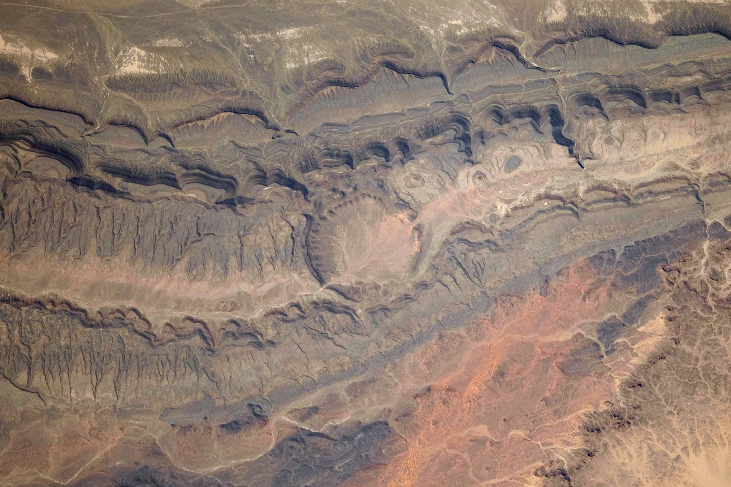
In the course of its history, Earth must therefore have been impacted as heavily as the Moon. The difference is that, on Earth, these craters are destroyed by our active geology before they can accumulate. As plate tectonics constantly renews our crust, evidence of past cratering events is slowly erased. Only in the past few decades have geologists succeeded in identifying the eroded remnants of many impact craters (Figure 8.19). Even more recent is our realization that, over the history of Earth, these impacts have had an important influence on the evolution of life.
英語のヒント
したがって、地球もその歴史の中で、月と同じほど激しく衝突を受けてきたに違いない。違いは、地球では活発な地質活動によって、クレーターがたまる前に壊されることである。プレートテクトニクスが絶えず地殻を新しくするため、過去の衝突の証拠はゆっくり消されていく。侵食された多くの衝突クレーターの跡を、地質学者が特定できるようになったのは、ここ数十年にすぎない(図8.19)。地球の歴史を通じて、それらの衝突が生命の進化に重要な影響を与えてきたと理解したのは、さらに最近である。
Ouarkziz Impact Crater.ウアルクジズ衝突クレーター。
credit: modification of work by NASA · NASA media use guidelines
Figure 8.19 Located in Algeria, this 4-km-wide crater (the round feature in the center) is the result of a meteor impact during the Cretaceous period. Although the crater has experienced heavy erosion, this image from the International Space Station shows the circular pattern resulting from impact. (credit: modification of work by NASA)
図8.19 アルジェリアにある幅4 kmのこのクレーター(中央の丸い地形)は、白亜紀の流星の衝突によってできた。激しく侵食されているが、国際宇宙ステーションからの画像では、衝突による円形の模様がわかる。(提供:NASAの作品を改変)
Recent Impacts近年の衝突
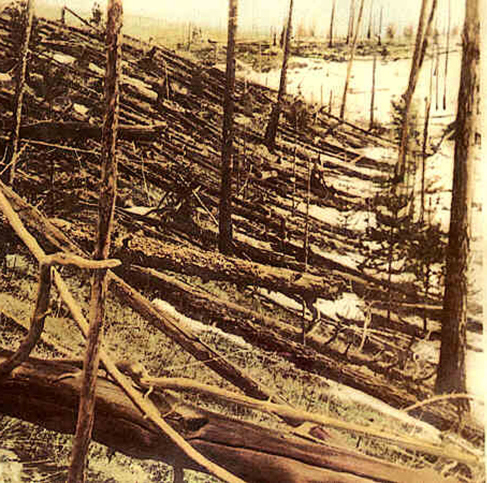
The collision of interplanetary debris with Earth is not a hypothetical idea. Evidence of relatively recent impacts can be found on our planet’s surface. One well-studied historic collision took place on June 30, 1908, near the Tunguska River in Siberia. In this desolate region, there was a remarkable explosion in the atmosphere about 8 kilometers above the surface. The shock wave flattened more than a thousand square kilometers of forest (Figure 8.20). Herds of reindeer and other animals were killed, and a man at a trading post 80 kilometers from the blast was thrown from his chair and knocked unconscious. The blast wave spread around the world, as recorded by instruments designed to measure changes in atmospheric pressure.
英語のヒント
惑星間の残骸が地球に衝突するというのは、仮説だけの話ではない。比較的最近の衝突の証拠が、地表に見つかる。よく研究された歴史上の衝突の一つは、1908年6月30日、シベリアのツングースカ川付近で起きた。この人けのない地域で、高度約8 kmの大気中に、著しい爆発が発生した。衝撃波は1000 km²を超える森林をなぎ倒した(図8.20)。トナカイの群れなどの動物が死に、爆心から80 km離れた交易所の男性は、椅子から投げ飛ばされて気絶した。爆風は世界中を伝わり、気圧の変化を測る装置に記録された。
Aftermath of the Tunguska Explosion.ツングースカ爆発の後。
credit: modification of work by Leonid Kulik · Public domain; OpenStax adaptation CC BY 4.0
Figure 8.20 This photograph, taken 19 years after the blast, shows a part of the forest that was destroyed by the 5-megaton explosion, resulting when a stony projectile about the size of a small office building (50 meters in diameter) collided with our planet. (credit: modification of work by Leonid Kulik)
図8.20 爆発の19年後に撮影したこの写真は、5メガトンの爆発で破壊された森林の一部を示す。爆発は、小さなオフィスビルほど、直径約50 mの岩石質の飛来物が、地球に衝突したことで起きた。(提供:Leonid Kulikの作品を改変)
Despite this violence, no craters were formed by the Tunguska explosion. Shattered by atmospheric pressure, the stony projectile with a diameter of approximately 50 meters disintegrated above our planet’s surface to create a blast equivalent to a 10-megaton nuclear bomb. Had it been smaller or more fragile, the impacting body would have dissipated its energy at high altitude and probably attracted no attention. Today, such high-altitude atmospheric explosions are monitored regularly by military surveillance systems.
英語のヒント
これほど激しかったにもかかわらず、ツングースカの爆発ではクレーターはできなかった。直径約50 mの岩石質の飛来物は、大気圧によって砕かれ、地表より上で崩壊し、10メガトンの核爆弾に相当する爆発を起こした。もっと小さいか壊れやすい天体だったなら、高い高度でエネルギーを散らし、おそらく誰の注意も引かなかっただろう。現在、このような高高度の大気中爆発は、軍事用の監視システムによって、日常的に監視されている。
If it had been larger or made of stronger material (such as metal), the Tunguska projectile would have penetrated all the way to the surface of Earth and exploded to form a crater. Instead, only the heat and shock of the atmospheric explosion reached the surface, but the devastation it left behind in Siberia bore witness to the power of such impacts. Imagine if the same rocky impactor had exploded over New York City in 1908; history books might today record it as one of the most deadly events in human history.
英語のヒント
もしツングースカの飛来物が、もっと大きいか、金属などのより強い物質でできていたなら、地表まで達して爆発し、クレーターを作っていただろう。実際には大気中の爆発の熱と衝撃だけが地表へ達したが、シベリアに残した惨状は、この種の衝突の威力を物語っていた。同じ岩石の衝突天体が、1908年のニューヨーク市の上空で爆発していたら、と想像してみよう。今日の歴史書は、人類史上最も多くの死者を出した出来事の一つとして記録していたかもしれない。
Tens of thousands of people witnessed directly the explosion of a smaller (20-meter) projectile over the Russian city of Chelyabinsk on an early winter morning in 2013. It exploded at a height of 21 kilometers in a burst of light brighter than the Sun, and the shockwave of the 0.5-megaton explosion broke tens of thousands of windows and sent hundreds of people to the hospital. Rock fragments (meteorites) were easily collected by people in the area after the blast because they landed on fresh snow.
英語のヒント
2013年の冬の早朝、ロシアの都市チェリャビンスクの上空で、より小さな直径20 mの飛来物が爆発するのを、何万人もの人が直接目撃した。天体は高度21 kmで、太陽より明るい閃光を放って爆発した。0.5メガトンの爆発の衝撃波は、何万枚もの窓ガラスを割り、何百人もの人が病院へ運ばれた。岩石の破片である隕石は、新しい雪の上へ落ちたため、爆発後、地域の人々によって容易に拾い集められた。
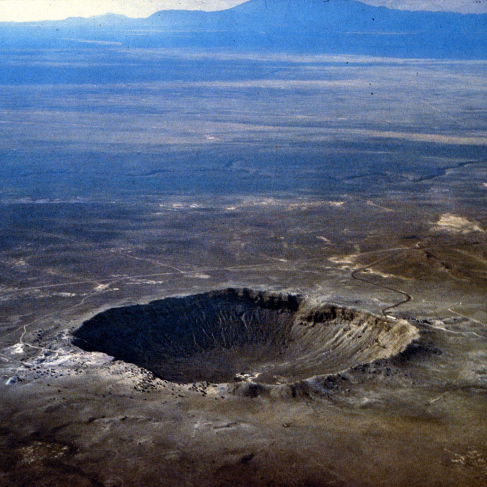
The best-known recent crater on Earth was formed about 50,000 years ago in Arizona. The projectile in this case was a lump of iron about 40 meters in diameter. Now called Meteor Crater and a major tourist attraction on the way to the Grand Canyon, the crater is about a mile across and has all the features associated with similar-size lunar impact craters (Figure 8.21). Meteor Crater is one of the few impact features on Earth that remains relatively intact; some older craters are so eroded that only a trained eye can distinguish them. Nevertheless, more than 150 have been identified. (See the list of suggested online sites at the end of this chapter if you want to find out more about these other impact scars.)
英語のヒント
地球で最もよく知られる新しいクレーターは、約5万年前、アリゾナにできた。この場合の飛来物は、直径約40 mの鉄の塊だった。現在はメテオクレーターと呼ばれ、グランドキャニオンへ向かう途中の主要な観光名所となっている。直径は約1マイルで、月の同規模の衝突クレーターに見られる特徴を、すべて備えている(図8.21)。メテオクレーターは、地球上で比較的元の姿を保つ、数少ない衝突地形の一つである。古いクレーターの中には、侵食が進み、訓練された目でなければ見分けられないものもある。それでも、150個以上が特定されている。(ほかの衝突の傷跡について詳しく知りたい人は、この章の末尾の参考ウェブサイト一覧を見よう。)
Meteor Crater in Arizona.アリゾナのメテオクレーター。
modification of work by D. Roddy/USGS · USGS public domain material
Figure 8.21 Here we see a 50,000-year-old impact crater made by the collision of a 40-meter lump of iron with our planet. Although impact craters are common on less active bodies such as the Moon, this is one of the very few well-preserved craters on Earth. (modification of work by D. Roddy/USGS)
図8.21 直径40 mの鉄の塊が地球に衝突してできた、5万年前のクレーター。月のような活動の弱い天体では衝突クレーターは普通だが、これは地球上でよく保存された、ごく少数のクレーターの一つである。(D. Roddy/USGSの作品を改変)