第30章宇宙の生命Life in the Universe
Life in Extreme Conditions極限条件での生命
At a chemical level, life consists of many types of molecules that interact with one another to carry out the processes of life. In addition to water, elemental raw materials, and energy, life also needs an environment in which those complicated molecules are stable (don’t break down before they can do their jobs) and their interactions are possible. Your own biochemistry works properly only within a very narrow range of about 10 °C in body temperature and two-tenths of a unit in blood pH (pH is a numerical measure of acidity, or the amount of free hydrogen ions). Beyond those limits, you are in serious danger.
英語のヒント
化学のレベルで見れば、生命は、互いに相互作用して生命活動を実行する、さまざまな種類の分子からなる。水、原材料となる元素、エネルギーに加え、生命は、その複雑な分子が安定していて、相互作用できる環境も必要とする。安定とは、仕事をする前に分解してしまわない、という意味である。あなた自身の生化学が正常に働くのは、体温なら約10℃、血液のpHなら0.2という、ごく狭い幅の中だけである。pHは酸性度、すなわち遊離した水素イオンの量を数値で表す尺度だ。その限界を超えれば、深刻な危険にさらされる。
Life overall must also have limits to the conditions in which it can properly work but, as we will see, they are much broader than human limits. The resources that fuel life are distributed across a very wide range of conditions. For example, there is abundant chemical energy to be had in hot springs, including alkaline springs (see Figure 30.7). This provides ample incentive for evolution to fill as much of that range with life as is biochemically possible. An organism (usually a microbe) that tolerates or even thrives under conditions that most of the life around us would consider hostile, such as very high or low temperature or acidity, is known as an extremophile (where the suffix -phile means “lover of”). Let’s have a look at some of the conditions that can challenge life and the organisms that have managed to carve out a niche at the far reaches of possibility.
英語のヒント
生命全体にも、正常に働ける条件の限界があるはずだ。しかし、これから見るように、その幅は人間の限界より、はるかに広い。生命を動かす資源は、非常に幅広い条件の下に分布している。たとえば、アルカリ性のものも含め、温泉には利用できる化学エネルギーが豊富にある(図30.7)。そのため、生化学的に可能な限り、その幅の多くを生命が埋めるように進化する、十分な誘因がある。非常に高い温度や低い温度、あるいは酸性度など、身の回りの生命の大半には過酷と思われる条件に耐え、さらには盛んに増える生物は、極限環境微生物と呼ばれる。通常は微生物であり、英語のextremophileの末尾-phileは「〜を好むもの」を意味する。生命に難題を突きつける条件のいくつかと、可能性の果てで、なんとか生存の場を切り開いた生物を見てみよう。
Both high and low temperatures can cause a problem for life. As a large organism, you are able to maintain an almost constant body temperature whether it is colder or warmer in the environment around you. But this is not possible at the tiny size of microorganisms; whatever the temperature in the outside world is also the temperature of the microbe, and its biochemistry must be able to function at that temperature. High temperatures are the enemy of complexity—increasing thermal energy tends to break apart big molecules into smaller and smaller bits, and life needs to stabilize the molecules with stronger bonds and special proteins. But this approach has its limits.
英語のヒント
高温も低温も、生命にとって問題になりうる。大きな生物であるあなたは、周囲の環境が寒くても暖かくても、ほぼ一定の体温を維持できる。しかし、微生物の小さな体では、それはできない。外界の温度が何度であっても、それが微生物自身の温度となり、生化学は、その温度で働けなければならない。高温は、複雑さの敵である。熱エネルギーが増えると、大きな分子は、より小さな断片へと次々に分かれやすくなる。そのため生命は、強い結合や特別なタンパク質によって、分子を安定させる必要がある。しかし、この方法にも限界がある。
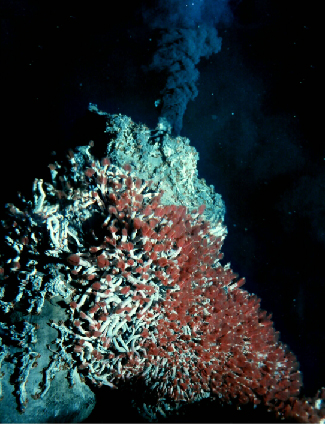
Nevertheless, as noted earlier, high-temperature environments like hot springs and hydrothermal vents often offer abundant sources of chemical energy and therefore drive the evolution of organisms that can tolerate high temperatures (see Figure 30.8); such an organism is called a thermophile. Currently, the high temperature record holder is a methane-producing microorganism that can grow at 122 °C, where the pressure also is so high that water still does not boil. That’s amazing when you think about it. We cook our food—meaning, we alter the chemistry and structure of its biomolecules—by boiling it at a temperature of 100 °C. In fact, food begins to cook at much lower temperatures than this. And yet, there are organisms whose biochemistry remains intact and operates just fine at temperatures 20 degrees higher.
英語のヒント
それでも、すでに述べたように、温泉や熱水噴出孔などの高温環境は、しばしば豊富な化学エネルギー源をもたらす。そのため、高温に耐えられる生物の進化を促す(図30.8)。このような生物を好熱菌という。現在の高温記録を持つのは、122℃で増殖できる、メタンを作る微生物である。この環境では圧力も非常に高いため、その温度でも水は沸騰しない。考えてみると、驚くべきことだ。私たちは100℃の湯で煮ることにより、食べ物を調理する。つまり、生体分子の化学的性質や構造を変えている。実際には、食べ物はそれよりずっと低い温度で、調理による変化を始める。それなのに、さらに20℃高い温度で、生化学が損なわれず、まったく正常に働く生物がいるのである。
Hydrothermal Vent on the Sea Floor.海底の熱水噴出孔。
credit: modification of work by the University of Washington; NOAA/OAR/OER · U.S. government work; OpenStax adaptation CC BY 4.0
Figure 30.8 What appears to be black smoke is actually superheated water filled with minerals of metal sulfide. Hydrothermal vent fluid can represent a rich source of chemical energy, and therefore a driver for the evolution of microorganisms that can tolerate high temperatures. Bacteria feeding on this chemical energy form the base of a food chain that can support thriving communities of animals—in this case, a dense patch of red and white tubeworms growing around the base of the vent. (credit: modification of work by the University of Washington; NOAA/OAR/OER)
図30.8 黒い煙のように見えるものは、実際には、金属硫化物の鉱物を含む、非常に高温の水である。熱水噴出孔の流体は、豊かな化学エネルギー源となり、その結果、高温に耐えられる微生物の進化を促しうる。この化学エネルギーを使う細菌が、動物の豊かな群集を支える食物連鎖の土台を作る。この場合には、噴出孔の根元の周りに、赤と白のチューブワームが密集して生えている。(提供:University of Washingtonの作品を改変。NOAA/OAR/OER)
Cold can also be a problem, in part because it slows down metabolism to very low levels, but also because it can cause physical changes in biomolecules. Cell membranes—the molecular envelopes that surround cells and allow their exchange of chemicals with the world outside—are basically made of fatlike molecules. And just as fat congeals when it cools, membranes crystallize, changing how they function in the exchange of materials in and out of the cell. Some cold-adapted cells (called psychrophiles) have changed the chemical composition of their membranes in order to cope with this problem; but again, there are limits. For example, the bacterium Planococcus halocryophilus has been shown to grow at –15 ºC and remain metabolically active at –25 ºC. Growth and metabolic activity are different measures.
英語のヒント
低温も問題になりうる。代謝をきわめて低い水準にまで遅らせることに加え、生体分子に物理的な変化を起こすことがあるからだ。細胞を囲み、外界との化学物質のやり取りを可能にする分子の包みである細胞膜は、基本的には脂肪に似た分子でできている。脂肪が冷えると固まるのと同じように、膜も結晶化し、細胞内外で物質を交換する働き方が変わる。低温に適応した細胞の一部は、好冷菌と呼ばれ、この問題に対処するために、膜の化学組成を変えている。しかし、ここにも限界がある。たとえば細菌Planococcus halocryophilusでは、−15℃で増殖し、−25℃でも代謝活動を保つことが実証されている。増殖と代謝活動は、異なる指標である。
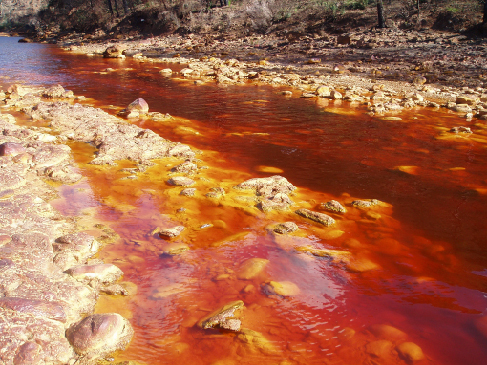
Conditions that are very acidic or alkaline can also be problematic for life because many of our important molecules, like proteins and DNA, are broken down under such conditions. For example, household drain cleaner, which does its job by breaking down the chemical structure of things like hair clogs, is a very alkaline solution. The most acid-tolerant organisms (acidophiles) are capable of living at pH values near zero—about ten million times more acidic than your blood (Figure 30.9). At the other extreme, some alkaliphiles can grow at pH levels of about 13, which is comparable to the pH of household bleach and almost a million times more alkaline than your blood.
英語のヒント
強い酸性やアルカリ性の条件も、生命に問題を起こしうる。タンパク質やDNAなどの重要な分子の多くが、その条件では分解されるからである。たとえば、家庭用の排水管洗浄剤は、髪の毛の詰まりなどを化学的に分解して取り除くもので、非常にアルカリ性の強い溶液である。最も酸に強い生物、好酸性微生物は、pHがほぼ0の環境でも生きられる。これは、血液より約1000万倍も酸性が強い(図30.9)。逆の極端な環境では、一部の好アルカリ性微生物が、約13のpHで増殖できる。家庭用漂白剤のpHに匹敵し、血液よりほぼ100万倍もアルカリ性が強い。
Spain’s Rio Tinto.スペインのリオ・ティント。
OpenStax / Rice University · CC BY 4.0
Figure 30.9 With a pH close to 2, Rio Tinto is literally a river of acid. Acid-loving microorganisms (acidophiles) not only thrive in these waters, their metabolic activities help generate the acid in the first place. The rusty red color that gives the river its name comes from high levels of iron dissolved in the waters.
図30.9 pHが2に近いリオ・ティントは、文字どおり、酸の川である。酸を好む微生物、好酸性微生物は、この水の中で盛んに増えるだけでなく、その代謝活動によって、そもそもの酸の生成も助けている。川の名前の由来となる、さびたような赤い色は、水に溶けた高濃度の鉄による。
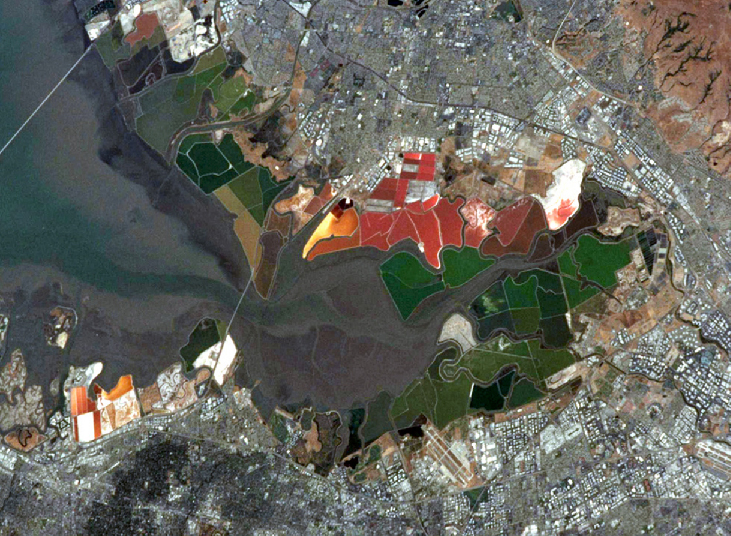
High levels of salts in the environment can also cause a problem for life because the salt blocks some cellular functions. Humans recognized this centuries ago and began to salt-cure food to keep it from spoiling—meaning, to keep it from being colonized by microorganisms. Yet some microbes have evolved to grow in water that is saturated in sodium chloride (table salt)—about ten times as salty as seawater (Figure 30.10).
英語のヒント
環境中の塩分が多いことも、生命に問題を起こしうる。塩が、細胞の一部の働きを妨げるからである。人間は何世紀も前にこれに気づき、食品が腐らないように塩漬けを始めた。つまり、微生物が住みつくのを防いだのである。それでも、一部の微生物は、塩化ナトリウム、つまり食塩で飽和した水の中で増殖するように進化した。その塩分濃度は、海水の約10倍にもなる(図30.10)。
Salt Ponds.塩田。
credit: modification of work by NASA · NASA media use guidelines
Figure 30.10 The waters of an evaporative salt works near San Francisco are colored pink by thriving communities of photosynthetic organisms. These waters are about ten times as salty as seawater—enough for sodium chloride to begin to crystallize out—yet some organisms can survive and thrive in these conditions. (credit: modification of work by NASA)
図30.10 サンフランシスコ近郊で、水を蒸発させて塩を作る製塩場の水が、盛んに増える光合成生物の群集によって、ピンク色になっている。その水は、海水の約10倍の塩分を含む。塩化ナトリウムが結晶として析出し始めるほどの濃さだが、そのような条件でも、生き延び、盛んに増える生物がいる。(提供:NASAの作品を改変)
Very high pressures can literally squeeze life’s biomolecules, causing them to adopt more compact forms that do not work very well. But we still find life—not just microbial, but even animal life—at the bottoms of our ocean trenches, where pressures are more than 1000 times atmospheric pressure. Many other adaptions to environmental “extremes” are also known. There is even an organism, Deinococcus radiodurans, that can tolerate ionizing radiation (such as that released by radioactive elements) a thousand times more intense than you would be able to withstand. It is also very good at surviving extreme desiccation (drying out) and a variety of metals that would be toxic to humans.
英語のヒント
非常に高い圧力は、生体分子を文字どおり押しつぶし、うまく働かない、より小さく詰まった形を取らせることがある。それでも、大気圧の1000倍を超える圧力の海溝の底で、生命は見つかっている。微生物だけでなく、動物さえいるのである。環境の「極限」への、それ以外の適応も数多く知られている。デイノコッカス・ラディオデュランスという生物は、放射性元素が放出するような電離放射線に、あなたが耐えられる強さの1000倍でも耐えられる。この生物は、極端な乾燥や、人間に有毒なさまざまな金属の存在下で生き延びることにも、非常に優れている。
From many such examples, we can conclude that life is capable of tolerating a wide range of environmental extremes—so much so that we have to work hard to identify places where life can’t exist. A few such places are known—for example, the waters of hydrothermal vents at over 300 °C appear too hot to support any life—and finding these places helps define the possibility for life elsewhere. The study of extremophiles over the last few decades has expanded our sense of the range of conditions life can survive and, in doing so, has made many scientists more optimistic about the possibility that life might exist beyond Earth.
英語のヒント
こうした多くの例から、生命は、幅広い極限環境に耐えられると結論できる。その幅があまりに広いため、生命が存在できない場所を特定するには、懸命に調べなければならないほどである。そのような場所は、いくつか知られている。たとえば、300℃を超える熱水噴出孔の水は、どのような生命にとっても、高温すぎるように見える。こうした場所を見つけることは、ほかの場所で生命が存在できる可能性の範囲を定める助けになる。この数十年の極限環境微生物の研究は、生命が生き延びられる条件の範囲について、私たちの認識を広げてきた。その結果、多くの科学者は、地球の外に生命がいるかもしれないという可能性に、より楽観的になった。