第30章宇宙の生命Life in the Universe
Life in the Outer Solar System太陽系外縁部の生命
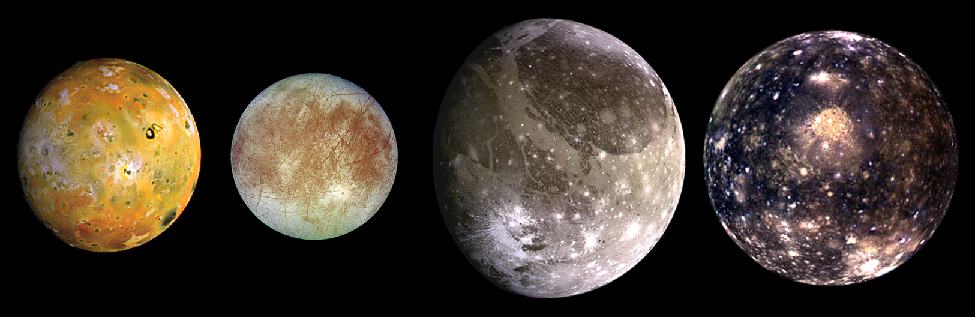
The massive gas and ice giant planets of the outer solar system—Jupiter, Saturn, Uranus, and Neptune—are almost certainly not habitable for life as we know it, but some of their moons might be (see Figure 30.12). Although these worlds in the outer solar system contain abundant water, they receive so little warming sunlight in their distant orbits that it was long believed they would be “geologically dead” balls of hard-frozen ice and rock. But, as we saw in the chapter on Rings, Moons, and Pluto, missions to the outer solar system have found something much more interesting.
英語のヒント
太陽系外縁部の巨大なガス惑星・氷惑星、木星・土星・天王星・海王星は、私たちが知るような生命には、ほぼ確実に適さない。しかし、それらの衛星の一部なら、生存可能かもしれない(図30.12参照)。これらの外縁部の天体には水が豊富にあるが、遠い軌道で受け取る温かな太陽光はあまりに少ない。そのため、長い間、固く凍り付いた氷と岩石からなる「地質学的に死んだ」球だと考えられていた。しかし「環・衛星・冥王星」の章で見たように、太陽系外縁部への探査は、はるかに興味深いものを見つけている。
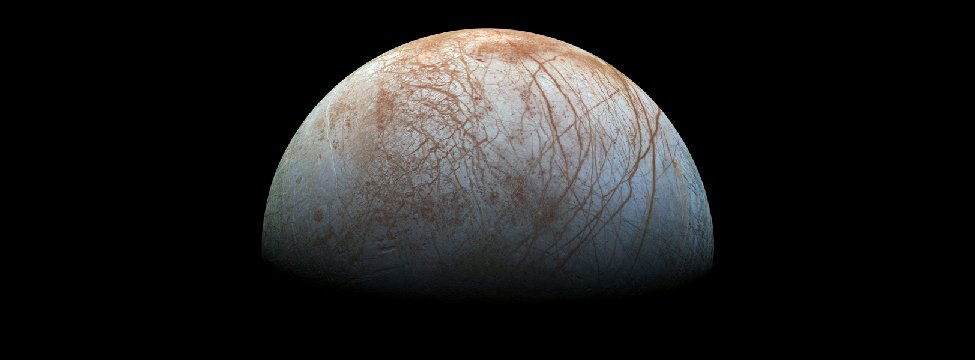
Jupiter’s moon Europa revealed itself to the Voyager and Galileo missions as an active world whose icy surface apparently conceals an ocean with a depth of tens to perhaps a hundred kilometers. As the moon orbits Jupiter, the planet’s massive gravity creates tides on Europa—just as our own Moon’s gravity creates our ocean tides—and the friction of all that pushing and pulling generates enough heat to keep the water in liquid form (Figure 30.13). Similar tides act upon other moons if they orbit close to the planet. Scientists now think that six or more of the outer solar system’s icy moons may harbor liquid water oceans for the same reason. Among these, Europa and Enceladus, a moon of Saturn, have thus far been of greatest interest to astrobiologists.
英語のヒント
木星の衛星エウロパは、ボイジャーとガリレオの探査によって、活動的な天体であることがわかった。氷の表面の下には、深さ数十kmから、おそらく100kmほどに及ぶ海が隠れているらしい。エウロパが木星を回ると、木星の強大な重力がエウロパに潮汐を生じさせる。私たちの月の重力が地球の海に潮の満ち引きを起こすのと同じである。この押したり引いたりする作用による摩擦が、水を液体のままに保つだけの熱を生む(図30.13)。ほかの衛星にも、惑星の近くを回っていれば同じような潮汐が働く。科学者は現在、太陽系外縁部の氷の衛星のうち、六つ以上に、同じ理由で液体の水の海がある可能性を考えている。中でもエウロパと、土星の衛星エンケラドゥスは、これまで宇宙生物学者の最大の関心を集めてきた。
Jupiter’s Moons.木星の衛星。
credit: modification of work by NASA/JPL/DLR · JPL image use policy
Figure 30.12 The Galilean moons of Jupiter are shown to relative scale and arranged in order of their orbital distance from Jupiter. At far left, Io orbits closest to Jupiter and so experiences the strongest tidal heating by Jupiter’s massive gravity. This effect is so strong that Io is thought to be the most volcanically active body in our solar system. At far right, Callisto shows a surface scarred by billions of years’ worth of craters—an indication that the moon’s surface is old and that Callisto may be far less active than its sibling moons. Between these hot and cold extremes, Europa, second from left, orbits at a distance where Jupiter’s tidal heating may be “just right” to sustain a liquid water ocean beneath its icy crust. (credit: modification of work by NASA/JPL/DLR)
英語のヒント
図30.12 木星のガリレオ衛星を同じ縮尺で示し、木星からの軌道距離の順に並べた。左端のイオは木星に最も近いため、木星の強大な重力による潮汐加熱も最も強い。この効果は非常に大きく、イオは太陽系で最も火山活動が活発な天体だと考えられている。右端のカリストの表面には、数十億年にわたってできたクレーターの傷跡がある。これは表面が古く、カリストの活動がほかの兄弟衛星よりずっと弱い可能性を示す。この熱い極端と冷たい極端の間に位置するのが、左から二番目のエウロパである。その軌道距離では、木星の潮汐加熱が、氷の地殻の下に液体の水の海を保つのに「ちょうどよい」のかもしれない。(クレジット:NASA/JPL/DLRの作品を改変)
Europa has probably had an ocean for most or all of its history, but habitability requires more than just liquid water. Life also requires energy, and because sunlight does not penetrate below the kilometers-thick ice crust of Europa, this would have to be chemical energy. One of Europa’s key attributes from an astrobiology perspective is that its ocean is most likely in direct contact with an underlying rocky mantle, and the interaction of water and rocks—especially at high temperatures, as within Earth’s hydrothermal vent systems—yields a reducing chemistry (where molecules tend to give up electrons readily) that is like one half of a chemical battery. To complete the battery and provide energy that could be used by life requires that an oxidizing chemistry (where molecules tend to accept electrons readily) also be available. On Earth, when chemically reducing vent fluids meet oxygen-containing seawater, the energy that becomes available often supports thriving communities of microorganisms and animals on the sea floor, far from the light of the Sun.
英語のヒント
エウロパには、その歴史の大部分、あるいは全期間を通じて海があったのだろう。しかし生命が生存できるためには、液体の水だけでは足りない。生命にはエネルギーも必要である。エウロパの厚さ数kmの氷の地殻の下には太陽光が届かないため、必要なのは化学エネルギーということになる。宇宙生物学の観点から見たエウロパの重要な特徴の一つは、その海が下にある岩石質のマントルと直接接している可能性が高いことである。水と岩石の相互作用は、特に地球の熱水噴出孔のような高温の場所では、分子が電子を手放しやすい還元的な化学環境を生む。これは化学電池の片側に相当する。電池を完成させ、生命が利用できるエネルギーを供給するには、分子が電子を受け取りやすい酸化的な化学環境も必要である。地球では、化学的に還元性の熱水が酸素を含む海水と出会うと、利用可能になったエネルギーが、太陽光から遠く離れた海底で、微生物や動物の豊かな群集を支えることがある。
The Galileo mission found that Europa’s icy surface does contain an abundance of oxidizing chemicals. This means that availability of energy to support life depends very much on whether the chemistry of the surface and the ocean can mix, despite the kilometers of ice in between. That Europa’s ice crust appears geologically “young” (only tens of millions of years old, on average) and that it is active makes it tantalizing to think that such mixing might indeed occur. Understanding whether and how much exchange occurs between the surface and ocean of Europa will be a key science objective of future missions to Europa, and a major step forward in understanding whether this moon could be a cradle of life.
英語のヒント
ガリレオ探査は、エウロパの氷の表面に、酸化作用を持つ化学物質が確かに豊富にあることを発見した。これは、生命を支えるエネルギーが利用できるかどうかが、数kmもの氷に隔てられた表面と海の化学物質が混ざり合えるかどうかに、大きく左右されることを意味する。エウロパの氷の地殻は地質学的に「若く」、平均で数千万年しかたっていないように見え、しかも活動的である。この二つの事実は、そのような混合が実際に起きているかもしれないという、魅力的な可能性を思わせる。表面と海の間で物質交換が起きているか、起きているならどの程度かを理解することは、将来のエウロパ探査の重要な科学目標となる。それは、この衛星が生命のゆりかごになりうるかを理解するうえで、大きな前進でもある。
Jupiter’s Moon Europa, as Imaged by NASA’s Galileo Mission.NASAのガリレオが撮影した、木星の衛星エウロパ。
credit: modification of work by NASA/JPL-Caltech/SETI Institute · JPL image use policy
Figure 30.13 The relative scarcity of craters on Europa suggests a surface that is “geologically young,” and the network of colored ridges and cracks suggests constant activity and motion. Galileo’s instruments also strongly suggested the presence of a massive ocean of salty liquid water beneath the icy crust. (credit: modification of work by NASA/JPL-Caltech/SETI Institute)
英語のヒント
図30.13 エウロパのクレーターが比較的少ないことは、表面が「地質学的に若い」ことを示唆する。色の付いた尾根と亀裂の網目は、継続的な活動と動きを示唆している。ガリレオの観測機器は、氷の地殻の下に、液体の塩水からなる巨大な海があることも強く示した。(クレジット:NASA/JPL-Caltech/SETI Instituteの作品を改変)
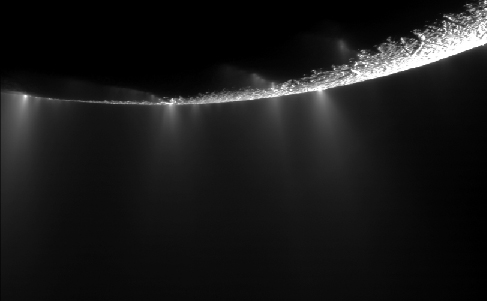
In 2005, the Cassini mission performed a close flyby of a small (500-kilometer diameter) moon of Saturn, Enceladus (Figure 30.14), and made a remarkable discovery. Plumes of gas and icy material were venting from the moon’s south polar region at a collective rate of about 250 kilograms of material per second. Several observations, including the discovery of salts associated with the icy material, suggest that their source is a liquid water ocean beneath tens of kilometers of ice. Analysis of Enceladus’s libration in 2015 strongly supported a global ocean. How long the ocean has persisted remains a separate question; it does appear to be in contact, and to have reacted, with a rocky interior. As on Europa, this is probably a necessary—though not sufficient—condition for habitability. What makes Enceladus so enticing to planetary scientists, though, are those plumes of material that seem to come directly from its ocean: samples of the interior are there for the taking by any spacecraft sent flying through. For a future mission, such samples could yield evidence not only of whether Enceladus is habitable but, indeed, of whether it is home to life.
英語のヒント
2005年、カッシーニは、土星の小さな衛星エンケラドゥスに接近して通過し、驚くべき発見をした。この衛星の直径は500kmである(図30.14)。南極域からはガスと氷の物質の噴出が起こっており、放出量は合計で毎秒約250kgに達していた。氷の物質に伴う塩類の発見を含む複数の観測は、その供給源が、厚さ数十kmの氷の下にある液体の水の海であることを示唆する。2015年のエンケラドゥスの秤動の解析は、全球的な海を強く支持した。海がどれほど長く存続してきたかは別の問いとして残るが、岩石質の内部と接触し、反応してきたように見える。エウロパの場合と同じく、これはおそらく、生存可能性の必要条件である。ただし十分条件ではない。それでも、惑星科学者にとってエンケラドゥスがとりわけ魅力的なのは、海から直接出てきたように見える、あの物質の噴出である。噴出の中を通過する探査機を送れば、内部の試料をその場で採取できる。将来の探査では、そのような試料から、エンケラドゥスで生命が生存可能かどうかだけでなく、実際に生命がいるかどうかの証拠まで得られるかもしれない。
Image of Saturn’s Moon Enceladus from NASA’s Cassini Mission.NASAのカッシーニによる、土星の衛星エンケラドゥスの画像。
credit: NASA/JPL/ SSI · JPL image use policy
Figure 30.14 The south polar region was found to have multiple plumes of ice and gas that, combined, are venting about 250 kilograms of material per second into space. Such features suggest that Enceladus, like Europa, has a sub-ice ocean. (credit: NASA/JPL/ SSI)
図30.14 南極域には氷とガスの噴出が複数見つかり、合計で毎秒約250kgの物質を宇宙空間へ放出している。そのような特徴は、エンケラドゥスにもエウロパと同じく、氷の下の海があることを示唆する。(クレジット:NASA/JPL/SSI)
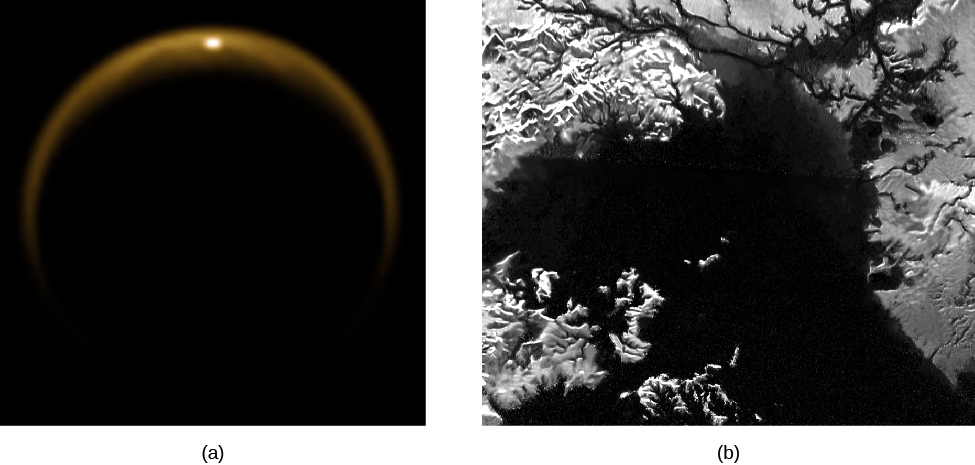
Saturn’s big moon Titan is very different from both Enceladus and Europa (see Figure 30.15). Although it may host a liquid water layer deep within its interior, it is the surface of Titan and its unusual chemistry that makes this moon such an interesting place. Titan’s thick atmosphere—the only one among moons in the solar system—is composed mostly of nitrogen but also of about 5% methane. In the upper atmosphere, the Sun’s ultraviolet light breaks apart and recombines these molecules into more complex organic compounds that are collectively known as tholins. The tholins shroud Titan in an orange haze, and imagery from Cassini and from the Huygens probe that descended to Titan’s surface show that heavier particles appear to accumulate on the surface, even forming “dunes” sculpted by winds, while liquid hydrocarbons (such as liquid methane) carve channels and collect in lakes. Some scientists see this organic chemical factory as a natural laboratory that may yield some clues about the solar system’s early chemistry—perhaps even chemistry that could support the origin of life.
英語のヒント
土星の大きな衛星タイタンは、エンケラドゥスともエウロパとも大きく異なる(図30.15参照)。内部深くに液体の水の層があるかもしれないが、この衛星をこれほど興味深い場所にしているのは、タイタンの表面と、そこでの特異な化学である。タイタンには、太陽系の衛星としては唯一の厚い大気がある。その主成分は窒素だが、メタンも約5%含まれる。上層大気では、太陽の紫外線がこれらの分子を分解し、再結合させ、より複雑な有機化合物を作る。それらはまとめてソリンと呼ばれる。ソリンはタイタンをオレンジ色のもやで包む。カッシーニや、タイタン表面へ降下したホイヘンス探査機の画像からは、重い粒子が表面にたまり、「砂丘」さえ形成しているらしいことがわかる。砂丘の形を作るのは風であり、液体メタンなどの液体炭化水素は流路を刻み、湖にたまる。一部の科学者は、この有機化学の工場を、太陽系初期の化学についての手掛かりをもたらす天然の実験室と見ている。それはもしかすると、生命の起源を支えうる化学についての手掛かりにもなる。
Image of Saturn’s Moon Titan from NASA’s Cassini Mission.NASAのカッシーニによる、土星の衛星タイタンの画像。
credit a: modification of work by NASA/JPL/University of Arizona/DLR; credit b: modification of work by NASA/JPL-Caltech/ASI · JPL image use policy
Figure 30.15 (a) The hazy orange glow comes from Titan’s thick atmosphere (the only one known among the moons of the solar system). That atmosphere is mostly nitrogen but also contains methane and potentially a variety of complex organic compounds. The bright spot near the top of the image is sunlight reflected from a very flat surface—almost certainly a liquid. We see this effect, called “glint,” when sunlight reflects off the surface of a lake or ocean. (b) Cassini radar imagery shows what look very much like landforms and lakes on the surface of Titan. But the surface lakes and oceans of Titan are not water; they are probably made of liquid hydrocarbons like methane and ethane. (credit a: modification of work by NASA/JPL/University of Arizona/DLR; credit b: modification of work by NASA/JPL-Caltech/ASI)
英語のヒント
図30.15 (a)オレンジ色のぼんやりした光は、タイタンの厚い大気から来ている。太陽系の衛星で、そのような大気が知られているのはタイタンだけである。大気の主成分は窒素だが、メタンも含まれ、さまざまな複雑な有機化合物が存在する可能性もある。画像上部に近い明るい点は、非常に平らな表面、おそらくほぼ確実に液体で反射した太陽光である。湖や海の表面が太陽光を反射すると、グリントと呼ばれる、このようなきらめきが見られる。(b)カッシーニのレーダー画像には、タイタン表面の陸地や湖によく似たものが写っている。しかし、タイタン表面の湖や海は水ではない。おそらくメタンやエタンのような液体炭化水素からできている。(クレジットa:NASA/JPL/アリゾナ大学/DLRの作品を改変。b:NASA/JPL-Caltech/ASIの作品を改変)