第28章銀河の進化と分布The Evolution and Distribution of Galaxies
28.3 The Distribution of Galaxies in Space28.3 宇宙空間における銀河の分布
Learning Objectives学習の目標
By the end of this section, you will be able to:
この節を学ぶと、次のことができるようになる。
Explain the cosmological principle and summarize the evidence that it applies on the largest scales of the known universe
宇宙原理を説明し、知られている宇宙の最大のスケールで、その原理が当てはまる証拠をまとめる。
Describe the contents of the Local Group of galaxies
局所銀河群にどのような銀河があるかを説明する。
Distinguish among groups, clusters, and superclusters of galaxies
銀河群、銀河団、超銀河団を区別する。
Describe the largest structures seen in the universe, including voids
ボイドを含め、宇宙で見られる最大の構造を説明する。
In the preceding section, we emphasized the role of mergers in shaping the evolution of galaxies. In order to collide, galaxies must be fairly close together. To estimate how often collisions occur and how they affect galaxy evolution, astronomers need to know how galaxies are distributed in space and over cosmic time. Are most of them isolated from one another or do they congregate in groups? If they congregate, how large are the groups and how and when did they form? And how, in general, are galaxies and their groups arranged in the cosmos? Are there as many in one direction of the sky as in any other, for example? How did galaxies get to be arranged the way we find them today?
英語のヒント
前の節では、銀河進化を形作る合体の役割を強調した。衝突するには、銀河同士がかなり近くになければならない。衝突がどれほど頻繁に起き、銀河進化にどう影響するかを見積もるには、銀河が宇宙空間にどう分布し、その分布が宇宙の歴史を通じてどう変わるかを知る必要がある。大半の銀河は互いに孤立しているのか、それとも集団を作るのだろうか。集まるのなら、その集団はどれほど大きく、いつ、どう形成されたのだろうか。一般に、銀河やその集団は、宇宙にどう配置されているのだろうか。例えば、空のどの方向にも、他の方向と同じくらいの数があるのだろうか。どうして現在見られる配置になったのだろうか。
Edwin Hubble found answers to some of these questions only a few years after he first showed that the spiral nebulae were galaxies and not part of our Milky Way. As he examined galaxies all over the sky, Hubble made two discoveries that turned out to be crucial for studies of the evolution of the universe.
英語のヒント
エドウィン・ハッブルは、渦巻星雲が天の川銀河の一部ではなく、別の銀河だと初めて示してから、わずか数年で、こうした問いの一部に答えを見つけた。空全体の銀河を調べるうちに、宇宙の進化の研究にとって、決定的に重要になる二つの発見をしたのである。
The Cosmological Principle宇宙原理
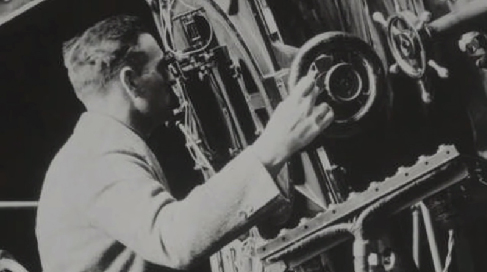
Hubble made his observations with what were then the world’s largest telescopes—the 100-inch and 60-inch reflectors on Mount Wilson. These telescopes have small fields of view: they can see only a small part of the heavens at a time. To photograph the entire sky with the 100-inch telescope, for example, would have taken longer than a human lifetime. So instead, Hubble sampled the sky in many regions, much as Herschel did with his star gauging (see The Architecture of the Galaxy). In the 1930s, Hubble photographed 1283 sample areas, and on each print, he carefully counted the numbers of galaxy images (Figure 28.13).
英語のヒント
ハッブルは当時、世界最大だったウィルソン山の100インチと60インチの反射望遠鏡を使って観測した。これらの望遠鏡は視野が狭く、一度には空の小さな部分しか見られない。例えば、100インチ望遠鏡で全天を撮影しようとすれば、人の一生より長い時間がかかったはずである。そこでハッブルは、ハーシェルが星の計数で行ったのとよく似た方法で、空のさまざまな領域を標本として調べた(「天の川銀河の構造」を参照)。1930年代には、1283の標本領域を撮影し、それぞれの写真で、銀河の像の数を丁寧に数えた(図28.13)。
The first discovery Hubble made from his survey was that the number of galaxies visible in each area of the sky is about the same. (Strictly speaking, this is true only if the light from distant galaxies is not absorbed by dust in our own Galaxy, but Hubble made corrections for this absorption.) He also found that the numbers of galaxies increase with faintness, as we would expect if the density of galaxies is about the same at all distances from us.
英語のヒント
ハッブルの調査による第一の発見は、空のどの領域でも、見える銀河の数はほぼ同じだということだった。厳密には、遠方の銀河の光が、天の川銀河の塵に吸収されない場合に限るが、ハッブルは、この吸収を補正していた。また、暗い銀河ほど数が増えることも見いだした。これは、私たちからどの距離でも、銀河の密度がほぼ同じなら予想される結果である。
To understand what we mean, imagine you are taking snapshots in a crowded stadium during a sold-out concert. The people sitting near you look big, so only a few of them will fit into a photo. But if you focus on the people sitting in seats way on the other side of the stadium, they look so small that many more will fit into your picture. If all parts of the stadium have the same seat arrangements, then as you look farther and farther away, your photo will get more and more crowded with people. In the same way, as Hubble looked at fainter and fainter galaxies, he saw more and more of them.
英語のヒント
意味をつかむために、満員のコンサート会場で、混み合うスタジアムの写真を撮っていると想像しよう。近くの席の人は大きく見えるので、写真には数人しか収まらない。しかし、スタジアムのずっと反対側に座る人へカメラを向けると、小さく見えるため、ずっと多くの人が写る。スタジアム全体で座席の配置が同じなら、遠くを見るほど、写真に写る人の数は増える。同じように、ハッブルも、より暗い銀河を調べるほど、ますます多くの銀河を見たのである。
Hubble at Work.観測中のハッブル
credit: NASA · NASA media use guidelines
Figure 28.13 Edwin Hubble at the 100-inch telescope on Mount Wilson. (credit: NASA)
図28.13 ウィルソン山の100インチ望遠鏡とエドウィン・ハッブル。(クレジット:NASA)
Hubble’s findings are enormously important, for they indicate that the universe is both isotropic and homogeneous—it looks the same in all directions, and a large volume of space at any given redshift or distance is much like any other volume at that redshift. If that is so, it does not matter what section of the universe we observe (as long as it’s a sizable portion): any section will look the same as any other.
英語のヒント
ハッブルの発見は、きわめて重要である。宇宙が等方的であり、かつ一様であることを示すからだ。つまり、どの方向にも同じように見え、ある赤方偏移や距離にある十分大きな空間領域は、同じ赤方偏移にある他の大きな領域と、よく似ている。そうであるなら、宇宙のどの部分を観測するかは問題にならない。ただし、十分に大きな範囲である必要がある。その条件を満たすどの部分も、他の部分と同じように見えるはずである。
Hubble’s results—and many more that have followed in the nearly 100 years since then—imply not only that the universe is about the same everywhere (apart from changes with time) but also that aside from small-scale local differences, the part we can see around us is representative of the whole. The idea that the universe is the same everywhere is called the cosmological principle and is the starting assumption for nearly all theories that describe the entire universe (see The Big Bang).
英語のヒント
ハッブルの結果と、その後ほぼ100年にわたって得られた多くの結果は、時間とともに変化することを別にすれば、宇宙がどこでもほぼ同じであることを示す。さらに、小さなスケールの局所的な違いを除けば、私たちの周囲で見える部分が、宇宙全体を代表していることも示す。宇宙はどこでも同じである、という考えを「宇宙原理」と呼ぶ。宇宙全体を記述するほぼすべての理論は、この原理を出発点の仮定としている(「ビッグバン」を参照)。
Without the cosmological principle, we could make no progress at all in studying the universe. Suppose our own local neighborhood were unusual in some way. Then we could no more understand what the universe is like than if we were marooned on a warm south-sea island without outside communication and were trying to understand the geography of Earth. From our limited island vantage point, we could not know that some parts of the planet are covered with snow and ice, or that large continents exist with a much greater variety of terrain than that found on our island.
英語のヒント
宇宙原理なしでは、宇宙の研究をまったく進められないだろう。私たちの近所だけが、何かの点で特殊だったとしよう。それでは、外部との連絡がない暖かい南の島に取り残された人が、地球の地理を理解しようとするのと同じくらい、宇宙の姿を理解できなくなる。島という限られた場所からは、地球の一部が雪や氷に覆われていることも、島で見られるよりはるかに多様な地形を持つ大陸があることも、知りようがないのである。
Hubble merely counted the numbers of galaxies in various directions without knowing how far away most of them were. With modern instruments, astronomers have measured the velocities and distances of hundreds of thousands of galaxies, and so built up a meaningful picture of the large-scale structure of the universe. In the rest of this section, we describe what we know about the distribution of galaxies, beginning with those that are nearby.
英語のヒント
ハッブルは、ほとんどの銀河までの距離を知らずに、さまざまな方向の銀河の数だけを数えた。現代の装置を使う天文学者は、何十万もの銀河の速度と距離を測定し、宇宙の大規模構造について、意味のある全体像を作り上げてきた。この節の残りでは、近くの銀河から始めて、銀河の分布についてわかっていることを説明する。