第12章環・衛星・冥王星Rings, Moons, and Pluto
Triton and Its Volcanoesトリトンとその火山
Neptune’s largest moon Triton (don’t get its name confused with Titan) has a diameter of 2720 kilometers and a density of 2.1 g/cm3, indicating that it’s probably composed of about 75% rock mixed with 25% water ice. Measurements indicate that Triton’s surface has the coldest temperature of any of the worlds our robot representatives have visited. Because its reflectivity is so high (about 80%), Triton reflects most of the solar energy that falls on it, resulting in a surface temperature between 35 and 40 K.
英語のヒント
海王星最大の衛星トリトンは、タイタンと名前を混同しないようにしよう。直径は2720キロメートル、密度は2.1 g/cm³であり、おそらく岩石約75%と水の氷約25%の混合物だと示している。測定によれば、トリトンの表面温度は、私たちの代わりを務める無人探査機が訪れた世界の中で最も低い。反射率が約80%と非常に高いため、降り注ぐ太陽エネルギーの大部分を反射し、表面温度は35~40 Kになる。
The surface material of Triton is made of frozen water, nitrogen, methane, and carbon monoxide. Methane and nitrogen exist as gas in most of the solar system, but they are frozen at Triton’s temperatures. Only a small quantity of nitrogen vapor persists to form an atmosphere. Although the surface pressure of this atmosphere is only 16 millionths of a bar, this is sufficient to support thin haze or cloud layers.
英語のヒント
トリトンの表面物質は、凍った水、窒素、メタン、一酸化炭素でできている。メタンと窒素は太陽系の大部分では気体として存在するが、トリトンの温度では凍っている。ごく少量の窒素の蒸気だけが残って大気を作る。この大気の地表圧力はわずか100万分の16バールだが、それでも薄いもやや雲の層を支えるには十分である。
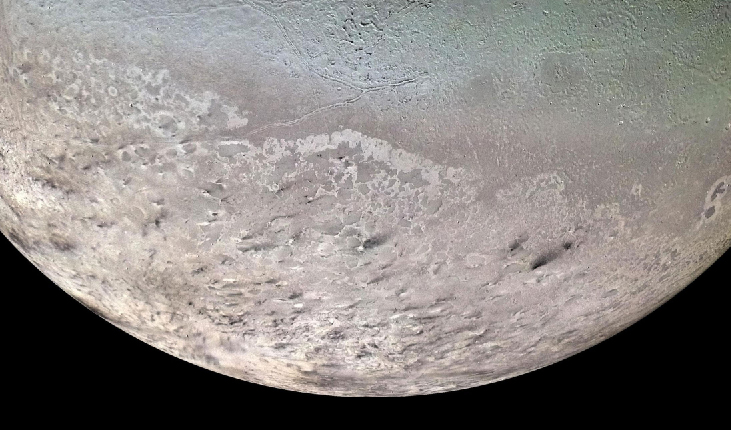
Triton’s surface, like that of many other moons in the outer solar system, reveals a long history of geological evolution (Figure 12.15). Although some impact craters are found, many regions have been flooded fairly recently by the local version of “lava” (perhaps water or water-ammonia mixtures). There are also mysterious regions of jumbled or mountainous terrain.
英語のヒント
外側の太陽系の多くの衛星と同じように、トリトンの表面にも、長い地質進化の歴史が見える(図12.15)。衝突クレーターはいくつかあるものの、多くの領域は、比較的最近、この世界での「溶岩」、おそらく水や水とアンモニアの混合物に覆われた。入り乱れた地形や、山の多い謎めいた領域もある。
Neptune’s Moon Triton.海王星の衛星トリトン。
credit: modification of work by NASA/JPL/USGS · JPL image use policy
Figure 12.15 This mosaic of Voyager 2 images of Triton shows a wide range of surface features. The pinkish area at the bottom is Triton’s large southern polar cap. The south pole of Triton faces the Sun here, and the slight heating effect is driving some of the material northward, where it is colder. (credit: modification of work by NASA/JPL/USGS)
図12.15 ボイジャー2号の画像を組み合わせたこのモザイクには、トリトン表面の多様な特徴が見える。下部のピンクがかった領域は、大きな南極冠である。ここではトリトンの南極が太陽を向いており、わずかな加熱によって、一部の物質がより寒い北の方へ移動している。(クレジット:NASA/JPL/USGSの作品を改変)
The Voyager flyby of Triton took place at a time when the moon’s southern pole was tipped toward the Sun, allowing this part of the surface to enjoy a period of relative warmth. (Remember that “warm” on Triton is still outrageously colder than anything we experience on Earth.) A polar cap covers much of Triton’s southern hemisphere, apparently evaporating along the northern edge. This polar cap may consist of frozen nitrogen that was deposited during the previous winter.
英語のヒント
ボイジャーがトリトンをフライバイしたとき、衛星の南極は太陽へ傾いており、この部分の表面は比較的温暖な時期を迎えていた。トリトンで「温暖」と言っても、地球で経験するどんな寒さより、なお途方もなく寒いことを忘れてはいけない。南半球の大部分は極冠で覆われており、その北の縁に沿って蒸発しているように見える。この極冠は、前の冬に降り積もった凍結窒素からできているのかもしれない。
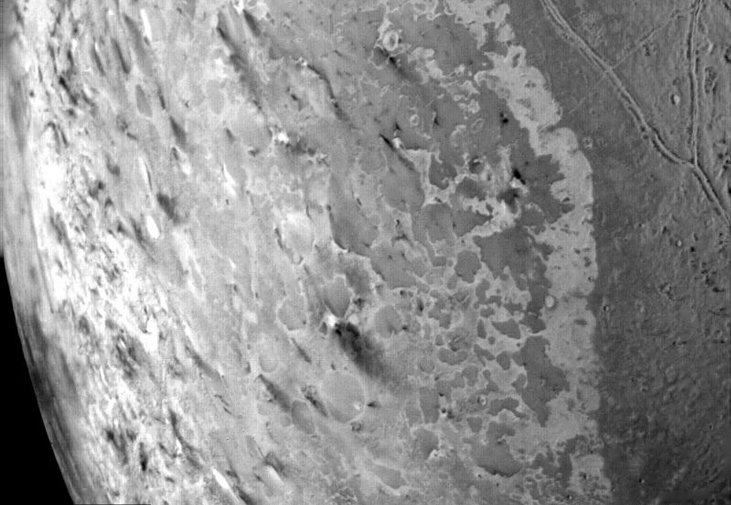
Remarkably, the Voyager images showed that the evaporation of Triton’s polar cap generates geysers or volcanic plumes of nitrogen gas (see Figure 12.16). (Fountains of such gas rose about 10 kilometers high, visible in the thin atmosphere because dust from the surface rose with them and colored them dark.) These plumes differ from the volcanic plumes of Io in their composition and also in that they derive their energy from sunlight warming the surface rather than from internal heat.
英語のヒント
驚くことに、ボイジャーの画像は、トリトンの極冠の蒸発が、窒素ガスの間欠泉または火山状の噴煙を生むと示した(図12.16参照)。ガスの噴泉は約10キロメートルまで上がり、表面のちりが一緒に上昇して暗い色を付けるため、薄い大気の中でも見える。これらの噴煙は、組成だけでなく、内部熱ではなく太陽光が表面を温めることからエネルギーを得るという点でも、イオの火山噴煙とは異なる。
Triton’s Geysers.トリトンの間欠泉。
credit: modification of work by NASA/JPL · JPL image use policy
Figure 12.16 This close-up view shows some of the geysers on Neptune’s moon Triton, with the long trains of dust pointing to the lower right in this picture. (credit: modification of work by NASA/JPL)
図12.16 海王星の衛星トリトンにある、いくつかの間欠泉の接近画像。この画像では、ちりの長い筋が右下へ向かっている。(クレジット:NASA/JPLの作品を改変)
Key Concepts and Summary重要事項のまとめ
Saturn’s moon Titan has an atmosphere that is thicker than that of Earth. There are lakes and rivers of liquid hydrocarbons, and evidence of a cycle of evaporation, condensation, and return to the surface that is similar to the water cycle on Earth (but with liquid methane and ethane). The Cassini-Huygens lander set down on Titan and showed a scene with boulders, made of water ice, frozen harder than rock. Neptune’s cold moon Triton has a very thin atmosphere and nitrogen gas geysers.
土星の衛星タイタンには、地球より厚い大気がある。液体炭化水素の湖や川があり、蒸発し、凝結し、表面へ戻る循環の証拠もある。この循環は地球の水循環に似ているが、液体はメタンとエタンである。カッシーニ=ホイヘンスの着陸機はタイタンに降り、岩石より硬く凍った水の氷からなる、大きな石が散らばる光景を見せた。海王星の冷たい衛星トリトンには、非常に薄い大気と、窒素ガスの間欠泉がある。