第14章宇宙からの試料と太陽系の起源Cosmic Samples and the Origin of the Solar System
Formation of the Terrestrial Planets地球型惑星の形成
The grains that condensed in the solar nebula rather quickly joined into larger and larger chunks, until most of the solid material was in the form of planetesimals, chunks a few kilometers to a few tens of kilometers in diameter. Some planetesimals still survive today as comets and asteroids. Others have left their imprint on the cratered surfaces of many of the worlds we studied in earlier chapters. A substantial step up in size is required, however, to go from planetesimal to planet.
英語のヒント
原始太陽系星雲で凝縮した粒は、かなり速やかに結び付き、次第に大きな塊になった。やがて固体物質の大半が、直径数km〜数十kmの塊である微惑星となった。微惑星の中には、彗星や小惑星として今日まで生き残るものがある。また、これまでの章で調べた多くの天体の、クレーターに覆われた表面に痕跡を残したものもある。しかし、微惑星から惑星になるには、大きさを大幅に増やす必要がある。
Some planetesimals were large enough to attract their neighbors gravitationally and thus to grow by the process called accretion. While the intermediate steps are not well understood, ultimately several dozen centers of accretion seem to have grown in the inner solar system. Each of these attracted surrounding planetesimals until it had acquired a mass similar to that of Mercury or Mars. At this stage, we may think of these objects as protoplanets—“not quite ready for prime time” planets.
英語のヒント
一部の微惑星は、重力で周囲の微惑星を引き寄せられるほど大きく、降着と呼ばれる過程によって成長できた。途中の段階はよく分かっていないものの、最終的には太陽系の内側に数十か所の降着の中心が育ったようだ。それぞれが周囲の微惑星を引き付け、水星や火星に似た質量を獲得するまで成長した。この段階の天体は、原始惑星、つまり「本番に出るにはまだ準備が整っていない」惑星と考えられる。
Each of these protoplanets continued to grow by the accretion of planetesimals. Every incoming planetesimal was accelerated by the gravity of the protoplanet, striking with enough energy to melt both the projectile and a part of the impact area. Soon the entire protoplanet was heated to above the melting temperature of rocks. The result was planetary differentiation, with heavier metals sinking toward the core and lighter silicates rising toward the surface. As they were heated, the inner protoplanets lost some of their more volatile constituents (the lighter gases), leaving more of the heavier elements and compounds behind.
英語のヒント
こうした原始惑星は、それぞれ微惑星の降着によって成長を続けた。飛び込む微惑星はすべて原始惑星の重力で加速され、飛来物自身と衝突地点の一部の両方を溶かすほどのエネルギーでぶつかった。やがて原始惑星全体が、岩石の融解温度を超えて加熱された。その結果、惑星の分化が起こり、重い金属は核へ沈み、軽いケイ酸塩は表面へ上がった。内側の原始惑星は加熱されるにつれ、揮発しやすい成分、すなわち軽いガスの一部を失い、より重い元素や化合物が多く残った。
Formation of the Giant Planets巨大惑星の形成
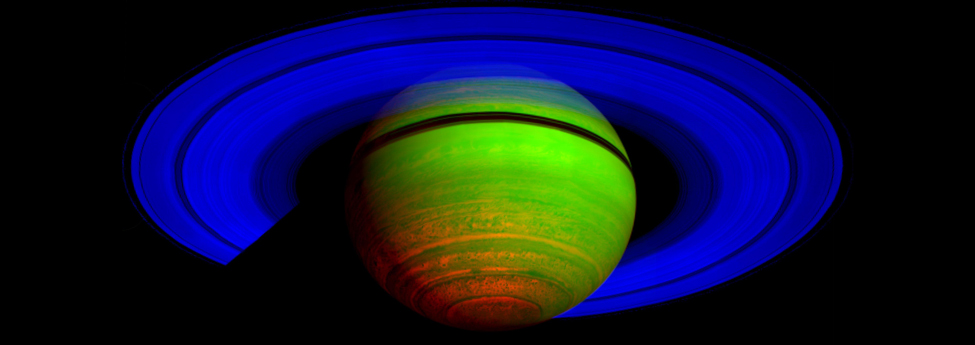
In the outer solar system, where the available raw materials included ices as well as rocks, the protoplanets grew to be much larger, with masses ten times greater than Earth. These protoplanets of the outer solar system were so large that they were able to attract and hold the surrounding gas. As the hydrogen and helium rapidly collapsed onto their cores, the giant planets were heated by the energy of contraction. But although these giant planets got hotter than their terrestrial siblings, they were far too small to raise their central temperatures and pressures to the point where nuclear reactions could begin (and it is such reactions that give us our definition of a star). After glowing dull red for a few thousand years, the giant planets gradually cooled to their present state (Figure 14.13).
英語のヒント
太陽系の外側では、使える原材料に岩石だけでなく氷も含まれていたため、原始惑星はずっと大きく成長し、質量は地球の10倍になった。これらの外側の原始惑星は、周囲のガスを引き寄せ、つなぎ留められるほど大きかった。水素とヘリウムが急速に核へ落ち込むと、巨大惑星は収縮のエネルギーで加熱された。しかし、地球型の兄弟惑星より高温になったとはいえ、巨大惑星は、中心の温度と圧力を核反応が始まるほどまで高めるには、はるかに小さすぎた。そして、このような核反応こそが恒星の定義を与える。数千年にわたって鈍い赤色に光った後、巨大惑星は徐々に冷え、現在の状態になった(図14.13)。
Saturn Seen in Infrared.赤外線で見た土星。
credit: modification of work by NASA/JPL/University of Arizona · JPL image use policy
Figure 14.13 This image from the Cassini spacecraft is stitched together from 65 individual observations. Sunlight reflected at a wavelength of 2 micrometers is shown as blue, sunlight reflected at 3 micrometers is shown as green, and heat radiated from Saturn’s interior at 5 micrometers is red. For example, Saturn’s rings reflect sunlight at 2 micrometers, but not at 3 and 5 micrometers, so they appear blue. Saturn’s south polar regions are seen glowing with internal heat. (credit: modification of work by NASA/JPL/University of Arizona)
図14.13 カッシーニ探査機によるこの画像は、65回の個別の観測をつなぎ合わせたものだ。波長2μmで反射された太陽光を青、3μmで反射された太陽光を緑、土星内部から波長5μmで放射された熱を赤で表している。例えば土星の環は、2μmでは太陽光を反射するが、3μmと5μmでは反射しないので青く見える。土星の南極域は、内部の熱で光っていることが分かる。(クレジット:NASA/JPL/University of Arizonaの作品を改変)
The collapse of gas from the nebula onto the cores of the giant planets explains how these objects acquired nearly the same hydrogen-rich composition as the Sun. The process was most efficient for Jupiter and Saturn; hence, their compositions are most nearly “cosmic.” Much less gas was captured by Uranus and Neptune, which is why these two planets have compositions dominated by the icy and rocky building blocks that made up their large cores rather than by hydrogen and helium. The initial formation period ended when much of the available raw material was used up and the solar wind (the flow of atomic particles) from the young Sun blew away the remaining supply of lighter gases.
英語のヒント
星雲のガスが巨大惑星の核へ落ち込んだことで、これらの天体が太陽とほぼ同じ、水素に富む組成を得た理由を説明できる。この過程は木星と土星で最も効率よく進んだため、その組成は最も「宇宙の標準的な組成」に近い。天王星と海王星が捕まえたガスは、はるかに少なかった。このため、両惑星の組成は水素とヘリウムよりも、大きな核を作った氷や岩石の構成材料が中心になっている。使える原材料の多くが使い尽くされ、若い太陽からの太陽風、すなわち原子を構成する粒子の流れが、残っていた軽いガスを吹き払うと、初期の形成期が終わった。
Further Evolution of the Systemその後の太陽系の進化
All the processes we have just described, from the collapse of the solar nebula to the formation of protoplanets, took place within a few million years. However, the story of the formation of the solar system was not complete at this stage; there were many planetesimals and other debris that did not initially accumulate to form the planets. What was their fate?
英語のヒント
ここまでに述べた原始太陽系星雲の収縮から原始惑星の形成までの過程は、すべて数百万年以内に起こった。しかし、この段階で太陽系形成の物語が終わったわけではない。初めには集まって惑星にならなかった微惑星や、ほかの破片が大量に残っていた。それらはどうなったのだろうか。
The comets visible to us today are merely the tip of the cosmic iceberg (if you’ll pardon the pun). Most comets are believed to be in the Oort cloud, far from the region of the planets. Additional comets and icy dwarf planets are in the Kuiper belt, which stretches beyond the orbit of Neptune. These icy pieces probably formed near the present orbits of Uranus and Neptune but were ejected from their initial orbits by the gravitational influence of the giant planets.
英語のヒント
今日見えている彗星は、宇宙の氷山の一角にすぎない。氷という言葉遊びは許してほしい。大部分の彗星は、惑星のある領域から遠く離れたオールトの雲にあると考えられている。海王星の軌道より外へ広がるカイパーベルトにも、彗星や氷の準惑星がある。これらの氷のかけらは、おそらく現在の天王星と海王星の軌道付近で形成され、巨大惑星の重力の影響によって、元の軌道からはじき出された。
In the inner parts of the system, remnant planetesimals and perhaps several dozen protoplanets continued to whiz about. Over the vast span of time we are discussing, collisions among these objects were inevitable. Giant impacts at this stage may have stripped Mercury of part of its mantle and crust, reversed the rotation of Venus, and broke off part of Earth to create the Moon (all events we discussed in other chapters).
英語のヒント
太陽系の内側では、残された微惑星と、おそらく数十個の原始惑星が、なお飛び回っていた。ここで考えているような非常に長い期間には、これらの天体どうしの衝突は避けられなかった。この段階の巨大衝突は、水星のマントルや地殻の一部をはぎ取り、金星の自転を逆転させ、地球の一部を切り離して月を作ったのかもしれない。これらはすべて、ほかの章で論じた出来事である。
Smaller-scale impacts also added mass to the inner protoplanets. Because the gravity of the giant planets could “stir up” the orbits of the planetesimals, the material impacting on the inner protoplanets could have come from almost anywhere within the solar system. In contrast to the previous stage of accretion, therefore, this new material did not represent just a narrow range of compositions.
英語のヒント
より小規模な衝突も、内側の原始惑星に質量を加えた。巨大惑星の重力が微惑星の軌道を「かき乱す」ことができたため、内側の原始惑星にぶつかる物質は、太陽系内のほとんどどこからでも来る可能性があった。したがって、この新たな物質の組成は、それ以前の降着段階とは違い、狭い範囲に限られてはいなかった。
As a result, much of the debris striking the inner planets was ice-rich material that had condensed in the outer part of the solar nebula. As this comet-like bombardment progressed, Earth accumulated the water and various organic compounds that would later be critical to the formation of life. Mars and Venus probably also acquired abundant water and organic materials from the same source.
英語のヒント
その結果、内側の惑星に衝突した破片の多くは、原始太陽系星雲の外側で凝縮した、氷に富む物質だった。こうした彗星のような天体による激しい衝突が進むにつれ、地球は水とさまざまな有機化合物を蓄えた。それらは後に、生命の形成に不可欠となる。火星と金星も、おそらく同じ供給源から大量の水と有機物を得た。
Gradually, as the planets swept up or ejected the remaining debris, most of the planetesimals disappeared. In two regions, however, stable orbits are possible where leftover planetesimals could avoid impacting the planets or being ejected from the system. These regions are the asteroid belt between Mars and Jupiter and the Kuiper belt beyond Neptune. The planetesimals (and their fragments) that survive in these special locations are what we now call asteroids, comets, and trans-neptunian objects.
英語のヒント
惑星が残った破片を取り込んだり放出したりするにつれ、大部分の微惑星は徐々に姿を消した。しかし二つの領域では安定な軌道が可能であり、残された微惑星は惑星への衝突や太陽系外への放出を免れることができた。その領域は、火星と木星の間の小惑星帯と、海王星の外のカイパーベルトである。これらの特別な場所で生き残った微惑星とその破片が、現在、小惑星、彗星、海王星以遠天体と呼ばれているものだ。
Astronomers used to think that the solar system that emerged from this early evolution was similar to what we see today. Detailed recent studies of the orbits of the planets and asteroids, however, suggest that there were more violent events soon afterward, perhaps involving substantial changes in the orbits of Jupiter and Saturn. These two giant planets control, through their gravity, the distribution of asteroids. Working backward from our present solar system, it appears that orbital changes took place during the first few hundred million years. One consequence may have been scattering of asteroids into the inner solar system, causing the period of “heavy bombardment” recorded in the oldest lunar craters.
英語のヒント
天文学者はかつて、この初期の進化から生まれた太陽系は、今日見られるものと似ていたと考えていた。しかし、惑星や小惑星の軌道を近年詳しく調べた結果、そのすぐ後にも、さらに激しい出来事があったことが示唆されている。おそらく、木星と土星の軌道に大きな変化が起こったのだろう。この二つの巨大惑星は、重力を通じて小惑星の分布を支配している。現在の太陽系から過去へさかのぼると、最初の数億年の間に軌道の変化が起こったように見える。その結果の一つが、小惑星を太陽系の内側へ散乱させたことかもしれない。それによって、月の最古のクレーターに記録された「激しい爆撃」の時代が生じた可能性がある。