第7章ほかの世界――太陽系入門Other Worlds: An Introduction to the Solar System
Temperatures: Going to Extremes温度――極端な世界
Generally speaking, the farther a planet or moon is from the Sun, the cooler its surface. The planets are heated by the radiant energy of the Sun, which gets weaker with the square of the distance. You know how rapidly the heating effect of a fireplace or an outdoor radiant heater diminishes as you walk away from it; the same effect applies to the Sun. Mercury, the closest planet to the Sun, has a blistering surface temperature that ranges from 280–430 °C on its sunlit side, whereas the surface temperature on Pluto is only about –220 °C, colder than liquid air.
英語のヒント
一般に、惑星や衛星は太陽から遠いほど、表面が冷たい。惑星を暖めているのは太陽の放射エネルギーであり、その強さは距離の2乗に応じて弱くなる。暖炉や屋外の放射式暖房器から離れると、暖める効果がどれほど急速に弱まるかは知っているだろう。太陽にも、同じことが当てはまる。太陽に最も近い惑星である水星の日の当たる側は、表面温度が280〜430 ℃という焼けつくような熱さになる。これに対して、冥王星の表面温度は約−220 ℃にすぎず、液体空気よりも冷たい。
Mathematically, the temperatures decrease approximately in proportion to the square root of the distance from the Sun. Pluto is about 30 AU at its closest to the Sun (or 100 times the distance of Mercury) and about 49 AU at its farthest from the Sun. Thus, Pluto’s temperature is less than that of Mercury by the square root of 100, or a factor of 10: from 500 K to 50 K.
英語のヒント
数学的には、温度は太陽からの距離の平方根にほぼ比例する割合で低下する。冥王星は、太陽に最も近いときには約30 AU(水星の太陽からの距離の100倍)にあり、最も遠いときには約49 AUにある。したがって、冥王星の温度は水星の温度を100の平方根、すなわち10で割ったものとなり、500 Kに対して50 Kとなる。
In addition to its distance from the Sun, the surface temperature of a planet can be influenced strongly by its atmosphere. Without our atmospheric insulation (the greenhouse effect, which keeps the heat in), the oceans of Earth would be permanently frozen. Conversely, if Mars once had a larger atmosphere in the past, it could have supported a more temperate climate than it has today. Venus is an even more extreme example, where its thick atmosphere of carbon dioxide acts as insulation, reducing the escape of heat built up at the surface, resulting in temperatures greater than those on Mercury. Today, Earth is the only planet where surface temperatures generally lie between the freezing and boiling points of water. As far as we know, Earth is the only planet to support life.
英語のヒント
惑星の表面温度は、太陽からの距離に加えて、大気からも強い影響を受ける。大気による保温作用(熱を閉じ込める温室効果)がなければ、地球の海は永久に凍りついているだろう。逆に火星は、かつて今より厚い大気を持っていたなら、現在より温暖な気候を保てた可能性がある。さらに極端な例が金星である。厚い二酸化炭素の大気が断熱材のように働き、表面に蓄積した熱を逃げにくくする。その結果、温度は水星よりも高くなる。現在、表面温度が一般に水の凝固点と沸点の間に収まる惑星は地球だけである。私たちの知る限り、生命を育む惑星も地球だけだ。
Geological Activity地質活動
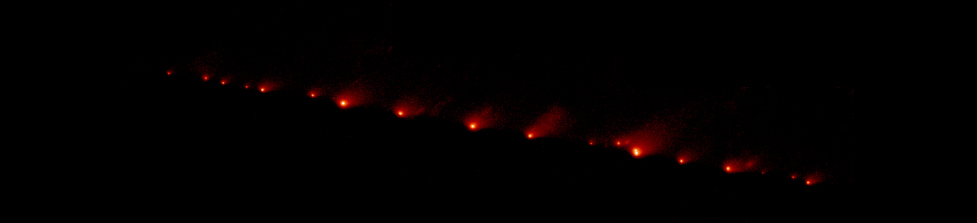
The crusts of all of the terrestrial planets, as well as of the larger moons, and Pluto, have been modified over their histories by both internal and external forces. Externally, each has been battered by a slow rain of projectiles from space, leaving their surfaces pockmarked by impact craters of all sizes (see Figure 7.4). We have good evidence that this bombardment was far greater in the early history of the solar system, but it certainly continues to this day, even if at a lower rate. The collision of more than 20 large pieces of Comet Shoemaker–Levy 9 with Jupiter in the summer of 1994 (see Figure 7.13) is one dramatic example of this process.
英語のヒント
すべての地球型惑星、大きな衛星、そして冥王星の地殻は、歴史を通じて、内部と外部の両方の力によって変化してきた。外側からは、宇宙から飛来する物体がまばらな雨のように衝突し、それぞれの表面に大小さまざまな衝突クレーターを刻んできた(図7.4参照)。この衝突は太陽系の歴史の初期にははるかに激しかったという、有力な証拠がある。しかし頻度が下がったとはいえ、現在も確かに続いている。この過程の劇的な例が、1994年夏にシューメーカー・レヴィ第9彗星の20個を超える大きな破片が木星に衝突した出来事である(図7.13参照)。
Comet Shoemaker–Levy 9.シューメーカー・レヴィ第9彗星。
credit: modification of work by NASA, ESA, H. Weaver (STScl), E. Smith (STScl) · CC BY 4.0
Figure 7.13 In this image of Comet Shoemaker–Levy 9 taken on May 17, 1994, by NASA’s Hubble Space Telescope, you can see about 20 icy fragments into which the comet broke. The comet was approximately 660 million kilometers from Earth, heading on a collision course with Jupiter. (credit: modification of work by NASA, ESA, H. Weaver (STScl), E. Smith (STScl))
図7.13 NASAのハッブル宇宙望遠鏡が1994年5月17日に撮影したシューメーカー・レヴィ第9彗星の画像。彗星が分裂してできた、約20個の氷の破片が見える。彗星は地球から約6億6000万km離れ、木星に衝突する進路を進んでいた。(提供:NASA、ESA、H. Weaver(STScl)、E. Smith(STScl)の作品を改変)
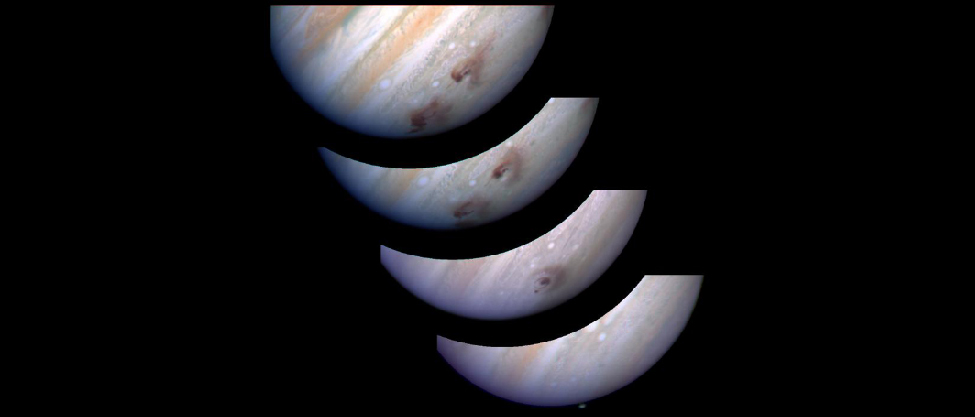
Figure 7.14 shows the aftermath of these collisions, when debris clouds larger than Earth could be seen in Jupiter’s atmosphere.
英語のヒント
図7.14は、これらの衝突の後の様子である。木星の大気には、地球よりも大きな破片の雲が見られた。
Jupiter with Huge Dust Clouds.巨大な塵の雲を持つ木星。
credit: modification of work by H. Hammel, NASA · NASA media use guidelines
Figure 7.14 The Hubble Space Telescope took this sequence of images of Jupiter in summer 1994, when fragments of Comet Shoemaker–Levy 9 collided with the giant planet. Here we see the site hit by fragment G, from five minutes to five days after impact. Several of the dust clouds generated by the collisions became larger than Earth. (credit: modification of work by H. Hammel, NASA)
図7.14 ハッブル宇宙望遠鏡が1994年夏、シューメーカー・レヴィ第9彗星の破片が木星に衝突した際に撮影した一連の画像。ここではG破片が衝突した場所の、衝突5分後から5日後までの様子を見ている。衝突によって生じた塵の雲のいくつかは、地球よりも大きくなった。(提供:H. Hammel、NASAの作品を改変)
During the time all the planets have been subject to such impacts, internal forces on the terrestrial planets have buckled and twisted their crusts, built up mountain ranges, erupted as volcanoes, and generally reshaped the surfaces in what we call geological activity. (The prefix geo means “Earth,” so this is a bit of an “Earth-chauvinist” term, but it is so widely used that we bow to tradition.) Among the terrestrial planets, Earth and Venus have experienced the most geological activity over their histories, although some of the moons in the outer solar system are also surprisingly active. In contrast, our own Moon is a dead world where geological activity ceased billions of years ago.
英語のヒント
すべての惑星がこのような衝突を受けてきた間、地球型惑星の内部の力は地殻を押し曲げ、ねじり、山脈を築き、火山として噴き出し、総じて、私たちが地質活動と呼ぶ働きによって表面の姿を作り変えてきた。(geological の接頭辞 geo は「地球」を意味するので、少々「地球びいき」の言葉ではある。しかし、あまりに広く使われているため、ここでも伝統に従うことにする。)地球型惑星の中では、地球と金星が、その歴史を通じて最も活発な地質活動を経験してきた。太陽系の外側の衛星の中にも、驚くほど活発なものがある。これとは対照的に、私たちの月は、何十億年も前に地質活動を終えた、死んだ世界である。
Geological activity on a planet is the result of a hot interior. The forces of volcanism and mountain building are driven by heat escaping from the interiors of planets. As we will see, each of the planets was heated at the time of its birth, and this primordial heat initially powered extensive volcanic activity, even on our Moon. But, small objects such as the Moon soon cooled off. The larger the planet or moon, the longer it retains its internal heat, and therefore the more we expect to see surface evidence of continuing geological activity. The effect is similar to our own experience with a hot baked potato: the larger the potato, the more slowly it cools. If we want a potato to cool quickly, we cut it into small pieces.
英語のヒント
惑星の地質活動は、内部が高温であることから生じる。火山活動や山脈形成を動かすのは、惑星の内部から逃げ出してくる熱である。後で見るように、惑星はそれぞれ、誕生時に加熱された。この原始の熱が、当初は月でさえも、広範な火山活動の原動力となった。しかし、月のような小さな天体は、すぐに冷えてしまった。惑星や衛星は大きいほど、内部の熱を長く保つ。そのため、地質活動が続いていることを示す証拠が表面に、より多く見られると期待される。この効果は、熱いベイクドポテトを扱うときの経験に似ている。ジャガイモが大きいほど、冷め方は遅い。早く冷ましたければ、小さく切ればよいのだ。
For the most part, the history of volcanic activity on the terrestrial planets conforms to the predictions of this simple theory. The Moon, the smallest of these objects, is a geologically dead world. Although we know less about Mercury, it seems likely that this planet, too, ceased most volcanic activity about the same time the Moon did. Mars represents an intermediate case. It has been much more active than the Moon, but less so than Earth. Earth and Venus, the largest terrestrial planets, still have molten interiors even today, some 4.5 billion years after their birth.
英語のヒント
大部分において、地球型惑星の火山活動の歴史は、この単純な理論の予測に合う。これらの天体のうち最も小さい月は、地質学的には死んだ世界である。水星についてわかっていることは少ないが、水星も月とほぼ同じころに、大半の火山活動を終えたらしい。火星は中間的な例である。月よりはずっと活発だったが、地球ほどではなかった。最大の地球型惑星である地球と金星は、誕生から約45億年たった現在でさえ、溶けた内部を持ち続けている。