第5章放射とスペクトルRadiation and Spectra
5.1 The Behavior of Light5.1 光の振る舞い
Learning Objectives学習の目標
By the end of this section, you will be able to:
この節を終えると、次のことができるようになる。
Explain the evidence for Maxwell’s electromagnetic model of light
マクスウェルの、光を電磁波とするモデルを裏づける証拠を説明する
Describe the relationship between wavelength, frequency, and speed of light
波長、振動数、光速の関係を説明する
Discuss the particle model of light and the definition of photon
光の粒子モデルと、光子の定義を論じる
Explain how and why the amount of light we see from an object depends upon its distance
天体から見える光の量が、その天体までの距離にどのように、またなぜ依存するかを説明する
Coded into the light and other kinds of radiation that reach us from objects in the universe is a wide range of information about what those objects are like and how they work. If we can decipher this code and read the messages it contains, we can learn an enormous amount about the cosmos without ever having to leave Earth or its immediate environment.
英語のヒント
宇宙の天体から私たちに届く光や、それ以外の種類の放射には、その天体がどんなもので、どのように働いているかについての、幅広い情報が符号のように組み込まれている。この符号を解読し、そこに含まれるメッセージを読み取ることができれば、地球やそのすぐ周辺を離れることなく、宇宙について実に多くのことを学べる。
The visible light and other radiation we receive from the stars and planets is generated by processes at the atomic level—by changes in the way the parts of an atom interact and move. Thus, to appreciate how light is generated, we must explore how atoms work. There is a bit of irony in the fact that in order to understand some of the largest structures in the universe, we must become acquainted with some of the smallest.
英語のヒント
恒星や惑星から私たちが受け取る可視光や、それ以外の放射は、原子の大きさの領域で起こる過程から生じる。つまり、原子を構成する部分どうしの相互作用や運動の仕方が変わることで生じるのである。したがって、光がどう作られるかを理解するには、原子の仕組みを調べなければならない。宇宙で最も大きな構造のいくつかを理解するために、最も小さな構造のいくつかをよく知らなければならないというのは、少し皮肉なことである。
Notice that we have twice used the phrase “light and other radiation.” One of the key ideas explored in this chapter is that visible light is not unique; it is merely the most familiar example of a much larger family of radiation that can carry information to us.
英語のヒント
ここまでに「光や、それ以外の放射」という言い方を2回使ったことに注目しよう。この章で扱う重要な考え方の一つは、可視光だけが特別なのではないということである。可視光は、私たちに情報を運べる、はるかに広い放射の仲間のうち、最もなじみ深い一例にすぎない。
The word “radiation” will be used frequently in this book, so it is important to understand what it means. In everyday language, “radiation” is often used to describe certain kinds of energetic subatomic particles released by radioactive materials in our environment. (An example is the kind of radiation used to treat some cancers.) But this is not what we mean when we use the word “radiation” in an astronomy text. Radiation, as used in this book, is a general term for waves (including light waves) that radiate outward from a source.
英語のヒント
この本ではradiationという語を頻繁に使うので、その意味を理解しておくことが重要である。日常の言葉では、radiationは、身の回りの放射性物質から放出される、エネルギーの高い、原子より小さなある種の粒子を表すのによく使われる。がんの治療に用いられる放射線は、その一例である。しかし、天文学の教科書でradiationというとき、ここで意味するのはそれではない。この本でいう「放射」は、光の波を含め、発生源から外へ広がっていく波の総称である。
As we saw in Orbits and Gravity, Newton’s theory of gravity accounts for the motions of planets as well as objects on Earth. Application of this theory to a variety of problems dominated the work of scientists for nearly two centuries. In the nineteenth century, many physicists turned to the study of electricity and magnetism, which are intimately connected with the production of light.
英語のヒント
「軌道と重力」で見たように、ニュートンの重力理論は、地上の物体だけでなく、惑星の運動も説明する。この理論をさまざまな問題に応用することが、ほぼ2世紀にわたり、科学者たちの研究の中心を占めた。19世紀には、多くの物理学者が、光の発生と密接に結びついている電気と磁気の研究へ向かった。
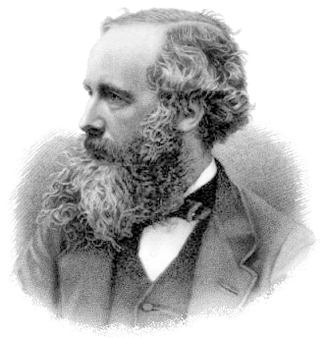
The scientist who played a role in this field comparable to Newton’s role in the study of gravity was physicist James Clerk Maxwell, born and educated in Scotland (Figure 5.2). Inspired by a number of ingenious experiments that showed an intimate relationship between electricity and magnetism, Maxwell developed a theory that describes both electricity and magnetism with only a small number of elegant equations. It is this theory that gives us important insights into the nature and behavior of light.
英語のヒント
この分野で、重力研究におけるニュートンに匹敵する役割を果たした科学者が、スコットランドで生まれ、教育を受けた物理学者ジェームズ・クラーク・マクスウェルである(図5.2)。電気と磁気の密接な関係を示す、数々の巧妙な実験に着想を得て、マクスウェルは、ごく少数の見事な方程式で電気と磁気の両方を記述する理論を作り上げた。光の本質や振る舞いを理解するための重要な手がかりを与えてくれるのは、この理論である。
James Clerk Maxwell (1831–1879).ジェームズ・クラーク・マクスウェル(1831〜1879年)。
OpenStax / Rice University · CC BY 4.0
Figure 5.2 Maxwell unified the rules governing electricity and magnetism into a coherent theory.
図5.2 マクスウェルは、電気と磁気を支配する法則を、一つの首尾一貫した理論に統合した。
Maxwell’s Theory of Electromagnetismマクスウェルの電磁気学の理論
We will look at the structure of the atom in more detail later, but we begin by noting that the typical atom consists of several types of particles, a number of which have not only mass but an additional property called electric charge. In the nucleus (central part) of every atom are protons, which are positively charged; outside the nucleus are electrons, which have a negative charge.
英語のヒント
原子の構造は後ほど詳しく見るが、まず、典型的な原子はいくつかの種類の粒子からできており、そのうちのいくつかは、質量に加えて、電荷と呼ばれる性質も持つことに注目しよう。すべての原子の原子核、つまり中心部分には、正の電荷を帯びた陽子がある。原子核の外側には、負の電荷を持つ電子がある。
Maxwell’s theory deals with these electric charges and their effects, especially when they are moving. In the vicinity of an electron charge, another charge feels a force of attraction or repulsion: opposite charges attract; like charges repel. When charges are not in motion, we observe only this electric attraction or repulsion. If charges are in motion, however (as they are inside every atom and in a wire carrying a current), then we measure another force called magnetism.
英語のヒント
マクスウェルの理論は、これらの電荷とその作用を、特に電荷が動いている場合について扱う。電子の電荷の近くでは、別の電荷は引力または斥力を受ける。異符号の電荷どうしは引き合い、同符号の電荷どうしは反発する。電荷が動いていないときに観測されるのは、この電気的な引力または斥力だけである。しかし電荷が動いているとき、たとえばどの原子の内部でも、また電流が流れる導線の中でもそうだが、そのときには磁気と呼ばれる別の力を測定できる。
Magnetism was well known for much of recorded human history, but its cause was not understood until the nineteenth century. Experiments with electric charges demonstrated that magnetism was the result of moving charged particles. Sometimes, the motion is clear, as in the coils of heavy wire that make an industrial electromagnet. Other times, it is more subtle, as in the kind of magnet you buy in a hardware store, in which many of the electrons inside the atoms are spinning in roughly the same direction; it is the alignment of their motion that causes the material to become magnetic.
英語のヒント
磁気は、人類が記録を残すようになってからの歴史の大部分で、よく知られていた。しかし、その原因は19世紀までわからなかった。電荷を使った実験によって、磁気は電荷を帯びた粒子が動く結果として生じることが示された。工業用の電磁石を作る太い導線のコイルでは、その動きは明らかであることもある。これに対して、金物店で買うような磁石では、動きはもっとわかりにくい。この場合、原子内部の多くの電子が、おおよそ同じ向きに回転している。その運動の向きがそろっていることが、物質を磁性体にするのである。
Physicists use the word field to describe the action of forces that one object exerts on other distant objects. For example, we say the Sun produces a gravitational field that controls Earth’s orbit, even though the Sun and Earth do not come directly into contact. Using this terminology, we can say that stationary electric charges produce electric fields, and moving electric charges also produce magnetic fields.
英語のヒント
物理学者は、ある物体が離れた別の物体に及ぼす力の作用を表すために、「場」という語を使う。たとえば、太陽と地球は直接触れ合っていないが、太陽は地球の軌道を支配する重力場を作る、と表現する。この用語を使えば、静止した電荷は電場を作り、動いている電荷はさらに磁場も作る、と言える。
Actually, the relationship between electric and magnetic phenomena is even more profound. Experiments showed that changing magnetic fields could produce electric currents (and thus changing electric fields), and changing electric currents could in turn produce changing magnetic fields. So once begun, electric and magnetic field changes could continue to trigger each other.
英語のヒント
実際には、電気と磁気の現象の関係はさらに深い。変化する磁場が電流を生み出し、したがって変化する電場も生み出せること、また、変化する電流が今度は変化する磁場を生み出せることが、実験で示された。そのため、ひとたび始まれば、電場と磁場の変化は、互いの変化を引き起こし続けることができる。
Maxwell analyzed what would happen if electric charges were oscillating (moving constantly back and forth) and found that the resulting pattern of electric and magnetic fields would spread out and travel rapidly through space. Something similar happens when a raindrop strikes the surface of water or a frog jumps into a pond. The disturbance moves outward and creates a pattern we call a wave in the water (Figure 5.3). You might, at first, think that there must be very few situations in nature where electric charges oscillate, but this is not at all the case. As we shall see, atoms and molecules (which consist of charged particles) oscillate back and forth all the time. The resulting electromagnetic disturbances are among the most common phenomena in the universe.
英語のヒント
マクスウェルは、電荷が振動している、つまり絶えず往復運動していると、何が起こるかを解析した。そして、その結果生じる電場と磁場の変化の模様が、広がりながら空間を速く伝わっていくことを見いだした。雨滴が水面に当たったり、カエルが池に飛び込んだりするときにも、似たことが起こる。乱れは外側へ進み、水中に「波」と呼ぶ模様を作る(図5.3)。最初は、自然界で電荷が振動する状況はごく少ないはずだ、と思うかもしれない。しかし、まったくそうではない。これから見るように、電荷を帯びた粒子でできている原子や分子は、絶えず往復して振動している。その結果生じる電磁的な乱れは、宇宙で最もよく見られる現象の一つである。
Making Waves.波を作る。
Figure 5.3 An oscillation in a pool of water creates an expanding disturbance called a wave. (credit: modification of work by "vastateparksstaff"/Flickr)
図5.3 水たまりで振動が起きると、「波」と呼ばれる、広がっていく乱れが生まれる。(提供:"vastateparksstaff"/Flickrの作品を改変)
Maxwell was able to calculate the speed at which an electromagnetic disturbance moves through space; he found that it is equal to the speed of light, which had been measured experimentally. On that basis, he speculated that light was one form of a family of possible electromagnetic disturbances called electromagnetic radiation, a conclusion that was again confirmed in laboratory experiments. When light (reflected from the pages of an astronomy textbook, for example) enters a human eye, its changing electric and magnetic fields stimulate nerve endings, which then transmit the information contained in these changing fields to the brain. The science of astronomy is primarily about analyzing radiation from distant objects to understand what they are and how they work.
英語のヒント
マクスウェルは、電磁的な乱れが空間を伝わる速さを計算できた。その速さは、実験で測定されていた光の速さと等しかった。それを根拠として、マクスウェルは、光は「電磁放射」と呼ばれる、起こりうる電磁的な乱れの仲間の一形態なのではないかと推測した。この結論も、実験室での実験によって確かめられた。たとえば天文学の教科書のページで反射した光が人の目に入ると、その変化する電場と磁場が神経末端を刺激する。すると神経末端は、こうした場の変化に含まれる情報を脳へ伝える。天文学という科学が主に行うのは、遠い天体からの放射を分析して、それが何で、どのように働いているかを理解することである。