第2章空を観測する――天文学の誕生Observing the Sky: The Birth of Astronomy
2.3 Astrology and Astronomy2.3 占星術と天文学
Learning Objectives学習の目標
By the end of this section, you will be able to:
この節を学ぶと、次のことができるようになる。
Explain the origins of astrology
占星術の起源を説明する。
Explain what a horoscope is
ホロスコープとは何かを説明する。
Summarize the arguments that invalidate astrology as a scientific practice
占星術を科学的な営みとみなせない理由をまとめる。
Many ancient cultures regarded the planets and stars as representatives or symbols of the gods or other supernatural forces that controlled their lives. For them, the study of the heavens was not an abstract subject; it was connected directly to the life-and-death necessity of understanding the actions of the gods and currying favor with them. Before the time of our scientific perspectives, everything that happened in nature—from the weather, to diseases and accidents, to celestial surprises such as eclipses or new comets—was thought to be an expression of the whims or displeasure of the gods. Any signs that helped people understand what these gods had in mind were considered extremely important.
英語のヒント
多くの古代文化では、惑星や恒星は、人間の暮らしを支配する神々やその他の超自然的な力の代理、あるいは象徴とみなされていた。そうした人々にとって、天を調べることは抽象的な学問ではない。神々の行動を理解し、その機嫌を取らなければならないという、生死にかかわる必要に直結していたのである。私たちのような科学的な見方が生まれる以前には、天候から病気や事故、さらには日食・月食や新しい彗星の出現といった天の異変まで、自然に起こるあらゆることが、神々の気まぐれや不満の表れだと考えられていた。神々が何を考えているのかを理解する手がかりになるしるしは、どれもきわめて重要とされたのである。
The movements of the seven objects that had the power to “wander” through the realm of the sky—the Sun, the Moon, and five planets visible to the unaided eye—clearly must have special significance in such a system of thinking.
英語のヒント
空という領域を「さまよう」力を持つ七つの天体、すなわち太陽、月、そして肉眼で見える五つの惑星の動きは、このような考え方のもとでは、当然、特別な意味を持つはずであった。
Most ancient cultures associated these seven objects with various supernatural rulers in their pantheon and kept track of them for religious reasons. Even in the comparatively sophisticated Greece of antiquity, the planets had the names of gods and were credited with having the same powers and influences as the gods whose names they bore. From such ideas was born the ancient system called astrology, still practiced by some people today, in which the positions of these bodies among the stars of the zodiac are thought to hold the key to understanding what we can expect from life.
英語のヒント
古代の文化の大半は、この七つの天体を、それぞれの神々の世界にいるさまざまな超自然的な支配者と結びつけ、宗教上の理由からその動きを追跡していた。古代のなかでは比較的高度な文化を持ったギリシャでさえ、惑星には神々の名が付けられ、名前を受け継いだ神々と同じ力や影響力を持つとされていた。こうした考えから生まれたのが、現在も一部の人々が実践している、占星術という古くからの体系である。占星術では、黄道帯の恒星の間でこれらの天体がどこにあるかが、人生に何を期待できるかを理解する鍵を握ると考えられている。
The Beginnings of Astrology占星術の始まり
Astrology began in Babylonia about two and half millennia ago. The Babylonians, believing the planets and their motions influenced the fortunes of kings and nations, used their knowledge of astronomy to guide their rulers. When the Babylonian culture was absorbed by the Greeks, astrology gradually came to influence the entire Western world and eventually spread to Asia as well.
英語のヒント
占星術は約2500年前にバビロニアで始まった。バビロニア人は、惑星とその動きが王や国家の命運に影響を及ぼすと信じ、天文学の知識を使って支配者を導いていた。バビロニアの文化がギリシャ人に取り込まれると、占星術は次第に西洋世界全体に影響を及ぼすようになり、やがてアジアにも広まった。
By the 2nd century BCE the Greeks democratized astrology by developing the idea that the planets influence every individual. In particular, they believed that the configuration of the Sun, Moon, and planets at the moment of birth affected a person’s personality and fortune—a doctrine called natal astrology. Natal astrology reached its peak with Ptolemy 400 years later. As famous for his astrology as for his astronomy, Ptolemy compiled the Tetrabiblos, a treatise on astrology that remains the “bible” of the subject. It is essentially this ancient religion, older than Christianity or Islam, that is still practiced by today’s astrologers.
英語のヒント
紀元前2世紀までに、ギリシャ人は、惑星がすべての個人に影響するという考えを発展させ、占星術を一般の人々にまで広めた。とりわけ、誕生の瞬間の太陽、月、惑星の配置が、その人の性格や運命に影響すると信じていた。これは出生占星術と呼ばれる考え方である。出生占星術は、その400年後、プトレマイオスのもとで最盛期を迎えた。天文学と同じくらい占星術でも名高かったプトレマイオスは、この分野で今も「聖書」とされる占星術の論書『テトラビブロス』を編纂した。今日の占星術師が実践しているものも、本質的には、キリスト教やイスラム教よりも古い、この古代の宗教なのである。
The Horoscopeホロスコープ
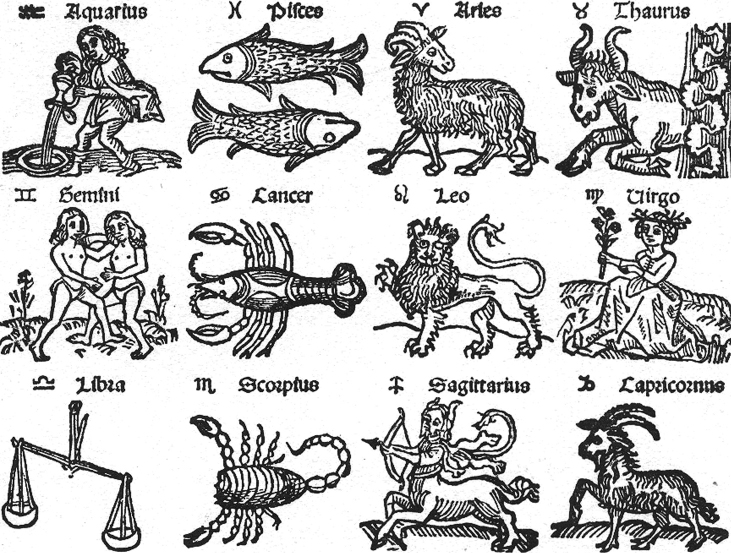
The key to natal astrology is the horoscope, a chart showing the positions of the planets in the sky at the moment of an individual’s birth. The word “horoscope” comes from the Greek words hora (meaning “time”) and skopos (meaning a “watcher” or “marker”), so “horoscope” can literally be translated as “marker of the hour.” When a horoscope is charted, the planets (including the Sun and Moon, classed as wanderers by the ancients) must first be located in the zodiac. At the time astrology was set up, the zodiac was divided into 12 sectors called signs (Figure 2.15), each 30° long. Each sign was named after a constellation in the sky through which the Sun, Moon, and planets were seen to pass—the sign of Virgo after the constellation of Virgo, for example.
英語のヒント
出生占星術の要となるのは、個人が生まれた瞬間に惑星が空のどこにあったかを示す図、ホロスコープである。「ホロスコープ」という語は、ギリシャ語の hora(「時間」)と skopos(「見張るもの」または「印を付けるもの」)に由来するので、文字どおりには「時刻を示すもの」と訳せる。ホロスコープを作成するには、まず惑星が黄道帯のどこにあるかを特定しなければならない。ここでいう惑星には、古代の人々が「さまようもの」に分類していた太陽と月も含まれる。占星術が成立したころ、黄道帯は、それぞれ長さが30°の、サインと呼ばれる12の区分に分けられた(図2.15)。これが黄道十二宮である。それぞれのサインには、太陽、月、惑星がその中を通っていくように見えた星座の名前が付けられた。たとえば、おとめ座のサインは、おとめ座という星座にちなんだものである。
Zodiac Signs.黄道十二宮のサイン
OpenStax / Rice University · CC BY 4.0
Figure 2.15 The signs of the zodiac are shown in a medieval woodcut.
図2.15 中世の木版画に描かれた黄道十二宮のサイン。
When someone today casually asks you your “sign,” they are asking for your “sun sign”—which zodiac sign the Sun was in at the moment you were born. However, more than 2000 years have passed since the signs received their names from the constellations. Because of precession, the constellations of the zodiac slide westward along the ecliptic, going once around the sky in about 26,000 years. Thus, today the real stars have slipped around by about 1/12 of the zodiac—about the width of one sign.
英語のヒント
現在、誰かが気軽にあなたの「星座」を尋ねるとき、尋ねているのは「太陽のサイン」、つまり、あなたが生まれた瞬間に太陽が黄道十二宮のどの区分にあったかである。しかし、サインに星座の名前が付けられてから、すでに2000年以上が過ぎている。歳差のため、黄道帯の星座は黄道に沿って西へずれ、約2万6000年で空を一周する。そのため現在、実際の恒星は黄道帯の約12分の1、サイン一つ分ほどずれている。
In most forms of astrology, however, the signs have remained assigned to the dates of the year they had when astrology was first set up. This means that the astrological signs and the real constellations are out of step; the sign of Aries, for example, now occupies the constellation of Pisces. When you look up your sun sign in a newspaper astrology column, the name of the sign associated with your birthday is no longer the name of the constellation in which the Sun was actually located when you were born. To know that constellation, you must look for the sign before the one that includes your birthday.
英語のヒント
ところが、占星術のほとんどの流派では、各サインに割り当てる一年の中の日付は、占星術が成立した当初のままである。そのため、占星術のサインと実際の星座は食い違っている。たとえば、おひつじ座のサインは、今ではうお座という星座の位置にある。新聞の占星術欄で自分の太陽のサインを調べても、誕生日に対応するサインの名前は、もはや、生まれたときに太陽が実際にあった星座の名前ではない。その星座を知るには、自分の誕生日を含むサインの一つ前を調べる必要がある。
A complete horoscope shows the location of not only the Sun, but also the Moon and each planet in the sky by indicating its position in the appropriate sign of the zodiac. However, as the celestial sphere turns (owing to the rotation of Earth), the entire zodiac moves across the sky to the west, completing a circuit of the heavens each day. Thus, the position in the sky (or “house” in astrology) must also be calculated. There are more or less standardized rules for the interpretation of the horoscope, most of which (at least in Western schools of astrology) are derived from the Tetrabiblos of Ptolemy. Each sign, each house, and each planet—the last acting as a center of force—is supposed to be associated with particular matters in a person’s life.
英語のヒント
完全なホロスコープには、太陽だけでなく、月と各惑星についても、黄道十二宮のどのサインにあるかを記すことで、その天体の空での位置が示される。しかし、地球の自転によって天球が回るにつれ、黄道帯全体も空を西へ動き、毎日、天を一周する。このため、空での位置、占星術でいう「ハウス」も計算しなければならない。ホロスコープの解釈には、ある程度標準化された規則がある。その大部分は、少なくとも西洋の占星術の流派では、プトレマイオスの『テトラビブロス』に由来する。各サイン、各ハウス、各惑星は、それぞれ人生の特定の事柄と関係があるとされ、最後に挙げた惑星は力の中心として働くと考えられている。
The detailed interpretation of a horoscope is a very complicated business, and there are many schools of astrological thought on how it should be done. Although some of the rules may be standardized, how each rule is to be weighed and applied is a matter of judgment—and “art.” It also means that it is very difficult to tie down astrology to specific predictions or to get the same predictions from different astrologers.
英語のヒント
ホロスコープを詳しく解釈するのは非常に込み入った仕事で、その方法には占星術の流派ごとに多くの考え方がある。一部の規則は標準化できるとしても、個々の規則をどの程度重く見て、どう適用すべきかは、判断、そして「技芸」に委ねられている。このことはまた、占星術から具体的な予測を明確に引き出すことや、異なる占星術師から同じ予測を得ることが、非常に難しいということでもある。