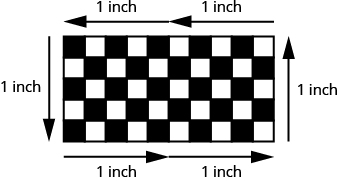
第9章数学モデルと幾何
9.4 Use Properties of Rectangles, Triangles, and Trapezoids9.4 長方形、三角形、台形の性質を使う
Learning Objectives学習目標
Learning Objectives学習目標
By the end of this section, you will be able to:
この節を終えると、次のことができるようになる。
- Understand linear, square, and cubic measure長さ、面積、体積の測定を理解する
- Use properties of rectangles長方形の性質を使う
- Use properties of triangles三角形の性質を使う
- Use properties of trapezoids台形の性質を使う
Before You Begin (3)準備問題(3題)
In this section, we’ll continue working with geometry applications. We will add some more properties of triangles, and we’ll learn about the properties of rectangles and trapezoids.
この節でも図形の応用問題を扱う。三角形の性質をさらにいくつか学び、長方形と台形の性質も学ぶ。
Understand Linear, Square, and Cubic Measure長さ、面積、体積の測定を理解する
When you measure your height or the length of a garden hose, you use a ruler or tape measure (Figure 9.13). A tape measure might remind you of a line—you use it for linear measure, which measures length. Inch, foot, yard, mile, centimeter and meter are units of linear measure.
英語のヒント
身長や庭のホースの長さを測るときには、定規や巻き尺を使う(図9.13)。巻き尺を見ると線を思い浮かべるかもしれない。これは長さを測るために使うものである。インチ、フィート、ヤード、マイル、センチメートル、メートルは長さの単位である。

Figure 9.13図 9.13
This tape measure measures inches along the top and centimeters along the bottom.
この巻き尺は、上側がインチ、下側がセンチメートルの目盛りである。
When you want to know how much tile is needed to cover a floor, or the size of a wall to be painted, you need to know the area, a measure of the region needed to cover a surface. Area is measured is square units. We often use square inches, square feet, square centimeters, or square miles to measure area. A square centimeter is a square that is one centimeter (cm) on each side. A square inch is a square that is one inch on each side (Figure 9.14).
英語のヒント
床を覆うのに必要なタイルの量や、塗装する壁の広さを知りたいときには、表面を覆う領域の大きさである面積を知る必要がある。面積は平方単位で測る。平方インチ、平方フィート、平方センチメートル、平方マイルなどをよく使う。1平方センチメートルは、各辺が1センチメートル(cm)の正方形である。1平方インチは、各辺が1インチの正方形である(図9.14)。
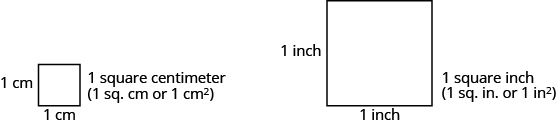
Figure 9.14図 9.14
Square measures have sides that are each unit in length.
平方単位を表す正方形の各辺は、長さ単位である。
Figure 9.15 shows a rectangular rug that is feet long by feet wide. Each square is foot wide by foot long, or square foot. The rug is made of squares. The area of the rug is square feet.
図9.15は、長さフィート、幅フィートの長方形の敷物を示している。各正方形は幅フィート、長さフィート、つまり平方フィートである。敷物は個の正方形からできている。面積は平方フィートである。
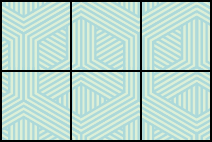
Figure 9.15図 9.15
The rug contains six squares of 1 square foot each, so the total area of the rug is 6 square feet.
敷物には1平方フィートの正方形が6個含まれるので、全体の面積は6平方フィートである。
When you measure how much it takes to fill a container, such as the amount of gasoline that can fit in a tank, or the amount of medicine in a syringe, you are measuring volume. Volume is measured in cubic units such as cubic inches or cubic centimeters. When measuring the volume of a rectangular solid, you measure how many cubes fill the container. We often use cubic centimeters, cubic inches, and cubic feet. A cubic centimeter is a cube that measures one centimeter on each side, while a cubic inch is a cube that measures one inch on each side (Figure 9.16).
英語のヒント
タンクに入るガソリンの量や注射器の中の薬の量など、容器を満たす量を測るときには体積を測っている。体積は立方インチや立方センチメートルなどの立方単位で測る。直方体の体積を測るときには、容器を満たす立方体の個数を測る。立方センチメートル、立方インチ、立方フィートをよく使う。1立方センチメートルは各辺が1センチメートルの立方体、1立方インチは各辺が1インチの立方体である(図9.16)。
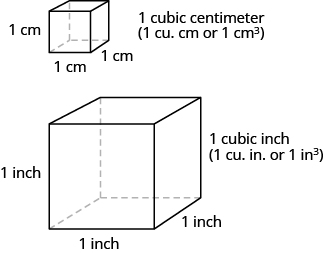
Figure 9.16図 9.16
Cubic measures have sides that are 1 unit in length.
立方単位を表す立方体の各辺は、長さ1単位である。
Suppose the cube in Figure 9.17 measures inches on each side and is cut on the lines shown. How many little cubes does it contain? If we were to take the big cube apart, we would find little cubes, with each one measuring one inch on all sides. So each little cube has a volume of cubic inch, and the volume of the big cube is cubic inches.
図9.17の立方体は各辺がインチで、示された線に沿って切られているとする。小さな立方体はいくつ含まれるだろうか。大きな立方体を分解すると、各辺が1インチの小さな立方体が個あるとわかる。それぞれの体積は立方インチなので、大きな立方体の体積は立方インチである。

Figure 9.17図 9.17
A cube that measures 3 inches on each side is made up of 27 one-inch cubes, or 27 cubic inches.
各辺が3インチの立方体は、1インチの立方体27個からできており、体積は27立方インチである。
Additional Resources追加教材
Example 9.25例題 9.25
For each item, state whether you would use linear, square, or cubic measure:
それぞれの量を、長さ、面積、体積のどれで測るかを述べよ。
- ⓐ amount of carpeting needed in a roomⓐ 部屋に必要なカーペットの量
- ⓑ extension cord lengthⓑ 延長コードの長さ
- ⓒ amount of sand in a sandboxⓒ 砂場にある砂の量
- ⓓ length of a curtain rodⓓ カーテンレールの長さ
- ⓔ amount of flour in a canisterⓔ 容器に入った小麦粉の量
- ⓕ size of the roof of a doghouse.ⓕ 犬小屋の屋根の広さ
Solution解答
ⓐ You are measuring how much surface the carpet covers, which is the area. ⓐ カーペットがどれだけの表面を覆うか、つまり面積を測る。 |
square measure 面積 |
ⓑ You are measuring how long the extension cord is, which is the length. ⓑ 延長コードがどれだけ長いか、つまり長さを測る。 |
linear measure 長さ |
ⓒ You are measuring the volume of the sand. ⓒ 砂の体積を測る。 |
cubic measure 体積 |
ⓓ You are measuring the length of the curtain rod. ⓓ カーテンレールの長さを測る。 |
linear measure 長さ |
ⓔ You are measuring the volume of the flour. ⓔ 小麦粉の体積を測る。 |
cubic measure 体積 |
ⓕ You are measuring the area of the roof. ⓕ 屋根の面積を測る。 |
square measure 面積 |
Try It (2)確認問題(2題)
Many geometry applications will involve finding the perimeter or the area of a figure. There are also many applications of perimeter and area in everyday life, so it is important to make sure you understand what they each mean.
図形の応用問題の多くでは、周の長さや面積を求める。周の長さと面積は日常生活でも多くの場面で使うので、それぞれの意味を確実に理解することが大切である。
Picture a room that needs new floor tiles. The tiles come in squares that are a foot on each side—one square foot. How many of those squares are needed to cover the floor? This is the area of the floor.
新しい床タイルが必要な部屋を思い浮かべよう。タイルは1辺1フィート、つまり1平方フィートの正方形である。床を覆うには何枚必要だろうか。これが床の面積である。
Next, think about putting new baseboard around the room, once the tiles have been laid. To figure out how many strips are needed, you must know the distance around the room. You would use a tape measure to measure the number of feet around the room. This distance is the perimeter.
英語のヒント
次に、タイルを敷いた後で、部屋の周囲に新しい幅木を取り付けることを考えよう。何本必要かを求めるには、部屋を一周する距離を知る必要がある。巻き尺を使い、何フィートあるかを測る。この距離が周の長さである。
Figure 9.18 shows a square tile that is inch on each side. If an ant walked around the edge of the tile, it would walk inches. This distance is the perimeter of the tile.
図9.18は、各辺がインチの正方形のタイルを示している。アリがタイルの縁を一周すると、インチ歩くことになる。この距離がタイルの周の長さである。
Since the tile is a square that is inch on each side, its area is one square inch. The area of a shape is measured by determining how many square units cover the shape.
タイルは各辺がインチの正方形なので、面積は1平方インチである。図形の面積は、何個の平方単位で覆えるかを調べて測る。
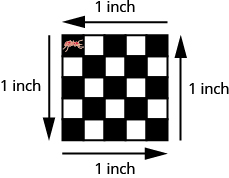
Figure 9.18図 9.18
When the ant walks completely around the tile on its edge, it is tracing the perimeter of the tile. The area of the tile is 1 square inch.
アリがタイルの縁を完全に一周するとき、タイルの周をたどっている。タイルの面積は1平方インチである。
Additional Resources追加教材
Example 9.26例題 9.26
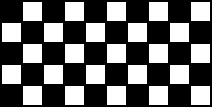
Each of two square tiles is square inch. Two tiles are shown together.
2枚の正方形のタイルはそれぞれ平方インチである。2枚を並べた図を示す。
- ⓐ What is the perimeter of the figure?ⓐ 図形の周の長さはいくらか。
- ⓑ What is the area?ⓑ 面積はいくらか。
Solution解答
ⓐ The perimeter is the distance around the figure. The perimeter is inches.
ⓐ 周の長さは図形を一周する距離であり、インチである。
ⓑ The area is the surface covered by the figure. There are square inch tiles so the area is square inches.
ⓑ 面積は図形が覆う表面の広さである。1平方インチのタイルが枚あるので、面積は平方インチである。