第18章典型元素の金属・半金属・非金属
Halides of the Representative Metals典型金属のハロゲン化物
Thousands of salts of the representative metals have been prepared. The binary halides are an important subclass of salts. A salt is an ionic compound composed of cations and anions, other than hydroxide or oxide ions. In general, it is possible to prepare these salts from the metals or from oxides, hydroxides, or carbonates. We will illustrate the general types of reactions for preparing salts through reactions used to prepare binary halides.
典型金属の塩は、何千種類も調製されている。二元ハロゲン化物は、塩の重要な下位分類である。塩とは、水酸化物イオンや酸化物イオン以外の、陽イオンと陰イオンからなるイオン性化合物である。一般に、これらの塩は、金属、または酸化物、水酸化物、炭酸塩から調製できる。二元ハロゲン化物を調製する反応を通して、塩の調製に使う一般的な反応の種類を示す。
The binary compounds of a metal with the halogens are the halides. Most binary halides are ionic. However, mercury, the elements of group 13 with oxidation states of 3+, tin(IV), and lead(IV) form covalent binary halides.
金属とハロゲンとの二元化合物が、ハロゲン化物である。二元ハロゲン化物の大部分はイオン性である。しかし、水銀、酸化状態3+の13族元素、スズ(IV)、鉛(IV)は、共有結合性の二元ハロゲン化物を作る。
The direct reaction of a metal and a halogen produce the halide of the metal. Examples of these oxidation-reduction reactions include:
金属とハロゲンとの直接反応によって、金属のハロゲン化物が生じる。これらの酸化還元反応の例は、次のとおりである。
If a metal can exhibit two oxidation states, it may be necessary to control the stoichiometry in order to obtain the halide with the lower oxidation state. For example, preparation of tin(II) chloride requires a 1:1 ratio of Sn to Cl2, whereas preparation of tin(IV) chloride requires a 1:2 ratio:
金属が二つの酸化状態を示す場合、低い酸化状態のハロゲン化物を得るためには、化学量論を制御する必要があることがある。たとえば、塩化スズ(II)の調製ではSnとCl2の比を1:1にする必要があるが、塩化スズ(IV)の調製では1:2の比が必要である。
The active representative metals—those that are easier to oxidize than hydrogen—react with gaseous hydrogen halides to produce metal halides and hydrogen. The reaction of zinc with hydrogen fluoride is:
活性な典型金属、すなわち水素より酸化されやすい金属は、気体のハロゲン化水素と反応して、金属ハロゲン化物と水素を生じる。亜鉛とフッ化水素との反応は、次のとおりである。
The active representative metals also react with solutions of hydrogen halides to form hydrogen and solutions of the corresponding halides. Examples of such reactions include:
活性な典型金属は、ハロゲン化水素の溶液とも反応し、水素と対応するハロゲン化物の溶液を作る。このような反応の例は、次のとおりである。
Hydroxides, carbonates, and some oxides react with solutions of the hydrogen halides to form solutions of halide salts. It is possible to prepare additional salts by the reaction of these hydroxides, carbonates, and oxides with aqueous solution of other acids:
水酸化物、炭酸塩、および一部の酸化物は、ハロゲン化水素の溶液と反応して、ハロゲン化物塩の溶液を作る。これらの水酸化物、炭酸塩、酸化物を、他の酸の水溶液と反応させると、さらに別の塩も調製できる。
A few halides and many of the other salts of the representative metals are insoluble. It is possible to prepare these insoluble salts by metathesis reactions that occur when solutions of soluble salts are mixed (see Figure 18.61). Metathesis reactions are examined in the chapter on the stoichiometry of chemical reactions.
英語のヒント
典型金属のハロゲン化物の一部と、その他の塩の多くは不溶性である。可溶性の塩の溶液を混合したときに起こる複分解反応によって、これらの不溶性塩を調製できる(図18.61参照)。複分解反応は、化学反応の化学量論の章で調べる。
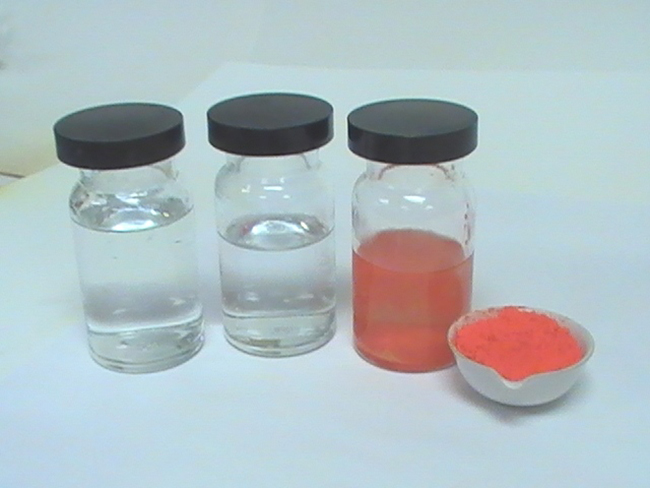
OpenStax, Rice University, Chemistry 2e. Original caption credit: (credit: Sahar Atwa) · CC BY 4.0 · Source出典
Figure 18.61図 18.61
Solid HgI2 forms when solutions of KI and Hg(NO3)2 are mixed. (credit: Sahar Atwa)
KIとHg(NO3)2の溶液を混ぜると、固体のHgI2が生じる。(クレジット:Sahar Atwa)
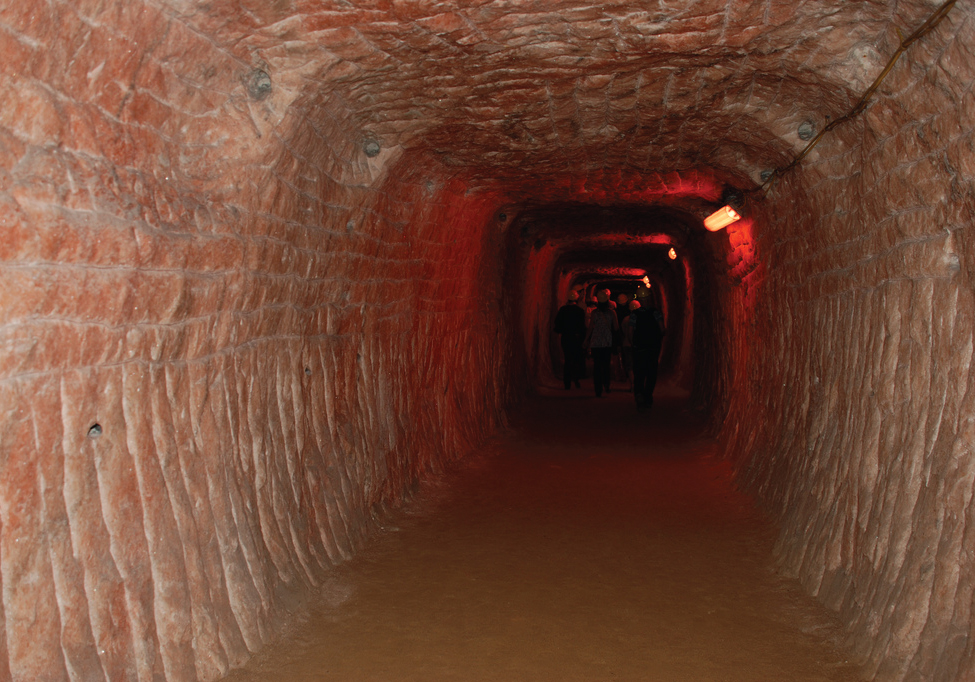
Several halides occur in large quantities in nature. The ocean and underground brines contain many halides. For example, magnesium chloride in the ocean is the source of magnesium ions used in the production of magnesium. Large underground deposits of sodium chloride, like the salt mine shown in Figure 18.62, occur in many parts of the world. These deposits serve as the source of sodium and chlorine in almost all other compounds containing these elements. The chlor-alkali process is one example.
いくつかのハロゲン化物は、自然界に大量に存在する。海洋や地下の塩水は、多くのハロゲン化物を含む。たとえば、海洋中の塩化マグネシウムは、マグネシウム生産に使うマグネシウムイオンの供給源である。図18.62に示す岩塩坑のように、大きな塩化ナトリウムの地下鉱床は、世界各地に存在する。これらの鉱床は、ナトリウムや塩素を含む、ほぼすべての他の化合物における、これらの元素の供給源となる。塩素アルカリ法はその一例である。
OpenStax, Rice University, Chemistry 2e. Original caption credit: (credit: Jarek Zok) Source title: Pink rock salt in Kłodawa mine. · CC BY 2.0 · Source出典
Figure 18.62図 18.62
Underground deposits of sodium chloride are found throughout the world and are often mined. This is a tunnel in the Kłodawa salt mine in Poland. (credit: Jarek Zok)
塩化ナトリウムの地下鉱床は世界中に見られ、採掘されることが多い。これは、ポーランドのクウォダヴァ岩塩坑の坑道である。(クレジット:Jarek Zok)
Interhalogensハロゲン間化合物
Compounds formed from two or more different halogens are interhalogens. Interhalogen molecules consist of one atom of the heavier halogen bonded by single bonds to an odd number of atoms of the lighter halogen. The structures of IF3, IF5, and IF7 are illustrated in Figure 18.63. Formulas for other interhalogens, each of which comes from the reaction of the respective halogens, are in Table 18.3.
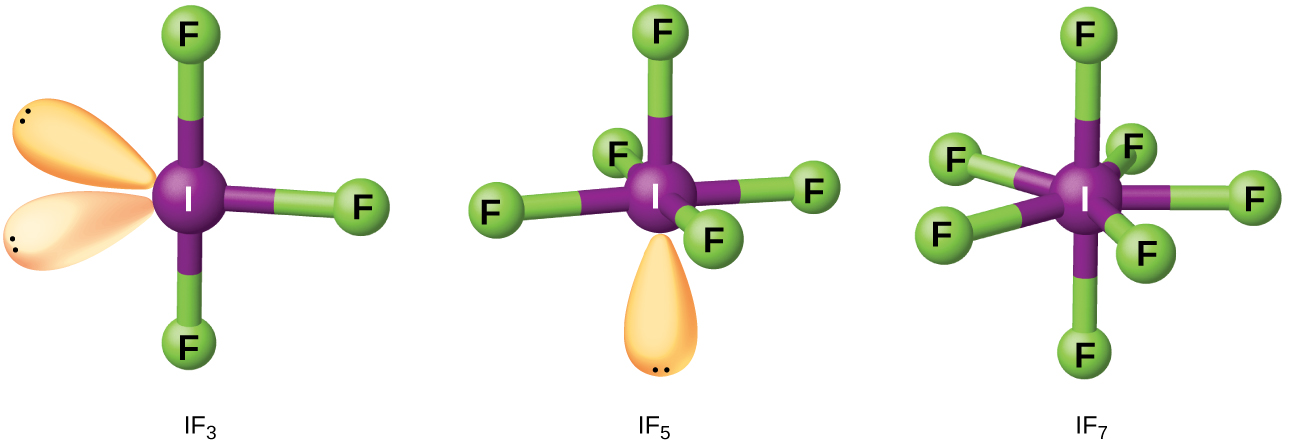


Figure 18.63図 18.63
The structure of IF3 is T-shaped (left), IF5 is square pyramidal (center), and IF7 is pentagonal bipyramidal (right).
IF3はT字形(左)、IF5 は四角錐形(中央)、IF7は五方両錐形(右)の構造を持つ。
Note from Table 18.3 that fluorine is able to oxidize iodine to its maximum oxidation state, 7+, whereas bromine and chlorine, which are more difficult to oxidize, achieve only the 5+-oxidation state. A 7+-oxidation state is the limit for the halogens. Because smaller halogens are grouped about a larger one, the maximum number of smaller atoms possible increases as the radius of the larger atom increases. Many of these compounds are unstable, and most are extremely reactive. The interhalogens react like their component halides; halogen fluorides, for example, are stronger oxidizing agents than are halogen chlorides.
表18.3から、フッ素はヨウ素を最高酸化状態の7+まで酸化できるが、より酸化しにくい臭素や塩素は5+の酸化状態までしか達しないことに注目しよう。7+の酸化状態が、ハロゲンの限界である。小さいハロゲン原子が大きい原子の周りに集まるため、大きい原子の半径が増すほど、配置できる小さい原子の最大数は増す。これらの化合物の多くは不安定で、大部分は極めて反応性が高い。ハロゲン間化合物は、その構成ハロゲン化物のように反応する。たとえば、ハロゲンのフッ化物は、ハロゲンの塩化物より強い酸化剤である。
The ionic polyhalides of the alkali metals, such as KI3, KICl2, KICl4, CsIBr2, and CsBrCl2, which contain an anion composed of at least three halogen atoms, are closely related to the interhalogens. As seen previously, the formation of the polyhalide anion is responsible for the solubility of iodine in aqueous solutions containing an iodide ion.
KI3、KICl2、KICl4、CsIBr2、CsBrCl2などの、アルカリ金属のイオン性ポリハロゲン化物は、少なくとも三個のハロゲン原子からなる陰イオンを含み、ハロゲン間化合物と密接に関連している。先に見たように、ヨウ素がヨウ化物イオンを含む水溶液に溶けるのは、ポリハロゲン化物陰イオンが形成されるためである。
Interhalogens ハロゲン間化合物 |
|||
|---|---|---|---|
YX |
YX3 |
YX5 |
YX7 |
ClF(g) |
ClF3(g) |
ClF5(g) |
|
BrF(g) |
BrF3(l) |
BrF5(l) |
|
BrCl(g) |
|||
IF(s) |
IF3(s) |
IF5(l) |
IF7(g) |
ICl(l) |
ICl3(s) |
||
IBr(s) |
|||