第10章液体と固体
Introductionはじめに
Learning Objectives学習目標
- Intermolecular Forces分子間力
- Properties of Liquids液体の性質
- Phase Transitions相転移
- Phase Diagrams相図
- The Solid State of Matter物質の固体状態
- Lattice Structures in Crystalline Solids結晶性固体の格子構造
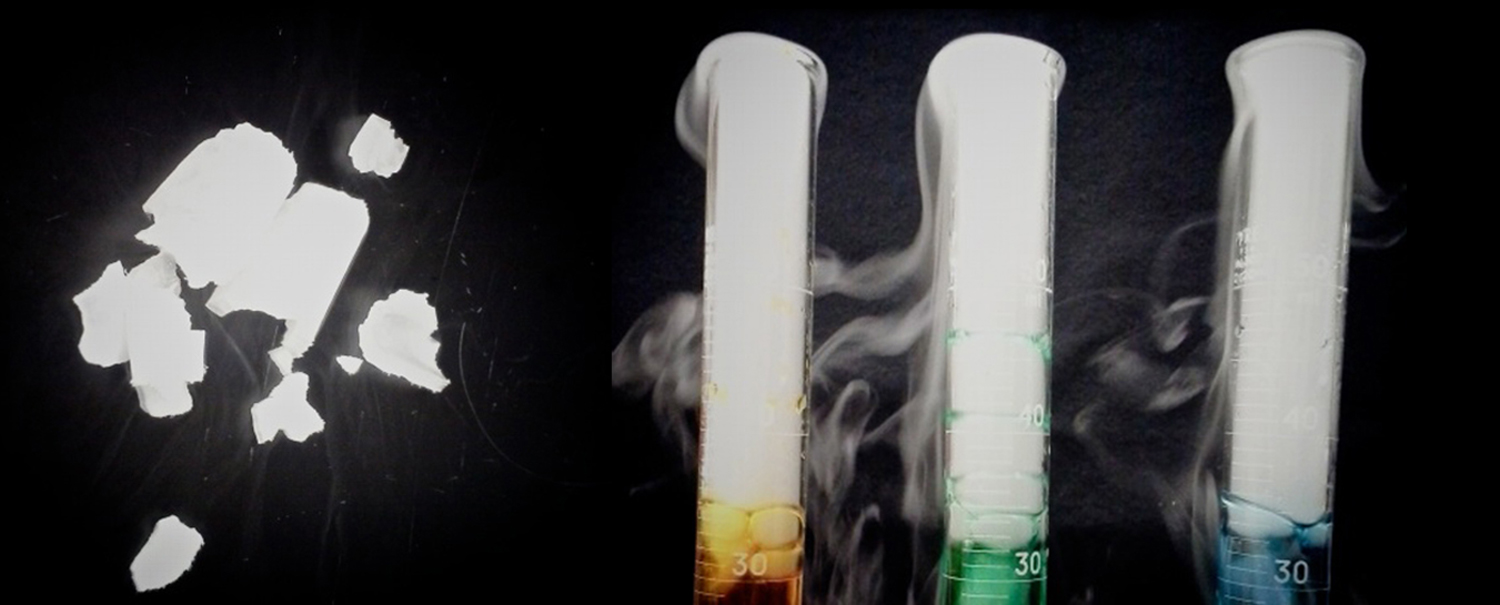
Figure 10.1図 10.1
Solid carbon dioxide (“dry ice”, left) sublimes vigorously when placed in a liquid (right), cooling the liquid and generating a dense mist of water above the cylinder. (credit: modification of work by Paul Flowers)
英語のヒント
固体の二酸化炭素(「ドライアイス」、左)は、液体に入れると激しく昇華し(右)、液体を冷やして、シリンダーの上に濃い水の霧を生じさせる。(クレジット:Paul Flowersの作品を改変)
Leprosy has been a devastating disease throughout much of human history. Aside from the symptoms and complications of the illness, its social stigma led sufferers to be cast out of communities and isolated in colonies; in some regions this practice lasted well into the twentieth century. At that time, the best potential treatment for leprosy was oil from the chaulmoogra tree, but the oil was extremely thick, causing blisters and making usage painful and ineffective. Healthcare professionals seeking a better application contacted Alice Ball, a young chemist at the University of Hawaii, who had focused her masters thesis on a similar plant. Ball initiated a sequence of procedures (repeated acidification and purification to change the characteristics of the oil and isolate the active substances (esters, discussed later in this text). The "Ball Method" as it later came to be called, became the standard treatment for leprosy for decades. In the liquid and solid states, atomic and molecular interactions are of considerable strength and play an important role in determining a number of physical properties of the substance. For example, the thickness, or viscosity, of the chaulmoogra oil was due to its intermolecular forces. In this chapter, the nature of these interactions and their effects on various physical properties of liquid and solid phases will be examined.
英語のヒント
ハンセン病は、人類の歴史の大部分を通して、深刻な被害をもたらす病気だった。症状や合併症に加え、病気に対する社会的な偏見のために、患者は地域社会から追放され、集団で隔離された。地域によっては、この慣行は20世紀に入ってからも長く続いた。当時、最も有望な治療薬は大風子の木から得られる油だったが、油は非常に粘りが強く、水疱を生じさせ、使用には痛みが伴い、効果も乏しかった。よりよい使い方を求める医療専門家たちは、ハワイ大学の若い化学者アリス・ボールに相談した。彼女は修士論文で、似た植物を研究していた。ボールは、油の性質を変え、有効成分(エステル。本書の後の部分で扱う)を分離するために、酸性化と精製を繰り返す一連の操作を始めた。後に「ボール法」と呼ばれるようになったこの方法は、何十年にもわたってハンセン病の標準治療となった。液体と固体では、原子や分子の相互作用はかなり強く、物質の多くの物理的性質を決めるうえで重要な役割を果たす。例えば、大風子油の濃さ、つまり粘度は、分子間力によるものだった。この章では、これらの相互作用の性質と、それが液相や固相のさまざまな物理的性質に及ぼす影響を調べる。