第2章原子・分子・イオン
Introductionはじめに
Learning Objectives学習目標
- Early Ideas in Atomic Theory初期の原子論
- Evolution of Atomic Theory原子論の発展
- Atomic Structure and Symbolism原子の構造と記号表記
- Chemical Formulas化学式
- The Periodic Table周期表
- Ionic and Molecular Compoundsイオン化合物と分子化合物
- Chemical Nomenclature化合物の命名法
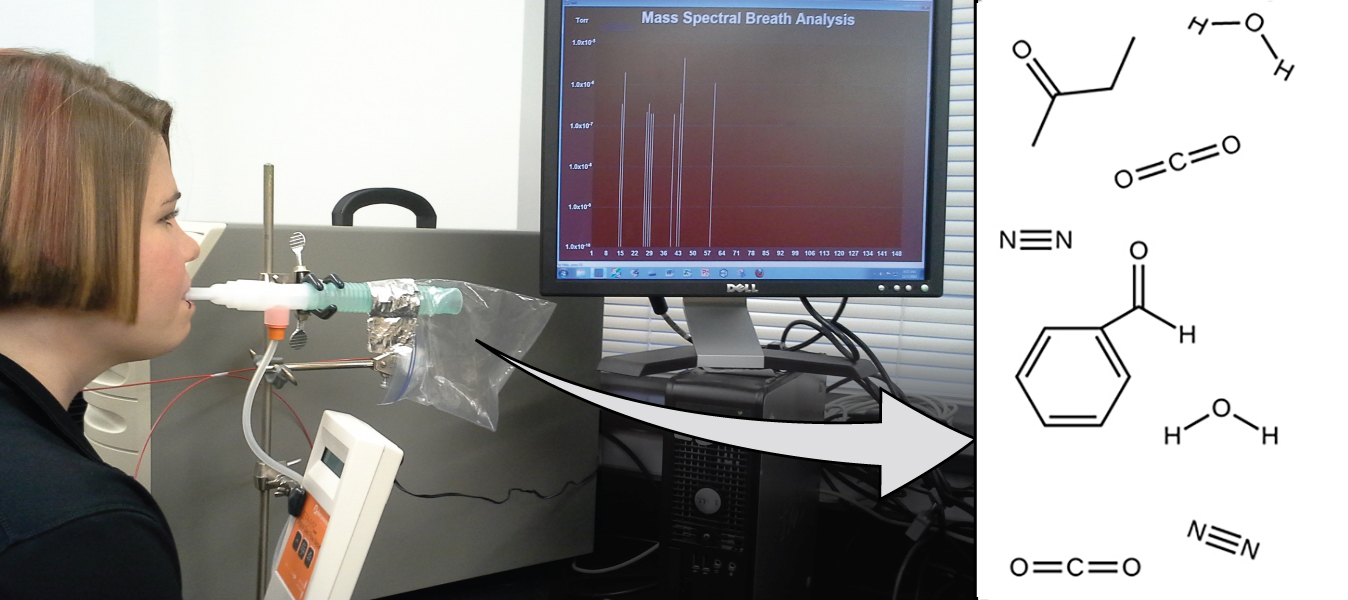
Figure 2.1図 2.1
Analysis of molecules in an exhaled breath can provide valuable information, leading to early diagnosis of diseases or detection of environmental exposure to harmful substances. (credit: modification of work by Paul Flowers)
吐いた息に含まれる分子を分析すると、病気の早期診断や、環境中の有害物質への曝露の検出につながる貴重な情報が得られる。(出典:Paul Flowersの作品を改変)
Lung diseases and lung cancers are among the world's most devastating illnesses partly due to delayed detection and diagnosis. Most noninvasive screening procedures aren't reliable, and patients often resist more accurate methods due to discomfort with the procedures or with the potential danger that the procedures cause. But what if you could be accurately diagnosed through a simple breath test?
英語のヒント
肺の病気や肺がんは、世界で最も深刻な病気の一部であり、その一因は発見と診断の遅れにある。非侵襲的なスクリーニング検査の多くは信頼性に乏しく、より正確な方法も、検査の不快さや検査に伴う潜在的な危険のために、患者から敬遠されることが多い。しかし、簡単な呼気検査で正確な診断を受けられるとしたらどうだろうか。
Early detection of biomarkers, substances that indicate an organism’s disease or physiological state, could allow diagnosis and treatment before a condition becomes serious or irreversible. Recent studies have shown that your exhaled breath can contain molecules that may be biomarkers for recent exposure to environmental contaminants or for pathological conditions ranging from asthma to lung cancer. Scientists are working to develop biomarker “fingerprints” that could be used to diagnose a specific disease based on the amounts and identities of certain molecules in a patient’s exhaled breath. In Sangeeta Bhatia's lab at MIT, a team used substances that react specifically inside diseased lung tissue; the products of the reactions will be present as biomarkers that can be identified through mass spectrometry (an analytical method discussed later in the chapter). A potential application would allow patients with early symptoms to inhale or ingest a "sensor" substance, and, minutes later, to breathe into a detector for diagnosis. Similar research by scientists such as Laura López-Sánchez has provided similar processes for lung cancer. An essential concept underlying this goal is that of a molecule’s identity, which is determined by the numbers and types of atoms it contains, and how they are bonded together. This chapter will describe some of the fundamental chemical principles related to the composition of matter, including those central to the concept of molecular identity.
英語のヒント
生体の病気や生理的状態を示す物質であるバイオマーカーを早期に検出できれば、病状が深刻になったり、元に戻らなくなったりする前に診断と治療を行えるかもしれない。最近の研究では、吐いた息の中に、環境汚染物質への最近の曝露や、ぜんそくから肺がんまでの病的状態のバイオマーカーとなり得る分子が含まれることが示されている。科学者は、患者の呼気中の特定の分子の量と種類から特定の病気を診断できる、バイオマーカーの「指紋」を開発しようとしている。MITのサンギータ・バティアの研究室では、あるチームが、病変のある肺組織内で特異的に反応する物質を使った。その反応生成物は、質量分析法(この章の後半で扱う分析法)によって識別できるバイオマーカーとして現れる。応用が実現すれば、初期症状のある患者が「センサー」物質を吸入または摂取し、数分後に検出器へ息を吹き込んで診断を受けられるようになるかもしれない。ラウラ・ロペス=サンチェスなどの科学者による同様の研究からも、肺がんに対する同様の方法が得られている。この目標を支える重要な概念は、分子が何であるかという、その同一性である。それは、分子に含まれる原子の数と種類、そして原子同士の結びつき方によって決まる。この章では、物質の組成に関係する基本的な化学の原理を、分子の同一性という概念の中心となるものも含めて説明する。