第21章核化学
Introductionはじめに
Learning Objectives学習目標
- Nuclear Structure and Stability原子核の構造と安定性
- Nuclear Equations核反応式
- Radioactive Decay放射性崩壊
- Transmutation and Nuclear Energy核変換と核エネルギー
- Uses of Radioisotopes放射性同位体の利用
- Biological Effects of Radiation放射線の生物への影響
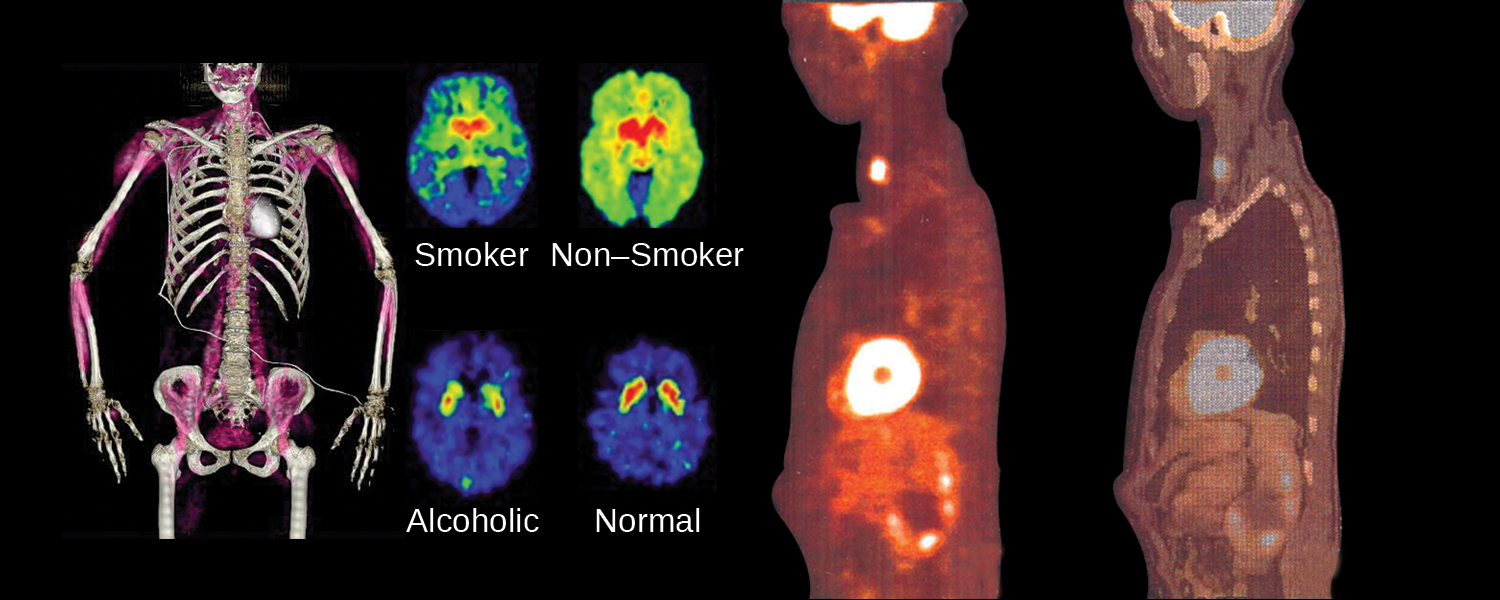

Figure 21.1図 21.1
Nuclear chemistry provides the basis for many useful diagnostic and therapeutic methods in medicine, such as these positron emission tomography (PET) scans. The PET/computed tomography scan on the left shows muscle activity. The brain scans in the center show chemical differences in dopamine signaling in the brains of addicts and nonaddicts. The images on the right show an oncological application of PET scans to identify lymph node metastasis.
英語のヒント
核化学は、ここに示した陽電子放出断層撮影(PET)など、医療で有用な多くの診断・治療法の基礎となる。左のPET/コンピューター断層撮影画像は筋肉の活動を示す。中央の脳画像は、依存症の人とそうでない人の脳における、ドーパミンの信号伝達の化学的な違いを示す。右の画像は、リンパ節転移を特定するためにPETを用いた腫瘍学での例である。
The chemical reactions that we have considered in previous chapters involve changes in the electronic structure of the species involved, that is, the arrangement of the electrons around atoms, ions, or molecules. Nuclear structure, the numbers of protons and neutrons within the nuclei of the atoms involved, remains unchanged during chemical reactions.
英語のヒント
これまでの章で扱った化学反応は、関わる化学種の電子構造、すなわち原子・イオン・分子の周囲の電子配置の変化を伴う。一方、関わる原子の原子核内の陽子数・中性子数という核構造は、化学反応の間も変わらない。
This chapter will introduce the topic of nuclear chemistry, which began with the discovery of radioactivity in 1896 by French physicist Antoine Becquerel and has become increasingly important during the twentieth and twenty-first centuries, providing the basis for various technologies related to energy, medicine, geology, and many other areas.
英語のヒント
この章では核化学を取り上げる。核化学は、1896年にフランスの物理学者アントワーヌ・ベクレルが放射能を発見したことから始まった。20世紀、21世紀を通じて重要性を増し、エネルギー、医療、地質学など、多くの分野の技術の基礎となっている。