第13章化学平衡の基本概念
Introductionはじめに
Learning Objectives学習目標
- Chemical Equilibria化学平衡
- Equilibrium Constants平衡定数
- Shifting Equilibria: Le Châtelier’s Principle平衡の移動:ルシャトリエの原理
- Equilibrium Calculations平衡の計算
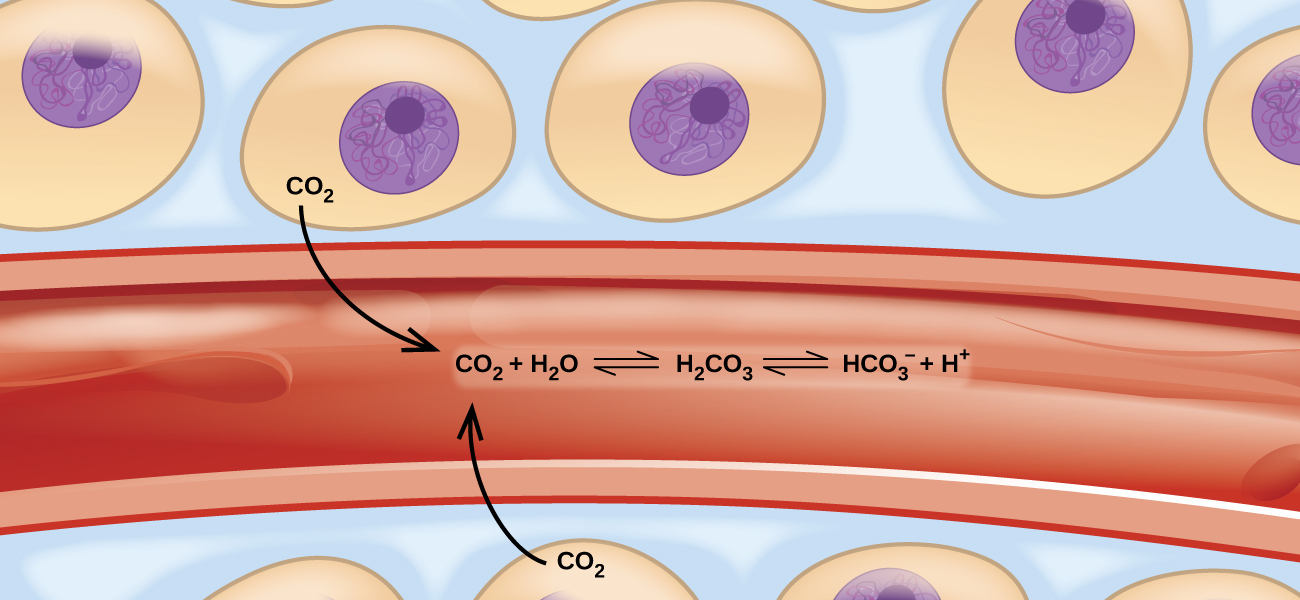

Figure 13.1図 13.1
Transport of carbon dioxide in the body involves several reversible chemical reactions, including hydrolysis and acid ionization (among others).
英語のヒント
体内での二酸化炭素の輸送には、加水分解や酸の電離など、いくつかの可逆的な化学反応が関わる。
Imagine a beach populated with sunbathers and swimmers. As those basking in the sun get too hot, they enter the surf to swim and cool off. As the swimmers tire, they return to the beach to rest. If the rate at which sunbathers enter the surf were to equal the rate at which swimmers return to the sand, then the numbers (though not the identities) of sunbathers and swimmers would remain constant. This scenario illustrates a dynamic phenomenon known as equilibrium, in which opposing processes occur at equal rates. Chemical and physical processes are subject to this phenomenon; these processes are at equilibrium when the forward and reverse reaction rates are equal. Equilibrium systems are pervasive in nature; the various reactions involving carbon dioxide dissolved in blood are examples (see Figure 13.1). This chapter provides a thorough introduction to the essential aspects of chemical equilibria.
英語のヒント
日光浴をする人と泳ぐ人でにぎわう海岸を思い浮かべよう。日光浴で暑くなりすぎると、人々は海に入って泳ぎ、体を冷やす。泳いで疲れると、浜辺に戻って休む。もし日光浴をする人が海に入る速さと、泳ぐ人が浜へ戻る速さが等しくなれば、日光浴をする人数と泳ぐ人数は一定になる。ただし、同じ人がそこにとどまるわけではない。この状況は、互いに逆向きの過程が等しい速さで起こる、平衡という動的な現象を示している。化学的・物理的な過程にもこの現象が見られ、正反応と逆反応の速さが等しいとき、その過程は平衡にある。自然界には平衡系が広く存在する。血液に溶けた二酸化炭素が関わるさまざまな反応も、その例である(図13.1参照)。本章では、化学平衡の基本的な側面を詳しく学ぶ。