第13章化学平衡の基本概念
13.1 Chemical Equilibria13.1 化学平衡
Learning Objectives学習目標
By the end of this section, you will be able to:
この節を学ぶと、次のことができるようになる。
- Describe the nature of equilibrium systems平衡系の性質を説明する。
- Explain the dynamic nature of a chemical equilibrium化学平衡の動的な性質を説明する。
The convention for writing chemical equations involves placing reactant formulas on the left side of a reaction arrow and product formulas on the right side. By this convention, and the definitions of “reactant” and “product,” a chemical equation represents the reaction in question as proceeding from left to right. Reversible reactions, however, may proceed in both forward (left to right) and reverse (right to left) directions. When the rates of the forward and reverse reactions are equal, the concentrations of the reactant and product species remain constant over time and the system is at equilibrium. The relative concentrations of reactants and products in equilibrium systems vary greatly; some systems contain mostly products at equilibrium, some contain mostly reactants, and some contain appreciable amounts of both.
英語のヒント
化学反応式は、反応物の化学式を矢印の左側に、生成物の化学式を右側に置くという慣例に従って書く。この慣例と「反応物」「生成物」の定義によって、反応式はその反応が左から右へ進むものとして表される。しかし、可逆反応は正方向(左から右)にも逆方向(右から左)にも進む。正反応と逆反応の速度が等しくなると、反応物と生成物の化学種の濃度は時間が経っても変わらず、系は平衡状態になる。平衡系における反応物と生成物の相対的な濃度は、系によって大きく異なる。平衡時にほとんどが生成物である系、ほとんどが反応物である系、両方がかなりの量で存在する系がある。
Figure 13.2 illustrates fundamental equilibrium concepts using the reversible decomposition of colorless dinitrogen tetroxide to yield brown nitrogen dioxide, an elementary reaction described by the equation:
図13.2では、無色の四酸化二窒素が可逆的に分解して褐色の二酸化窒素を生じる反応を使い、平衡の基本概念を示す。この素反応は次の式で表される。
Note that a special double arrow is used to emphasize the reversible nature of the reaction.
反応が可逆的であることを強調するため、特別な二重矢印を使っていることに注意しよう。
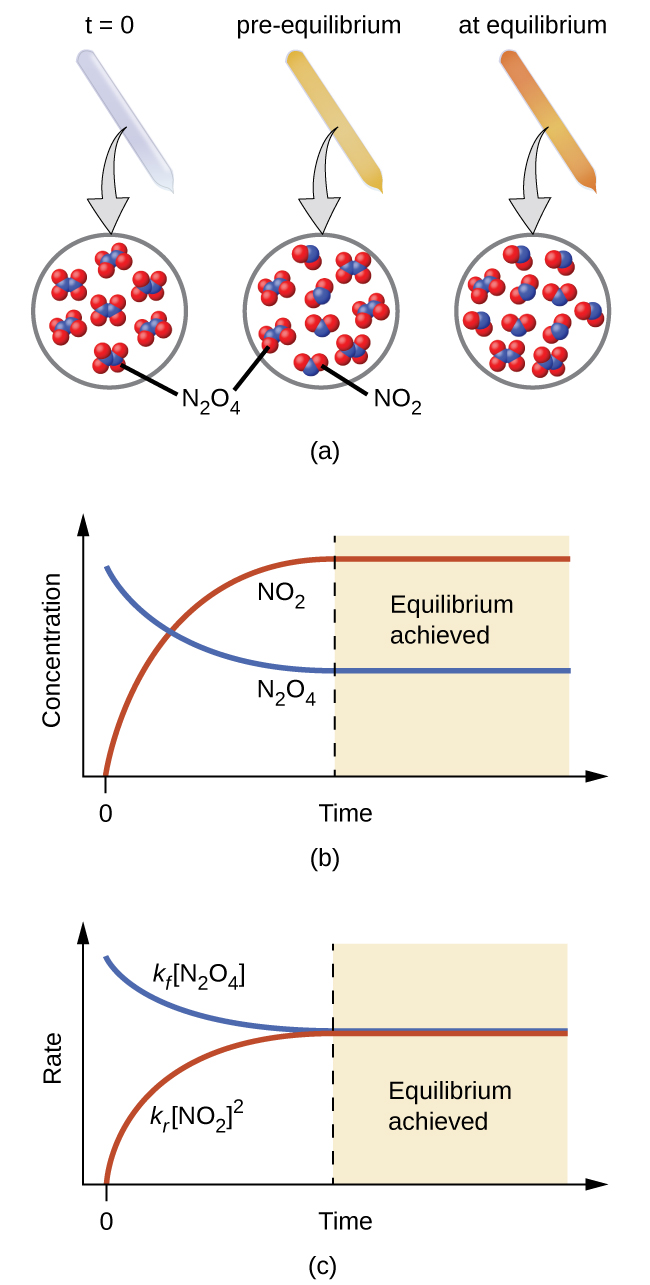
Figure 13.2図 13.2
(a) A sealed tube containing colorless N2O4 darkens as it decomposes to yield brown NO2. (b) Changes in concentration over time as the decomposition reaction achieves equilibrium. (c) At equilibrium, the forward and reverse reaction rates are equal.
(a) 無色のN2O4を入れた密閉管は、分解によって褐色のNO2が生じるにつれて色が濃くなる。(b) 分解反応が平衡に達するまでの濃度の時間変化。(c) 平衡では、正反応と逆反応の速度が等しい。
For this elementary process, rate laws for the forward and reverse reactions may be derived directly from the reaction stoichiometry:
この素過程では、正反応と逆反応の速度式を、反応の化学量論から直接導くことができる。
As the reaction begins (t = 0), the concentration of the N2O4 reactant is finite and that of the NO2 product is zero, so the forward reaction proceeds at a finite rate while the reverse reaction rate is zero. As time passes, N2O4 is consumed and its concentration falls, while NO2 is produced and its concentration increases (Figure 13.2b). The decreasing concentration of the reactant slows the forward reaction rate, and the increasing product concentration speeds the reverse reaction rate (Figure 13.2c). This process continues until the forward and reverse reaction rates become equal, at which time the reaction has reached equilibrium, as characterized by constant concentrations of its reactants and products (shaded areas of Figure 13.2b and Figure 13.2c). It’s important to emphasize that chemical equilibria are dynamic; a reaction at equilibrium has not “stopped,” but is proceeding in the forward and reverse directions at the same rate. This dynamic nature is essential to understanding equilibrium behavior as discussed in this and subsequent chapters of the text.
英語のヒント
反応開始時(t=0)には、反応物N2O4の濃度は有限で、生成物NO2の濃度は0である。したがって、正反応は有限の速度で進むが、逆反応の速度は0である。時間とともにN2O4が消費されて濃度が下がり、NO2が生成して濃度が上がる(図13.2b)。反応物の濃度が下がると正反応が遅くなり、生成物の濃度が上がると逆反応が速くなる(図13.2c)。この変化は正反応と逆反応の速度が等しくなるまで続き、その時点で反応は平衡に達する。平衡では、反応物と生成物の濃度が一定になる(図13.2bと図13.2cの色のついた領域)。化学平衡は動的であるという点が重要である。平衡にある反応は「止まった」のではなく、正方向と逆方向に同じ速度で進み続けている。この動的な性質を理解することは、本章と以後の章で扱う平衡の振る舞いを理解するうえで欠かせない。
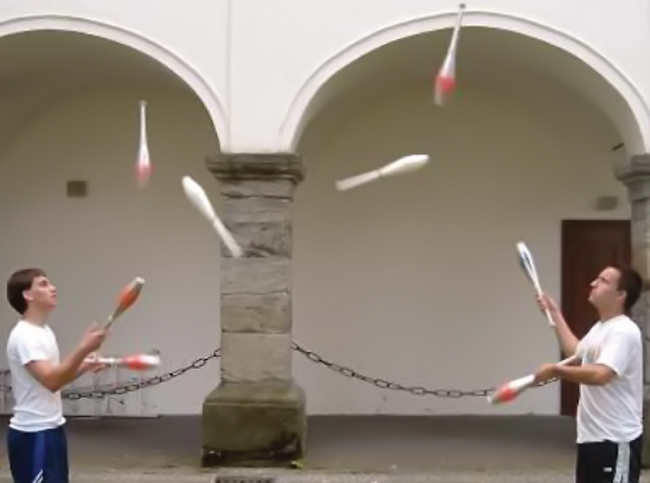


Figure 13.3図 13.3
A two-person juggling act illustrates the dynamic aspect of chemical equilibria. Each person is throwing and catching clubs at the same rate, and each holds a (approximately) constant number of clubs.
二人で行うジャグリングは、化学平衡の動的な側面を示す。各人は同じ速さでクラブを投げ、受け取るため、手に持つクラブの本数はほぼ一定である。
Physical changes, such as phase transitions, are also reversible and may establish equilibria. This concept was introduced in another chapter of this text through discussion of the vapor pressure of a condensed phase (liquid or solid). As one example, consider the vaporization of bromine:
相転移などの物理変化も可逆的であり、平衡を成立させることがある。この概念は、別の章で凝縮相(液体または固体)の蒸気圧を説明した際に紹介した。一例として、臭素の蒸発を考えよう。
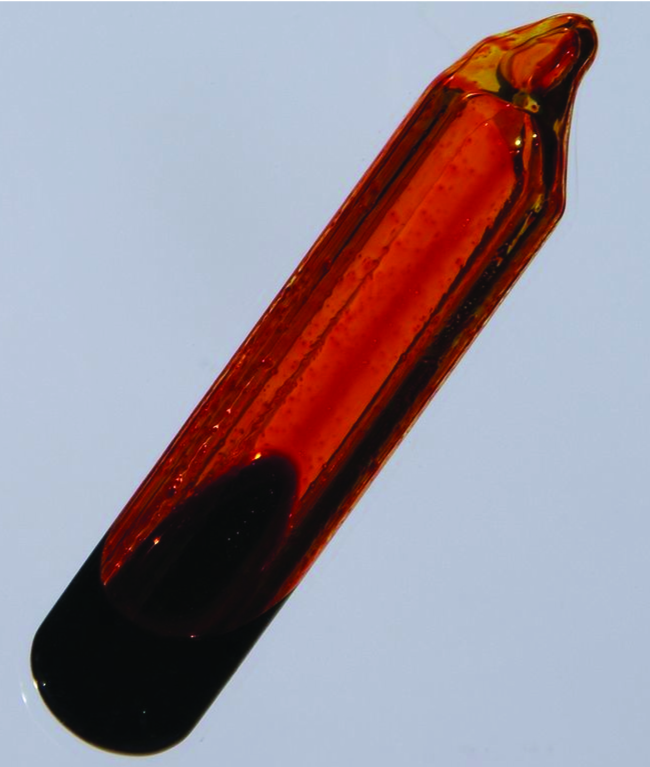
When liquid bromine is added to an otherwise empty container and the container is sealed, the forward process depicted above (vaporization) will commence and continue at a roughly constant rate as long as the exposed surface area of the liquid and its temperature remain constant. As increasing amounts of gaseous bromine are produced, the rate of the reverse process (condensation) will increase until it equals the rate of vaporization and equilibrium is established. A photograph showing this phase transition equilibrium is provided in Figure 13.4.
英語のヒント
ほかには何も入っていない容器に液体臭素を加えて密閉すると、上に示した正方向の過程、すなわち蒸発が始まる。液体の露出した表面積と温度が一定である限り、蒸発はほぼ一定の速度で続く。気体臭素の量が増えるにつれて、逆方向の過程である凝縮の速度が上がり、蒸発の速度と等しくなると平衡が成立する。この相転移平衡の写真を図13.4に示す。
OpenStax, Rice University, Chemistry 2e. Original caption credit: (credit: http://images-of-elements.com/bromine.php) · CC BY 3.0 · Source出典
Figure 13.4図 13.4
A sealed tube containing an equilibrium mixture of liquid and gaseous bromine. (credit: http://images-of-elements.com/bromine.php)
液体と気体の臭素が平衡状態で共存する密閉管。(クレジット:http://images-of-elements.com/bromine.php)
Key Concepts and Summary重要な概念とまとめ
A reversible reaction is at equilibrium when the forward and reverse processes occur at equal rates. Chemical equilibria are dynamic processes characterized by constant amounts of reactant and product species.
可逆反応は、正方向と逆方向の過程が等しい速度で起こるとき、平衡にある。化学平衡は、反応物と生成物の化学種の量が一定であることを特徴とする動的な過程である。
Chemistry End of Chapter Exercises章末問題
Exercises 1–5練習問題 1–5
Exercise 1問題 1
What does it mean to describe a reaction as “reversible”?
反応が「可逆的」であるとは、どういう意味か。
Solution解き方
The reaction can proceed in both the forward and reverse directions.
その反応は正方向にも逆方向にも進むことができる。
Exercise 2問題 2
When writing an equation, how is a reversible reaction distinguished from a nonreversible reaction?
反応式を書くとき、可逆反応を不可逆反応とどう区別するか。
Exercise 3問題 3
If a reaction is reversible, when can it be said to have reached equilibrium?
可逆反応が平衡に達したと言えるのは、どのようなときか。
Solution解き方
When a system has reached equilibrium, no further changes in the reactant and product concentrations occur; the forward and reverse reactions continue to proceed, but at equal rates.
系が平衡に達すると、反応物と生成物の濃度はそれ以上変わらなくなる。正反応と逆反応は進み続けるが、その速度は等しい。
Exercise 4問題 4
Is a system at equilibrium if the rate constants of the forward and reverse reactions are equal?
正反応と逆反応の速度定数が等しければ、その系は平衡にあるか。
Exercise 5問題 5
If the concentrations of products and reactants are equal, is the system at equilibrium?
生成物と反応物の濃度が等しければ、その系は平衡にあるか。
Solution解き方
Not necessarily. A system at equilibrium is characterized by constant reactant and product concentrations, but the values of the reactant and product concentrations themselves need not be equal.
英語のヒント
必ずしもそうではない。平衡にある系では反応物と生成物の濃度が一定であるが、それらの濃度の値そのものが等しい必要はない。
equilibrium
平衡
state of a reversible reaction in which the forward and reverse processes occur at equal rates
正方向と逆方向の過程が等しい速度で起こっている、可逆反応の状態。
reversible reaction
可逆反応
chemical reaction that can proceed in both the forward and reverse directions under given conditions
与えられた条件のもとで、正方向にも逆方向にも進むことができる化学反応。