第18章典型元素の金属・半金属・非金属
18.9 Occurrence, Preparation, and Compounds of Oxygen18.9 酸素の存在・製法・化合物
Learning Objectives学習目標
By the end of this section, you will be able to:
この節を学び終えると、次のことができるようになる。
- Describe the properties, preparation, and compounds of oxygen酸素の性質、製法、化合物を説明する。
- Describe the preparation, properties, and uses of some representative metal oxides, peroxides, and hydroxides典型金属の酸化物、過酸化物、水酸化物のいくつかについて、製法、性質、用途を説明する。
Oxygen is the most abundant element on the earth’s crust. The earth’s surface is composed of the crust, atmosphere, and hydrosphere. About 50% of the mass of the earth’s crust consists of oxygen (combined with other elements, principally silicon). Oxygen occurs as O2 molecules and, to a limited extent, as O3 (ozone) molecules in air. It forms about 20% of the mass of the air. About 89% of water by mass consists of combined oxygen. In combination with carbon, hydrogen, and nitrogen, oxygen is a large part of plants and animals.
英語のヒント
酸素は、地殻で最も豊富な元素である。地球の表面は、地殻、大気、水圏からなる。地殻の質量の約50%は、酸素(他の元素、主としてケイ素と結合したもの)からなる。空気中では、酸素はO2分子として、また、少量はO3(オゾン)分子として存在する。空気の質量の約20%を占める。水の質量の約89%は、化合した酸素である。酸素は、炭素、水素、窒素と結合して、動植物の大きな部分を占める。
Oxygen is a colorless, odorless, and tasteless gas at ordinary temperatures. It is slightly denser than air. Although it is only slightly soluble in water (49 mL of gas dissolves in 1 L at STP), oxygen’s solubility is very important to aquatic life.
常温では、酸素は無色、無臭、無味の気体である。空気よりわずかに密度が高い。水にはわずかしか溶けない(STPでは、1 Lに49 mLの気体が溶ける)が、酸素の溶解性は水生生物にとって非常に重要である。
Most of the oxygen isolated commercially comes from air and the remainder from the electrolysis of water. The separation of oxygen from air begins with cooling and compressing the air until it liquefies. As liquid air warms, oxygen with its higher boiling point (90 K) separates from nitrogen, which has a lower boiling point (77 K). It is possible to separate the other components of air at the same time based on differences in their boiling points.
商業的に単離される酸素の大部分は空気から得られ、残りは水の電気分解による。空気から酸素を分離するには、まず空気を冷却・圧縮して液化する。液体空気の温度が上がると、沸点の高い酸素(90 K)は、沸点の低い窒素(77 K)から分かれる。同時に、沸点の違いに基づいて、空気の他の成分も分離できる。
Oxygen is essential in combustion processes such as the burning of fuels. Plants and animals use the oxygen from the air in respiration. The administration of oxygen-enriched air is an important medical practice when a patient is receiving an inadequate supply of oxygen because of shock, pneumonia, or some other illness.
酸素は、燃料の燃焼などの燃焼過程に不可欠である。動植物は、呼吸で空気中の酸素を用いる。ショック、肺炎、その他の病気によって患者への酸素供給が不十分な場合、酸素濃度を高めた空気を投与することは重要な医療行為である。
The chemical industry employs oxygen for oxidizing many substances. A significant amount of oxygen produced commercially is important in the removal of carbon from iron during steel production. Large quantities of pure oxygen are also necessary in metal fabrication and in the cutting and welding of metals with oxyhydrogen and oxyacetylene torches.
英語のヒント
化学工業では、多くの物質を酸化するために酸素を用いる。商業的に生産される酸素のかなりの量が、製鋼時に鉄から炭素を除くために重要となる。金属の加工や、酸水素トーチおよび酸素アセチレントーチによる金属の切断・溶接にも、大量の純粋な酸素が必要である。
Liquid oxygen is important to the space industry. It is an oxidizing agent in rocket engines. It is also the source of gaseous oxygen for life support in space.
液体酸素は宇宙産業に重要である。ロケットエンジンの酸化剤となる。また、宇宙での生命維持に使う気体酸素の供給源でもある。
As we know, oxygen is very important to life. The energy required for the maintenance of normal body functions in human beings and in other organisms comes from the slow oxidation of chemical compounds. Oxygen is the final oxidizing agent in these reactions. In humans, oxygen passes from the lungs into the blood, where it combines with hemoglobin, producing oxyhemoglobin. In this form, blood transports the oxygen to tissues, where it is transferred to cells and used as a chemical oxidant, yielding as ultimate products carbon dioxide and water. The blood carries the carbon dioxide through the veins to the lungs, where the blood releases the carbon dioxide and collects another supply of oxygen. Digestion and assimilation of food regenerate the materials consumed by oxidation in the body; the energy liberated is the same as if the food burned outside the body.
英語のヒント
周知のように、酸素は生命にとって非常に重要である。人間や他の生物が正常な身体機能を維持するのに必要なエネルギーは、化合物のゆっくりした酸化によって得られる。これらの反応で、酸素は最終的な酸化剤となる。人間では、酸素は肺から血液に入り、そこでヘモグロビンと結合して酸素ヘモグロビンを作る。この形で血液が酸素を組織に運び、そこで酸素は細胞に渡され、化学的酸化剤として使われ、最終生成物として二酸化炭素と水を生じる。血液は静脈を通して二酸化炭素を肺に運び、そこで二酸化炭素を放出し、新たな酸素の供給を受ける。食物の消化と同化によって、体内の酸化で消費された物質が再生される。放出されるエネルギーは、食物を体外で燃焼させた場合と同じである。
Green plants continually replenish the oxygen in the atmosphere by a process called photosynthesis. The products of photosynthesis may vary, but, in general, the process converts carbon dioxide and water into glucose (a sugar) and oxygen using the energy of light:
英語のヒント
緑色植物は、光合成と呼ばれる過程によって、大気中の酸素を絶えず補充する。光合成の生成物はさまざまでありうるが、一般に、この過程は光のエネルギーを用いて、二酸化炭素と水をグルコース(糖の一種)と酸素に変える。
Thus, the oxygen that became carbon dioxide and water by the metabolic processes in plants and animals returns to the atmosphere by photosynthesis.
このように、動植物の代謝過程で二酸化炭素と水になった酸素は、光合成によって大気へ戻る。
When dry oxygen is passed between two electrically charged plates, ozone (O3, illustrated in Figure 18.42), an allotrope of oxygen possessing a distinctive odor, forms. The formation of ozone from oxygen is an endothermic reaction, in which the energy comes from an electrical discharge, heat, or ultraviolet light:
乾燥した酸素を、電荷を帯びた二枚の板の間に通すと、独特の臭いを持つ酸素の同素体、オゾン(O3、図18.42)が生じる。酸素からオゾンができる反応は吸熱反応であり、エネルギーは放電、熱、または紫外光から得られる。
The sharp odor associated with sparking electrical equipment is due, in part, to ozone.
火花を出す電気機器に伴う刺激臭は、一部はオゾンによるものである。
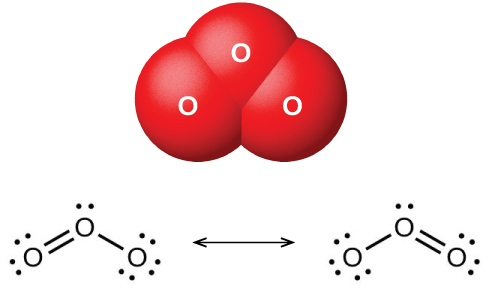

Figure 18.42図 18.42
The image shows the bent ozone (O3) molecule and the resonance structures necessary to describe its bonding.
画像は、折れ線形のオゾンO3分子と、その結合を記述するのに必要な共鳴構造を示している。
Ozone forms naturally in the upper atmosphere by the action of ultraviolet light from the sun on the oxygen there. Most atmospheric ozone occurs in the stratosphere, a layer of the atmosphere extending from about 10 to 50 kilometers above the earth’s surface. This ozone acts as a barrier to harmful ultraviolet light from the sun by absorbing it via a chemical decomposition reaction:
英語のヒント
オゾンは、大気上層の酸素に太陽の紫外光が作用して、自然に生じる。大気中のオゾンの大部分は、地表の約10~50キロメートル上空に広がる大気の層、成層圏に存在する。このオゾンは、化学的な分解反応によって太陽の有害な紫外光を吸収し、それを遮る役割を果たす。
The reactive oxygen atoms recombine with molecular oxygen to complete the ozone cycle. The presence of stratospheric ozone decreases the frequency of skin cancer and other damaging effects of ultraviolet radiation. It has been clearly demonstrated that chlorofluorocarbons, CFCs (known commercially as Freons), which were present as aerosol propellants in spray cans and as refrigerants, caused depletion of ozone in the stratosphere. This occurred because ultraviolet light also causes CFCs to decompose, producing atomic chlorine. The chlorine atoms react with ozone molecules, resulting in a net removal of O3 molecules from stratosphere. This process is explored in detail in our coverage of chemical kinetics. There is a worldwide effort to reduce the amount of CFCs used commercially, and the ozone hole is already beginning to decrease in size as atmospheric concentrations of atomic chlorine decrease. While ozone in the stratosphere helps protect us, ozone in the troposphere is a problem. This ozone is a toxic component of photochemical smog.
英語のヒント
反応性の高い酸素原子が分子状酸素と再結合し、オゾンの循環が完了する。成層圏のオゾンが存在することで、皮膚がんの発生頻度や、紫外線の他の有害な影響が低減される。スプレー缶のエアロゾル噴射剤や冷媒として存在していたクロロフルオロカーボンCFC(商業的にはフロンとして知られる)が、成層圏のオゾンの減少を引き起こしたことが明確に示されている。これは、紫外光がCFCも分解し、原子状塩素を生じさせるために起こった。塩素原子がオゾン分子と反応し、正味では成層圏からO3分子が除かれる。この過程は、反応速度論を扱う部分で詳しく調べる。商業的に使われるCFCの量を減らすため、世界的な取り組みが行われており、大気中の原子状塩素の濃度が低下するにつれて、オゾンホールはすでに縮小し始めている。成層圏のオゾンは私たちを守る助けとなるが、対流圏のオゾンは問題となる。このオゾンは、光化学スモッグの有毒な成分である。
The uses of ozone depend on its reactivity with other substances. It can be used as a bleaching agent for oils, waxes, fabrics, and starch: It oxidizes the colored compounds in these substances to colorless compounds. It is an alternative to chlorine as a disinfectant for water.
オゾンの用途は、他の物質との反応性を利用している。油、ろう、織物、デンプンの漂白剤として使うことができ、これらの物質中の有色化合物を、無色化合物に酸化する。水の消毒剤として、塩素の代わりにもなる。