第18章典型元素の金属・半金属・非金属
Peroxides and Superoxides過酸化物と超酸化物
Peroxides and superoxides are strong oxidizers and are important in chemical processes. Hydrogen peroxide, H2O2, prepared from metal peroxides, is an important bleach and disinfectant. Peroxides and superoxides form when the metal or metal oxides of groups 1 and 2 react with pure oxygen at elevated temperatures. Sodium peroxide and the peroxides of calcium, strontium, and barium form by heating the corresponding metal or metal oxide in pure oxygen:
英語のヒント
過酸化物と超酸化物は強い酸化剤であり、化学的過程で重要である。金属過酸化物から調製される過酸化水素H2O2は、重要な漂白剤・消毒剤である。1族と2族の金属または金属酸化物が、高温で純粋な酸素と反応すると、過酸化物や超酸化物が生じる。過酸化ナトリウムと、カルシウム、ストロンチウム、バリウムの過酸化物は、対応する金属または金属酸化物を純粋な酸素中で加熱すると生じる。
The peroxides of potassium, rubidium, and cesium can be prepared by heating the metal or its oxide in a carefully controlled amount of oxygen:
カリウム、ルビジウム、セシウムの過酸化物は、量を注意深く制御した酸素中で、金属またはその酸化物を加熱して調製できる。
With an excess of oxygen, the superoxides KO2, RbO2, and CsO2 form. For example:
酸素が過剰にあると、超酸化物KO2、RbO2、CsO2が生じる。たとえば、
The stability of the peroxides and superoxides of the alkali metals increases as the size of the cation increases.
アルカリ金属の過酸化物と超酸化物の安定性は、陽イオンの大きさが増すにつれて高くなる。
Hydroxides水酸化物
Hydroxides are compounds that contain the OH− ion. It is possible to prepare these compounds by two general types of reactions. Soluble metal hydroxides can be produced by the reaction of the metal or metal oxide with water. Insoluble metal hydroxides form when a solution of a soluble salt of the metal combines with a solution containing hydroxide ions.
水酸化物は、OH−イオンを含む化合物である。これらの化合物は、一般的な二種類の反応によって調製できる。可溶性の金属水酸化物は、金属または金属酸化物と水との反応によって生成できる。不溶性の金属水酸化物は、金属の可溶性塩の溶液を、水酸化物イオンを含む溶液と混ぜると生じる。
With the exception of beryllium and magnesium, the metals of groups 1 and 2 react with water to form hydroxides and hydrogen gas. Examples of such reactions include:
ベリリウムとマグネシウムを除き、1族と2族の金属は水と反応して、水酸化物と水素ガスを作る。このような反応の例は、次のとおりである。
However, these reactions can be violent and dangerous; therefore, it is preferable to produce soluble metal hydroxides by the reaction of the respective oxide with water:
しかし、これらの反応は激しく危険になりうるため、可溶性の金属水酸化物は、対応する酸化物と水との反応で生成するほうがよい。
Most metal oxides are base anhydrides. This is obvious for the soluble oxides because they form metal hydroxides. Most other metal oxides are insoluble and do not form hydroxides in water; however, they are still base anhydrides because they will react with acids.
金属酸化物の大部分は、塩基無水物である。可溶性酸化物では、金属水酸化物を作るため、このことは明らかである。他の金属酸化物の大部分は不溶性で、水中で水酸化物を作らないが、酸と反応するため、それでも塩基無水物である。
It is possible to prepare the insoluble hydroxides of beryllium, magnesium, and other representative metals by the addition of sodium hydroxide to a solution of a salt of the respective metal. The net ionic equations for the reactions involving a magnesium salt, an aluminum salt, and a zinc salt are:
ベリリウム、マグネシウム、および他の典型金属の不溶性水酸化物は、それぞれの金属塩の溶液に水酸化ナトリウムを加えることで調製できる。マグネシウム塩、アルミニウム塩、亜鉛塩が関わる反応の正味イオン反応式は、次のとおりである。
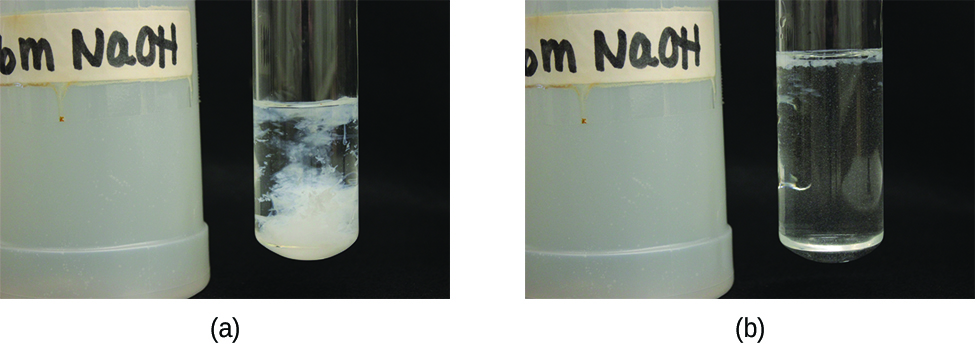
An excess of hydroxide must be avoided when preparing aluminum, gallium, zinc, and tin(II) hydroxides, or the hydroxides will dissolve with the formation of the corresponding complex ions: and (see Figure 18.45). The important aspect of complex ions for this chapter is that they form by a Lewis acid-base reaction with the metal being the Lewis acid.
英語のヒント
アルミニウム、ガリウム、亜鉛、スズ(II)の水酸化物を調製する際は、水酸化物を過剰にしてはならない。そうすると、対応する錯イオン、、、を形成して、水酸化物が溶解してしまう(図18.45参照)。この章における錯イオンの重要な点は、金属がルイス酸となるルイス酸塩基反応によって、それらが形成されることである。
OpenStax, Rice University, Chemistry 2e. Original caption credit: (credit: modification of work by Mark Ott) · CC BY 4.0 · Source出典

Figure 18.45図 18.45
(a) Mixing solutions of NaOH and Zn(NO3)2 produces a white precipitate of Zn(OH)2. (b) Addition of an excess of NaOH results in dissolution of the precipitate. (credit: modification of work by Mark Ott)
(a) NaOHとZn(NO3)2の溶液を混ぜると、Zn(OH)2の白色沈殿が生じる。(b) 過剰のNaOHを加えると、沈殿が溶解する。(クレジット:Mark Ottの作品を改変。)
Industry uses large quantities of sodium hydroxide as a cheap, strong base. Sodium chloride is the starting material for the production of NaOH because NaCl is a less expensive starting material than the oxide. Sodium hydroxide is among the top 10 chemicals in production in the United States, and this production was almost entirely by electrolysis of solutions of sodium chloride. This process is the chlor-alkali process, and it is the primary method for producing chlorine.
工業では、安価な強塩基として水酸化ナトリウムを大量に用いる。NaClは酸化物より安価な出発物質であるため、NaOHの生産には塩化ナトリウムを出発物質として使う。水酸化ナトリウムは、米国の生産量上位10位に入る化学物質であり、その生産はほぼすべて、塩化ナトリウム溶液の電気分解によって行われていた。この過程が塩素アルカリ法であり、塩素を生産する主要な方法でもある。
Sodium hydroxide is an ionic compound and melts without decomposition. It is very soluble in water, giving off a great deal of heat and forming very basic solutions: 40 grams of sodium hydroxide dissolves in only 60 grams of water at 25 °C. Sodium hydroxide is employed in the production of other sodium compounds and is used to neutralize acidic solutions during the production of other chemicals such as petrochemicals and polymers.
水酸化ナトリウムはイオン性化合物で、分解せずに融解する。水に非常によく溶け、多量の熱を放出し、強い塩基性の溶液を作る。25 °Cでは、わずか60グラムの水に40グラムの水酸化ナトリウムが溶ける。水酸化ナトリウムは、他のナトリウム化合物の生産に使われるほか、石油化学製品やポリマーなど、他の化学物質の生産中に酸性溶液を中和するために用いられる。
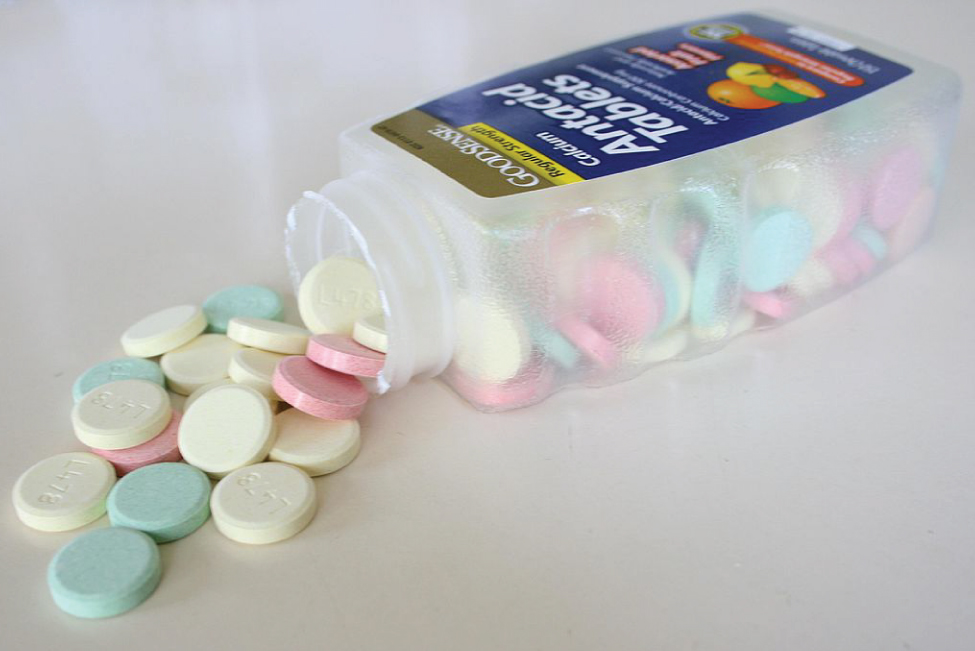
Many of the applications of hydroxides are for the neutralization of acids (such as the antacid shown in Figure 18.46) and for the preparation of oxides by thermal decomposition. An aqueous suspension of magnesium hydroxide constitutes the antacid milk of magnesia. Because of its ready availability (from the reaction of water with calcium oxide prepared by the decomposition of limestone, CaCO3), low cost, and activity, calcium hydroxide is used extensively in commercial applications needing a cheap, strong base. The reaction of hydroxides with appropriate acids is also used to prepare salts.
英語のヒント
水酸化物の用途の多くは、酸の中和(図18.46に示す制酸剤など)と、熱分解による酸化物の調製である。水酸化マグネシウムの水懸濁液は、制酸剤のミルク・オブ・マグネシアを構成する。水酸化カルシウムは、容易に入手できること(石灰岩CaCO3の分解で調製した酸化カルシウムと水との反応による)、低コスト、活性の高さから、安価な強塩基を必要とする商業用途で広く使われる。水酸化物と適切な酸との反応は、塩の調製にも使われる。
OpenStax, Rice University, Chemistry 2e. Original caption credit: (credit: “Midnightcomm”/Wikimedia Commons) Source work: Antacid-L478.jpg · CC BY 2.5 · Source出典

Figure 18.46図 18.46
Calcium carbonate, CaCO3, can be consumed in the form of an antacid to neutralize the effects of acid in your stomach. (credit: “Midnightcomm”/Wikimedia Commons)
炭酸カルシウムCaCO3は、胃の中の酸の作用を中和するため、制酸剤の形で摂取できる。(クレジット:「Midnightcomm」/Wikimedia Commons)