第6章地中海の人々Mediterranean Peoples
Introductionはじめに
Alexander the Great.アレクサンドロス大王
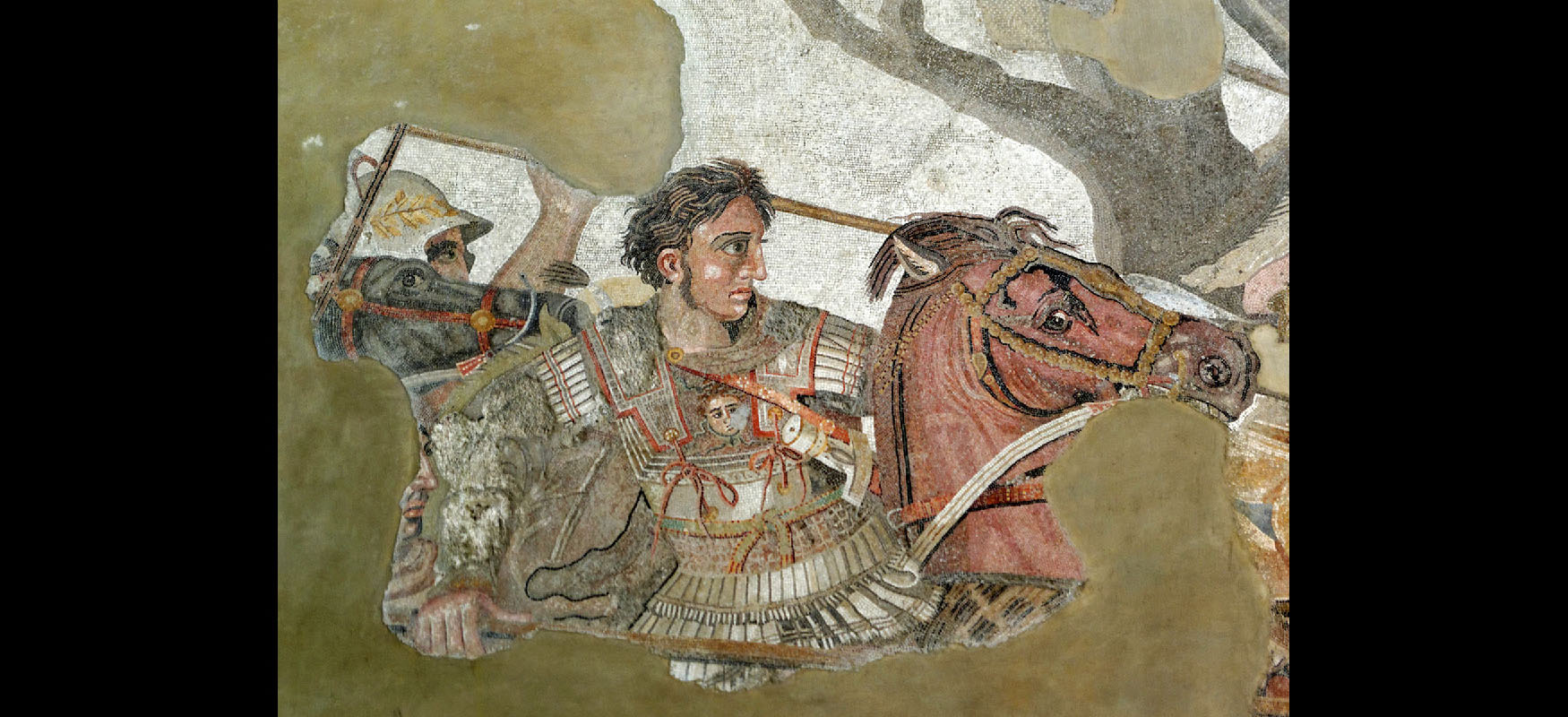
(credit: modification of work “Alexander and Bucephalus - Battle of Issus mosaic” by Museo Archeologico Nazionale – Naples/Wikimedia Commons, Public Domain) · Public Domain
Figure 6.1 This first-century CE portrayal of the Macedonian king Alexander the Great is part of a large mosaic depicting the Battle of Issus (333 BCE) that was discovered in a home excavated in Pompeii, Italy. (credit: modification of work “Alexander and Bucephalus - Battle of Issus mosaic” by Museo Archeologico Nazionale – Naples/Wikimedia Commons, Public Domain)
図6.1 後1世紀に制作されたこのマケドニア王アレクサンドロス大王の表現は、イッソスの戦い(前333年)を描いた大きなモザイクの一部である。イタリアのポンペイで発掘された住宅から見つかった。(出典: 原作品を加工:“Alexander and Bucephalus - Battle of Issus mosaic”/Museo Archeologico Nazionale – Naples/Wikimedia Commons, パブリックドメイン)
In the first century CE, a wealthy Roman in the southern Italian town of Pompeii decorated his home with an elaborate mosaic portraying the decisive victory of the Macedonians, led by Alexander the Great, over the Persian Empire at the Battle of Issus (in modern Turkey) in 333 BCE (Figure 6.1). Why would a Roman invest in such expensive decoration to commemorate the three hundred–year-old victory of a foreign king in a distant land?
英語のヒント
紀元後1世紀、イタリア南部の町ポンペイに暮らす裕福なローマ人が、自宅を精巧なモザイクで飾った。描かれていたのは、前333年、現在のトルコに当たるイッソスで、アレクサンドロス大王率いるマケドニア軍がペルシア帝国に決定的な勝利を収めた場面である(図6.1)。なぜローマ人が、遠い土地で外国の王が300年前に挙げた勝利を記念するために、これほど高価な装飾に資金を投じたのだろうか。
Beginning approximately 3,500 years before our time, the lands that border the Mediterranean Sea became increasingly linked by commerce and cultural interaction. These links culminated in the emergence of the Roman Empire, which had united all these regions by the first century CE. Greek colonists had settled the region of Pompeii some seven hundred years before this mosaic was produced, and Alexander, the hero of the battle, was a champion in Greek culture. With his iconic victory over the Persian “barbarians,” he represented the shared cultural legacy of Greeks and Romans. The history of the ancient Mediterranean world shows how this common culture developed over time.
英語のヒント
今から約3,500年前以降、地中海沿岸の土地は、商業と文化交流を通じてしだいに強く結び付くようになった。この結び付きは、紀元後1世紀までにこれらの地域をすべて統一したローマ帝国の出現へとつながった。このモザイクが作られる約700年前には、ギリシアの植民者がポンペイの地域に定住していた。そして戦いの英雄アレクサンドロスは、ギリシア文化にとっての英雄だった。ペルシアの「蛮族」に象徴的な勝利を収めた彼は、ギリシア人とローマ人が共有する文化的遺産を体現していた。古代地中海世界の歴史をたどれば、この共通の文化が長い時間をかけてどのように形成されたかがわかる。
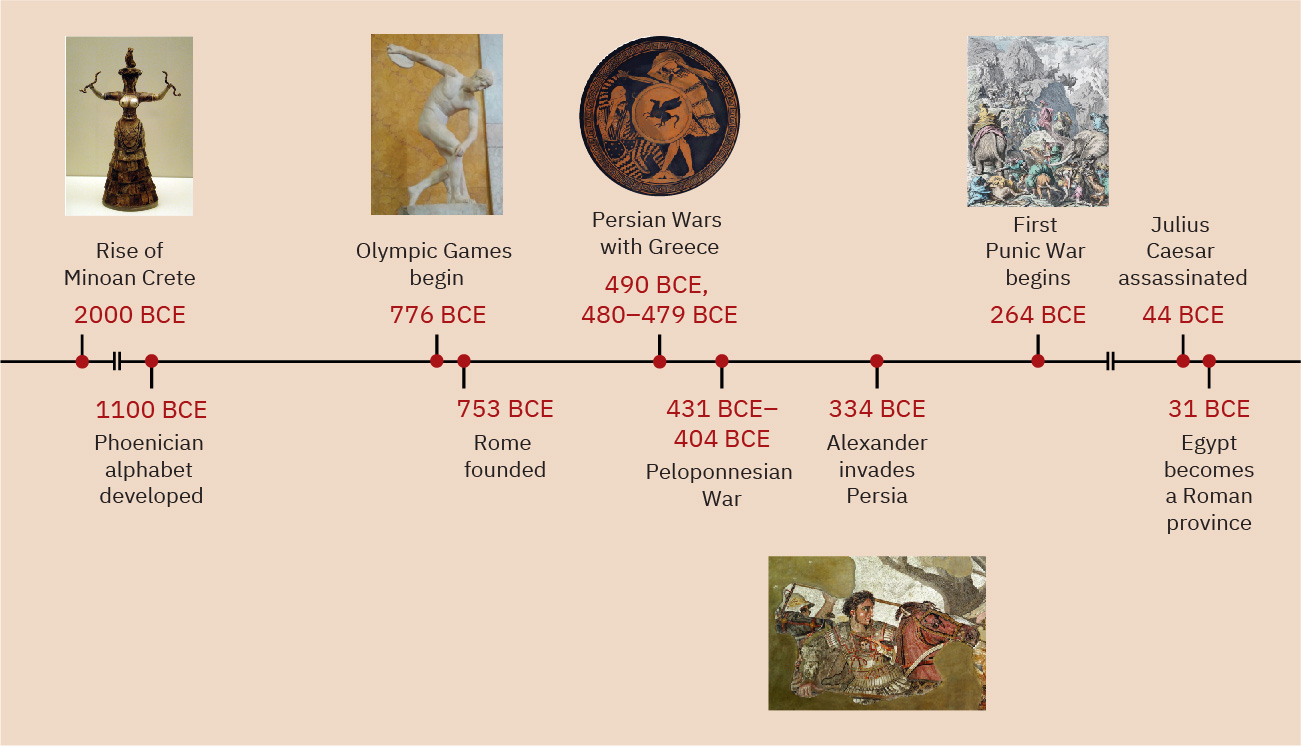
Timeline: Mediterranean Peoples.年表:地中海の諸民族
(credit “2000 BCE”: modification of work “Figurine of the Snake Goddess. Archaeological Museum of Herakleion” by O.Mustafin/Wikimedia Commons, CC0 1.0; credit “776 BCE: modification of work “Discobolus side 2” by Ricky Bennison/Wikimedia Commons, CC0 1.0; credit “490 BCE, 480–479 BCE”: modification of work “Persian Warrior (Left) and Greek Warrior (Right) in a Duel” by National Museums Scotland/Wikimedia Commons, Public Domain; credit “334 BCE”: modification of work “Alexander and Bucephalus - Battle of Issus mosaic” by Museo Archeologico Nazionale – Naples/Wikimedia Commons, Public Domain; credit “264 BCE”: modification of work “Heinrich Leutemann - Hannibals Übergang über die Alpen (cropped)” by Musée Dauphinois Grenoble/Wikimeida Commons, Public Domain) · CC0 1.0 + Public Domain
Figure 6.2 (credit “2000 BCE”: modification of work “Figurine of the Snake Goddess. Archaeological Museum of Herakleion” by O.Mustafin/Wikimedia Commons, CC0 1.0; credit “776 BCE: modification of work “Discobolus side 2” by Ricky Bennison/Wikimedia Commons, CC0 1.0; credit “490 BCE, 480–479 BCE”: modification of work “Persian Warrior (Left) and Greek Warrior (Right) in a Duel” by National Museums Scotland/Wikimedia Commons, Public Domain; credit “334 BCE”: modification of work “Alexander and Bucephalus - Battle of Issus mosaic” by Museo Archeologico Nazionale – Naples/Wikimedia Commons, Public Domain; credit “264 BCE”: modification of work “Heinrich Leutemann - Hannibals Übergang über die Alpen (cropped)” by Musée Dauphinois Grenoble/Wikimeida Commons, Public Domain)
図6.2 (出典“2000 BCE”: 原作品を加工:“Figurine of the Snake Goddess. Archaeological Museum of Herakleion”/O.Mustafin/Wikimedia Commons, CC0 1.0;出典 “776 BCE: 原作品を加工:“Discobolus side 2”/Ricky Bennison/Wikimedia Commons, CC0 1.0;出典 “490 BCE, 480–479 BCE”: 原作品を加工:“Persian Warrior (Left) and Greek Warrior (Right) in a Duel”/National Museums Scotland/Wikimedia Commons, パブリックドメイン;出典 “334 BCE”: 原作品を加工:“Alexander and Bucephalus - Battle of Issus mosaic”/Museo Archeologico Nazionale – Naples/Wikimedia Commons, パブリックドメイン;出典 “264 BCE”: 原作品を加工:“Heinrich Leutemann - Hannibals Übergang über die Alpen (cropped)”/Musée Dauphinois Grenoble/Wikimeida Commons, パブリックドメイン)
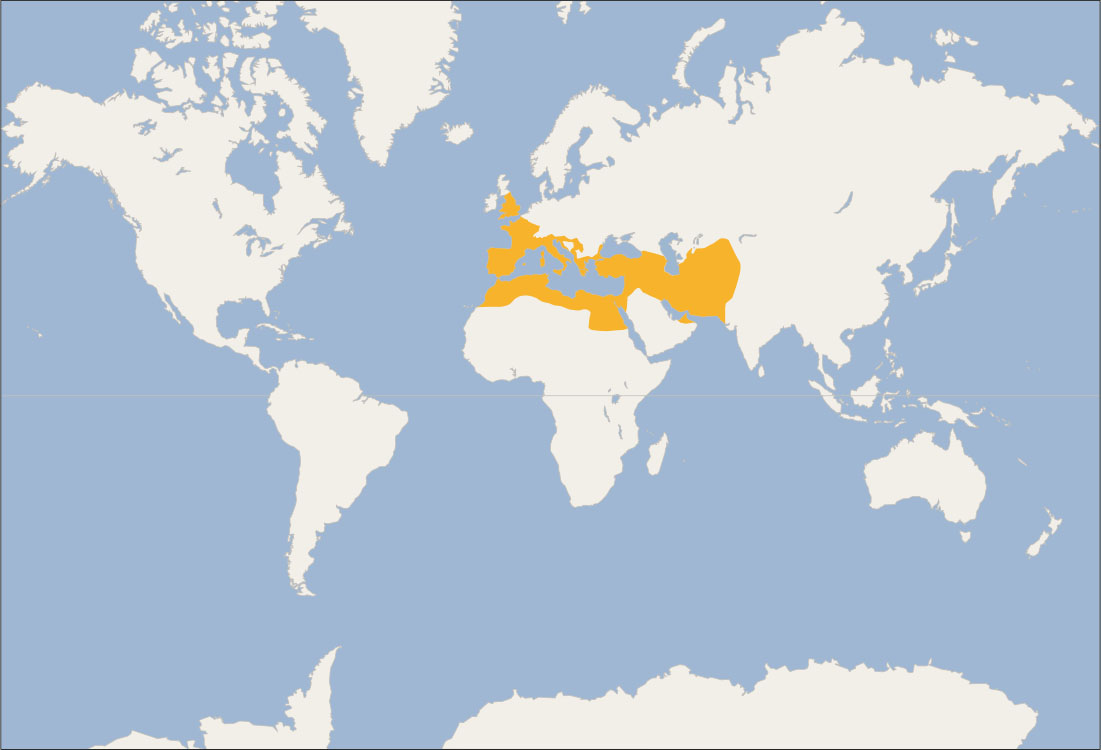
Locator Map: Mediterranean Peoples.位置を確認する地図:地中海の諸民族
(credit: modification of work “World map blank shorelines” by Maciej Jaros/Wikimedia Commons, Public Domain) · Public Domain
Figure 6.3 (credit: modification of work “World map blank shorelines” by Maciej Jaros/Wikimedia Commons, Public Domain)
図6.3 (出典: 原作品を加工:“World map blank shorelines”/Maciej Jaros/Wikimedia Commons, パブリックドメイン)