第3章初期文明と都市社会Early Civilizations and Urban Societies
Introductionはじめに
The Art of Ur.ウルの美術。
(credit: modification of work "Standard of Ur" by Unknown/Wikimedia Commons, Public Domain) · Public Domain
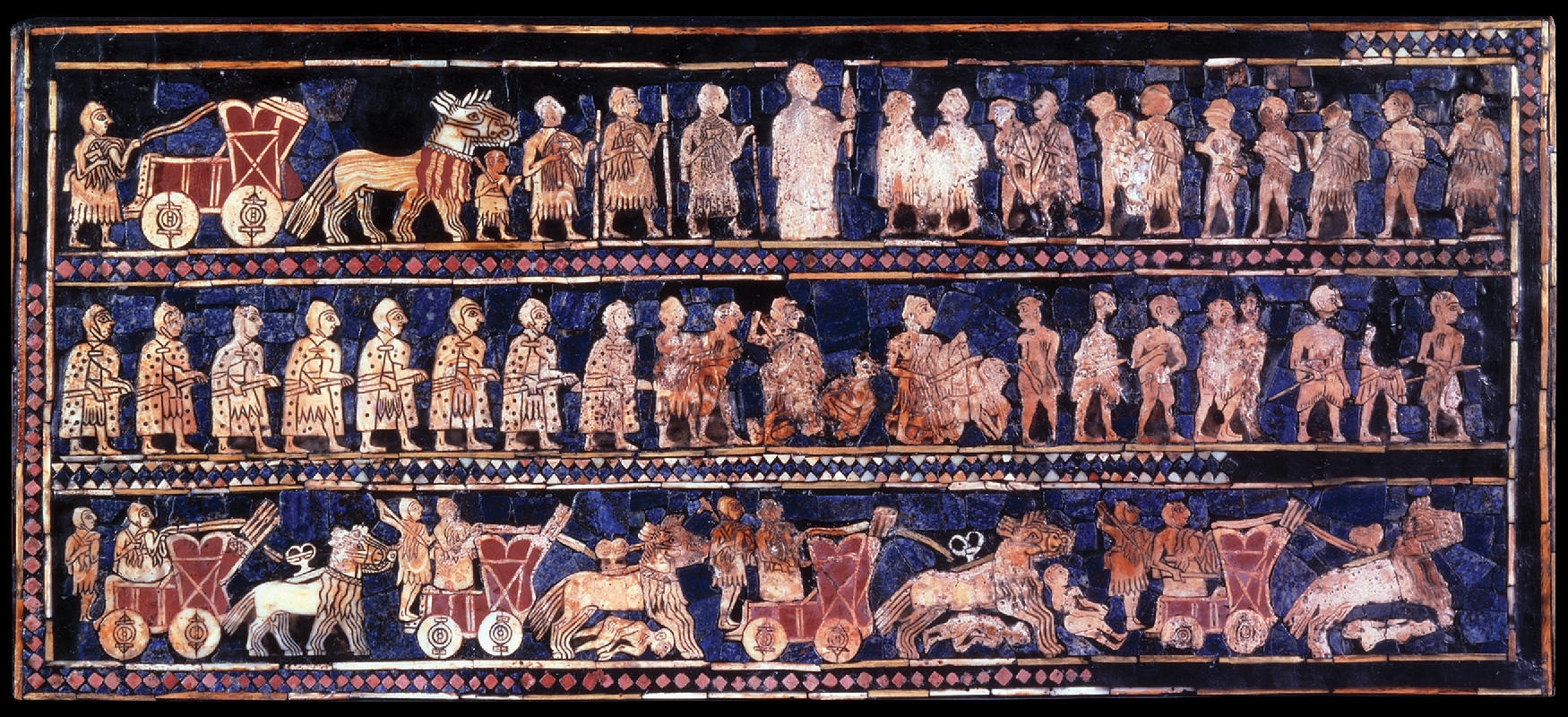
Figure 3.1 This intricately ornamented box of mosaic-covered wood was found in a royal tomb in the ancient city of Ur. It dates from about 2550 BCE and exhibits several markers of this era’s civilizations, such as a hierarchical society (as the scenes illustrate) and the presence of wealth, leisure, and specialized skills needed to make such an elaborate decorative object. (credit: modification of work "Standard of Ur" by Unknown/Wikimedia Commons, Public Domain)
図3.1 モザイクを施したこの精巧な木箱は、古代都市ウルの王墓で発見された。紀元前2550年頃のもので、描かれた場面に示される階層社会や、このような凝った装飾品を作るための富、余暇、専門技能など、この時代の文明を示す特徴が見られる。(出典:作者不詳/Wikimedia Commons「Standard of Ur」を改変、パブリックドメイン)
The land of Sumer, in today’s southern Iraq, was home to some of the largest early cities in human history. In one of these ancient settlements, Ur, a beautiful wooden box was laid in a royal tomb in about 2550 BCE (Figure 3.1). It measures roughly nine by twenty inches (a little bigger than a laptop) and is inlaid with elaborate mosaic figures and borders composed of bits of red limestone, lapis lazuli, and marine shell. This kind of specialized craftsmanship was a hallmark of societies that no longer depended on hunting and gathering for food but rather produced crops capable of sustaining large populations. In turn, they gained enough time and prosperity for some members to focus on artisanal crafts.
英語のヒント
現在のイラク南部に当たるシュメールには、人類史上最初期の大都市のいくつかがあった。その一つウルでは、紀元前2550年頃、王墓に美しい木箱が納められた(図3.1)。大きさは約9×20インチで、ノートパソコンより少し大きい。赤い石灰岩、ラピスラズリ、海の貝殻の小片を使い、精巧なモザイクの人物像や縁飾りが象嵌されている。このような専門的な職人技は、食料を狩猟採集に頼る段階を離れ、大きな人口を養える作物を生産する社会の特徴だった。その結果、社会の一部の人が工芸に専念できるだけの時間と豊かさが生まれた。
The box indicates at least three important things about the civilization that produced it. First, a highly skilled artisan constructed the box and created the mosaics, indicating the presence of specialization of labor. Second, the mosaics show someone who is presumably the king at the center of the top row, directing the soldiers below. These power dynamics suggest new social hierarchies. Finally, the soldiers all appear smaller in the scene than the king, symbolically reflecting their subordinate position and telling us that social stratification had come into existence. All these developments took place gradually over time, bringing slow but enduring change to the lives of the people in Ur and those who lived nearby. Similar changes occurred in the world’s other ancient cities.
英語のヒント
この箱からは、それを作った文明について、少なくとも三つの重要なことが分かる。第一に、高度な技能を持つ職人が箱とモザイクを作ったことは、労働の専門化を示している。第二に、モザイクの上段中央では、王と思われる人物が下の兵士たちを指揮している。この力関係は、新しい社会的序列を示唆する。第三に、兵士は全員、王より小さく描かれている。これは従属的な立場を象徴し、社会の階層化が成立していたことを示す。こうした変化は、時間をかけて徐々に起こり、ウルとその周辺に住む人々の暮らしを、ゆっくりと、しかし持続的に変えた。世界のほかの古代都市でも、同様の変化が起こった。
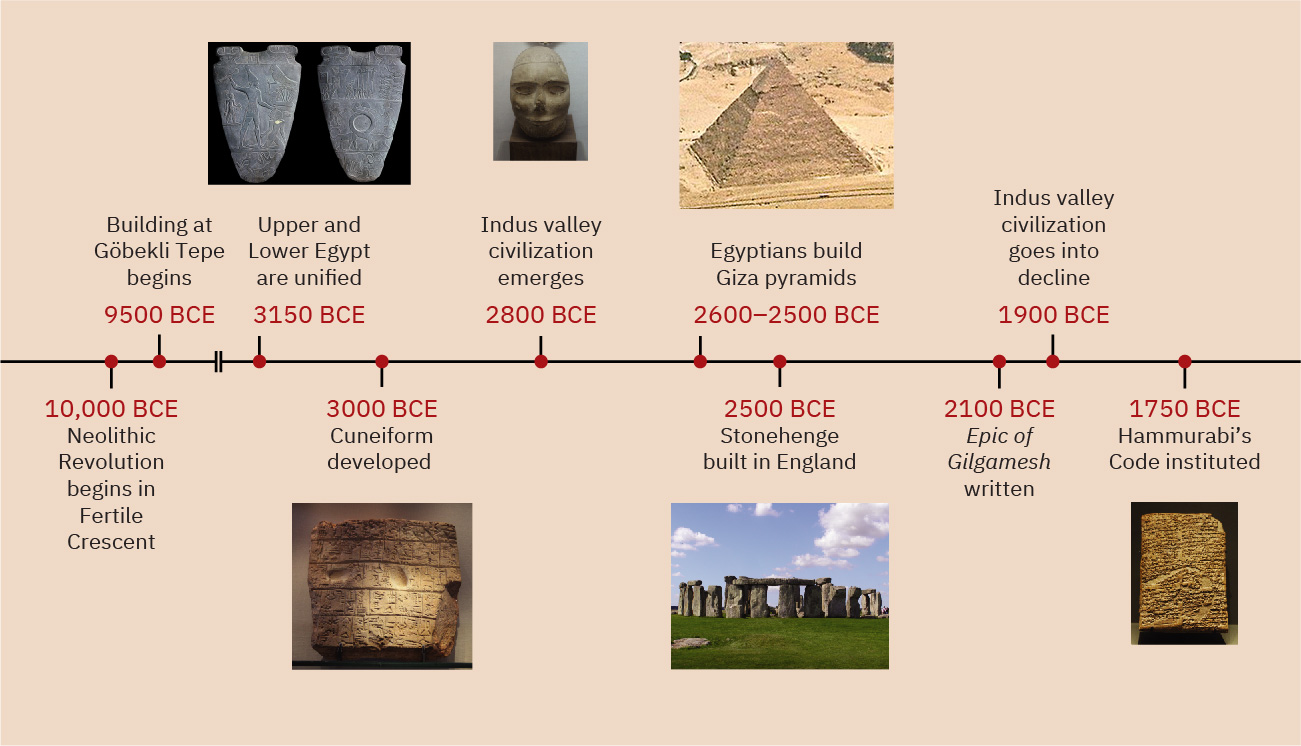
Timeline: Early Civilizations and Urban Societies.年表:初期文明と都市社会。
(credit "3000 BCE, cuneiform": modification of work "Sumerian Cuneiform Clay Tablet" by Gary Todd/Flickr, CC0 1.0; credit "3000 BCE, Dynastic Rule": "La palette de Narmer" by “Jean88”/Wikimedia Commons, CC0 1.0; credit "3000 BCE, Indus Valley": modification of work "Harappan (Indus Valley) Pottery" by Gary Todd/Flickr, CC0 1.0; credit "2500 BCE, Giza": "All Gizah Pyramids" by Ricardo Liberato/Wikimedia Commons, CC BY 2.5; credit "2500 BCE, Stonehenge": "Stonehenge" by “thegarethwiscombe”/Flickr, CC BY 2.0; credit "1750 BCE": "Prologue of the code of Hammurabi" by Marie-Lan Nguyen/Wikimedia Commons, Public Domain) · CC0 1.0 + CC BY 2.5 + CC BY 2.0 + Public Domain
Figure 3.2 (credit "3000 BCE, cuneiform": modification of work "Sumerian Cuneiform Clay Tablet" by Gary Todd/Flickr, CC0 1.0; credit "3000 BCE, Dynastic Rule": "La palette de Narmer" by “Jean88”/Wikimedia Commons, CC0 1.0; credit "3000 BCE, Indus Valley": modification of work "Harappan (Indus Valley) Pottery" by Gary Todd/Flickr, CC0 1.0; credit "2500 BCE, Giza": "All Gizah Pyramids" by Ricardo Liberato/Wikimedia Commons, CC BY 2.5; credit "2500 BCE, Stonehenge": "Stonehenge" by “thegarethwiscombe”/Flickr, CC BY 2.0; credit "1750 BCE": "Prologue of the code of Hammurabi" by Marie-Lan Nguyen/Wikimedia Commons, Public Domain)
図3.2 (出典「紀元前3000年、楔形文字」:Gary Todd/Flickr「Sumerian Cuneiform Clay Tablet」を改変、CC0 1.0。「紀元前3000年、王朝支配」:「Jean88」/Wikimedia Commons「La palette de Narmer」、CC0 1.0。「紀元前3000年、インダス文明」:Gary Todd/Flickr「Harappan (Indus Valley) Pottery」を改変、CC0 1.0。「紀元前2500年、ギザ」:Ricardo Liberato/Wikimedia Commons「All Gizah Pyramids」、CC BY 2.5。「紀元前2500年、ストーンヘンジ」:「thegarethwiscombe」/Flickr「Stonehenge」、CC BY 2.0。「紀元前1750年」:Marie-Lan Nguyen/Wikimedia Commons「Prologue of the code of Hammurabi」、パブリックドメイン)
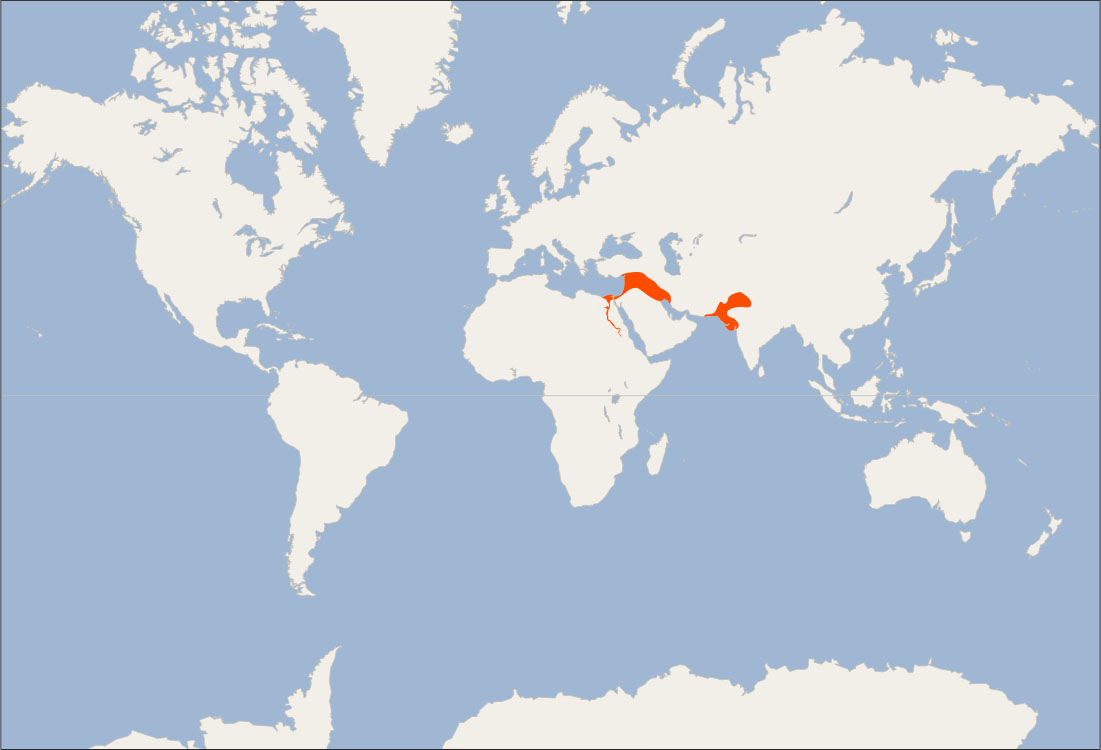
Locator Map: Early Civilizations and Urban Societies.位置図:初期文明と都市社会。
(credit: modification of work "World map blank shorelines" by Maciej Jaros/Wikimedia Commons, Public Domain) · Public Domain
Figure 3.3 (credit: modification of work "World map blank shorelines" by Maciej Jaros/Wikimedia Commons, Public Domain)
図3.3 (出典:Maciej Jaros/Wikimedia Commons「World map blank shorelines」を改変、パブリックドメイン)