第7章ローマ帝国での暮らしExperiencing the Roman Empire
Introductionはじめに
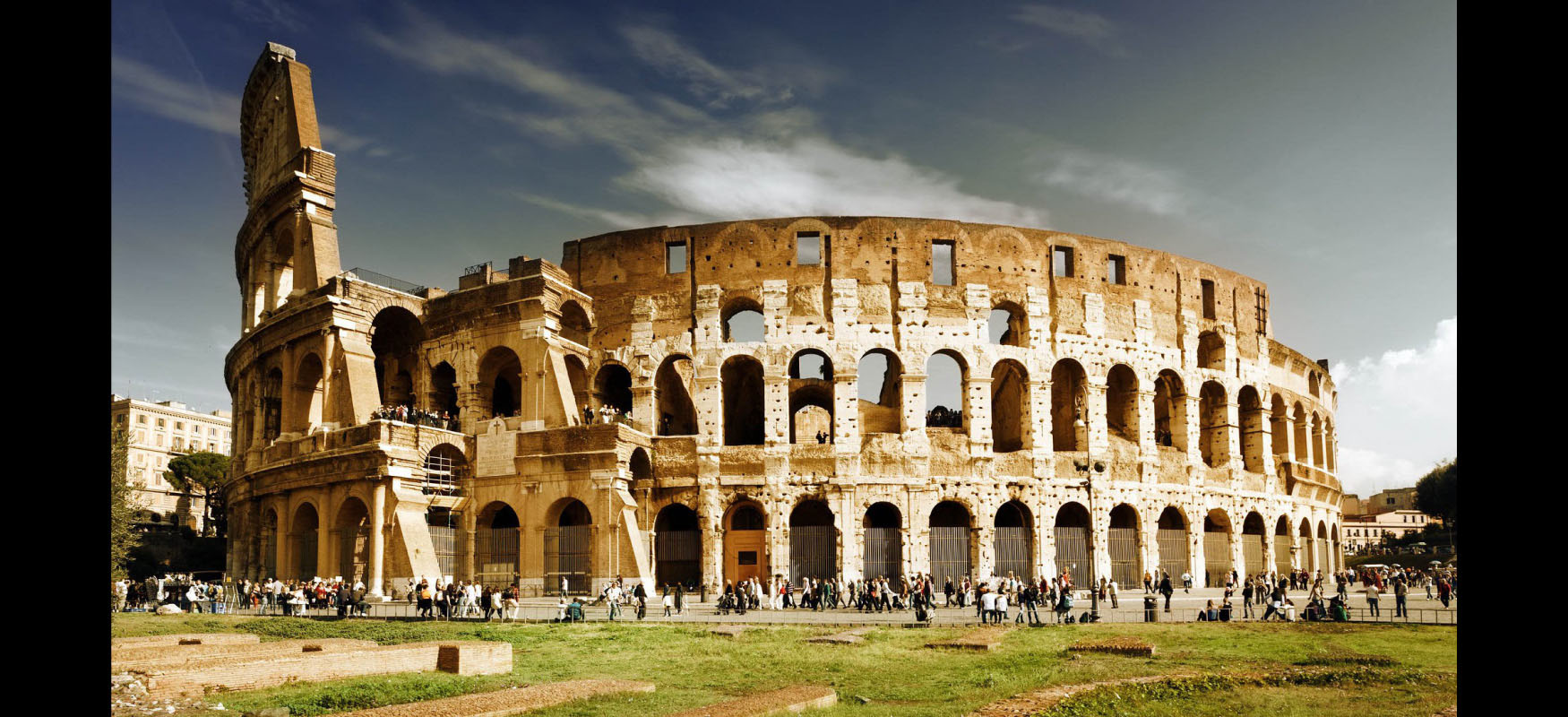
The Colosseum in Rome.ローマのコロッセウム。
(credit: modification of work "Colosseum - Rome - Italy" by Sam Valadi/Flickr, CC BY 2.0) · CC BY 2.0
Figure 7.1 The largest standing amphitheater in the world, the Colosseum is a perpetual reminder of the power and culture of the Roman Empire at its height. (credit: modification of work "Colosseum - Rome - Italy" by Sam Valadi/Flickr, CC BY 2.0)
図7.1 現存する世界最大の円形闘技場、コロッセウムは、最盛期のローマ帝国の権力と文化を、今も絶えず私たちに思い起こさせる。(出典:Sam Valadi/Flickrによる「Colosseum - Rome - Italy」を改変、CC BY 2.0)
The ancient city of Rome gave its name to an empire that stretched from Britain to the Arabian Peninsula. While political life was centered in the city of Rome—the seat of the Senate and of the emperor—“Rome” came to represent a much broader geographic expanse. From the second century BCE to the third century CE, Rome’s magnitude was reflected in the diversity of experiences of all those who lived within the empire’s borders, not just those who lived in the shadow of the great Colosseum (Figure 7.1).
英語のヒント
古代都市ローマは、ブリテン島からアラビア半島まで広がる帝国の名にもなった。政治生活の中心は、元老院と皇帝の所在地であるローマ市にあったが、「ローマ」という名は、はるかに広大な地域を表すようになった。紀元前2世紀から紀元後3世紀にかけて、ローマの規模の大きさを映し出していたのは、巨大なコロッセウムの近くに暮らす人々だけでなく、帝国の領域内に暮らすすべての人々の、多様な経験だった(図7.1)。
Rome was a patriarchal society that achieved success through military dominance, patriotism, and respect for authority. Romans prided themselves on the status and reputation they achieved through military or political service, as well as through their claims of noble ancestors. This arrangement largely benefited upper-class Roman men, while others struggled to navigate the system and were subject to domination by the elite. Roman women and enslaved people were held to restrictive cultural standards for their behavior, though many were able to overcome these and hold real influence in Roman society. The complexity of daily life in Rome is key to understanding the way the empire functioned and flourished at its height.
英語のヒント
ローマは、軍事的優位、愛国心、権威への敬意によって成功を収めた家父長制の社会だった。ローマ人は、軍務や政治への奉仕によって得た地位や評判、そして高貴な祖先を持つという主張を誇りにしていた。この仕組みから大きな利益を得たのはローマの上層階級の男性であり、ほかの人々は、仕組みの中で生き抜こうと苦闘し、エリートによる支配を受けた。ローマの女性や奴隷にされた人々は、行動を制限する文化的な規範に従うことを求められた。それでも、その制約を乗り越え、ローマ社会で実際に影響力を持つことのできた人も多かった。ローマの日常生活の複雑さは、最盛期の帝国がどのように機能し、繁栄したのかを理解する鍵である。
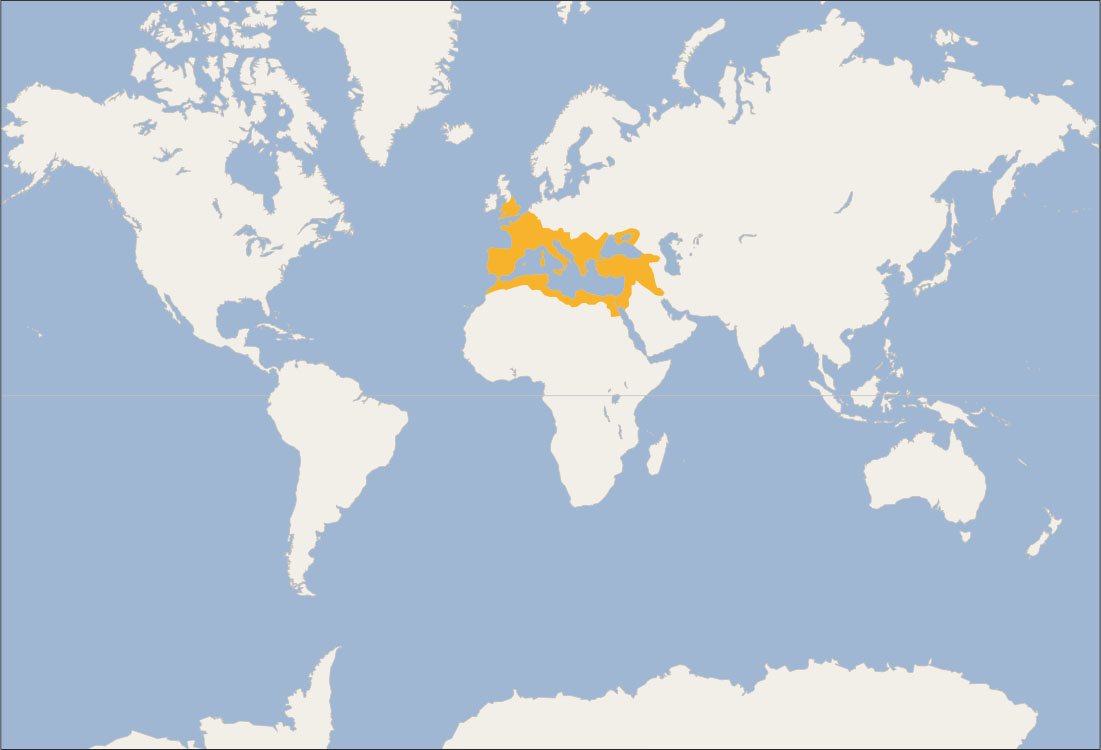
Locator Map: Experiencing the Roman Empire.位置図――ローマ帝国での暮らし。
(credit: modification of work “World map blank shorelines” by Maciej Jaros/Wikimedia Commons, Public Domain) · Public Domain
Figure 7.2 (credit: modification of work “World map blank shorelines” by Maciej Jaros/Wikimedia Commons, Public Domain)
図7.2 (出典:Maciej Jaros/Wikimedia Commonsによる「World map blank shorelines」を改変、パブリックドメイン)