第7章ローマ帝国での暮らしExperiencing the Roman Empire
7.4 Religion in the Roman Empire7.4 ローマ帝国の宗教
Learning Objectives学習の目標
By the end of this section, you will be able to:
この節を学ぶと、次のことができるようになる。
Identify the major cults and religions found in the Roman Empire
ローマ帝国に見られた主要な祭祀や宗教を特定する
Discuss how Romans accepted and adapted religions from other areas of the Empire
ローマ人が帝国のほかの地域の宗教を、どのように受け入れ、作り変えたかを論じる
Explain the rise of Christianity in Rome
ローマにおけるキリスト教の台頭を説明する
Religious belief and practice were enmeshed in Roman daily life. The presence of the divine suffused the physical world, and Romans sacrificed to their many gods as a way to gain their favor. Roman religion was multifaceted and based initially on the Greek pantheon, adapted for Rome’s culture and language. While Romans took pride in the traditional elements of their religious system, they were also able to incorporate new features in it to accommodate cultural or political change. Some new gods were added, and it was common for certain sectors of Roman society such as soldiers to have favorite gods or patron deities. The flexibility of Roman religion set the stage for new religious groups to emerge, including Christians in the first century CE.
英語のヒント
宗教的な信仰と実践は、ローマの日常生活に深く組み込まれていた。神的な存在が物質的な世界に行き渡っているとされ、ローマ人は多くの神々の好意を得るために供犠を捧げた。ローマの宗教は多面的で、当初はギリシャの神々の体系を基礎に、それをローマの文化と言語に合わせたものだった。ローマ人は宗教の伝統的な要素を誇りにしつつ、文化や政治の変化に対応するため、新しい特徴を取り入れることもできた。新たな神が加えられることもあり、兵士などの特定の社会集団が、特に好む神や守護神を持つことも一般的だった。この宗教の柔軟さが、紀元後1世紀のキリスト教徒を含む、新たな宗教集団が現れる下地となった。
The Emperor and the Virgins皇帝と処女たち
Roman religio (from which the English word “religion” derives) signified an obligation to the gods. According to this principle, Romans were expected to pay attention to divine and religious matters, including the most important aspect of religious practice, sacrifice. By offering animals to the gods, Romans hoped to receive good fortune or gain insight into a question or problem. While their religion certainly had private elements, its public rituals often intertwined faith with politics. That connection was also, and especially, visible in the worship of the emperor.
英語のヒント
ローマのレリギオ――英語のreligionの語源――は、神々に対する義務を意味した。この原則に従い、ローマ人は神的・宗教的な事柄に注意を払い、特に宗教実践の最重要の側面である供犠を重んじることを期待された。神々に動物を捧げることで、幸運を得たり、問いや問題への洞察を得たりしようとした。その宗教には確かに私的な要素もあったが、公的な儀礼はしばしば信仰と政治を絡み合わせた。その結びつきは、皇帝崇拝においても、とりわけはっきりと見られた。
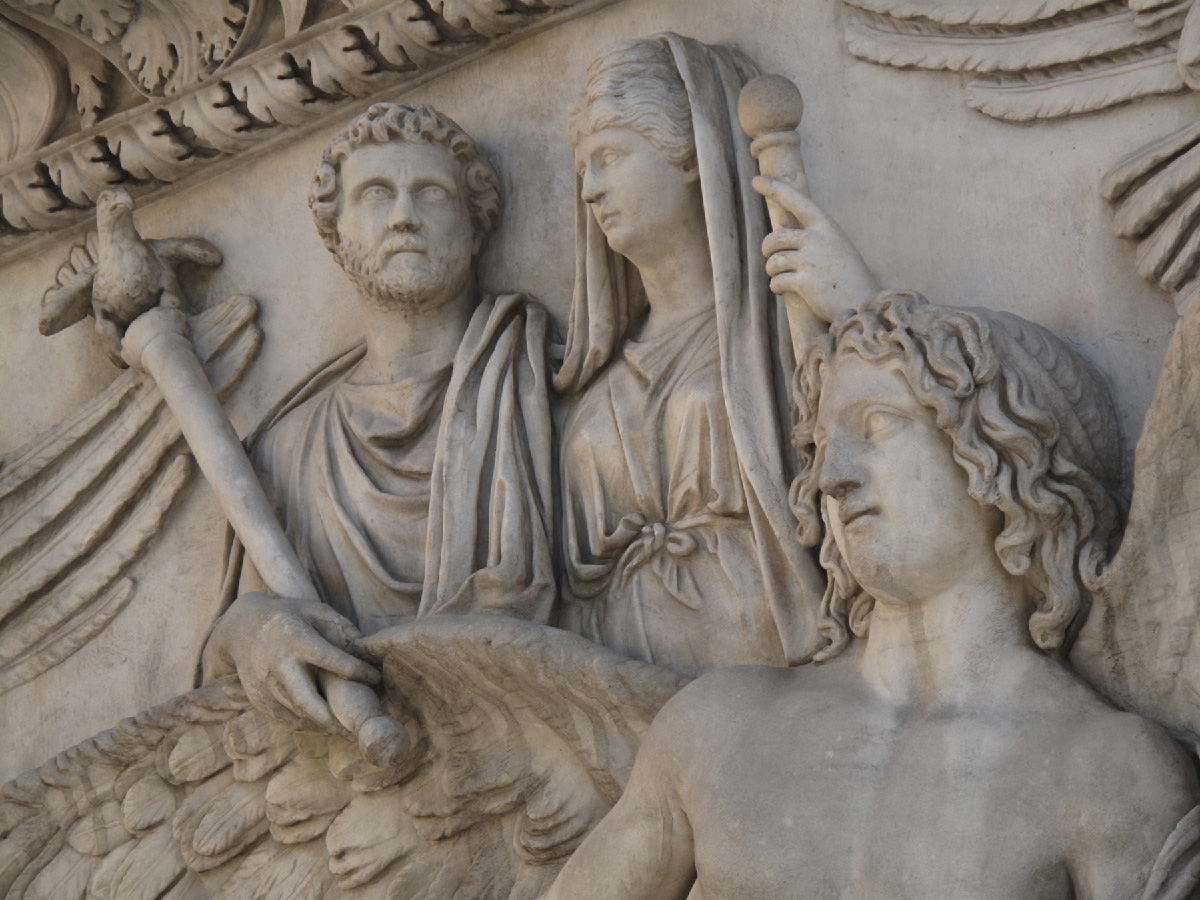
The imperial cult was a group of rites and practices that praised a deceased emperor’s divine status. Emperors were often deified (made gods) after they died, by order of their successors and with approval by the Senate. This formal process of deification was known as apotheosis and was extended to emperors who were remembered favorably (Figure 7.13). The process of deification had become so routine among later emperors that when the emperor Vespasian was dying, he is reported to have said, “Alas! I think I am becoming a god!”
英語のヒント
皇帝祭祀とは、亡くなった皇帝の神的な地位をたたえる一連の儀式と実践だった。皇帝は死後、後継者の命令と元老院の承認によって、神格化、すなわち神にされることが多かった。アポテオーシスと呼ばれたこの正式な神格化の手続きは、好意的に記憶された皇帝に適用された(図7.13)。後の皇帝たちの間では、この手続きがあまりにも通例となったため、ウェスパシアヌス帝は死に際して、「ああ、どうやら私は神になりかけているらしい」と言ったと伝えられる。
The Apotheosis of Emperor Antoninus Pius and Empress Faustina.アントニヌス・ピウス帝と皇后ファウスティナの神格化。
(credit: “Column Base of Antoninus Pius (II)” by Institute for the Study of the Ancient World/Flickr, CC BY 2.0) · CC BY 2.0
Figure 7.13 This detail of a carved marble column from the second century CE shows the apotheosis, or elevation to divine status, of the emperor Antoninus Pius and his wife Faustina. A winged genius (an attendant spirit) in the lower right carries the two to heaven. (credit: “Column Base of Antoninus Pius (II)” by Institute for the Study of the Ancient World/Flickr, CC BY 2.0)
図7.13 紀元後2世紀の大理石の柱に刻まれた浮彫の細部で、アントニヌス・ピウス帝と妻ファウスティナのアポテオーシス、すなわち神的な地位への上昇を描いている。右下の翼を持つゲニウス(守護的な精霊)が、二人を天へ運んでいる。(出典:Institute for the Study of the Ancient World/Flickr「Column Base of Antoninus Pius (II)」、CC BY 2.0)
In this period, priesthoods were created specifically for the worship of a defied emperor. A number of priesthoods already existed that were attached to specific gods and that organized the religious affairs of the city, such as the festival calendar. Priesthoods for the imperial cult were added to this group of religious offices that men could join to further their public careers.
英語のヒント
この時期、神格化された皇帝の崇拝を専門に担う神官職が設けられた。すでに、特定の神に結び付き、祭礼の暦など都市の宗教的な事柄を取り仕切る神官職はいくつも存在していた。皇帝祭祀の神官職も、この宗教的な官職群に加わった。男性たちは、公的な経歴をさらに発展させるため、こうした職に就くことができた。
The worship of living emperors was much more muddled because Romans were wary of changing the custom of deifying only deceased individuals. Julius Caesar seems to have intended to be worshiped as a god in his lifetime, and later emperors may have been aware of this plan because many routinely pushed for deification during their own reigns. In the city of Rome, emperors were often closely associated with the gods, but only stereotypically “corrupt” emperors such as Caligula declared themselves gods during their lifetimes. Still, many compromises were made so living emperors were not directly worshipped. These included associating the emperor with the goddess Roma, the divine representation of the city, or making sacrifices for the emperor’s well-being rather than directly to him. In the provinces, however, divine honors were sometimes given to living emperors; locals might equate a living emperor or a member of the imperial family with a deity in order to gain the emperor’s favor, particularly in the Greek east.
英語のヒント
生きている皇帝の崇拝は、はるかに曖昧で入り組んでいた。ローマ人は、死者だけを神格化する慣習を変えることに慎重だったからである。ユリウス・カエサルは、生前から神として崇拝されることを意図していたように見える。後の皇帝たちも、この計画を知っていたのかもしれない。多くの皇帝が、自分の治世中の神格化を繰り返し推し進めたからである。ローマ市では、皇帝はしばしば神々と密接に結び付けられたが、生前に自らを神と宣言したのは、カリグラのような、典型的な「堕落した」皇帝と見なされる者だけだった。それでも、生きた皇帝を直接崇拝せずに済むよう、多くの折衷策が取られた。皇帝を、都市ローマの神的な姿である女神ローマと結び付けたり、皇帝自身に直接ではなく、皇帝の安寧のために供犠を捧げたりしたのである。しかし属州では、生きている皇帝に神としての栄誉を与えることもあった。特にギリシャ語圏の東方では、地元の人々が皇帝の好意を得るため、生きた皇帝やその家族を神と同一視することがあった。
A few women could serve in a priestly office as vestal virgins. The six members of this female priesthood were chosen at an early age to serve in the Temple of Vesta, the goddess of the hearth, for ten to thirty years. Their chief duty was to protect the sacred eternal fire that symbolized eternal Rome. Letting the flame go out was a punishable offense because the fire’s absence meant Vesta had abandoned the city. Vestals swore a vow of chastity, and the punishment for breaking it was severe, illustrating the symbolic importance of their virginity, which was linked to the preservation of Rome. A vestal who lost her virginity could be punished by being buried alive or having hot metal poured down her throat. As a result, political crises could result from the murder of a vestal, while miracles were attributed to their magical virginity.
英語のヒント
少数の女性は、ウェスタの処女として神官職に就くことができた。この女性神官団の六人は幼いころに選ばれ、かまどの女神ウェスタの神殿で10〜30年間奉仕した。主な務めは、永遠のローマを象徴する神聖な不滅の火を守ることだった。火を絶やすことは罰すべき罪とされた。火が消えることは、ウェスタが都市を見捨てたことを意味したからである。ウェスタの神官は純潔の誓いを立て、それを破った場合の罰は厳しかった。これは、ローマの存続と結び付けられた処女性の、象徴的な重要さを示している。処女性を失った神官は、生き埋めにされたり、熱い金属を喉に流し込まれたりする罰を受けることがあった。そのため、ウェスタの神官の殺害が政治的危機を引き起こすこともあった一方、奇跡は彼女たちの魔力を持つ処女性によるものとされた。
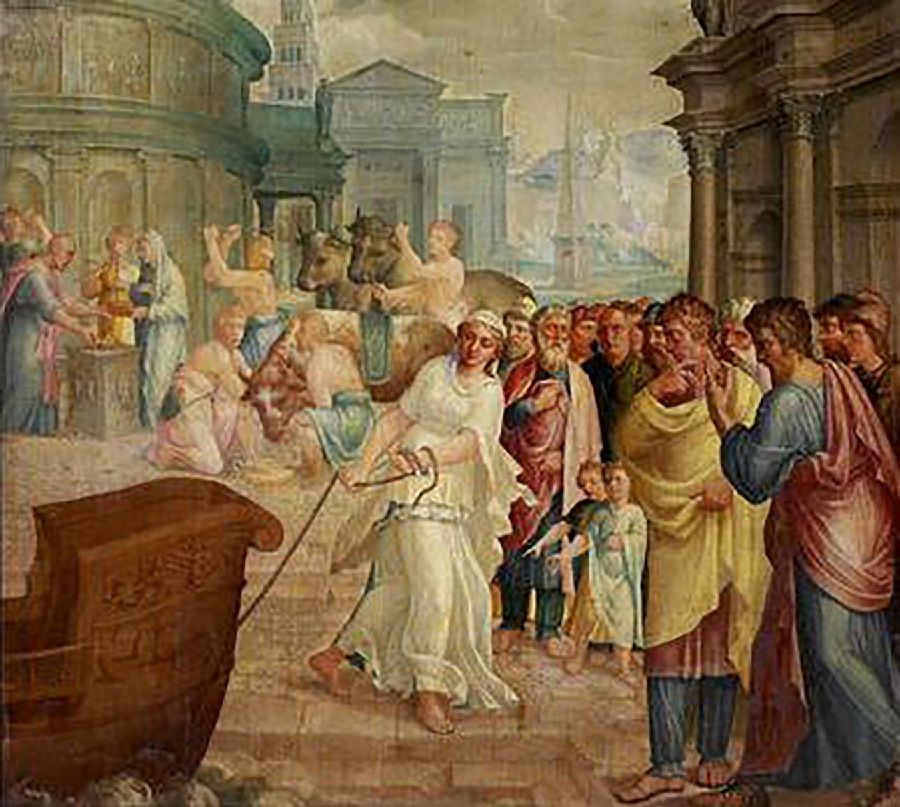
The story of the vestal virgin Claudia Quinta represents one such instance. To win favor during Hannibal’s invasion of Italy in 204 BCE, the Romans brought the goddess Magna Mater (“Great Mother”) by ship from her shrine in Asia Minor, in the form of a black stone. During its reception at Ostia, the ship was grounded on a shoal, but Claudia Quinta was able to miraculously pull it to safety. She had been suspected of breaking her vow of chastity, but her actions proved her virginity. According to the Roman historian Herodian of Antioch, “[Quotation omitted for rights reasons.]” (Figure 7.14).
英語のヒント
ウェスタの処女クラウディア・クインタの物語は、そのような一例である。紀元前204年、ハンニバルのイタリア侵攻中に神の好意を得ようとして、ローマ人は小アジアの聖所から、マグナ・マテル(「偉大な母」)という女神を、黒い石の姿で船に載せて運んだ。オスティアで迎え入れる際、船は浅瀬に乗り上げたが、クラウディア・クインタは奇跡的に船を安全な場所へ引き出すことができた。彼女は純潔の誓いを破ったと疑われていたが、この行為によって処女であることを証明した。アンティオキア出身のローマの歴史家ヘロディアノスは、次のように記している。〔権利の関係で割愛〕(図7.14)。
The Vestal Virgin Claudia Quinta.ウェスタの処女クラウディア・クインタ。
(credit: “Claudia Quinta” by Lambert Lombard, Eglise St-Armand à Stokrooie/Wikimedia Commons, Public Domain) · Public Domain
Figure 7.14 This large sixteenth-century painting by the Belgian artist Lambert Lombard imagines Claudia Quinta’s rescue of the ship carrying Magna Mater to Rome. Lombard had visited Rome, and this work demonstrates that the story of the vestal virgin remained an inspiration there long after the empire had fallen. (credit: “Claudia Quinta” by Lambert Lombard, Eglise St-Armand à Stokrooie/Wikimedia Commons, Public Domain)
図7.14 16世紀のベルギーの画家ランベール・ロンバールによるこの大きな絵は、マグナ・マテルをローマへ運ぶ船をクラウディア・クインタが救った場面を想像して描いている。ロンバールはローマを訪れており、この作品は、帝国の崩壊後も長く、ウェスタの処女の物語がそこで創作の着想を与え続けたことを示している。(出典:Lambert Lombard, Eglise St-Armand à Stokrooie/Wikimedia Commons「Claudia Quinta」、パブリックドメイン)