第7章ローマ帝国での暮らしExperiencing the Roman Empire
7.5 The Regions of Rome7.5 ローマ帝国の諸地域
Learning Objectives学習の目標
By the end of this section, you will be able to:
この節を学び終えると、次のことができるようになる。
Identify the regions of the Roman Empire and the way they related to the center of power
ローマ帝国の諸地域と、それぞれが権力の中心と結んだ関係を説明する。
Describe the various peoples who made up the Roman Empire
ローマ帝国を構成したさまざまな人々について述べる。
The expansion of Rome’s borders created a process in which local communities both emulated and resisted Roman culture, and in which some cultural elements were imposed by the Romans themselves. In the western empire, the army spread Roman culture, and local life coexisted with the presence of Roman people and goods. In the eastern empire, including Egypt and the Levant, complex local life likewise persisted even as elites hoped to gain prominence in the imperial system. The exclusion or incorporation of foreigners was a perennial problem for the empire as it interacted with a wide swath of different cultures. Citizenship was a prized Roman cultural value, and its changing definition reflected the way Rome managed its empire.
英語のヒント
ローマの領土が広がるにつれ、地域社会がローマ文化を手本にしながら抵抗もするという過程が生まれた。その中では、ローマ人自身が一部の文化的要素を押しつけることもあった。帝国西部では軍隊がローマ文化を広め、地域固有の生活は、そこに暮らすローマ人や持ち込まれたローマの品々と共存した。エジプトやレヴァントを含む帝国東部でも同様に、複雑な地域の生活が続き、有力者たちは帝国の体制の中で地位を高めようとしていた。広範な異文化と関わる帝国にとって、外から来た人々を排除するか、内部に組み込むかは、絶えず付きまとう問題だった。市民権はローマ文化で高く評価された価値であり、その定義の変化には、ローマが帝国をどのように運営したかが反映されている。
The Culture of the Roman Empireローマ帝国の文化
The Roman Empire was divided into administrative units called provinces, the number of which seems to have always been in flux as new territories were lost or gained. A province was governed by a magistrate chosen by the Senate or personally by the emperor. The term for governing a senatorial province was one year, while that for administering an imperial province was indefinite. Provincial governors had imperium, or jurisdiction over a territory or military legion. They were also relatively autonomous in managing their territory, having a staff of lieutenants and other officials to conduct administrative business.
英語のヒント
ローマ帝国は「属州」と呼ばれる行政区画に分かれていた。新たな領土を得たり失ったりするにつれて、その数は絶えず変動していたようである。属州を統治するのは、元老院、または皇帝自身が選んだ政務官だった。元老院属州を統治する任期は1年だったのに対し、皇帝属州を統治する任期には定めがなかった。属州総督はインペリウム、すなわち領土や軍団に対する統治・指揮権を持っていた。総督は領土の運営にあたって比較的大きな裁量も持ち、行政実務を担う副官やその他の役人からなる職員を抱えていた。
By the first century CE, the western empire had undergone several periods of conquest by the Romans. The regions of Britain and Gaul (the latter is now France and some areas east of it) witnessed many cultural changes after the invasions of Julius Caesar in the 50s BCE. The process of Romanization in Gaul shaped the unique culture that developed there. Local Gallic elites and Romans, generally members of the military for a time, contributed to a fusion of cultures. Characteristic Roman features such as roads and centuriation, a process of mapping the land onto a grid for development, demonstrated the integration of Gaul into the wider Roman economy. The production of local goods increased in order to supply the Roman army. Gauls constructed villas with Roman features such as tiled roofing, stone masonry, and peristyle or columned courtyards. Urban spaces also became characteristically Roman in their architecture. This shifting culture in Gaul shows the adoption of a Roman way of life following the period of conquest.
英語のヒント
1世紀までに、帝国西部はローマ人による征服を幾度か経験していた。ブリタンニアとガリアの地域では、前50年代のユリウス・カエサルの侵攻後、多くの文化的変化が起きた。ガリアは現在のフランスと、その東側の一部地域にあたる。ガリアにおけるローマ化の過程は、そこで発展した独自の文化を形づくった。地元ガリア人の有力者と、たいていは一定期間を軍人として過ごしたローマ人とが、文化の融合に寄与した。道路やケントゥリアティオのような、ローマ特有の仕組みは、ガリアがより広いローマ経済に組み込まれたことを示していた。ケントゥリアティオとは、開発のために土地を格子状に区画する作業である。ローマ軍への補給のため、地域の物資の生産は増えた。ガリア人は、瓦屋根、石造り、列柱で囲まれた中庭といったローマ的な特徴を備えたヴィラを建てた。都市空間の建築も、ローマ特有のものになった。ガリアのこのような文化の変化には、征服後にローマ的な生活様式が取り入れられたことが表れている。
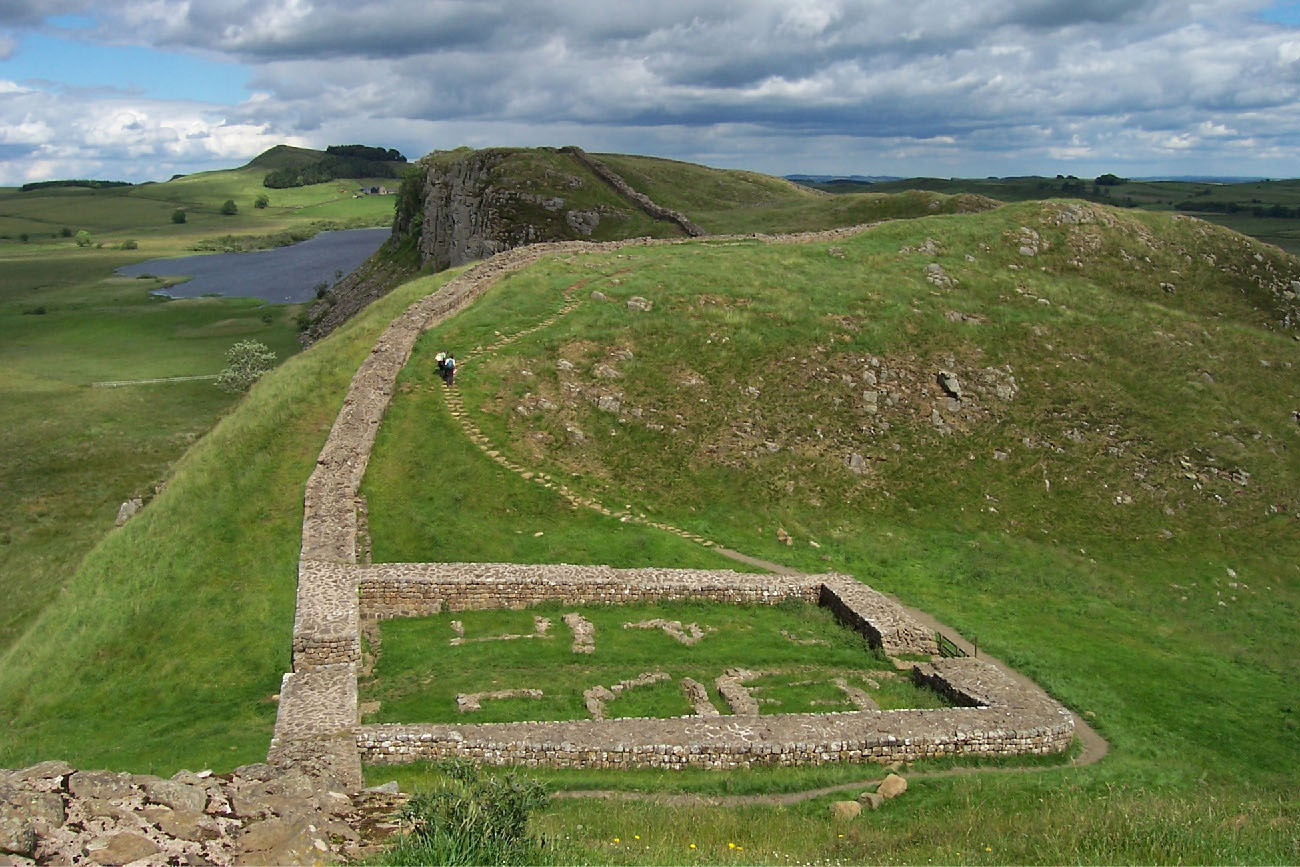
Following Julius Caesar’s invasion of Britain in 55 BCE, the region came into increasing contact with Roman culture, though the Roman army did not have a permanent presence there. So, in 43 CE, the emperor Claudius invaded Britain and incorporated the southern region of the island into the empire. Unlike the case in Gaul, centuriation and the construction of roads in Britain were an attempt at direct control of the local population. The militarization of the province reflected the imposition of Roman culture. In addition to roads, the Roman army also constructed forts and camps, including the immense fortification called Hadrian’s Wall, built to establish a frontier in the early second century (Figure 7.18). Still, a local community was able to flourish in small towns, which increased their agricultural production and adopted a limited version of Roman culture. For example, the town of Silchester included a forum, possibly an early Christian church, and an amphitheater that may have hosted gladiatorial matches.
英語のヒント
前55年にユリウス・カエサルがブリタンニアへ侵攻した後、この地域とローマ文化との接触は増えたが、ローマ軍はそこに常駐していなかった。そこで43年、皇帝クラウディウスがブリタンニアに侵攻し、島の南部を帝国に組み入れた。ガリアの場合とは異なり、ブリタンニアでのケントゥリアティオや道路建設は、住民を直接支配しようとする試みだった。属州の軍事化には、ローマ文化が押しつけられたことが表れている。ローマ軍は道路に加え、砦や野営地も築いた。その中には、2世紀初頭に辺境の境界を定めるために築かれた、ハドリアヌスの長城という巨大な防御施設もあった(図7.18)。それでも、小さな町では地域社会が栄えることができた。町々は農業生産を増やし、ローマ文化を限定的な形で取り入れた。例えばシルチェスターには、フォルム、初期のキリスト教会だった可能性のある建物、そして剣闘士の試合が行われたかもしれない円形闘技場があった。
Hadrian’s Wall.ハドリアヌスの長城
(credit: “Milecastle 39 on Hadrian’s Wall” by Adam Cuerden/Wikimedia Commons, Public Domain) · Public Domain
Figure 7.18 The massive Roman fortification built in Britain by the emperor Hadrian in the second century CE is roughly seventy-four miles long, with small forts known as milecastles placed at every mile along its entire length, as in the foreground of this photo. (credit: “Milecastle 39 on Hadrian’s Wall” by Adam Cuerden/Wikimedia Commons, Public Domain)
図7.18 2世紀に皇帝ハドリアヌスがブリタンニアに建設したローマの巨大な防御施設は、全長約74マイルである。写真の手前に見えるような「マイルキャッスル」と呼ばれる小さな砦が、全長にわたり1マイルおきに設けられていた。(出典:Adam Cuerden「Milecastle 39 on Hadrian’s Wall」、Wikimedia Commons、パブリックドメイン)
In the eastern empire, the relationship between locals and Rome was similarly complex. Even before its conquest in the second century BCE, Greece and its classical past had fascinated Romans. Hellenism—a high regard for the Greek cultural institutions of philosophy, religion, and system of education—influenced Roman views of this region. Greek culture inspired Romans with both reverence for and anxieties about literature, language, and even fashion. For instance, to some, Latin was in a power struggle with Greek after the latter language became popular among the Roman elite and educated. And even the Roman toga was contrasted with the Greek pallium cloak, in an effort to articulate Roman identity. Emperors such as Augustus and Hadrian praised classical Greece, attempting to preserve its past greatness; they imposed a Roman view of Greekness by contributing to monument building in the region, and local Greek elites sought imperial favor and grants in their cities.
英語のヒント
帝国東部でも、地域の住民とローマとの関係は同じように複雑だった。前2世紀に征服する以前から、ローマ人はギリシアとその古典古代の歴史に魅了されていた。哲学、宗教、教育制度といったギリシアの文化的制度を重んじるヘレニズムは、ローマ人のこの地域に対する見方に影響を与えた。ギリシア文化は、文学、言語、さらには服装についてさえ、ローマ人に敬意と不安の両方を抱かせた。例えば、ギリシア語がローマの有力者や教養ある人々の間で広まると、ラテン語はギリシア語と勢力争いをしている、と見る人々もいた。ローマ人としての自分たちの特徴をはっきりさせようとして、ローマのトガさえギリシアのパリウムという外套と対比された。アウグストゥスやハドリアヌスのような皇帝は、古典期ギリシアを称賛し、その過去の偉大さを残そうとした。彼らはこの地域の記念建造物の建設に資金を出すことで、ローマ人の考える「ギリシアらしさ」を押しつけた。ギリシアの地元有力者も、自分たちの都市に皇帝の好意や助成を得ようとした。
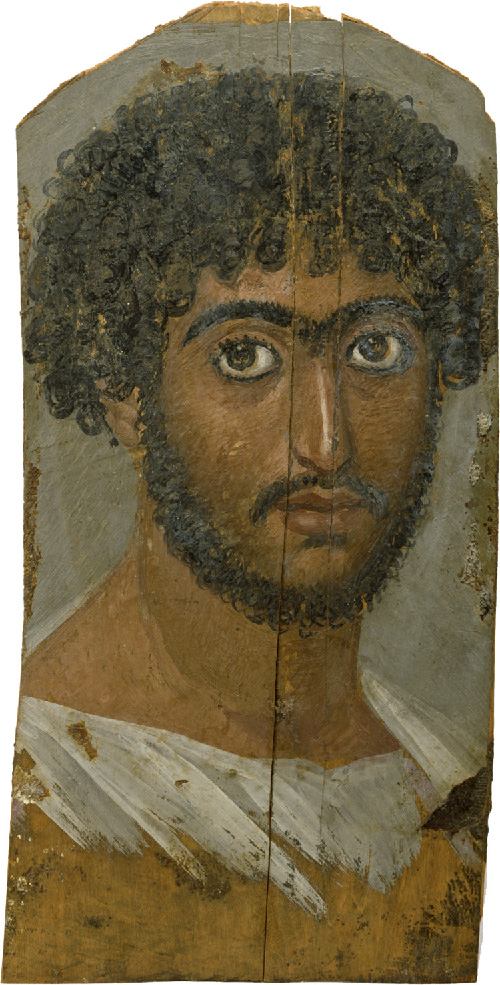
North Africa also had a long history of interaction with Rome. Through a series of conflicts with the Carthaginians, the Romans had taken control of the coastal regions by the second century BCE. Following the conquest, local settlements in the west underwent a period of intense urban building as the Romans attempted to set up the frontier. In the east, Egypt, like Greece, had a profound influence on the Romans. In addition to Egyptian religious cults that became popular, Egyptian art and architecture gained a foothold, with motifs such as crocodiles and hippos appearing in the art of wealthy Roman homes. The Egyptian practice of embalming the dead may also have gained some prominence among Romans in the first century CE. Furthermore, the encaustic portraits that adorned coffins reflect the multiethnic identity of people in Roman Egypt. This artistic style, in which pigments mixed with wax were painted on wood, originated in ancient Egypt. But the subjects of the portraits wear Roman dress and bear Greek and Egyptian names (Figure 7.19).
英語のヒント
北アフリカも、ローマとの長い交流の歴史を持っていた。カルタゴ人との一連の戦争を経て、ローマ人は前2世紀までに沿岸部を支配下に収めた。征服後、西部の地域の集落では、ローマ人が辺境の境界を築こうとする中で、都市建設が集中的に行われた。東部では、エジプトがギリシアと同じように、ローマ人に深い影響を与えた。エジプトの宗教的な信仰が広まっただけでなく、その美術や建築も足場を築いた。ローマの富裕な家の美術には、ワニやカバといった意匠が現れた。死者に防腐処理を施すエジプトの習慣も、1世紀のローマ人の間である程度注目された可能性がある。さらに、棺を飾った蝋画の肖像は、ローマ領エジプトの人々の多民族的なアイデンティティを反映している。顔料を蝋と混ぜて木に塗るこの美術様式は、古代エジプトで生まれた。しかし、肖像に描かれた人々はローマ式の服を着て、ギリシア系やエジプト系の名前を持っている(図7.19)。
A Funerary Portrait.死者を描いた肖像
(credit: modification of work “Mummy Portrait of a Bearded Man” by Walters Art Museum, Acquired by Henry Walters, 1912/Wikimedia Commons, Public Domain) · Public Domain
Figure 7.19 This life-size Egyptian funerary portrait from about 170–180 CE was painted in encaustic on wood and shows the deceased as they wished to be remembered. Its naturalistic style demonstrates the influence of Roman culture in Egypt at the time. (credit: modification of work “Mummy Portrait of a Bearded Man” by Walters Art Museum, Acquired by Henry Walters, 1912/Wikimedia Commons, Public Domain)
図7.19 170〜180年ごろのこの等身大のエジプトの葬送肖像は、木板に蝋画の技法で描かれたもので、故人が人々の記憶に残してほしいと願った姿を示している。写実的な画風には、当時のエジプトにおけるローマ文化の影響が表れている。(出典:ウォルターズ美術館「Mummy Portrait of a Bearded Man」を改変、1912年にヘンリー・ウォルターズが収集、Wikimedia Commons、パブリックドメイン)