第14章パクス・モンゴリカ――モンゴルの草原帝国Pax Mongolica: The Steppe Empire of the Mongols
Introductionはじめに
Kublai Khan.クビライ・カン。
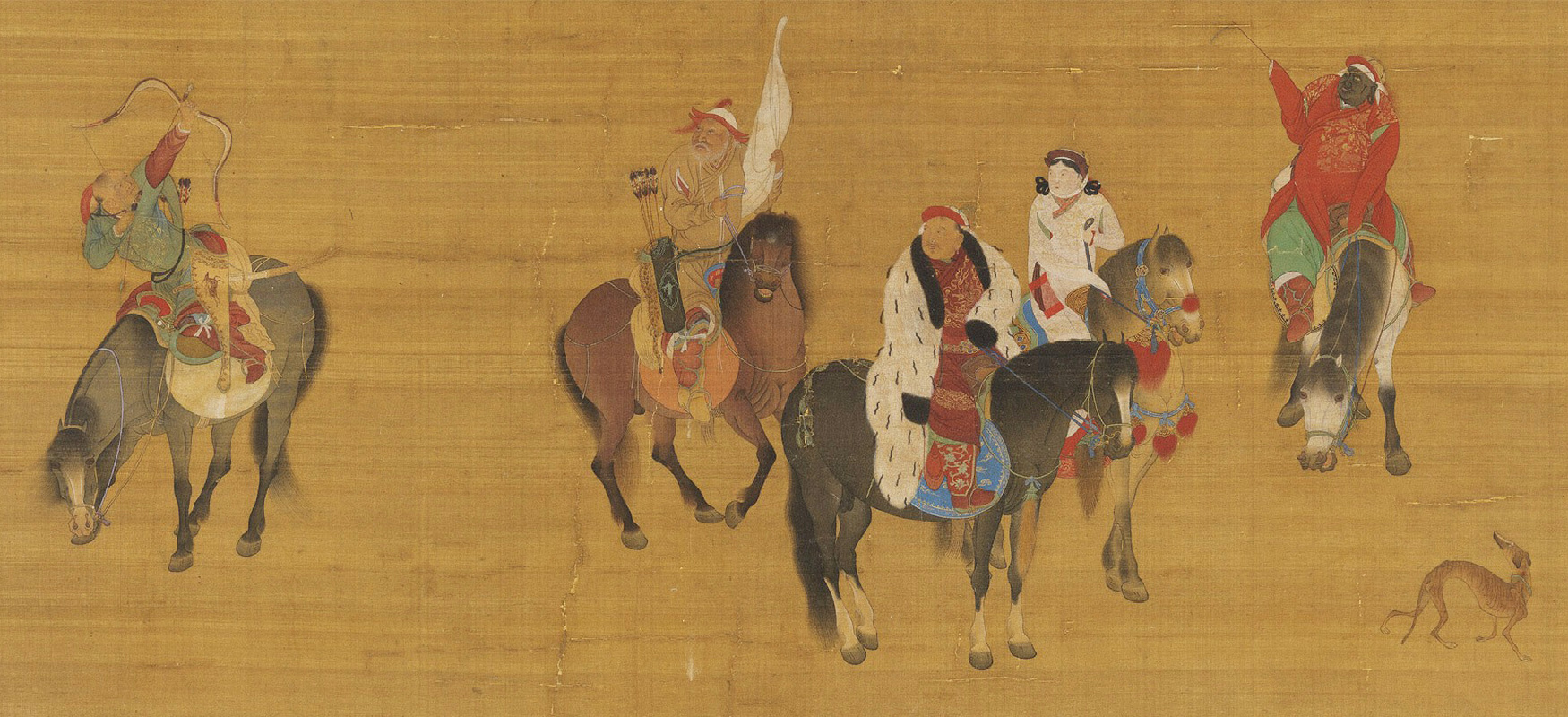
(credit: modification of work “Kublai Khan on a hunting expedition, painted on a silk handscroll (fragment)” by Cambridge Illustrated History of China (1999) by Patricia B. Ebrey/National Palace Museum/Wikimedia Commons, Public Domain) · Public Domain
Figure 14.1 This image is from a silk scroll painting made in 1280 CE by Liu Guandao, known as Zhongxian, an artist of Kublai Khan’s court. It depicts Kublai (center in a white fur coat) with his wife and others on a traditional hunt, demonstrating the value the Mongols continued to place on their origins even after their empire spread far from their ancestral steppe lands. (credit: modification of work “Kublai Khan on a hunting expedition, painted on a silk handscroll (fragment)” by Cambridge Illustrated History of China (1999) by Patricia B. Ebrey/National Palace Museum/Wikimedia Commons, Public Domain)
図14.1 1280年、クビライ・カンの宮廷画家で、字を仲賢という劉貫道が、絹の巻物に描いた絵の一部。白い毛皮の外套を着た中央のクビライが、妻や一行と伝統的な狩りをする姿を描く。帝国が祖先の草原から遠く離れた土地へ広がっても、モンゴル人が自らの出自を大切にし続けたことを示している。(出典:Patricia B. Ebrey著 Cambridge Illustrated History of China〔1999年〕/国立故宮博物院/Wikimedia Commons「Kublai Khan on a hunting expedition, painted on a silk handscroll (fragment)」を改変、パブリックドメイン)
The years between 1000 and 1350 CE were a time of extreme highs and lows for the people living in the Eurasian land mass. China came close to industrializing and creating a Confucian meritocracy. An increasing percentage of Eurasia’s population converted to Islam, even as Christian military forces pushed Islamic civilization to the southern tip of Iberia and tried to wrest the eastern Mediterranean—the territory viewed by Jews, Christians, and Muslims as “the Holy Land”—from Muslim rule. Europeans grappled with creating governments strong enough to protect the population but with robust enough checks on centralized authority to keep at least the elites from being abused. Enslaved people revolted and began to rule in the Nile delta and Indian subcontinent.
英語のヒント
1000年から1350年は、ユーラシア大陸に住む人々にとって、繁栄と苦難の振幅がきわめて大きい時代だった。中国は工業化と、儒教に基づく実力本位の社会の実現に近づいた。ユーラシアの人口のうち、イスラームへ改宗する人の割合が増えていった。そのさなかにも、キリスト教徒の軍はイスラーム文明をイベリア半島の南端へ押し込み、ユダヤ教徒・キリスト教徒・ムスリムが「聖地」とみなす東地中海地域を、ムスリムの支配から奪おうとしていた。ヨーロッパ人は、住民を守れるほど強力でありながら、少なくともエリートが権力の濫用で苦しまないよう、中央集権的な権威を十分に抑制できる政府を築くことに取り組んだ。ナイル・デルタとインド亜大陸では、奴隷にされた人々が反乱を起こし、支配する側になった。
Nowhere, however, was change more dramatic and consequential than among the scattered seminomadic people of the Inner Asian Steppe. One of their number, written off and enslaved as a child, emerged to unite and lead a large faction of them into such a potent force that his descendants, who included Kublai Khan (Figure 14.1), marched as conquerors through the palaces of the Chinese Son of Heaven, the Caliph of God’s messenger, and countless cities. This leader was known to the world as Chinggis (Genghis) Khan. Uniting a million or so of the world’s 400 million people into the Mongol Empire, he not only altered the trajectory of their lives, he also unleashed forces that swept many old ways aside and laid the foundations for the modern world to emerge.
英語のヒント
しかし、内陸アジアの草原地帯に散らばる半遊牧民の間ほど、劇的で重大な変化が起きた場所はなかった。その一人は、子どものころ見限られて奴隷にされたが、やがて多数の集団を統合して率い、きわめて強大な勢力へと変えた。その結果、クビライ・カン(図14.1)を含む彼の子孫は、征服者として、中国の天子の宮殿、神の使徒の後継者であるカリフの宮殿、そして無数の都市へ進軍した。この指導者こそ、世界にチンギス・カンとして知られる人物である。世界人口4億人のうち約100万人をモンゴル帝国へまとめ上げた彼は、その人々の人生の行方を変えたばかりではない。古いあり方をいくつも一掃する力を解き放ち、近代世界が生まれる基礎を築いた。
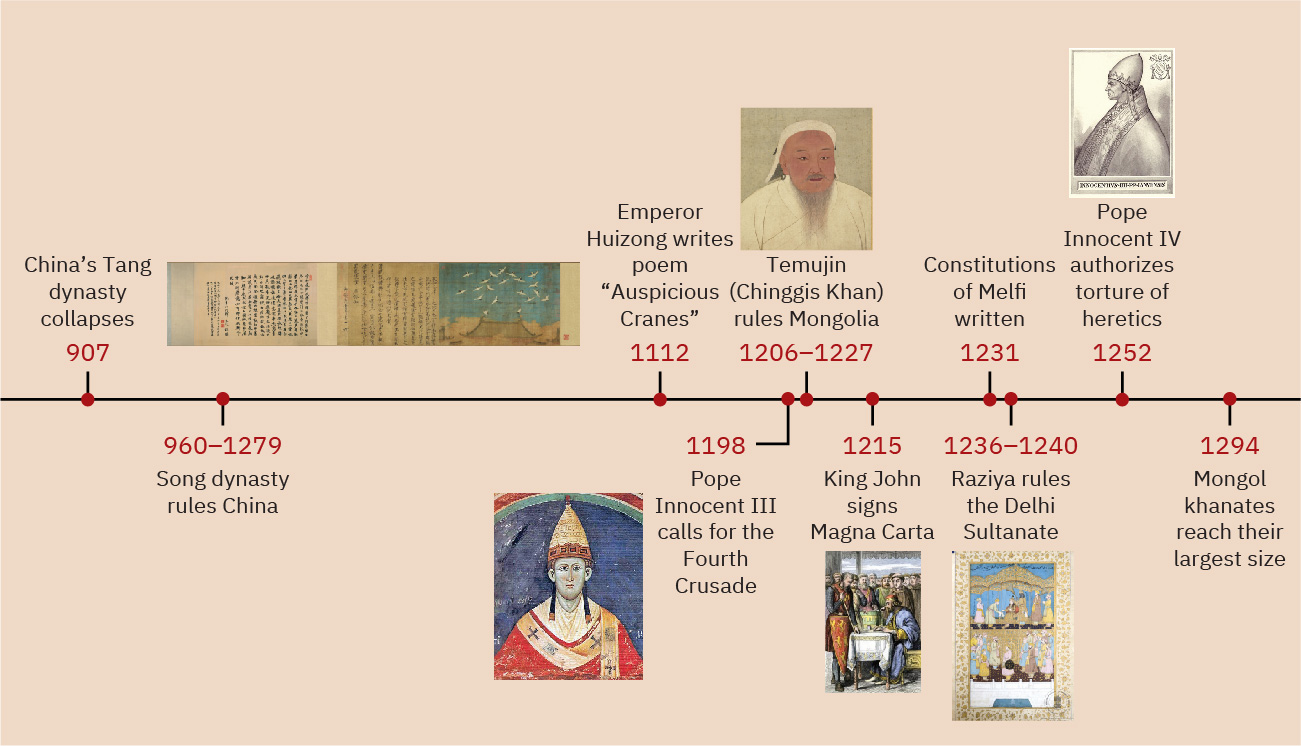
Timeline: Pax Mongolica: The Steppe Empire of the Mongols.年表:パクス・モンゴリカ――モンゴル人の草原帝国。
(credit “1112”: modification of work “Auspicious Cranes” by Liaoning Provincial Museum/Wikimedia Commons, Public Domain; credit “1198”: modification of work “Pope Innocent III wearing a Y-shaped pallium” by Fresco at the cloister Sacro Speco/Wikimedia Commons, Public Domain; credit “1206–1227”: modification of work “Emperor Taizu of Yuan, better known as Genghis Khan” by National Palace Museum/Wikimedia Commons, Public Domain; credit “1215”: modification of work “King John of England signing Magna Carta” by The Granger Collection, New York/Wikimedia Commons, Public Domain; credit “1236–1240”: modification of work “Sultana Razia Begum” by Salar Jung Museum, Hyderabad/Museums of India, Public Domain; credit “1252”: modification of work “Pope Innocent IV” by The Lives and Times of the Popes by Chevalier Artaud de Montor, New York: The Catholic Publication Society of America, 1911/Wikimedia Commons, Public Domain) · Public Domain
Figure 14.2 (credit “1112”: modification of work “Auspicious Cranes” by Liaoning Provincial Museum/Wikimedia Commons, Public Domain; credit “1198”: modification of work “Pope Innocent III wearing a Y-shaped pallium” by Fresco at the cloister Sacro Speco/Wikimedia Commons, Public Domain; credit “1206–1227”: modification of work “Emperor Taizu of Yuan, better known as Genghis Khan” by National Palace Museum/Wikimedia Commons, Public Domain; credit “1215”: modification of work “King John of England signing Magna Carta” by The Granger Collection, New York/Wikimedia Commons, Public Domain; credit “1236–1240”: modification of work “Sultana Razia Begum” by Salar Jung Museum, Hyderabad/Museums of India, Public Domain; credit “1252”: modification of work “Pope Innocent IV” by The Lives and Times of the Popes by Chevalier Artaud de Montor, New York: The Catholic Publication Society of America, 1911/Wikimedia Commons, Public Domain)
図14.2 (「1112」の出典:遼寧省博物館/Wikimedia Commons「Auspicious Cranes」を改変、パブリックドメイン。「1198」の出典:Sacro Speco修道院回廊のフレスコ画/Wikimedia Commons「Pope Innocent III wearing a Y-shaped pallium」を改変、パブリックドメイン。「1206–1227」の出典:国立故宮博物院/Wikimedia Commons「Emperor Taizu of Yuan, better known as Genghis Khan」を改変、パブリックドメイン。「1215」の出典:The Granger Collection, New York/Wikimedia Commons「King John of England signing Magna Carta」を改変、パブリックドメイン。「1236–1240」の出典:Salar Jung Museum, Hyderabad/Museums of India「Sultana Razia Begum」を改変、パブリックドメイン。「1252」の出典:Chevalier Artaud de Montor著 The Lives and Times of the Popes〔New York: The Catholic Publication Society of America, 1911〕/Wikimedia Commons「Pope Innocent IV」を改変、パブリックドメイン)
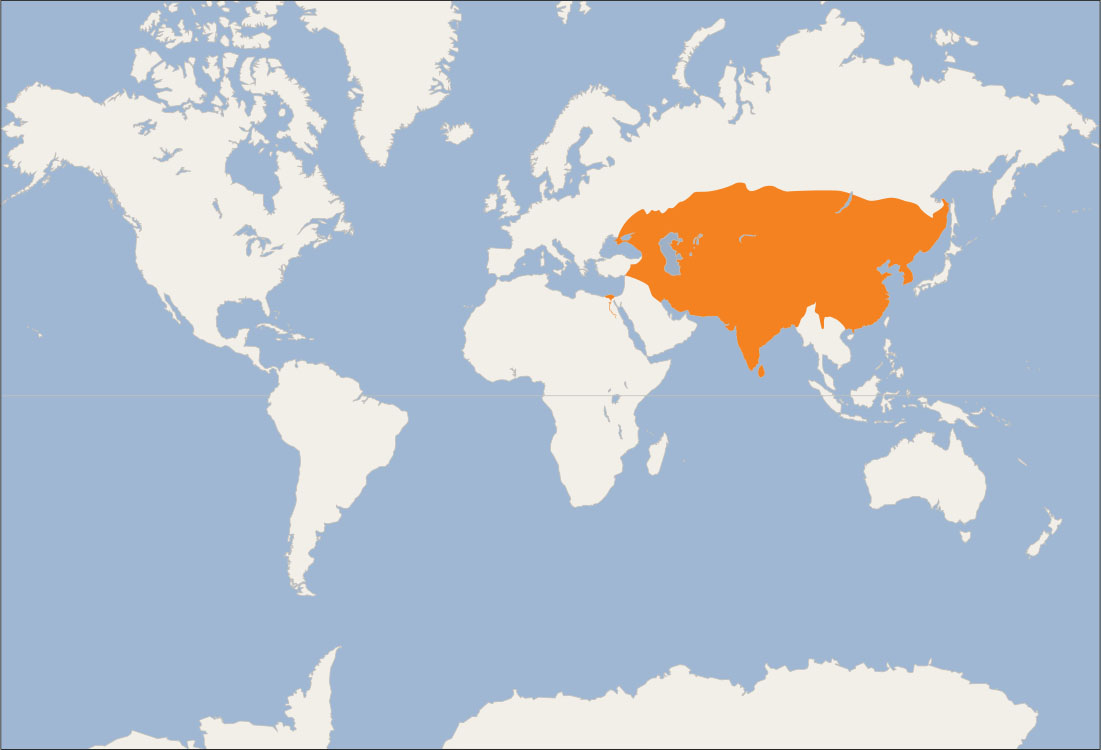
Locator Map: Pax Mongolica: The Steppe Empire of the Mongols.位置図:パクス・モンゴリカ――モンゴル人の草原帝国。
(credit: modification of work “World map blank shorelines” by Maciej Jaros/Wikimedia Commons, Public Domain) · Public Domain
Figure 14.3 (credit: modification of work “World map blank shorelines” by Maciej Jaros/Wikimedia Commons, Public Domain)
図14.3 (出典:Maciej Jaros/Wikimedia Commons「World map blank shorelines」を改変、パブリックドメイン)