第14章パクス・モンゴリカ――モンゴルの草原帝国Pax Mongolica: The Steppe Empire of the Mongols
The Rise of Egypt’s Mamluk Dynastyエジプトのマムルーク朝の成立
Turan Shah did not live long enough to enjoy the fruits of his success. The wandering Turks turned mamluks who were the backbone of his army were convinced that the ransom money from the crusaders would be used to replace them with more traditional mamluks from Africa. To secure their position and gain control of the ransom money for themselves, they overthrew Turan Shah. His stepmother, al-Salih’s surviving widow Shajar al-Durr, briefly assumed the throne, but the mamluks were not willing to follow a female sultan, so they forced her to marry their leader Izz al-Din Aybak and abdicate in his favor. Historians consider the ascension of Aybak to be the end of the Ayyubid dynasty and the beginning of the Egyptian Mamluk dynasty. The Ayyubids left important marks on the history of the Islamic Levant. They restored the primacy of Sunni Islam after over two hundred years of Shia Fatimid rule. They built new madrasas—Muslim schools of learning, often with an emphasis on studying the Quran—in Aleppo, Cairo, and Damascus.
英語のヒント
トゥーラーン・シャーは、勝利の成果を味わうほど長く生きなかった。軍の中核だった、放浪するテュルク人からマムルークになった者たちは、十字軍の身代金が、自分たちをアフリカ出身の、より伝統的なマムルークへ置き換えるために使われると確信していた。自分たちの地位を守り、身代金を自ら掌握するため、彼らはトゥーラーン・シャーを倒した。継母で、サーリフの未亡人シャジャル・アッドゥッルが一時即位した。しかしマムルークたちは女性のスルタンに従おうとせず、指導者イッズ・アッディーン・アイバクと結婚し、夫へ位を譲るよう強いた。歴史家は、アイバクの即位を、アイユーブ朝の終わり、エジプトのマムルーク朝の始まりとする。アイユーブ朝は、イスラームのレヴァントの歴史に重要な跡を残した。シーア派のファーティマ朝による200年以上の支配のあとに、スンナ派の優位を取り戻した。また、アレッポ、カイロ、ダマスクスに、マドラサを新たに建てた。マドラサは、しばしばクルアーンの学習を重んじる、ムスリムの学問の場である。
While Christians and Muslims were fighting each other, Hulagu Khan and his troops were ready to return to expanding Mongol domains. Satisfied with their looting of Baghdad and the security of their supply routes, they moved north to lands more hospitable to the enormous herds the army required. Hulagu decided the Mamluk areas of Syria and Egypt would be his next targets and demanded the Mamluk sultan become his vassal and pay tribute. The sultan declined. In 1259, after securing cooperation (or at least noninterference) from Islamic forces in Anatolia and crusader forces in the area, Hulagu attacked the Mamluks. Initially he had great success, taking Aleppo, which was annihilated as Baghdad had been, and Damascus, which surrendered unconditionally and was largely spared. Hulagu’s participation was short-lived, however. In early 1260, he received word that his presence was needed at a kurultai in Karakorum.
英語のヒント
キリスト教徒とムスリムが戦う間、フレグ・カンと軍は、モンゴル領の拡張を再開する用意をしていた。バグダードの略奪と補給路の安全に満足すると、軍が必要とする巨大な家畜群に適した、北の土地へ移った。フレグは、マムルークが治めるシリアとエジプトを次の標的と決め、スルタンに臣従と貢納を求めたが、スルタンは拒んだ。1259年、アナトリアのイスラーム勢力と現地の十字軍勢力から、協力、少なくとも不干渉を取りつけ、フレグはマムルークを攻めた。初めは大成功し、アレッポを奪ってバグダード同様に壊滅させ、無条件降伏したダマスクスには、大半の破壊を免れさせた。しかしフレグの参戦は短かった。1260年初め、カラコルムのクリルタイへ出席する必要があるという知らせを受けた。
Hulagu appears to have underestimated Mamluk military prowess. Despite withdrawing possibly 90 percent of his forces as he returned to Karakorum, he still ordered Kitbuqa, one of his top generals and a Nestorian Christian, to take twenty thousand troops to conquer Egypt. Augmenting Kitbuqa’s forces were Christian Armenians and some of the remaining crusaders. In the fall of 1260, the Mamluks attacked the invading Mongols at Ain Jalut and soundly defeated them, killing Kitbuqa and most of his force. While the loss was relatively small compared with Hulagu’s overall force, it was enough to save parts of the unconquered Islamic world from further Mongol attack. Hulagu soon had his hands full defending his territory from his fellow Mongols, especially those of the Golden Horde. Meanwhile, the Mamluks were able to liberate Syria and Palestine from both the Mongols and the remaining crusaders and give some support to the Golden Horde in its conflicts with the Il-Khanate.
英語のヒント
フレグは、マムルークの軍事力を過小評価していたようである。カラコルムへ戻るため、おそらく軍の90パーセントを引き揚げながらも、最も有力な将軍の一人で、ネストリウス派のキリスト教徒キトブカに、2万人でエジプトを征服するよう命じた。キトブカ軍には、キリスト教徒のアルメニア人と、残る十字軍の一部も加わった。1260年秋、マムルークは、侵入するモンゴル軍をアイン・ジャールートで攻め、大勝した。キトブカと軍の大半を殺した。フレグの全軍に比べれば、損失は比較的小さかったが、まだ征服されていないイスラーム世界の一部を、さらなる攻撃から救うには十分だった。フレグはまもなく、同じモンゴル人、とりわけジョチ・ウルスから自領を守るので手いっぱいになった。一方、マムルークは、シリアとパレスチナを、モンゴル軍と残存する十字軍の双方から解放し、イル・ハン国と対立するジョチ・ウルスへ、ある程度の支援を与えることもできた。
The Delhi Sultanateデリー・スルタン朝
There are many parallels between Mamluk Egypt and the Delhi Sultanate (in present-day India). The Delhi Sultanate had been created by the inhabitants of what is modern Afghanistan and was led by Muhammed of Ghur, who conquered the sultanate established by Mahmud of Ghazna in the late twelfth century. When the Mongols encountered it, the sultanate was ruled by a dynasty of former mamluks whose founder, Quṭb al-Din Aybak, had seized power after Muhammed’s death in 1206. Perhaps his efforts served as inspiration for the mamluk general Izz al-Din Aybak, who led the overthrow of Egypt’s Ayyubid dynasty almost fifty years later.
英語のヒント
エジプトのマムルーク朝と、現在のインドにあったデリー・スルタン朝には、多くの共通点がある。デリー・スルタン朝は、現在のアフガニスタンの住民が築いたもので、ゴールのムハンマドに率いられた。彼は、マフムード・ガズナヴィーが建てたスルタン国を、12世紀末に征服した。モンゴル軍がこの国と接したころは、元マムルークの王朝が治めていた。その創始者クトゥブ・アッディーン・アイバクは、1206年のムハンマドの死後、権力を握った。おそらく、その行動が、約50年後、エジプトでアイユーブ朝を倒したマムルーク将軍イッズ・アッディーン・アイバクにも、着想を与えたのかもしれない。
A feature the Delhi Sultanate shared with both its Mongol neighbors and the later Egyptian Mamluk dynasty was frequent bouts of civil war over succession. Aybak died from an injury after falling from a horse in 1210, leaving the task of stabilizing the sultanate to his son-in-law Iltutmish. Iltutmish did a remarkable job, asserting authority over other commanders of mamluk armies. After his death in 1236, however, decentralization and turmoil reigned for sixty years. During that time, there were ten sultans, only one of whom died from natural causes. The population suffered the disruption of economic activity and the destruction of crops, goods, and production centers during these multiyear struggles for leadership.
英語のヒント
デリー・スルタン朝が、隣のモンゴル諸国や、のちのエジプトのマムルーク朝と共有した特徴は、継承をめぐる内戦が頻発したことだった。1210年、アイバクは落馬で負った傷で死に、国を安定させる仕事は、娘婿イルトゥトゥミシュに残された。イルトゥトゥミシュは、他のマムルーク軍の指揮官に自らの権威を認めさせ、めざましい働きをした。しかし1236年に死ぬと、分権化と混乱が60年間、支配することになった。その間、スルタンは10人いたが、自然死したのは一人だけだった。何年も続く指導権争いで、経済活動は中断し、作物、物品、生産拠点が破壊され、住民は苦しんだ。
The conflict after the death of Iltutmish foreshadowed the turmoil of the Mamluk seizure of power from the Ayyubids and the role played in each case by a talented and forceful Muslim woman. Among the Mamluks this was al-Salih’s surviving widow, Shajar al-Durr. In the Delhi Sultanate, it was Raziya, Iltutmish’s daughter, whom he considered the most capable of his children to rule. A half-brother seized power with help from factions unwilling to accept a female sultan. Raziya, who had administered Delhi when her father was away on campaign, outmaneuvered her half-brother by directly appealing to the people of Delhi. When the army saw the public behind her, they deposed her decadent and incompetent brother.
英語のヒント
イルトゥトゥミシュの死後の争いは、のちにマムルークがアイユーブ朝から権力を奪うときの混乱と、両方の事件で有能かつ強い意志を持つムスリム女性が果たす役割を、先取りしていた。エジプトでは、サーリフの未亡人シャジャル・アッドゥッルがその女性だった。デリーでは、イルトゥトゥミシュが子どものなかで最も統治に向くと考えた娘、ラズィーヤだった。女性のスルタンを認めない勢力の支援で、異母兄が権力を握った。父の遠征中にデリーの行政を担当した経験のあるラズィーヤは、住民へ直接訴えて、異母兄を出し抜いた。軍は、民衆が彼女を支持するのを見ると、放蕩で無能な兄を廃した。
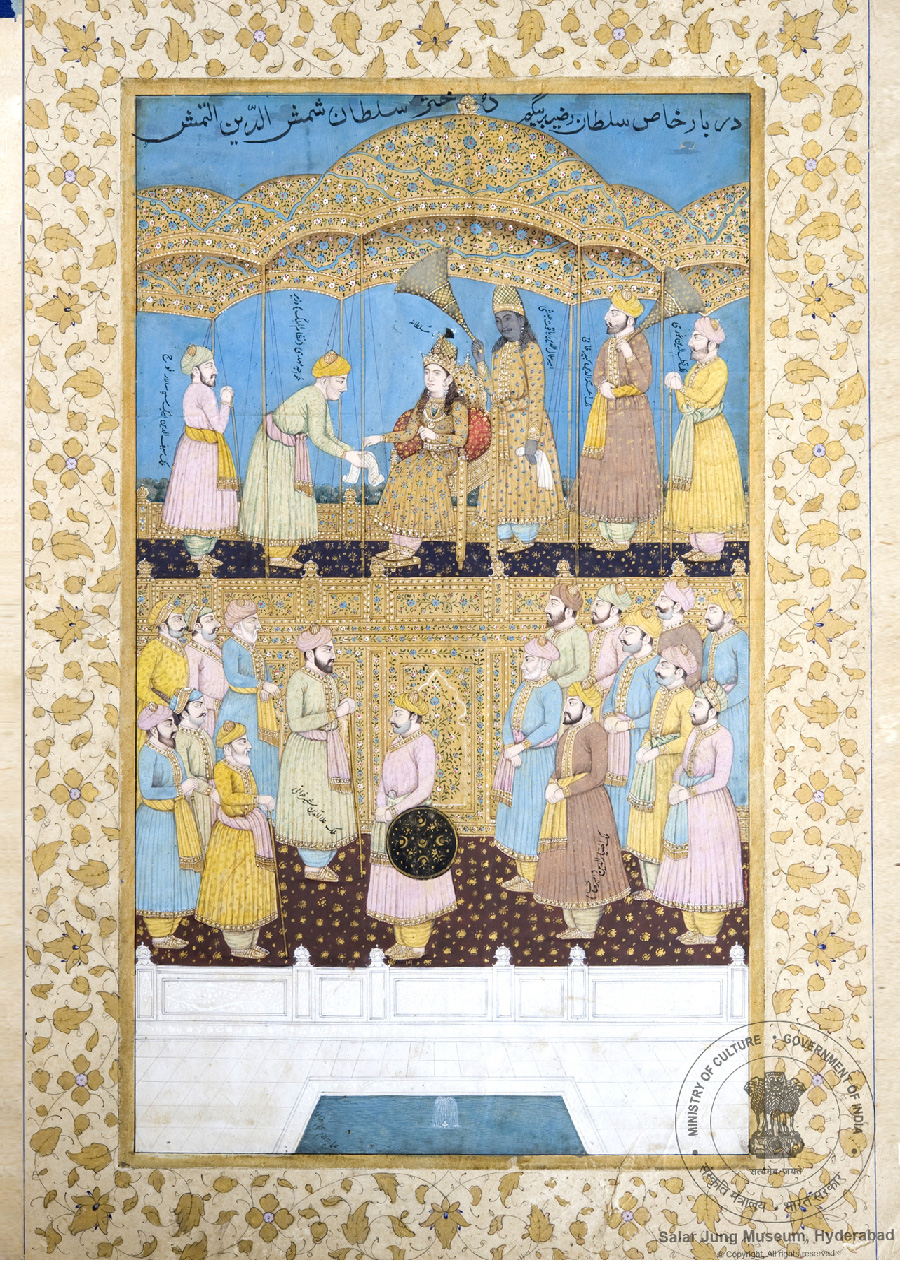
Raziya ruled as sultana for four years and is remembered as a capable administrator, even leading successful military campaigns (Figure 14.14). Politically shrewd, she came to power despite the objections of nobles primarily because of popular support from her people. Breaking with Islamic convention, she dressed as a man, wore pants and no veil, and kept her hair short. This was too much for some Muslims in the sultanate. Another half-brother capitalized on their discontent and organized a rebellion of several military units, which drove Raziya into hiding. She was, however, cunning; she was eventually captured by one of the generals and married him; whether the marriage was a romantic alliance or a case of political opportunism is unknown. Ultimately, the couple was defeated and killed.
英語のヒント
ラズィーヤは4年間、女性スルタンとして治め、有能な統治者として記憶される。自ら軍を率いて遠征に成功することもあった(図14.14)。政治的に鋭敏で、貴族の反対があっても、主に民衆の支持によって権力を得た。イスラームの慣習を破り、男性の服を着て、ズボンをはき、ヴェールを着けず、髪を短くした。スルタン国の一部のムスリムには、それは受け入れがたかった。別の異母兄弟が不満を利用し、複数の軍部隊による反乱を組織したため、ラズィーヤは身を隠した。しかし彼女は機転が利いた。やがて将軍の一人に捕らえられると、その将軍と結婚した。それが愛情による結びつきか、政治的な機会を利用したものかは分からない。最終的に二人は敗れ、殺された。
Sultana Raziya.女性スルタン、ラズィーヤ。
(credit: modification of work “Sultana Razia Begum” by Salar Jung Museum, Hyderabad/Museums of India, Public Domain) · Public Domain
Figure 14.14 This nineteenth-century painted miniature depicts Sultana Raziya in the center of the top row. Notice that she is the only female in the throne room, including her attendants, who appear to her right. (credit: modification of work “Sultana Razia Begum” by Salar Jung Museum, Hyderabad/Museums of India, Public Domain)
図14.14 19世紀の細密画。女性スルタンのラズィーヤが、上段中央に描かれる。右側の従者たちも含め、玉座の間で女性は彼女だけであることに注目しよう。(出典:Salar Jung Museum, Hyderabad/Museums of India「Sultana Razia Begum」を改変、パブリックドメイン)
To keep down rebellion and internal power struggles, the later Delhi sultans developed a series of authoritarian policies. For example, a secret police network was established to watch civilian administrators and military officials. Rules were so strict that these elites were banned from having celebratory gatherings with their peers, because sultans feared coups were planned at such events. Although already prohibited by the Quran, alcohol was officially outlawed, at least in the administrative area of Delhi. Peasants were largely spared in an effort to prevent rebellions, but other classes lost their financial independence and were placed under state control. Land that had been given to soldiers and war widows was confiscated, and bureaucrats’ salaries were kept low. Price controls limited merchants’ profit potential, and high taxes prevented the accumulation of large amounts of private capital. All these policies deprived subjects of wealth to fund rebellions and gave the sultan the ability to control people by cutting off their income.
英語のヒント
反乱と内部の権力争いを抑えるため、後代のデリーのスルタンは、一連の権威主義的な政策を進めた。たとえば、行政官と軍人を監視する秘密警察網を設けた。規則は厳しく、同僚との祝いの集まりさえ禁じた。そのような場でクーデターが企てられると恐れたからである。酒はすでにクルアーンで禁じられていたが、少なくともデリーの行政地域では、公式に禁止された。農民は、反乱を防ぐため、こうした介入をおおむね免れた。しかし他の階層は経済的独立を失い、国家の統制下に置かれた。兵士や戦争未亡人へ与えていた土地は没収され、官僚の給与は低く抑えられた。価格統制で商人の利益は制限され、高い税は、大きな私的資本の蓄積を妨げた。こうした政策すべてが、臣民から反乱の資金となる富を奪い、スルタンに、収入を断つことで人々を統制する力を与えた。
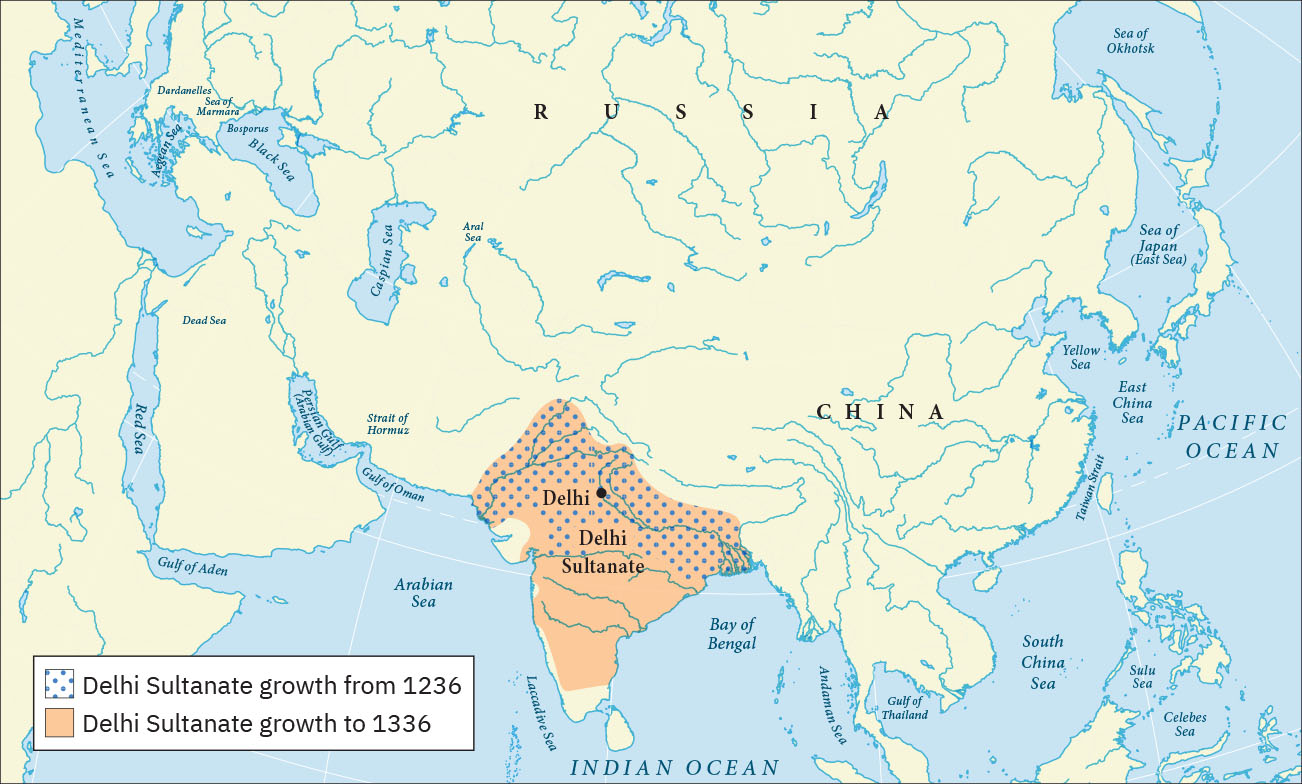
Despite frequent internal turmoil, the Delhi Sultanate performed well against external foes and expanded greatly during the hundred years after Iltutmish’s rule. When he died in 1236, the sultanate controlled the area from the Himalayas through the Ganges River valley to the Narmada River at the northern edge of the Deccan Plateau. By the end of Muhammad Bin Tughlaq’s conquests in 1336, it held almost all the subcontinent’s land as well (Figure 14.15). This expansion not only enlarged the territory Muslims ruled from Delhi; it also facilitated the conversion to Islam of more of the Indian population. A per-person tax was imposed on Hindus, but it was graduated based on income. Those at the extremes of wealth and poverty, the Brahmans and the Pariah, respectively, were largely exempt. Furthermore, no sultan imposed sharia, which would likely have caused resentment. Those like the Pariah and Sudra, who felt caste discrimination, could easily find a home and increase their social standing by converting to Islam, and a good number chose to do so.
英語のヒント
内紛は多かったが、デリー・スルタン朝は外敵によく対抗し、イルトゥトゥミシュの治世から100年間で、大きく拡張した。彼が1236年に死んだとき、国はヒマラヤからガンジス川流域を経て、デカン高原北端のナルマダー川までを支配していた。ムハンマド・ビン・トゥグルクの征服が1336年に終わるまでには、亜大陸のほぼ全域を支配していた(図14.15)。この拡張は、デリーからムスリムが治める土地を増やしただけでなく、インド住民のイスラームへの改宗も進めた。ヒンドゥー教徒には人頭税が課されたが、所得に応じた段階が設けられた。富と貧困の両極に位置するとされたバラモンとパーリアは、それぞれ、おおむね免税だった。また、どのスルタンも、反感を招きそうなシャリーアを押しつけなかった。パーリアやシュードラのようにカースト差別を受ける人々は、イスラームへ改宗することで、居場所を得て、社会的地位を上げやすかった。かなりの人が、その道を選んだ。
The Growth of the Delhi Sultanate.デリー・スルタン朝の拡大。
(attribution: Copyright Rice University, OpenStax, under CC BY 4.0 license) · CC BY 4.0
The Delhi Sultanate was also effective at repulsing Mongol attacks. While Chinggis Khan had bypassed it in his war against the Khwarazmians, both the Il-Khanate and the Chagatai Khanate, despite their own domestic turmoil and conflict with neighboring Mongol khanates, launched periodic raids against it for plunder. It was not until the 1290s that the Chagatai Khan Duwa made the first of several attempts not just to pillage but to conquer at least parts of the Delhi Sultanate. Duwa never led these efforts himself because he was engaged against the Yuan dynasty for most of this period. At least six attempts failed between 1296 and 1306, however, in no small part because Duwa had chosen to attack when the sultanate had one of its most capable rulers, Alauddin Khilji.
英語のヒント
デリー・スルタン朝は、モンゴルの攻撃も効果的に撃退した。チンギス・カンはホラズムとの戦争でこの国を避けたが、イル・ハン国とチャガタイ・ハン国は、自国内の混乱と隣のモンゴル諸国との対立があるなかでも、略奪のため周期的に襲った。1290年代になって初めて、チャガタイ家のカン、ドゥアが、単に略奪するだけでなく、デリー・スルタン朝の少なくとも一部を征服しようと、何度か試みた。ドゥア自身は、この時期の大半を元との戦いに費やしていたため、直接遠征を率いなかった。しかし1296年から1306年の間、少なくとも6回の試みが失敗した。その大きな理由は、スルタン朝が最も有能な君主の一人、アラーウッディーン・ハルジーに治められていた時期に、攻撃したことだった。
Tarmashirin made one last attack on the Delhi Sultanate for the Chagatai Khanate in 1327. Taking advantage of Sultan Tughlaq’s moving his capital and the bulk of his forces south to the center of his expanded empire, Tarmashirin, while struggling to assume the Chagatai Khanate throne, laid siege to Delhi. After extorting a great deal of tribute from Sultan Tughlaq, useful in raising an army to complete his own ascension to power back home, Tarmashirin withdrew his forces. Some scholars suggest his subsequent conversion to Islam was an attempt to minimize the possibility of a major retaliatory strike by the sultanate. Regardless, the fracturing of the Chagatai Khanate after Tarmashirin’s death ended any serious efforts by Mongols to conquer the Delhi Sultanate.
英語のヒント
1327年、タルマシリンは、チャガタイ・ハン国としてデリー・スルタン朝へ最後の攻撃を行った。スルタン・トゥグルクが、首都と軍の大半を、拡大した帝国の中央に当たる南へ移した機会を利用した。チャガタイ・ハン国の王位を得ようと争っていたタルマシリンは、デリーを包囲し、トゥグルクから多額の貢納を脅し取った。その金は、帰国して即位を確実にする軍を集めるのに役立った。その後、彼は撤退した。後のイスラーム改宗も、スルタン朝による大規模な報復の危険を減らす試みだった、と考える研究者もいる。いずれにせよ、タルマシリンの死後、チャガタイ・ハン国が分裂したことで、モンゴルによるデリー征服の本格的な試みは終わった。