第4章古代オリエントThe Near East
Introductionはじめに
An Army at War.戦う軍隊。
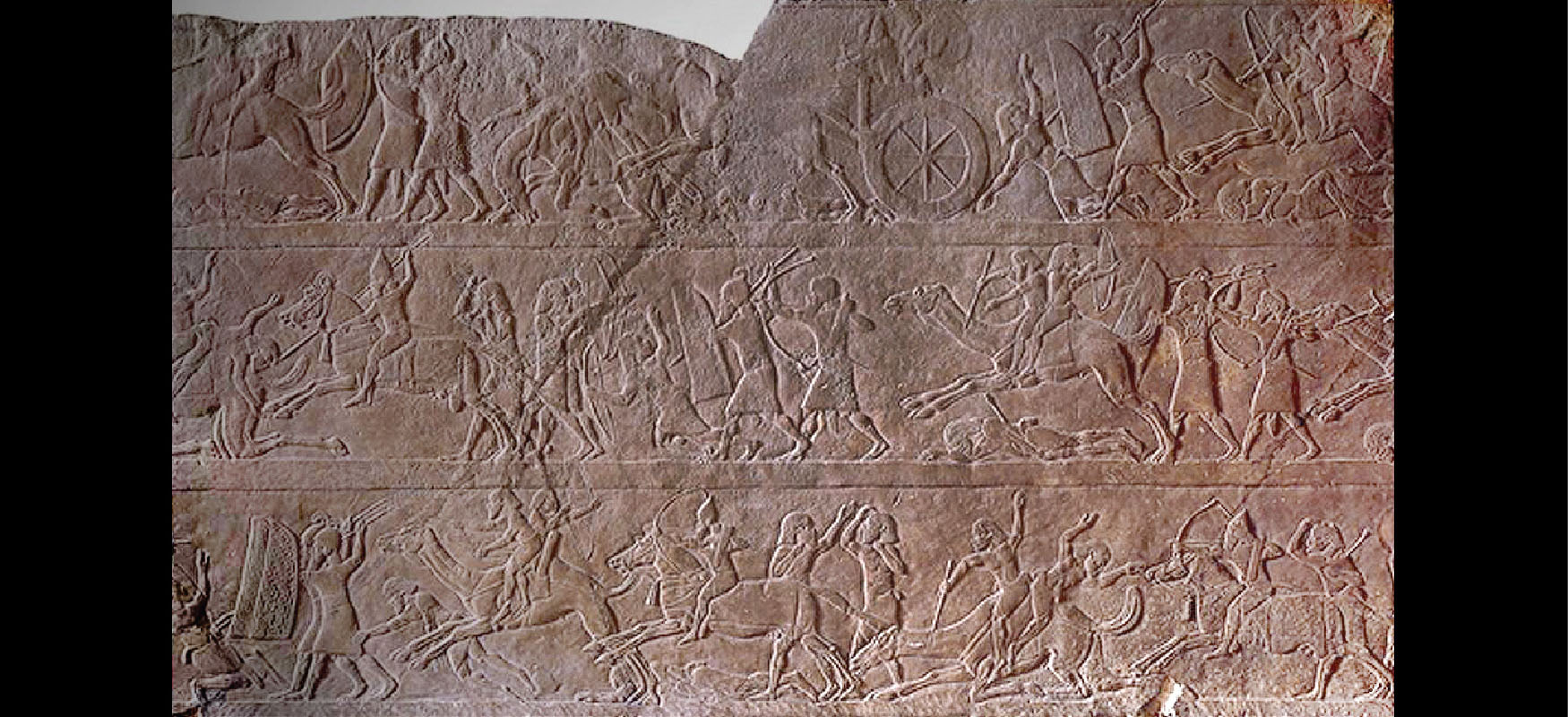
(credit: modification of work “Assyrian Arabian Battle” by “LaLouvre”/Wikimedia Commons, CC0 1.0) · CC0 1.0
Figure 4.1 This seventh-century BCE stone relief from an Assyrian palace shows the army of King Ashurbanipal fighting against nomadic Arabian desert groups. (credit: modification of work “Assyrian Arabian Battle” by “LaLouvre”/Wikimedia Commons, CC0 1.0)
図4.1 アッシリア宮殿の紀元前7世紀の石造浮彫。アッシュルバニパル王の軍が、アラビア砂漠の遊牧集団と戦う様子を描く。(出典:「LaLouvre」/Wikimedia Commons「Assyrian Arabian Battle」を改変、CC0 1.0)
At the dawn of the Iron Age, which began around 1200 BCE in the Near East, highly trained Assyrian armies with bronze and iron weapons expanded out of northern Mesopotamia. Within a few centuries, their conquests had provided the Assyrians with an empire larger than the Near East had ever seen. Relying on archaeological finds like this detailed relief as well as textual documentation from the Bible and other sources, historians have pieced together the history of this once-mighty state (Figure 4.1). The Assyrians conquered the kingdom of Israel in the eighth century BCE, added Egypt to their lands in the seventh century BCE, and held it all together with a combination of ruthless military tactics, efficient state organization, and a wide network of royal roads. They left a powerful regional legacy, yet theirs is just one of many empires that rose and fell in the complicated and dangerous world of the ancient Near East. Though these local power brokers were linked by the shared heritage of a Sumerian past, including influences such as cuneiform and Hammurabi’s law code, their rapid succession speaks to the level of rivalry and conflict experienced by the people of the area. Yet the same chaos led to important innovations in all aspects of society, particularly military technology.
英語のヒント
近東で紀元前1200年頃に始まる鉄器時代の幕開けに、青銅と鉄の武器を持つ、よく訓練されたアッシリア軍が、メソポタミア北部から勢力を広げた。数世紀のうちに、その征服は、近東でそれまでに例のない広大な帝国を生んだ。歴史家は、この精緻な浮彫のような考古資料と、聖書などの文字資料を組み合わせ、かつて強大だった国家の歴史を復元してきた(図4.1)。アッシリアは紀元前8世紀にイスラエル王国を征服し、紀元前7世紀にはエジプトを領土に加えた。容赦のない軍事戦術、効率的な国家組織、広い王道網を組み合わせ、全体をまとめた。地域に強い遺産を残したが、複雑で危険な古代近東で興亡した、多くの帝国の一つでもあった。こうした地域勢力は、楔形文字やハンムラビ法典など、シュメール以来の共通の遺産で結ばれていた。それでも支配勢力が次々と交代したことは、地域の人々が経験した競争と紛争の激しさを物語る。同じ混乱は、社会のあらゆる面、とりわけ軍事技術の重要な革新も生んだ。
Timeline: The Near East.年表:近東。
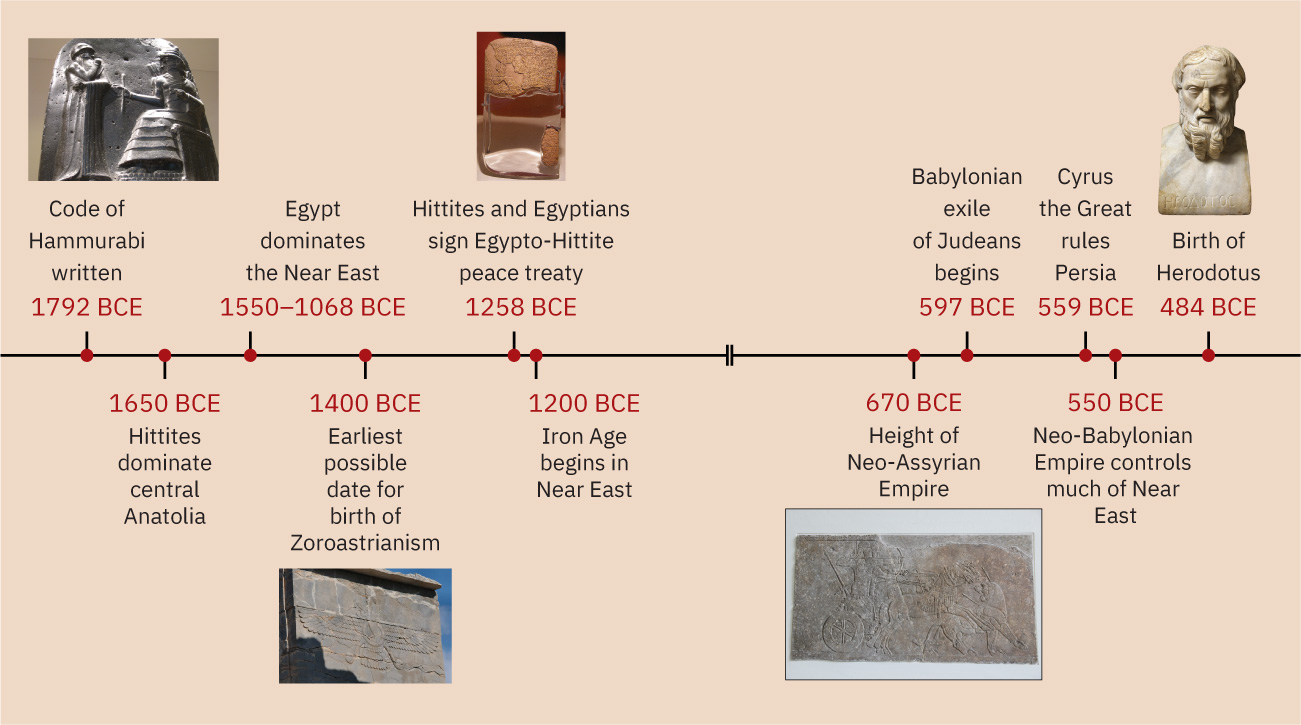
(credit “1792 BCE”: modification of work “Louvre - Hammurabi's Code” by “Erin”/Flickr, CC BY 2.0; credit “1400 BCE”: modification of work “Persepolis, Tripylon, eastern gate (2)” by Marco Prins/Wikimedia Commons, CC0 1.0; credit “1258 BCE”: modification of work “Treaty of Kadesh” by Iocanus/Museum of the Ancient Orient/Wikimedia Commons, CC BY 3.0; credit “670 BCE”: modification of work “Ancient Assyria Bas-Relief of Lion Hunt, Nimrud, 883-859 BC” by Gary Todd/Flickr, Public Domain; credit “484 BCE”: modification of work “Marble bust of Herodotos” by The Metropolitan Museum of Art, Gift of George F. Baker, 1891/Wikimedia Commons, Public Domain) · CC BY 2.0 + CC0 1.0 + CC BY 3.0 + Public Domain
Figure 4.2 (credit “1792 BCE”: modification of work “Louvre - Hammurabi's Code” by “Erin”/Flickr, CC BY 2.0; credit “1400 BCE”: modification of work “Persepolis, Tripylon, eastern gate (2)” by Marco Prins/Wikimedia Commons, CC0 1.0; credit “1258 BCE”: modification of work “Treaty of Kadesh” by Iocanus/Museum of the Ancient Orient/Wikimedia Commons, CC BY 3.0; credit “670 BCE”: modification of work “Ancient Assyria Bas-Relief of Lion Hunt, Nimrud, 883-859 BC” by Gary Todd/Flickr, Public Domain; credit “484 BCE”: modification of work “Marble bust of Herodotos” by The Metropolitan Museum of Art, Gift of George F. Baker, 1891/Wikimedia Commons, Public Domain)
図4.2 (出典「紀元前1792年」:「Erin」/Flickr「Louvre - Hammurabi’s Code」を改変、CC BY 2.0。「紀元前1400年」:Marco Prins/Wikimedia Commons「Persepolis, Tripylon, eastern gate (2)」を改変、CC0 1.0。「紀元前1258年」:Iocanus/古代オリエント博物館/Wikimedia Commons「Treaty of Kadesh」を改変、CC BY 3.0。「紀元前670年」:Gary Todd/Flickr「Ancient Assyria Bas-Relief of Lion Hunt, Nimrud, 883-859 BC」を改変、パブリックドメイン。「紀元前484年」:メトロポリタン美術館、George F. Baker寄贈、1891年/Wikimedia Commons「Marble bust of Herodotos」を改変、パブリックドメイン)
Locator Map: The Near East.位置図:近東。
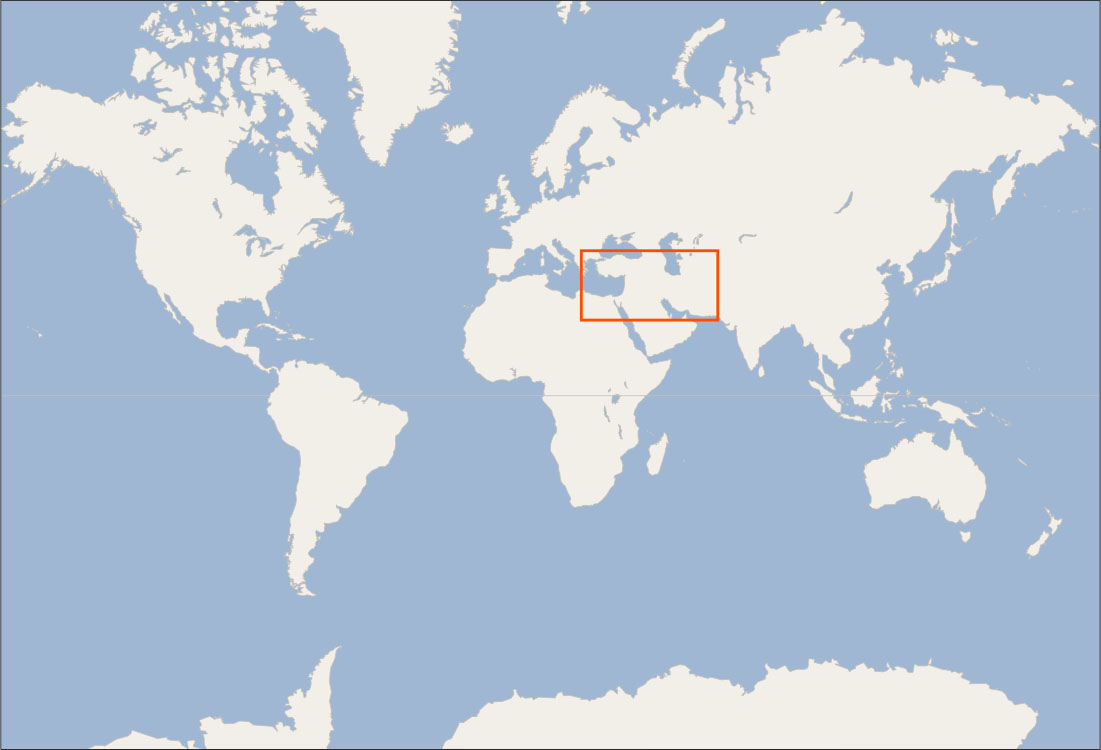
(credit: modification of work “World map blank shorelines” by Maciej Jaros/Wikimedia Commons, Public Domain) · Public Domain
Figure 4.3 (credit: modification of work “World map blank shorelines” by Maciej Jaros/Wikimedia Commons, Public Domain)
図4.3 (出典:Maciej Jaros/Wikimedia Commons「World map blank shorelines」を改変、パブリックドメイン)