第4章古代オリエントThe Near East
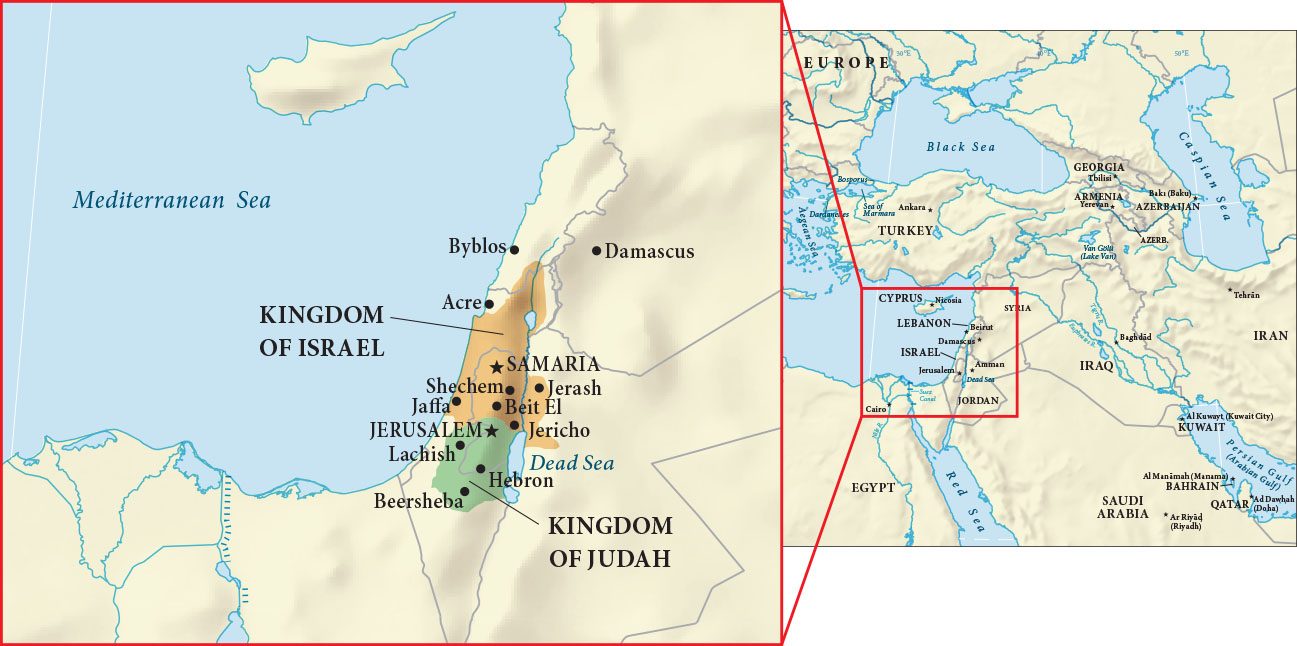
The Divided Monarchy.分裂王国。
(attribution: Copyright Rice University, OpenStax, under CC BY 4.0 license) · CC BY 4.0
With the rise of the Neo-Assyrian Empire and its expansion into Canaan, Israel and Judah entered a new era under foreign domination within the Assyrian-controlled Near East. Anti-Assyrian sentiment in both kingdoms and the Neo-Assyrians’ desire to control the eastern Mediterranean eventually led to multiple Assyrian attacks on Israel. The most devastating occurred in 722 BCE, when thousands of Israelites were deported to other parts of the empire, as was the Assyrians’ custom.
英語のヒント
新アッシリア帝国が台頭し、カナンへ拡張すると、イスラエルとユダは、アッシリアが支配する近東の中で、異国の支配下に置かれる時代へ入った。両王国の反アッシリア感情と、地中海東部を支配しようとする新アッシリアの意図は、何度ものイスラエル攻撃につながった。最も壊滅的だったのは紀元前722年で、アッシリアの慣行に従い、数千人が帝国の他地域へ強制移住させられた。
Prophets in Judah interpreted the destruction of Israel as punishment for its having veered from the covenant with Yahweh. They called for religious reforms in Judah in order to avoid a similar fate. While Judah was incorporated into the Neo-Assyrian Empire, it avoided the destruction experienced by Israel. However, the defeat of Assyria by the Neo-Babylonians brought new challenges to Judah. Resistance to Babylon led to punishments and forced deportations in 597 BCE, and finally to the destruction of Jerusalem and its temple in 586 BCE.
英語のヒント
ユダの預言者は、イスラエルの滅亡を、ヤハウェとの契約から逸脱した罰と解釈した。同じ運命を避けるため、ユダでも宗教改革を求めた。ユダは新アッシリア帝国に組み込まれたが、イスラエルのような破壊は免れた。しかし新バビロニアがアッシリアを倒すと、新たな危機が訪れた。バビロンへの抵抗は、紀元前597年の処罰と強制移住、そして紀元前586年のエルサレムと神殿の破壊を招いた。
The many Judeans deported to Babylon after the fall of Jerusalem were settled in Mesopotamia and expected to help repopulate areas that had been devastated by wars. Many assimilated into Babylonian culture and became largely indistinguishable from other Mesopotamians. Some, however, retained their Judean culture and religious beliefs. For these Judeans, the Babylonian exile, as it was called, was a time of cultural and religious revival. They edited various earlier Hebrew writings and combined them into a larger work, thus giving shape to the core of the Hebrew Bible. Finally, with the rise of the Persian Empire and its conquest of Babylonia, the Persian king Cyrus the Great permitted the unassimilated Judeans to return to Judah. They went in two major waves over the next few decades and began a process of reconstruction that eventually included the rebuilding of Yahweh’s temple at Jerusalem.
英語のヒント
エルサレム陥落後、バビロンへ連行された多くのユダの人々はメソポタミアに定住させられ、戦争で荒れた土地の人口回復を担うよう求められた。多くはバビロニア文化に同化し、他のメソポタミア人とほとんど見分けがつかなくなった。しかし一部は、自分たちの文化と信仰を保った。彼らにとって、「バビロン捕囚」は文化と宗教の再生の時だった。古いヘブライの文書を編集して大きな作品にまとめ、ヘブライ語聖書の核を形作った。やがてペルシアがバビロニアを征服すると、キュロス大王は、同化していなかった人々のユダへの帰還を許した。続く数十年、主に2回の波に分かれて戻り、再建を始めた。ついにはエルサレムのヤハウェの神殿も再建された。
The Culture of the Hebrewsヘブライ人の文化
The most salient feature of Hebrew culture during this period was its then-unusual monotheism. The Bible suggests this tradition began with Abraham, who was said to have entered into a covenant with Yahweh as far back as 2100 BCE. With the emergence of Moses in the Bible, Hebrew monotheism really began to take shape. As the Bible explains, during the exodus from Egypt, Moses was given the laws directly from Yahweh, including the command that only Yahweh be worshipped. This account suggests that pure monotheism was commonly practiced by the Hebrews from that time forward. Yet closer inspection of the biblical stories reveals a much more complicated and gradual process toward monotheism.
英語のヒント
この時代のヘブライ文化で最も目立つ特徴は、当時としては珍しい一神教だった。聖書は、紀元前2100年にもさかのぼってヤハウェと契約を結んだとされるアブラハムに、その始まりを置く。一神教が本格的な形を取り始めるのは、モーセの登場からである。聖書によれば、出エジプトの間、モーセはヤハウェから直接法を授かり、その中にはヤハウェだけを崇拝せよという命令もあった。この記述は、それ以降、純粋な一神教が広く行われたかのように見せる。しかし聖書を詳しく読むと、もっと複雑で段階的な、一神教への過程が見える。
For example, the first of the commandments given to Moses by Yahweh demands that the Hebrews “have no other gods before me.” This language implies that there are in fact other gods, but those gods are not to be worshipped. In other places in the Bible, God is referred to as plural or occasionally as part of an assembly of gods. This textual evidence likely preserves small elements of the earlier Canaanite polytheistic religious traditions. These include the veneration of El, the head of the pantheon and often associated with Yahweh, and of Yahweh’s consort Asherah, the storm god Baal, the fertility goddess Astarte, and many others. Archaeologists’ discoveries of temples and figurines representing these gods attest to the fact that they were worshipped in some form well into the eighth century BCE.
英語のヒント
たとえば最初の戒めは、「私の前に他の神々を持ってはならない」と命じる。この言い方は、他の神々が存在するが、崇拝してはいけないことを含意する。他の箇所では神が複数形で呼ばれ、神々の集会の一員とされる場合もある。こうした記述には、おそらく古いカナンの多神教の断片が残っている。神々の長で、しばしばヤハウェと結びつけられるエル、ヤハウェの配偶神アシェラ、嵐の神バアル、豊穣の女神アスタルテなどへの崇敬である。神殿や神像の発見は、紀元前8世紀に入っても、これらの神々が何らかの形で崇拝されていたことを裏づける。
Many portions of the Bible describe how the Hebrews frequently fell away from Yahweh and back into their polytheistic traditions. This backsliding is usually condemned in the Bible and occasionally results in efforts by biblical heroes to restore Moses’s covenant with God. King Hezekiah of Judah (727–697 BCE), for example, conducted a cleansing campaign against unauthorized worship around his kingdom. He removed local shrines, destroyed sacred monuments, and smashed cult objects. His son, King Manasseh, however, restored some of these cultic practices and shrines. Setting aside the bias of the Bible’s writers, Manasseh may have been attempting to rescue long-standing religious traditions that had been under assault by his reform-minded father. However, as early as the mid-seventh century BCE, the religious reformers who promoted the centralized worship of Yahweh and obedience to the laws of Moses had clearly gained the upper hand. Their interpretation of Hebrew history and religion was then on the rise.
英語のヒント
聖書の多くの箇所は、ヘブライ人がしばしばヤハウェから離れ、多神教に戻ったと語る。この信仰の後退は通常非難され、ときに聖書の英雄たちが、モーセと神の契約を回復しようとする。たとえばユダ王ヒゼキヤ(紀元前727~697年)は、公認されない崇拝を一掃する運動を行い、地方の聖所を取り除き、聖なる記念物や祭具を壊した。息子マナセ王は、そうした祭祀や聖所の一部を復活させた。聖書の著者の偏りをひとまず脇に置けば、改革志向の父に攻撃された、長年の宗教伝統を救おうとしたのかもしれない。しかし紀元前7世紀半ばにはすでに、ヤハウェ崇拝の集約とモーセの法への服従を求める改革者が、明らかに優位を得ていた。彼らの歴史・宗教解釈が勢いを増していたのである。
The backsliding theme of the Hebrew Bible was partly a way for its writers to account for the vestiges of Canaanite religious practices that did not fit neatly with their view of the Hebrews as having been monotheistic from the time of Moses. The abandonment of Yahweh accounted for the disasters that befell the Hebrews in Israel and Judah, especially the destruction of the temple and forced deportation to Babylon. Neo-Assyria and Neo-Babylonia were merely tools, the biblical writers and the prophets they record attest, used by Yahweh to compel the Hebrews to follow the correct path or face punishment. This version of Israelite history was kindled and strengthened during the Babylonian exile, when the core portion of the Hebrew Bible was being edited and assembled.
英語のヒント
聖書が信仰の後退を繰り返し語るのは、モーセ以来ずっと一神教だったという著者の見方に合わない、カナンの宗教慣行の名残を説明するためでもあった。イスラエルとユダを襲った災い、とりわけ神殿破壊とバビロンへの強制移住は、ヤハウェを捨てたためと説明された。聖書の著者と、そこに登場する預言者によれば、新アッシリアと新バビロニアは、正しい道に従わなければ罰を受けると、ヤハウェがヘブライ人に迫るための道具にすぎなかった。この歴史観は、聖書の核となる部分が編集・集成されたバビロン捕囚の間に、いっそう強まった。
By the time the Judeans were allowed to return to Jerusalem and rebuild their temple, the basic framework of what we understand today as Judaism had emerged and been largely accepted. The Jews (or people from Judah) were expected to worship only Yahweh, live moral lives consistent with his dictates, and closely follow the laws of Moses. For example, they were prohibited from murdering, stealing, and committing adultery. They were barred from consuming specific foods such as pork, shellfish, insects, and meat that had been mixed with dairy. Food had to be properly prepared, which included ritual slaughter for animals. Jewish people were also prohibited from working on the seventh day of the week and were compelled to treat wives with respect and give to charity, among many other acts. And of course there were important rules about the worship of Yahweh, including loving him, fearing him, emulating him, and not profaning his name.
英語のヒント
ユダの人々がエルサレムへ戻り、神殿を再建することを許される頃には、今日ユダヤ教と呼ぶ信仰の基本的な枠組みが生まれ、広く受け入れられていた。ユダヤ人、すなわちユダの人々は、ヤハウェだけを崇拝し、その命令に沿う道徳的な生活を送り、モーセの法を厳密に守るものとされた。殺人、窃盗、姦通は禁止された。豚肉、貝類、昆虫、乳製品と混ぜた肉など、特定の食品も禁じられた。食物は正しく調理し、動物には儀礼に従う屠畜が必要だった。週の第7日には働かず、妻を敬い、施しをするなど、多くの行為を求められた。神を愛し、畏れ、まね、その名を汚さないなど、ヤハウェ崇拝にも重要な規則があった。
Since the Hebrews could trace their origins back to agricultural clans, a number of the laws of Moses dealt with agricultural issues, like prohibitions against eating ripe grains from the harvest before they are made into an offering. The festival of Sukkot, meaning “huts,” was a harvest festival when Jewish people were expected to erect huts, possibly as a way to remember the time when they were primarily agriculturalists. However, as the Hebrews grew in number and began living in cities and adopting urban occupations, these agricultural traditions were relegated primarily to symbolic religious practice. In cities, Jewish people found economic opportunities as craftspeople, traders, and merchants. As Jerusalem grew in the centuries after the Babylonian exile, their religion became ever more adapted to urban life.
英語のヒント
ヘブライ人の起源は農耕氏族にさかのぼるため、モーセの法にも農業に関するものが多い。たとえば収穫した穀物を供物にする前に食べることを禁じた。「小屋」を意味するスコット(仮庵祭)は収穫祭で、人々は小屋を建てた。主に農業を営んでいた時代を思い出すためだった可能性がある。しかし人口が増え、都市に住み、都市的な職業を持つようになると、農業の伝統は主に象徴的な宗教行為となった。都市では職人や商人として機会を得た。捕囚後の数世紀、エルサレムが成長するにつれて、宗教もますます都市生活に適応した。
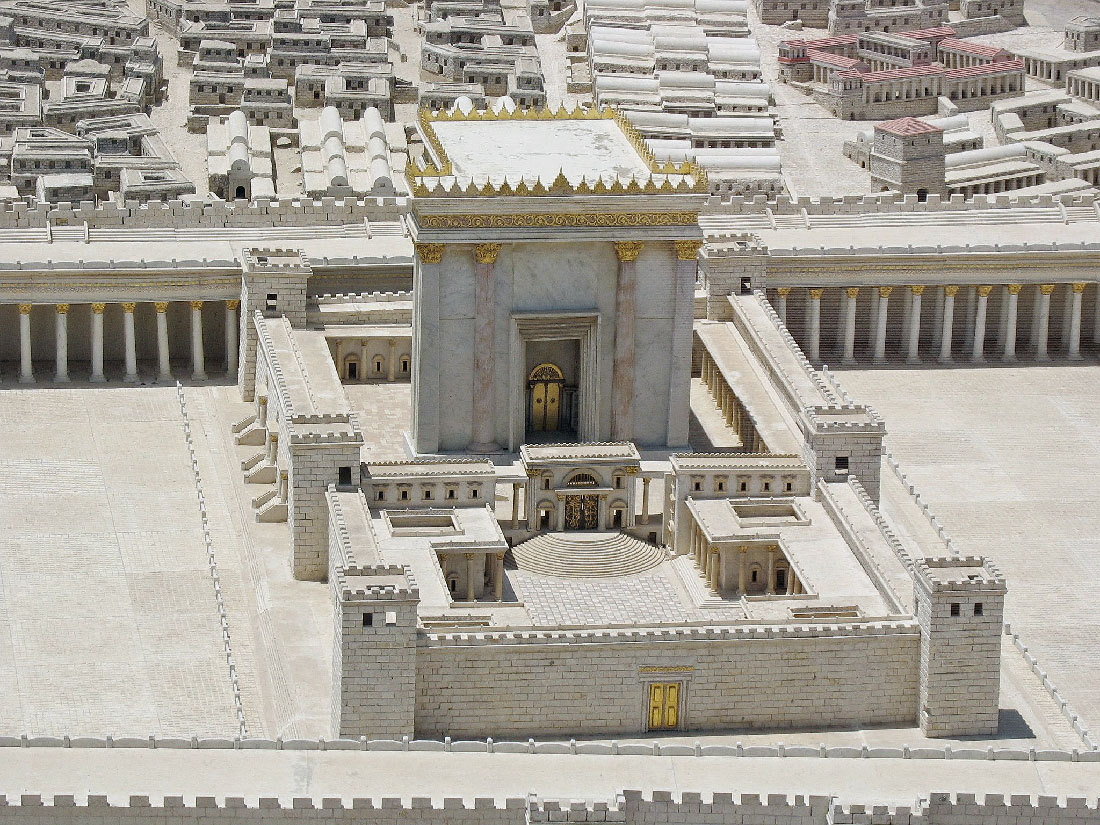
At the center of urban life in Jerusalem was the temple, completed around 515 BCE (Figure 4.41). It included courtyards as well as an enclosed sanctuary with altars and a special location kept in total darkness, referred to as the Holy of Holies, where Yahweh was present. In the temple, the priests organized various religious festivals and performed elaborate rituals, including special sacrifices of animals supplied by worshippers seeking the favor of Yahweh.
英語のヒント
エルサレムの都市生活の中心には、紀元前515年頃に完成した神殿があった(図4.41)。中庭のほか、祭壇を備えた囲いのある聖所と、ヤハウェが臨在する「至聖所」と呼ぶ、完全な暗闇に保たれた特別な場所があった。神官は各種の宗教祭礼を組織し、神の恵みを求める礼拝者が持参した動物の特別な犠牲など、精緻な儀式を行った。
The Second Temple.第2神殿。
(credit: “Second Temple” by “Ariely”/Wikimedia Commons, CC BY 3.0) · CC BY 3.0
Figure 4.41 This contemporary model of the Second Temple complex in Jerusalem shows the way it would have looked after the expansions begun by Herod in the first century BCE and continued into the first century CE. (credit: “Second Temple” by “Ariely”/Wikimedia Commons, CC BY 3.0)
図4.41 エルサレムの第2神殿群の現代の模型。紀元前1世紀にヘロデが始め、紀元1世紀まで続いた拡張工事後の姿を示す。(出典:「Ariely」/Wikimedia Commons「Second Temple」、CC BY 3.0)