第4章古代オリエントThe Near East
Foreign Affairs and Trade外交と交易
The many city-states, kingdoms, and empires of Mesopotamia operated in a complex world in which both risks and rewards for rulers were extremely high. War was especially common, and diplomatic mistakes could have costly consequences. Kings preferred to avoid war if possible and maintain healthy diplomatic relationships with others instead. A smaller kingdom, for example, might find it advantageous to seek an alliance with a large regional power like Assyria, Babylonia, or the Hittite Empire. Sending sons and daughters to rival kingdoms in marriage also helped forestall war and build cultural and familial bridges between competitors. The Hittite king Suppiluliumas attempted to marry one of his sons into the Egyptian royal family, which would have united these two regional powers and competitors. That marriage never took place, but many others did.
英語のヒント
メソポタミアの多くの都市国家、王国、帝国は、支配者にとって危険も見返りも極めて大きい、複雑な世界で動いていた。戦争は頻繁で、外交の誤りは高い代償を伴った。王たちは可能なら戦争を避け、良好な外交関係を保とうとした。小国には、アッシリア、バビロニア、ヒッタイトのような大国との同盟が有利なこともあった。息子や娘を競争国と結婚させることも、戦争を防ぎ、文化と血縁の橋を架けた。ヒッタイト王シュッピルリウマは息子の一人をエジプト王家へ婿入りさせようとした。実現すれば二大競争国を結び付けたはずだが、この婚姻は実現しなかった。ほかの多くの婚姻は成立した。
Ambassadors were a key part of Mesopotamia’s complex diplomatic world. Kings frequently sent their representatives to friendly and even rival kingdoms to mend or strengthen relationships, a vital task frequently performed under extreme pressure. A wrong move could start a war. As they are today, however, such emissaries were guaranteed certain protections. In ordinary situations, they could expect to be free to leave unharmed when the situation demanded it, to be exempt from certain taxes, and to have their property respected. But if war broke out between the two kingdoms, an ambassador could get caught in the middle.
英語のヒント
使節は、複雑な外交世界の重要な一部だった。王は、友好国にも競争国にも代表を送り、関係を修復・強化した。強い圧力の下で行う重要な仕事で、判断を誤れば戦争にもなった。ただし、現在と同じく、使節には一定の保護が保証された。通常は、必要な時に無傷で去る自由、一定の税の免除、財産の尊重を期待できた。しかし両国が開戦すれば、使節は板挟みになることがあった。
Gift giving was an important part of the ambassadors’ role. When sent to another kingdom, emissaries frequently carried with them an offering of high value for the king who received them, and on their return home, their king expected a present of equal or greater worth. This exchange of gifts demonstrated respect and goodwill between the rulers. Returning empty-handed suggested the foreign king was breaking off diplomatic relations or had even become hostile. Occasionally an ambassador might be unable to return home, either because the relationship between the two kingdoms had gone sour or because the foreign king refused to supply an appropriate gift.
英語のヒント
贈り物も使節の重要な役割だった。派遣先の王へ高価な贈り物を持参し、帰国する時には、自国の王が同等以上の返礼を期待した。交換は王同士の敬意と善意を示した。手ぶらで帰ることは、相手の王が外交関係を断ち、さらには敵対し始めたことを示唆した。両国関係が悪化したり、相手の王が適切な贈り物を用意しなかったりして、使節が帰国できなくなることもあった。
Rulers did not rely only on ambassadors for collecting intelligence in Ancient Mesopotamia. They often employed spies to inform them of what was happening inside both rival and friendly foreign kingdoms. These could be merchants, sailors, artisans, or refugees fleeing foreign lands. Hammurabi, for example, made frequent use of espionage. Not only did he recruit agents of all types to keep tabs on other kings, but he even established a special intelligence bureau in the palace at Mari to collect, translate, and analyze documents provided by his many spies. The most common uses of this intelligence were to anticipate war, learn about troop movements, and assess the strength of a foreign kingdom before putting an army into the field. Using spies was risky, however, because the very nature of the work suggested that such agents were never to be trusted, and betrayal was always a possibility. An even greater risk was borne by the spies themselves, who could expect a painful death if caught.
英語のヒント
古代メソポタミアの支配者は、情報収集を使節だけに頼らなかった。商人、船乗り、職人、外国から逃れて来た難民などを間者として使い、敵国と友好国の内情を知らせさせた。ハンムラビも諜報をよく用い、さまざまな人員で他の王の動きを見張るだけでなく、マリの宮殿に特別な情報機関を設け、間者の文書を集め、翻訳し、分析させた。情報は主に、戦争を予測し、軍の移動を知り、出兵前に相手国の力を測るために使われた。しかし、間者は仕事の性質上、決して信頼しきれず、裏切りの可能性があるため、その使用には危険があった。間者自身が負う危険はさらに大きく、捕まれば苦痛に満ちた死が待っていた。
Long-distance trade was another important point of contact between different kingdoms around the region. Archaeological work has unearthed a wealth of information about the trading networks that crisscrossed the Near East and beyond. As early as the empire of Sargon of Akkad, Mesopotamian traders operating in the Persian Gulf sailed as far as modern-day Pakistan to trade with the people of the Indus River valley. Large empires had an interest in encouraging trade and maintained roads and bridges across the Near East for that purpose. The Assyrians were productive builders of roads and bridges that carried people and goods into and across their territory. Roads in the enormous Neo-Assyrian Empire were managed by a central government authority to ensure that the movement of goods and especially of soldiers proceeded unhindered.
英語のヒント
遠距離交易も、地域の王国同士の重要な接点だった。考古学は、近東とその外を縦横に結ぶ交易網について、豊富な情報を明らかにした。サルゴンの帝国の時代にはすでに、ペルシア湾のメソポタミア商人が現在のパキスタンまで航海し、インダス流域と交易した。大帝国は交易促進に利益を見いだし、各地の道路や橋を維持した。アッシリア人も、人と物が領土内外を移動する道路・橋を盛んに築いた。巨大な新アッシリア帝国の道路は、中央政府が管理し、物資、特に兵士の移動が妨げられないようにした。
By today’s standards, the long-distance roads that crisscrossed this landscape were often of poor quality. They were generally unpaved and were maintained by local authorities, who would frequently carve a new road alongside the old one after years of wear. In the desert regions where soil was firm, the roads might be straight, while in more diverse terrain, they might wind around mountains and other imposing obstacles like swamps. Traveling between cities on such roads could take several weeks, even over relatively short distances. Traders could expect some form of protection from local rulers, however, in exchange for paying custom fees and duties.
英語のヒント
今日の基準では、地域を縦横に結ぶ長距離道路の質は悪いことが多かった。一般に未舗装で地方当局が管理し、年月を経て傷むと、脇に新しい道を切り開くことが多かった。地面の固い砂漠では直線でも、地形の複雑な場所では、山や湿地など大きな障害物を迂回した。都市間の移動は、比較的短い距離でも数週間かかることがあった。ただし商人は、通行・関税などを払う代わりに、地方の支配者から何らかの保護を期待できた。
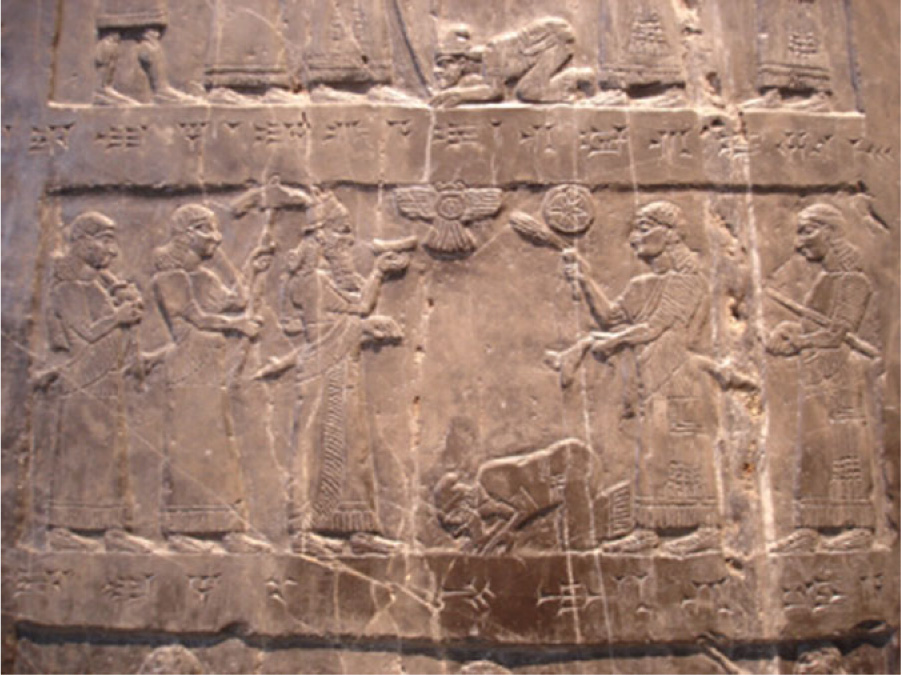
Access to foreign goods and raw materials was a major concern of empires in the Near East. In Mesopotamia in particular, vital resources like stone, timber, and metal ores were scarce, and they had to be procured in large quantities from distant locations. The flow of these goods into imperial centers often took the form of tribute payments, much like a tax, from vassal or subjugated kingdoms (Figure 4.10). However, tribute was not the only mechanism for international trade. During the Old Assyrian period (c. 2000–1600 BCE), for example, Assyrian traders traveled between Mesopotamia, Anatolia, and even Afghanistan trading in valuable goods like copper, tin, and textiles. Copper and tin were especially important because they are the ingredients needed to make bronze, the primary material for manufacturing metal tools and weapons in this period. The Assyrians even established merchant colonies in Anatolia where they exchanged tin and textiles for silver and gold.
英語のヒント
外国の物資や原料を得ることは、近東の帝国の大きな関心事だった。特にメソポタミアでは、石、木材、金属鉱石など重要な資源が乏しく、遠方から大量に調達する必要があった。属国や征服した王国から、税に似た貢納の形で帝国中心部へ流れ込むことも多かった(図4.10)。しかし、国際交易は貢納だけではない。たとえば古アッシリア時代(紀元前2000~1600年頃)の商人は、メソポタミア、アナトリア、さらにはアフガニスタンの間を行き来し、銅、スズ、織物などを取引した。銅とスズは、この時代の金属道具・武器の主要素材である青銅に必要なため、特に重要だった。アッシリア人はアナトリアに商人居留地も設け、スズや織物を銀や金と交換した。
Receiving Tribute.貢納を受ける。
(credit: “First depiction of Hoshea on the Black Obelisk” by The British Museum/Wikimedia Commons, Public Domain) · Public Domain
Figure 4.10 In this relief from the Black Obelisk of Shalmaneser III, Assyrian king Shalmaneser III is shown receiving tribute from Jehu, the king of Israel, bowing before him. The limestone obelisk was erected in 825 BCE as a public monument and is one of only two complete Assyrian obelisks that have been discovered to date. (credit: “First depiction of Hoshea on the Black Obelisk” by The British Museum/Wikimedia Commons, Public Domain)
図4.10 シャルマネセル3世の黒色オベリスクの浮彫。アッシリア王シャルマネセル3世が、前にひれ伏すイスラエル王イエフから貢納を受ける。石灰岩のオベリスクは紀元前825年、公共の記念碑として建てられ、現在までに見つかった完全なアッシリアのオベリスク2基のうちの一つである。(出典:大英博物館/Wikimedia Commons「First depiction of Hoshea on the Black Obelisk」、パブリックドメイン)