第5章古代のアジアAsia in Ancient Times
Introductionはじめに
Harappa: A Doorway to Trade.ハラッパー――交易の玄関口。
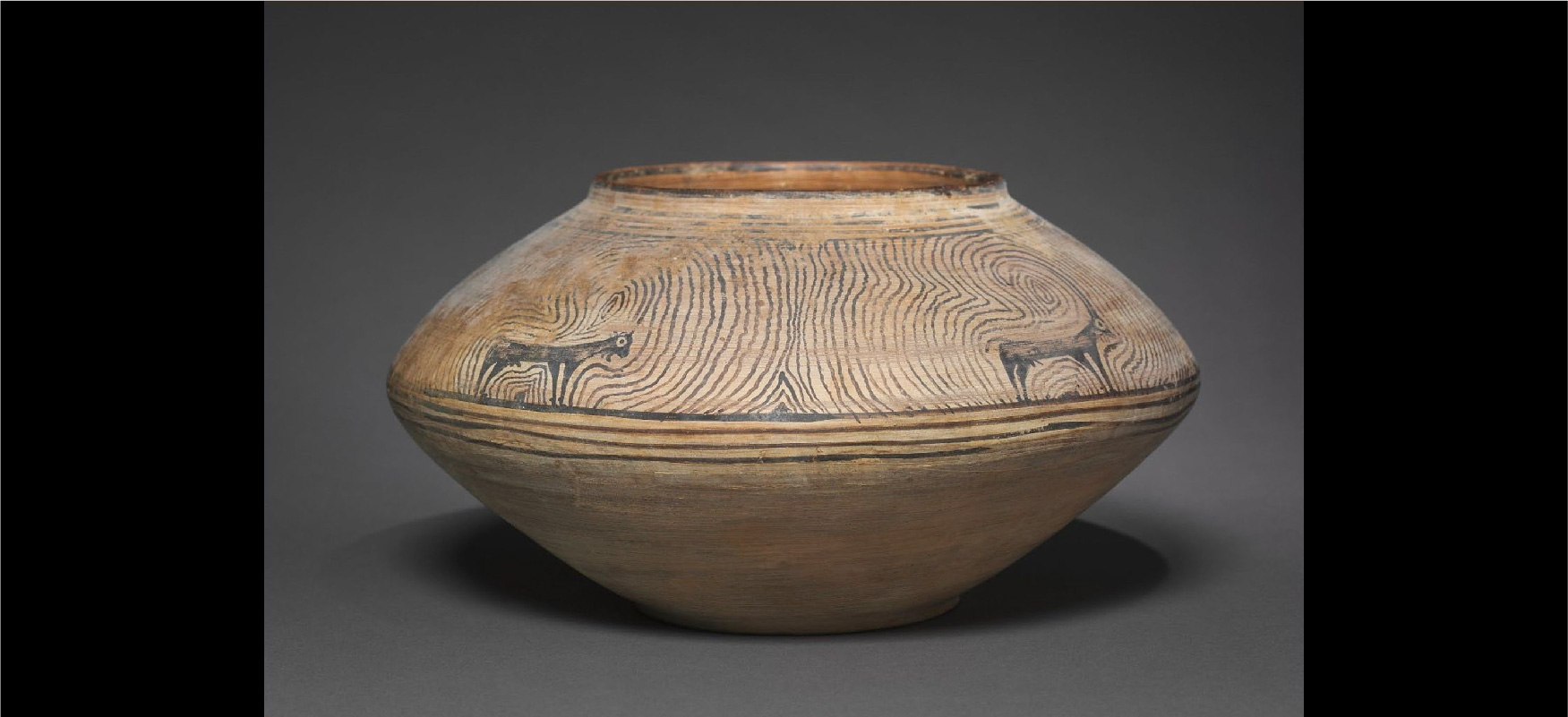
(credit: modification of work “Harappa Vessel - 1-8harappanjar” by Prof Grossetti/Flickr, Public Domain) · Public Domain
Figure 5.1 This intricately painted cooking vessel is from the ancient city of Harappa, in today’s Pakistan near the Ravi River. Harappan ways left an indelible mark on Indian culture. Featuring standardized weights and measures, uniform bricks, and even indoor plumbing, Harappa and the city of Mohenjo-Daro were doorways to trade, to waves of human migration, and to agriculture flowing from Egypt and Mesopotamia to the rest of Asia. (credit: modification of work “Harappa Vessel - 1-8harappanjar” by Prof Grossetti/Flickr, Public Domain)
図5.1 精緻な絵付けを施したこの調理容器は、現在のパキスタンのラーヴィー川近くにあった古代都市ハラッパーのもの。ハラッパーの生活様式はインド文化に消えることのない痕跡を残した。統一された度量衡、規格のそろった煉瓦、さらには屋内の給排水設備まで備えたハラッパーとモヘンジョダロは、交易や人の移住の波、そしてエジプト・メソポタミアからアジア各地へと伝わる農耕の玄関口だった。(出典:原作品を加工:“Harappa Vessel - 1-8harappanjar”/Prof Grossetti/Flickr、パブリックドメイン)
Ancient Asia was dominated by two civilizational poles, one centered in today’s India and the other to the east, across the Asian landmass in China. Within both these zones developed impressive cities, kingdoms, and even empires whose commercial might, religion, and technology shaped the lives of Asians for thousands of years (Figure 5.1). Other Asians—traveling peoples of the steppes—acted as conduits of trade and exchange as they brought goods and ideas from one end of the continent to the other.
英語のヒント
古代アジアには、文明の二つの中心が大きな影響力を持っていた。一つは現在のインドを中心とし、もう一つはアジア大陸を東へ隔てた中国にあった。どちらの地域でも大規模な都市や王国、さらには帝国が発展し、その商業力・宗教・技術は何千年にもわたってアジアの人びとの暮らしを形づくった(図5.1)。アジアの別の人びと、すなわち草原を移動する諸集団は、大陸の一端から他端へ商品や思想を運び、交易と交流をつなぐ役割を担った。
The same was true far to the east and the south. There, groups that became the Koreans and Japanese, as well as others who arrived in Southeast Asia via migration and trade, also carved out civilizations, smaller societies that influenced their larger neighbors in China and India. At this time, Asia was a region woven together by networks of traveling monks, nomadic peoples, oceanic and overland trade, and shared writing systems.
英語のヒント
はるか東や南でも同様だった。後に朝鮮人や日本人となる集団や、移住と交易を通じて東南アジアに到来した人びとも、独自の文明を築いた。これらの比較的小さな社会は、中国やインドという大きな隣人に影響を与えた。この時代のアジアは、旅する僧侶や遊牧民、海上・陸上の交易、共通の文字体系によるネットワークで結び合わされた地域だった。
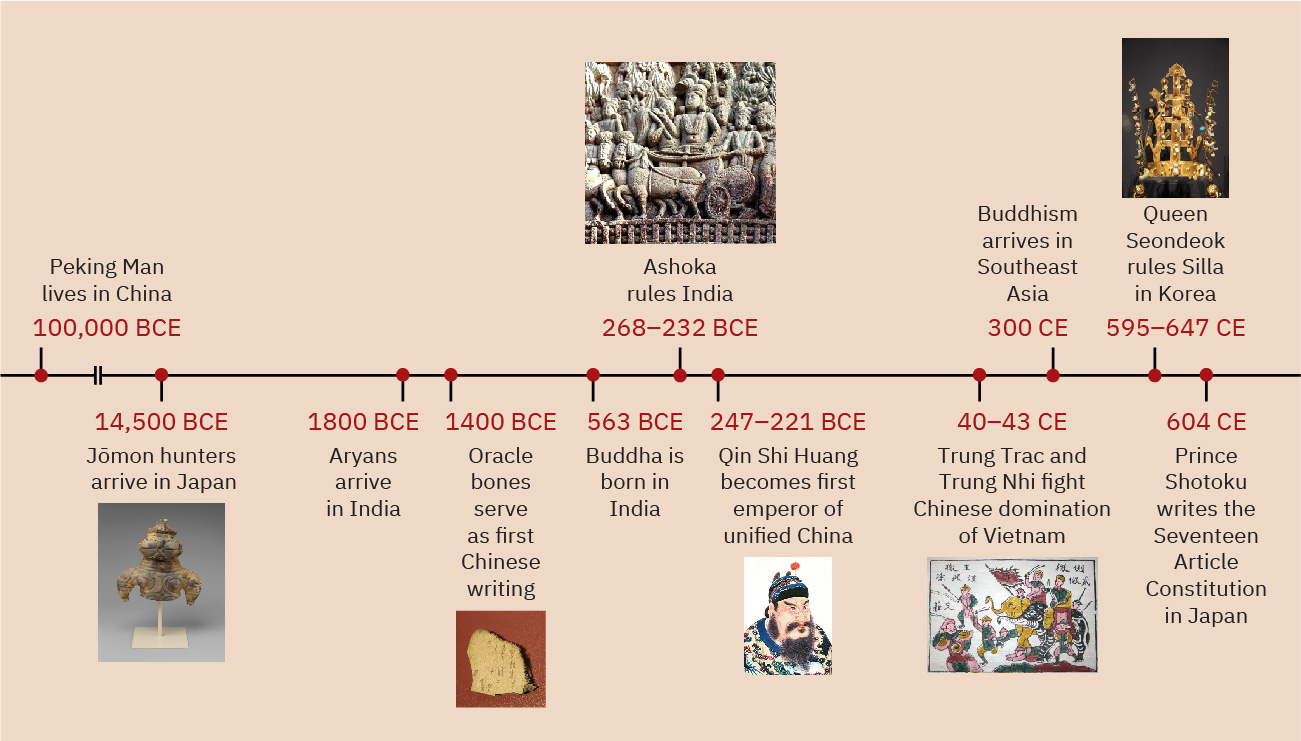
Timeline: Asia in Ancient Times.年表:古代のアジア。
(credit “14,500 BCE”: modification of work “Dogū (Clay Figurine)” by The Harry G. C. Packard Collection of Asian Art, Gift of Harry G. C. Packard, and Purchase, Fletcher, Rogers, Harris Brisbane Dick, and Louis V. Bell Funds, Joseph Pulitzer Bequest, and The Annenberg Fund Inc. Gift, 1975/Metropolitan Museum of Art, Public Domain; credit “1400 BCE”: modification of work “Shang Ox Bone Oracle Bone” by Gary Todd/Flickr, Public Domain; credit “268–232 BCE”: modification of work "King Asoka visits Ramagrama" by Anandajoti Bhikkhu/Flickr, CC BY 2.0; credit “247–221 BCE”: modification of work “A portrait painting of Qin Shi Huangdi, first emperor of the Qin dynasty” by Richard R. Wertz/18th century album of portraits of 86 emperors of China, with Chinese historical notes, British Library/Wikimedia Commons, Public Domain; credit “40-43 CE”: modification of work “Hai ba trung Dong Ho painting” by “LuckyBirdie”/Wikimedia Commons, Public Domain; credit “595–647 CE”: modification of work “Gold Crown of Silla Kingsom” by Gary Todd/Flickr, Public Domain) · Public Domain + CC BY 2.0
Figure 5.2 (credit “14,500 BCE”: modification of work “Dogū (Clay Figurine)” by The Harry G. C. Packard Collection of Asian Art, Gift of Harry G. C. Packard, and Purchase, Fletcher, Rogers, Harris Brisbane Dick, and Louis V. Bell Funds, Joseph Pulitzer Bequest, and The Annenberg Fund Inc. Gift, 1975/Metropolitan Museum of Art, Public Domain; credit “1400 BCE”: modification of work “Shang Ox Bone Oracle Bone” by Gary Todd/Flickr, Public Domain; credit “268–232 BCE”: modification of work "King Asoka visits Ramagrama" by Anandajoti Bhikkhu/Flickr, CC BY 2.0; credit “247–221 BCE”: modification of work “A portrait painting of Qin Shi Huangdi, first emperor of the Qin dynasty” by Richard R. Wertz/18th century album of portraits of 86 emperors of China, with Chinese historical notes, British Library/Wikimedia Commons, Public Domain; credit “40-43 CE”: modification of work “Hai ba trung Dong Ho painting” by “LuckyBirdie”/Wikimedia Commons, Public Domain; credit “595–647 CE”: modification of work “Gold Crown of Silla Kingsom” by Gary Todd/Flickr, Public Domain)
図5.2 (出典「前1万4500年」:原作品を加工:“Dogū (Clay Figurine)”/Harry G. C. Packard アジア美術コレクション、Harry G. C. Packard の寄贈、および Fletcher・Rogers・Harris Brisbane Dick・Louis V. Bell の各基金と Joseph Pulitzer の遺贈、The Annenberg Fund Inc. の寄贈による購入、1975年/メトロポリタン美術館、パブリックドメイン;「前1400年」:原作品を加工:“Shang Ox Bone Oracle Bone”/撮影:Gary Todd/Flickr、パブリックドメイン;「前268~232年」:原作品を加工:“King Asoka visits Ramagrama”/撮影:Anandajoti Bhikkhu/Flickr、CC BY 2.0;「前247~221年」:原作品を加工:“A portrait painting of Qin Shi Huangdi, first emperor of the Qin dynasty”/Richard R. Wertz/中国皇帝86人の肖像と歴史注記を収めた18世紀の画帖、英国図書館/Wikimedia Commons、パブリックドメイン;「40~43年」:原作品を加工:“Hai ba trung Dong Ho painting”/“LuckyBirdie”/Wikimedia Commons、パブリックドメイン;「595~647年」:原作品を加工:“Gold Crown of Silla Kingsom”/撮影:Gary Todd/Flickr、パブリックドメイン)
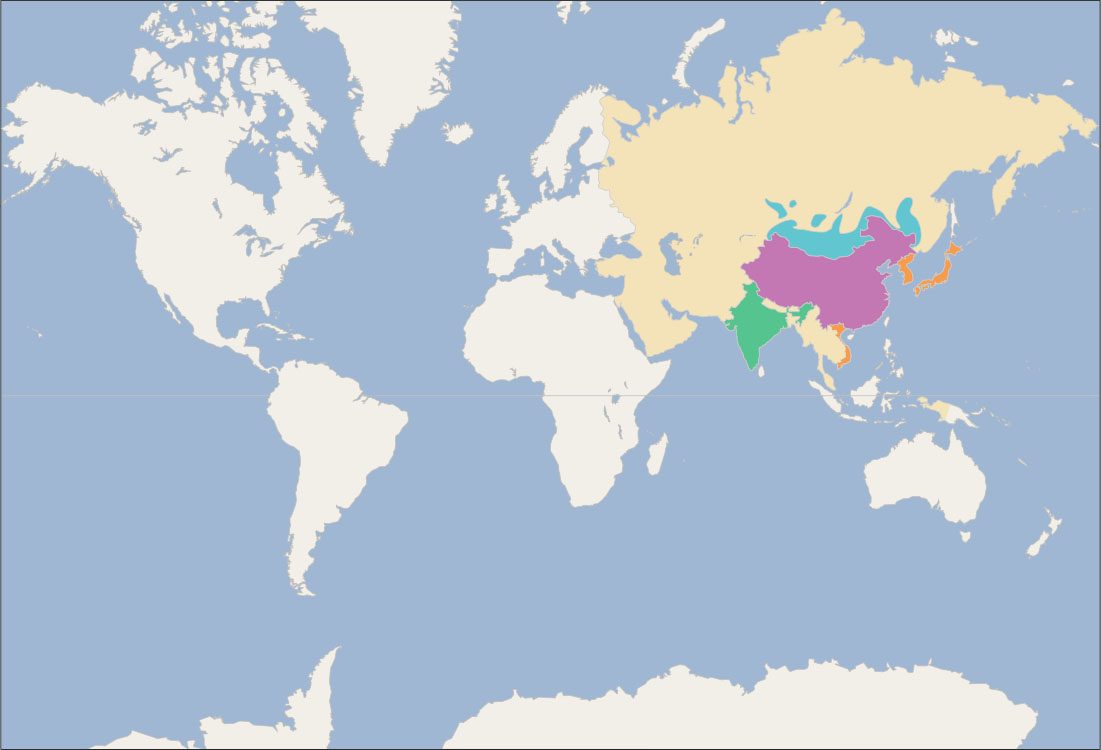
Locator Map: Asia in Ancient Times.位置図:古代のアジア。
(credit: modification of work “World map blank shorelines” by Maciej Jaros/Wikimedia Commons, Public Domain) · Public Domain
Figure 5.3 (credit: modification of work “World map blank shorelines” by Maciej Jaros/Wikimedia Commons, Public Domain)
図5.3 (出典:原作品を加工:“World map blank shorelines”/Maciej Jaros/Wikimedia Commons、パブリックドメイン)