第5章古代のアジアAsia in Ancient Times
5.3 Korea, Japan, and Southeast Asia5.3 朝鮮・日本・東南アジア
Learning Objectives学習の目標
By the end of this section, you will be able to:
この節を学ぶと、次のことができるようになる。
Discuss how geography and climate change influenced the early history of Korea, Japan, and Southeast Asia
地理と気候変動が、朝鮮・日本・東南アジアの初期の歴史にどう影響したかを論じる。
Describe the cultural exchanges between ancient Korea and Japan
古代の朝鮮と日本の文化交流を説明する。
Compare daily life in ancient Korea, Japan, and Southeast Asia
古代の朝鮮・日本・東南アジアの日常生活を比較する。
Korea, Japan, and Southeast Asia were notable in the ancient world as homes to cultures uniquely engaged with the wider world. Via trade, religion, and diplomacy, Korea and Japan borrowed and adapted from Chinese civilization, but even more importantly from each other. Ties between Southeast Asia and India likewise proved formative in the eras in which many cultures evolved from small cities and agrarian villages into trade-post empires with monumental architecture. Conversely, geography, climate, and the early cultural forms produced by the first migrants meant that each area also produced its own indigenous systems. For example, Buddhist missionaries traveled from the Indian subcontinent across the Silk Roads and pilgrims trekked to temples to study and eventually bring home tools to convert their native cultures, but in each destination the faith was transformed into hundreds of new sects and interpretations of the path to enlightenment.
英語のヒント
朝鮮・日本・東南アジアは、より広い世界と独自の関わりを持つ文化が生まれた地域として、古代世界で重要だった。朝鮮と日本は、交易・宗教・外交を通じて中国文明から要素を借りて作り変えたが、それ以上に重要だったのは互いからの取り入れだった。同じように東南アジアとインドのつながりは、多くの文化が小都市や農村から、壮大な建築を持つ交易拠点の帝国へ発展する時代に、形成的な役割を果たした。逆に、地理・気候、そして最初の移住者の作った初期文化の形態によって、各地域には独自の土着の体系も生まれた。例えば仏教の伝道者はインド亜大陸からシルクロードを通って旅し、巡礼者は寺院へ足を運んで学び、やがて自らの文化を改宗させるための手段を持ち帰った。しかし、それぞれの土地で仏教は、悟りへの道についての何百もの新しい宗派や解釈へ変化した。
Ancient Korea古代朝鮮
The earliest humans to reach the Korean peninsula did so around thirty thousand years ago. The land is very hilly, and mountains in the north form a barrier with Manchuria. Important rivers include the Daedong, the Han, and the Yalu. Winters are cold and snowy in the north, while summer months in the south feature blistering heat and torrential rains. Archaeologists have found evidence of bronze weapons dating back to 1300 BCE, but no clear proof that Korea at that time produced a Bronze Age civilization. The earliest written records of the first Koreans come from China, where the Book of Documents recounts the creation of a fief known as Joseon, located in northern Korea and awarded to a Chinese noble referred to as Gija. Later records in Chinese documents from 200 BCE to 313 CE provide descriptions of various small states in areas of Korea and Manchuria.
英語のヒント
朝鮮半島に最初の人類が到達したのは約3万年前だった。土地は丘陵が多く、北部の山々が満洲との障壁をなしている。主要な河川には大同江・漢江・鴨緑江がある。北の冬は寒く雪が多いのに対し、南の夏は猛烈な暑さと豪雨を特徴とする。考古学者は前1300年にさかのぼる青銅製武器の証拠を発見したが、そのころ朝鮮に青銅器文明が成立していたという明確な証拠はない。初期の朝鮮の人びとについての最古の文字記録は中国に由来する。『書経』は、朝鮮北部に朝鮮と呼ばれる封土が設けられ、箕子という中国の貴族に与えられたことを語る。前200~後313年の後の中国文献には、朝鮮と満洲の各地にあったさまざまな小国の記述が見られる。
Seen from the vantage point of Chinese authors, our picture of ancient Korea begins to take shape during China’s Han dynasty, when the peninsula was home to a number of small tribes, cultures, and communities living near the borders of the Chinese empire. From these Chinese records it is also clear that the earliest Koreans were in constant contact and exchange with not just the Chinese but also Inner Asian Steppe peoples like the Xiongnu as well as settlers in Japan. Thus, ethnicity in ancient Korea was quite fluid and prone to change. Groups borrowed liberally from each other’s cultures, traded, and were absorbed and transformed by conquest.
英語のヒント
中国の著者の視点から見ると、古代朝鮮の姿が輪郭を現し始めるのは漢代である。当時の半島には、中国帝国の国境近くに暮らす多くの小さな部族・文化・共同体があった。これらの中国史料からは、初期の朝鮮の人びとが、中国人だけでなく、匈奴などの内陸アジア草原の人びとや、日本の住民とも絶えず接触し交流していたことが分かる。したがって古代朝鮮の民族的な帰属は非常に流動的で、変化しやすかった。集団同士は互いの文化を幅広く取り入れ、交易し、征服によって吸収・変容した。
The transformation of Korea into a unified culture and civilization is a story with many stops and starts. Historians often begin with the narrative of the Han dynasty historian Sima Qian, which tells of the dynasty’s efforts to suppress the Xiongnu by invading northern Korea and establishing four garrisons there, from the Liao River to near today’s Seoul. The presence of Chinese generals, troops, and settlers spurred exchange with societies on the Korean peninsula, which borrowed from Chinese culture the ideas of coins, seals, artwork, and building techniques to make roads and mounded tombs. Adopted by tribal chieftains and aristocratic warrior families, Chinese culture provided a wealth of material needed to engineer the first Korean states by controlling large areas of the northern half of the peninsula.
英語のヒント
朝鮮が統一的な文化・文明へと変わる過程には、多くの中断と再出発があった。歴史家はしばしば、漢代の歴史家、司馬遷の記述を出発点とする。それは漢が匈奴を抑えようとして朝鮮北部へ侵攻し、遼河から現在のソウル近くにかけて、四つの駐屯地を設置したという物語である。中国の将軍・兵士・入植者の存在は、朝鮮半島の社会との交流を促した。半島の社会は、貨幣・印章・美術品、道路や墳丘墓を造る建築技術を、中国文化から取り入れた。部族の首長や貴族的な戦士の家々が採用した中国文化は、半島北半分の広域を支配して最初の朝鮮国家を作り上げるために必要な、豊富な素材を提供した。
When unable to trade, Korean tribal societies mimicked the Xiongnu and raided the Chinese settlements, drawing strength and forging their own war bands. Among the early Korean polities noted in Chinese records in the north were Joseon, Goguryeo, and Buyeo, a frequent ally of the Han. With the collapse of the Han, each of these Korean societies lost a valuable partner and source of weapons, technology, and wealth. In the fourth and fifth centuries CE, all three struggled to defend themselves against rising powers in the north, such as the Xianbei.
英語のヒント
交易ができないとき、朝鮮の部族社会は匈奴に倣って中国の入植地を襲い、力を蓄え、独自の戦士集団を組織した。中国の記録に見える北方の初期の政体には、朝鮮・高句麗、そして漢と同盟を結ぶことの多かった扶余があった。漢の崩壊により、これらの社会はいずれも重要な相手を失い、武器・技術・富の供給源を失った。4~5世紀には、三者とも、鮮卑など北方で台頭する勢力から身を守ろうと苦闘した。
In roughly the same time frame, in the central and southern parts of the Korean Peninsula, and therefore beyond the reach of Chinese administration, three groups known collectively as the Three Han established their territories. Chinese sources from the time refer to people in the southwest as the Mahan, those in the southeast as Jinhan, and between them a group known as the Byeonhan. These societies were ruled by aristocratic families that chose a chief and controlled the lives of lower-ranking commoners, servants, and enslaved people.
英語のヒント
ほぼ同じころ、中国の行政が及ばない朝鮮半島の中部・南部には、三韓と総称される三つの集団が領域を築いた。当時の中国史料は、南西部の人びとを馬韓、南東部を辰韓、その間を弁韓と呼んでいる。これらの社会は、首長を選ぶ貴族の家々によって支配され、その貴族は下位の庶民・使用人・奴隷にされた人びとの生活を統制した。
The Three Han were far less formidable military powers than their counterparts to the north, in part because they lacked horses and fought primarily on foot. On the other hand, they showed considerable cultural fluidity and knowledge of their neighbors. In Jinhan, many tattooed their bodies in decorative patterns like those found on the bodies of the Wa living in Japan, not surprising given that groups moved relatively freely between Japan and Korea in this age. Residents of Korea traveled to Japan, sometimes as traders and fishers and other times as migrants and permanent settlers. In Mahan, clothing and hairstyles mimicked a style used by the Xianbei on the Inner Asian Steppe, even as their lifestyles revolved around farming rather than a nomadic culture lived on horseback. Indeed, it appears that early Korean societies were quite selective in their borrowing.
英語のヒント
三韓の軍事力は、北の諸勢力よりはるかに弱かった。その理由の一つは馬が少なく、主として徒歩で戦ったことにある。他方で文化的にはかなり柔軟で、近隣の人びとについてもよく知っていた。辰韓では、日本に暮らす倭人に似た装飾模様の入れ墨を体に施す人が多かった。この時代、日本と朝鮮の間を集団が比較的自由に移動していたことを考えれば、不思議ではない。朝鮮の住民は、ある時は交易者や漁師として、またある時は移住者や定住者として日本へ渡った。馬韓の衣服や髪型は、内陸アジア草原の鮮卑の様式に似ていた。しかし生活の中心は、馬上の遊牧文化ではなく農耕だった。実際、初期の朝鮮社会は、取り入れるものをかなり選び分けていたと考えられる。
Practices such as the levirate, in which a young male marries his elder brother’s widow, were used widely by Inner Asian Steppe peoples and adopted by a number of early Korean ruling families. But the decision whether to emulate the Chinese, Japanese, or other neighbors presented a range of options and cultural choices for chieftains and elite families to build on in this age.
英語のヒント
若い男性が兄の未亡人と結婚するレビラト婚のような慣行は、内陸アジア草原の人びとの間で広く用いられ、初期の朝鮮の支配家族のいくつかにも採用された。しかし、中国人・日本人・その他の隣人の誰に倣うかという判断には、幅広い選択肢があった。この時代の首長や有力家は、それらの文化的選択を土台に社会を築くことができた。
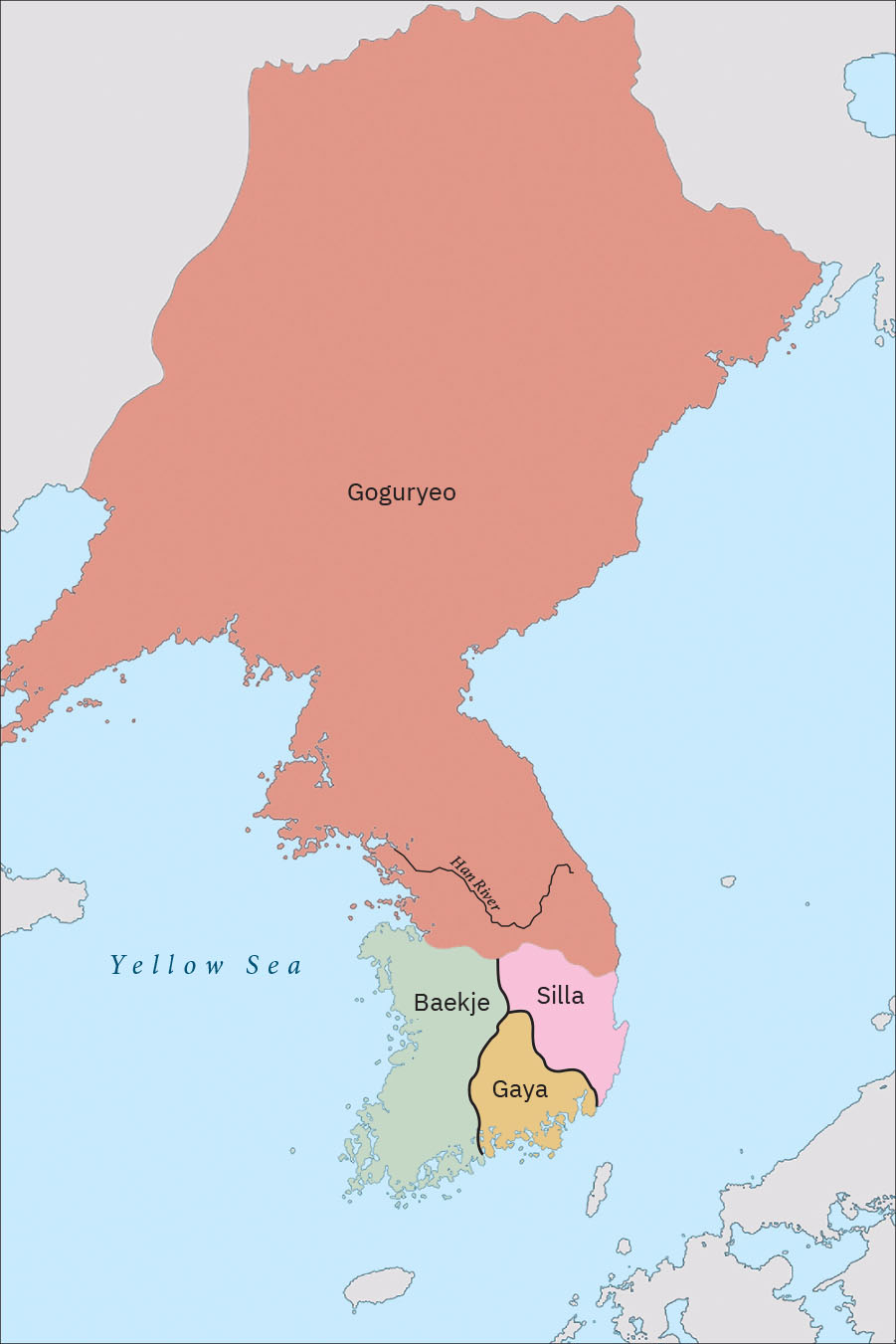
The decline of Chinese power in the fourth century unleashed a wave of refugees that proved pivotal in speeding up the process of state-building in Korea, opening an age known as the Three Kingdoms (313–668 CE). The three kingdoms in questions were Goguryeo, Baekje, and Silla (Figure 5.11). Chinese immigrants resettling within the bounds of Korea provided a source of knowledge about political practices that strengthened the rule of elites, transforming them into kings. These kings commanded large armies, drawing legitimacy from their military prowess and creating mounded tombs that required vast resources and labor. From the struggles against groups such as the Khitan and Xianbei in the north emerged the kingdom of Goguryeo. In the late fourth century, under the leadership of King Gwanggaeto, this kingdom drove southward in a series of expansionist wars against its main rival, the Korean kingdom of Baekje and its allies from Japan, the Wa. In doing so, Goguryeo managed to make the third of the Three Kingdoms, Silla, a vassal by the early fifth century.
英語のヒント
4世紀の中国の権力の衰えは、難民の流出を引き起こした。それは朝鮮の国家形成を加速させるうえで決定的となり、三国時代(313~668年)という時代を開いた。ここでいう三国は高句麗・百済・新羅である(図5.11)。朝鮮の領内へ移り住んだ中国人は、有力者の支配を強め、彼らを王へと変える政治的実践の知識を提供した。これらの王は大軍を指揮し、軍事的力量から正統性を得て、膨大な資源と労働力を要する墳丘墓を造った。北方の契丹や鮮卑などとの闘争から、高句麗王国が台頭した。4世紀後半、広開土王の下で、高句麗は最大の敵である朝鮮の百済と、その日本の同盟者である倭に対して、南への拡張戦争を繰り返した。その過程で、5世紀初頭までに、三国の残る一国、新羅を臣従させることに成功した。
Ancient Korea.古代朝鮮。
(credit: modification of work “Map of Goguryeo (476)” by “solicitatia”/Wikimedia Commons, CC0 1.0) · CC0 1.0
Figure 5.11 Three pivotal kingdoms—Goguryeo, Baekje, and Silla—dominated trade and cultural exchange with China and Japan and vied to unify all of Korea under their rule. A fourth kingdom, Gaya, remained relatively weak in this period and in 532 CE was absorbed by Silla. (credit: modification of work “Map of Goguryeo (476)” by “solicitatia”/Wikimedia Commons, CC0 1.0)
図5.11 中心となる三つの王国—高句麗・百済・新羅—は、中国や日本との交易と文化交流を支配し、朝鮮全土を自らの統治の下に統一しようと競った。四つ目の王国である伽耶は、この時期には比較的弱いままで、532年に新羅へ吸収された。(出典: 原作品を加工:“Map of Goguryeo (476)”/“solicitatia”/Wikimedia Commons, CC0 1.0)
Beyond Goguryeo’s militarism, its expansion was marked by two other critical developments. The first was its skillful use of diplomacy and regional politics to manage alliances and threats, playing off groups within and around the Korean peninsula to secure its power. The second was the adoption of a written script from China, evidenced by 414 CE in a stone slab inscribed to note the accomplishments of King Gwanggaeto upon his death. Goguryeo’s elites also learned from the Chinese the art of adorning their large, mounded tombs with colorful murals depicting the lives of royals surrounded by dancers, servants, and enslaved people. Images of large battles, wrestling matches, and mythical creatures such as the phoenix in other mural scenes suggest the emergence of a rich courtly life.
英語のヒント
高句麗の拡張には、軍事力に加えて、二つの重要な発展があった。一つは、外交と地域政治を巧みに用いて同盟や脅威を調整し、朝鮮半島内外の集団を対抗させて自らの権力を確保したことだった。もう一つは中国から文字を採用したことで、広開土王の死に際して業績を記した414年の石碑が、その証拠となっている。高句麗の有力者はまた、王族が踊り手・使用人・奴隷にされた人びとに囲まれて暮らす姿を描く、色鮮やかな壁画で大きな墳丘墓を飾る技法を中国人から学んだ。ほかの壁画に見られる大規模な戦闘・格闘競技・鳳凰などの神話的な生き物は、豊かな宮廷生活の出現を示唆している。
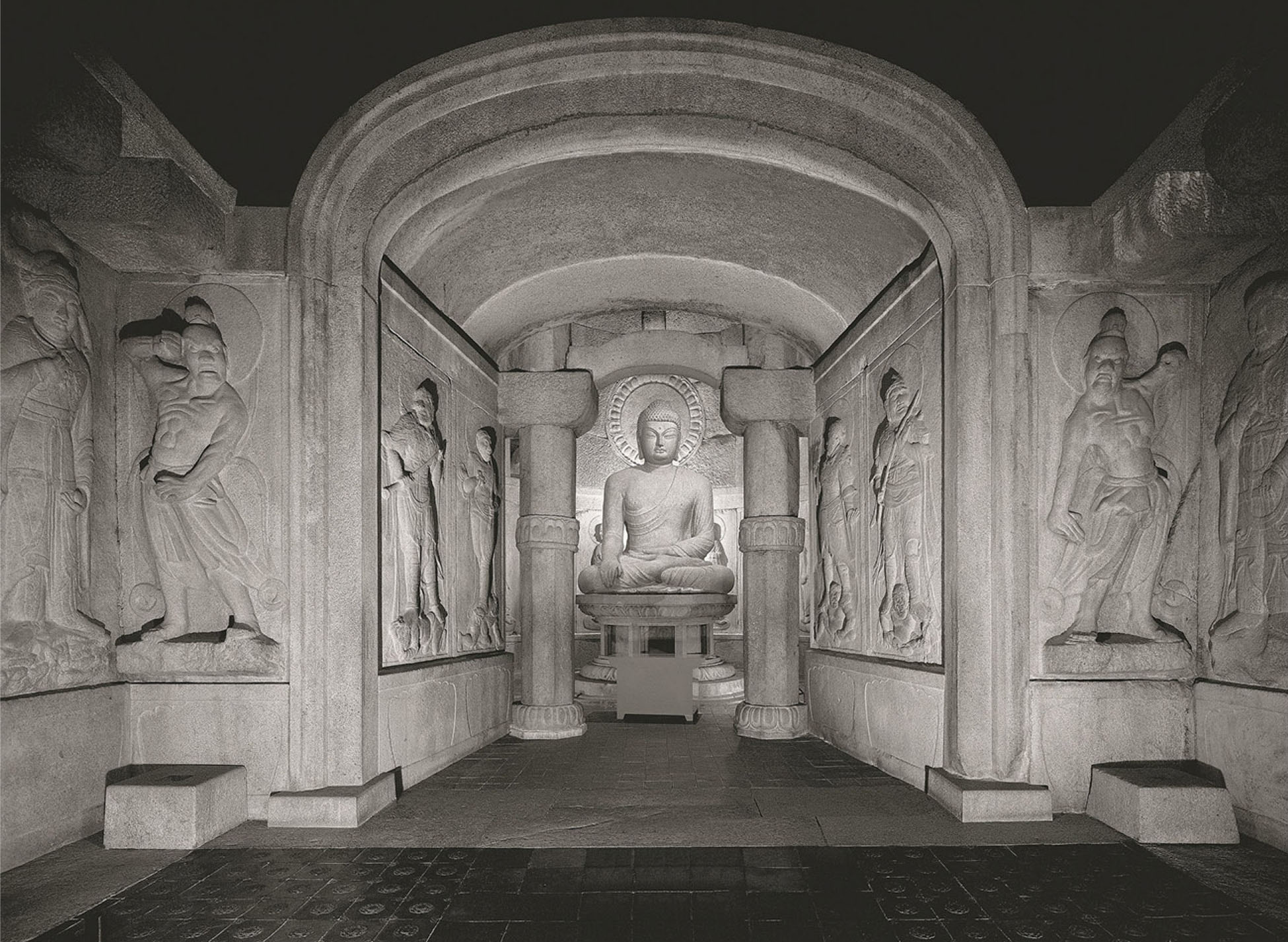
During the Three Kingdoms era, the Chinese writing system spread throughout Korea, allowing those excluded from the ranks of aristocratic families a chance to seek appointment as scribes. The literacy necessary to study Confucian texts or Buddhist sutras, teachings of the Buddha, was a rare and very valuable skill. Knowledge of Chinese culture was another means to a life within the Korean courts, especially when writing poetry became a favorite pastime of Korean royalty and composing an eloquent verse was a critical sign of nobility and refinement. Many kingdoms sent royals, aristocrats, traders, scholars, and monks to China as apprentices to acquire skills and expertise they could bring home. These groups had an indelible impact on early Korean culture and society, particularly as Buddhism developed and grew into distinct sects and traditions. A few Korean Buddhist monks even traveled as far as India and central Asia, while others worked as teachers in the Three Kingdoms, inspiring new forms of painting, sculpture, and jewelry, and later the famed Buddhist monument, the first-century Seokguram Grotto (Figure 5.12).
英語のヒント
三国時代には中国の文字体系が朝鮮全域へ広まり、貴族の家に属さない人にも書記への任官を求める機会が生まれた。儒教の文献や、ブッダの教えである仏教の経典を読むための識字能力は、まれで非常に価値の高い技能だった。中国文化の知識も、朝鮮の宮廷で暮らすための手段になった。特に詩作が王族の好む余暇となり、流麗な詩を作れることが、高貴さと洗練の重要なしるしになると、その意味が増した。多くの王国は王族・貴族・交易者・学者・僧侶を学習者として中国へ送り、持ち帰れる技能や専門知識を身につけさせた。これらの人びとは、特に仏教が発展して独自の宗派や伝統へ分かれていく中で、初期の朝鮮の文化と社会に消えない影響を与えた。朝鮮の仏僧の中にはインドや中央アジアまで旅した者もおり、ほかには三国内で教師として働いた者もいた。彼らは絵画・彫刻・装身具の新しい形態、さらに後には有名な仏教遺跡である1世紀の石窟庵を生み出す刺激となった(図5.12)。
The Seokguram Grotto.石窟庵。
(credit: “Front view of Seokguram from front chamber” by Cultural Heritage Administration/Wikimedia Commons, Korea Open Government License Type I: Attribution) · KOGL Type 1
Figure 5.12 Created in the eighth century CE, this Buddhist monument lies in an enormous temple complex on the slopes of Mount Toshan, an architectural marvel and exemplar of Buddhist motifs that modern Koreans consider a national treasure. (credit: “Front view of Seokguram from front chamber” by Cultural Heritage Administration/Wikimedia Commons, Korea Open Government License Type I: Attribution)
図5.12 8世紀に作られたこの仏教建築は、吐含山の斜面にある巨大な寺院複合体の中に位置する。建築上の驚異であり、仏教の意匠をよく示すもので、現代の韓国人は国の宝と見なしている。(出典: “Front view of Seokguram from front chamber”/Cultural Heritage Administration/Wikimedia Commons, Korea Open Government License Type I: Attribution)
These changes to the Korean political, social, and spiritual landscape also powered Gogoryeo’s rival state Baekje. The kingdom of Baekje emerged from its home near the Liao River in Manchuria to conquer and absorb the Mahan territory in 369. To consolidate their control over the southwestern area of the peninsula, Baekje’s rulers created a Chinese-style bureaucracy with a chief minister and carried on a successful maritime trade with China and Japan. Demand for Chinese culture, weapons, and Buddhism gave Baekje influence and prestige in Japan. However, a military defeat by Goguryeo and Silla in 475 kept Baekje hemmed in below the Han River. Afterward, Baekje turned its energy to upsetting the balance of power on the Korean peninsula by entreating Silla to rise against Goguryeo, its protector and overlord.
英語のヒント
朝鮮の政治・社会・宗教のあり方の変化は、高句麗の敵国である百済の力も高めた。百済王国は満洲の遼河近くの故郷から興り、369年に馬韓の領域を征服して取り込んだ。半島南西部の支配を固めるため、百済王は首相を置く中国式の官僚制度を作り、中国・日本との海上交易を成功させた。中国文化・武器・仏教への需要によって、百済は日本で影響力と威信を得た。しかし475年に高句麗と新羅に敗れ、漢江以南へ封じ込められた。その後、百済は半島の勢力均衡を崩すことへ力を注ぎ、新羅に、その保護者であり宗主国でもある高句麗へ反旗を翻すよう働きかけた。
Ultimately, however, it was Silla that emerged from these plots to unify a larger share of today’s Korea than any kingdom that preceded it. The smallest kingdom at the beginning of the era, located in the southeastern corner of the peninsula, Silla was ruled by powerful families that, like their neighbors, eventually copied models from China to wield power. Silla’s rulers created Chinese-style ministries and codes of law and supported the practice of Buddhism to enhance their prestige and legitimacy. Maritime trade later proved a channel for Silla to form an alliance with a reunified China under the Sui and then the Tang dynasties. Conflict between Goguryeo and the Sui began in the 590s and lasted for decades. Later, the Tang supplanted the Sui and renewed Chinese ambitions to dominate the Korean peninsula.
英語のヒント
しかし結局、こうした策略を経て、それまでのどの王国よりも現在の朝鮮の広い部分を統一したのは、新羅だった。半島南東の隅に位置し、時代の初めには最も小さかった新羅は、有力な家々によって支配されていた。その人びとも近隣と同じように、やがて権力を行使するため中国の制度を模倣した。新羅の統治者は中国式の官庁と法典を作り、威信と正統性を高めるため仏教を支援した。後には海上交易が、隋、続いて唐の下で再統一された中国と新羅が同盟を結ぶ経路になった。高句麗と隋の対立は590年代に始まり、何十年も続いた。その後、隋に代わった唐は、朝鮮半島の支配を目指す中国の野心を再び押し進めた。
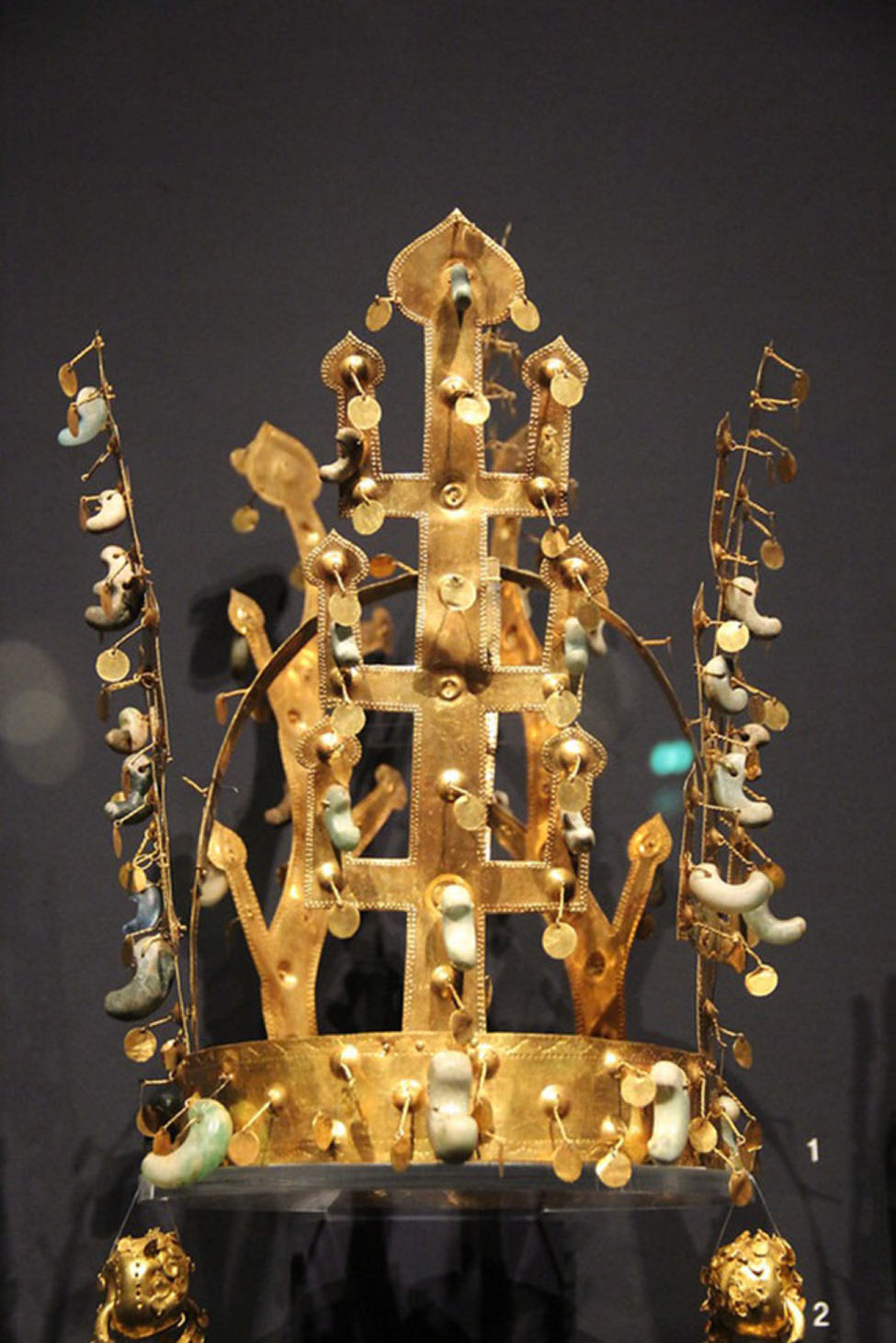
By the 640s, the skillful diplomacy of Queen Seondeok of Silla (Figure 5.13) had leveraged the hostility between Goguryeo and the Chinese into the means for a Silla alliance with the Tang. Her kingdom’s ships proved invaluable in ferrying Chinese armies onto the peninsula to lay conquest. Together, Silla and the Tang first subjugated Baekje and then eliminated Goguryeo in the north. Then, while the Tang set up bureaucracies to administer Korea, Seondeok’s successors in Silla conspired with the defeated forces of their rivals to evict the invaders. Together, the remnants of the Baekje and Goguryeo’s armies under the sway of Silla expelled Chinese forces in 676, ushering in a new era of unified rule over much of the peninsula that lasted from 668 to 892 CE. For a time, Silla severed its relations with the Tang, forgoing a critical resource that had powered its survival for centuries. But by the eighth century, new threats to both the Tang and Silla had emerged in the north. As a result, Silla once again sent tribute to the Chinese in return for protection and trade.
英語のヒント
640年代までに、新羅の善徳女王の巧みな外交は、高句麗と中国の敵対関係を、新羅が唐と同盟を結ぶ手段へと転化させた(図5.13)。新羅の船は、中国軍を半島へ運んで征服を行ううえで、非常に重要だった。新羅と唐は共同でまず百済を服属させ、次いで北の高句麗を滅ぼした。その後、唐が朝鮮を統治する官僚機構を設ける一方で、新羅では善徳女王の後継者たちが、敗れたかつての敵の軍勢と謀り、侵入者を追い出そうとした。新羅の影響下に集まった百済・高句麗の残軍は、ともに676年に中国軍を駆逐した。こうして半島の大部分を統一的に治める新たな時代が開かれ、668~892年まで続いた。新羅は一時、唐との関係を絶ち、何世紀もの間その生存を支えてきた重要な資源を手放した。しかし8世紀までには、唐にも新羅にも北方の新たな脅威が現れた。その結果、新羅は保護と交易の見返りに、再び中国へ貢納するようになった。
The Gold Crown of Silla.新羅の金冠。
(credit: “Gold Crown of Silla Kingsom” by Gary Todd/Flickr, Public Domain) · Public Domain
Figure 5.13 The kingdom of Silla left behind examples of its impressive and famous gold working skill. This gold crown, likely owned by a queen in the fifth century CE, was found in a tomb in the early twentieth century in Gyeongju, the capital of Silla. While we can’t know for sure, Queen Seondeok likely wore a similar crown. (credit: “Gold Crown of Silla Kingsom” by Gary Todd/Flickr, Public Domain)
図5.13 新羅は、見事で名高い金工技術の実例を残した。この金冠は、後5世紀の女王の所有物だった可能性が高く、20世紀初めに、新羅の首都・慶州の墓から発見された。確かなことはわからないが、善徳女王も、おそらく同じような冠を着けた。(出典: “Gold Crown of Silla Kingsom”/Gary Todd/Flickr, パブリックドメイン)
Part of Queen Seondeok’s legacy was a period of unprecedented female rule, during which new art forms emerged that in later centuries became distinctive Korean traditions. In ancient Korea, women wielded power as royal princesses, and affluent women often served as advisors and regents. But Queen Seondeok’s reign paved the way for future queens of Silla, Jindeok, and Jinseong, to inherit the throne. Over time, Korean artisans learned from China how to make celadon ceramic, known for its lustrous green glaze, creating exquisite vases, jugs, bowls, and even pillows with Buddhist motifs such as cranes and clouds. In later centuries these works helped support a robust trade network running from China through Korea to Japan.
英語のヒント
善徳女王が残したものの一つは、それまでにない女性統治の時代だった。この時期には新しい芸術の形が生まれ、後世に朝鮮独自の伝統となった。古代朝鮮では王女が権力を行使し、富裕な女性が助言者や摂政として働くことも多かった。しかし善徳女王の治世は、後の新羅の女王である真徳・真聖が王位を継承する道を開いた。時がたつにつれて、朝鮮の職人は中国から、光沢のある緑の釉薬で知られる青磁の製法を学んだ。鶴や雲などの仏教的な文様をあしらった精緻な花瓶・水差し・鉢、さらには枕まで作った。後の世紀にはこれらの作品が、中国から朝鮮を経て日本へ至る活発な交易網を支えた。