第12章インド・インド洋世界・東アジアIndia, the Indian Ocean Basin, and East Asia
Introductionはじめに
A Caravansary.キャラヴァンサライ(隊商宿)
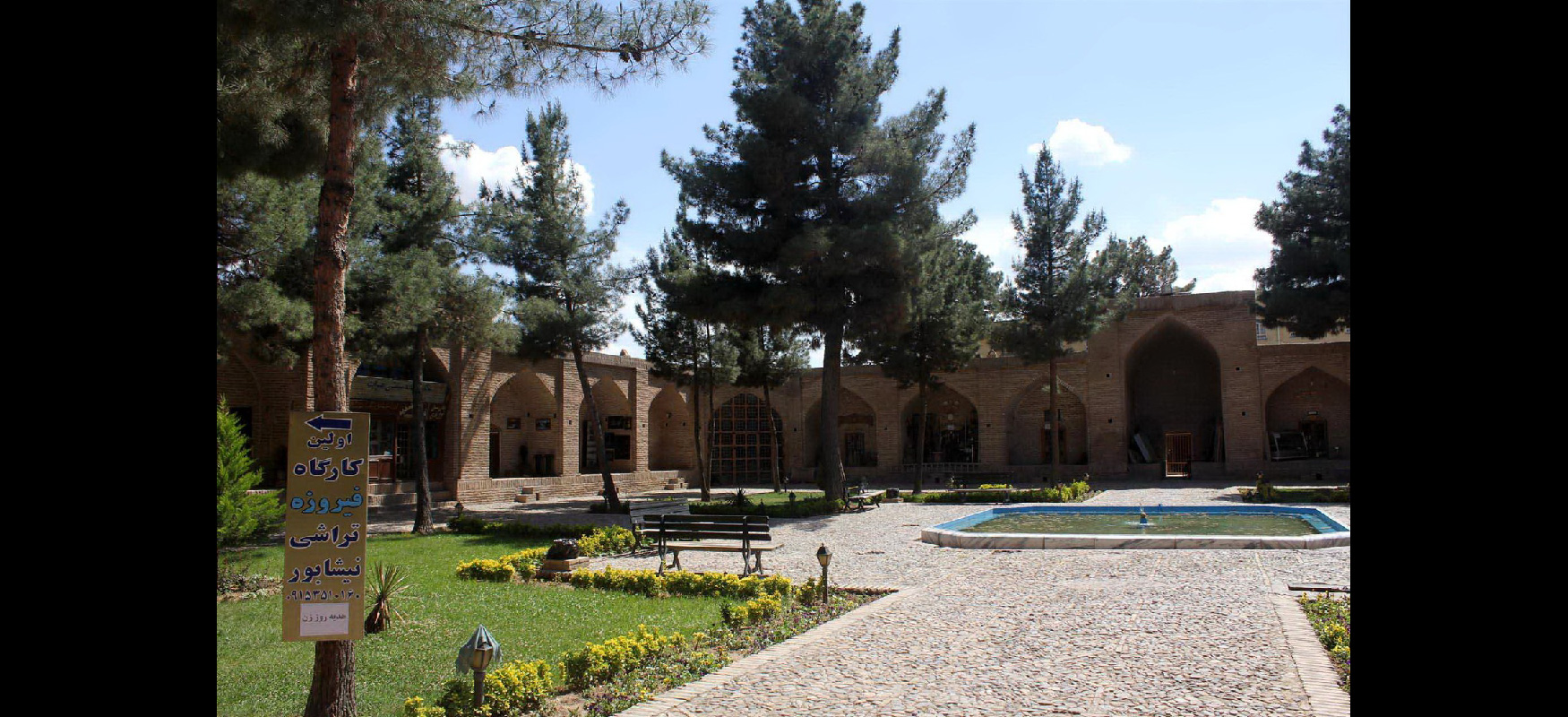
(credit: modification of work “Abbasi caravanserai of Nishapur” by Sonia Sevilla/Wikimedia Commons, CC0 1.0) · CC0 1.0
Figure 12.1 Along the Silk Roads, caravansaries were vital outposts where merchants traveling between Turkey and China could stay and meet other traders to exchange goods, commodities, and ideas. The Shah Abbasi caravansary shown here is now a national heritage site in Nishapur, in modern Iran. (credit: modification of work “Abbasi caravanserai of Nishapur” by Sonia Sevilla/Wikimedia Commons, CC0 1.0)
図12.1 シルクロード沿いの隊商宿は重要な拠点だった。トルコと中国の間を旅する商人は、ここに宿泊し、ほかの交易商と会って品物や商品、思想を交換できた。写真のシャー・アッバース隊商宿は、現在のイランのニーシャープールにある国の文化遺産である。(出典:Sonia Sevilla/Wikimedia Commons「Abbasi caravanserai of Nishapur」を改変、CC0 1.0)
The early Middle Ages was a time of increased connections across continents. This period was marked by the continued development of the maritime networks centered on the Indian Ocean, and of the Silk Roads—a series of trade routes linking China and parts of central Asia, India, and the Middle East. A globally connected medieval world was emerging, one united by long-distance trade networks and enhanced by the exchange of ideas. An important element of this system was the caravansary, an inn funded by the state or wealthy individuals where travelers could spend the night and store their goods securely (Figure 12.1). In addition to providing shelter, caravansaries were a place for merchants to meet other traders to exchange goods as well as share and spread Islamic ideas and traditions.
英語のヒント
中世前期は、大陸をまたぐ結び付きが強まった時代だった。インド洋を中心とする海上交通網と、中国を中央アジアの一部、インド、中東と結ぶ交易路の集まりであるシルクロードが、発展を続けたことがこの時代の特徴である。遠距離交易の網で結ばれ、思想の交換によっていっそう結び付きの深まった、広域につながる中世世界が生まれつつあった。この仕組みの重要な要素がキャラヴァンサライ、すなわち隊商宿だった。国家や裕福な個人が資金を出した宿で、旅人は夜を過ごし、商品を安全に保管できた(図12.1)。隊商宿は宿泊場所を提供するだけでなく、商人がほかの交易商と会って品物を交換し、イスラームの思想や伝統を分かち合い、広める場でもあった。
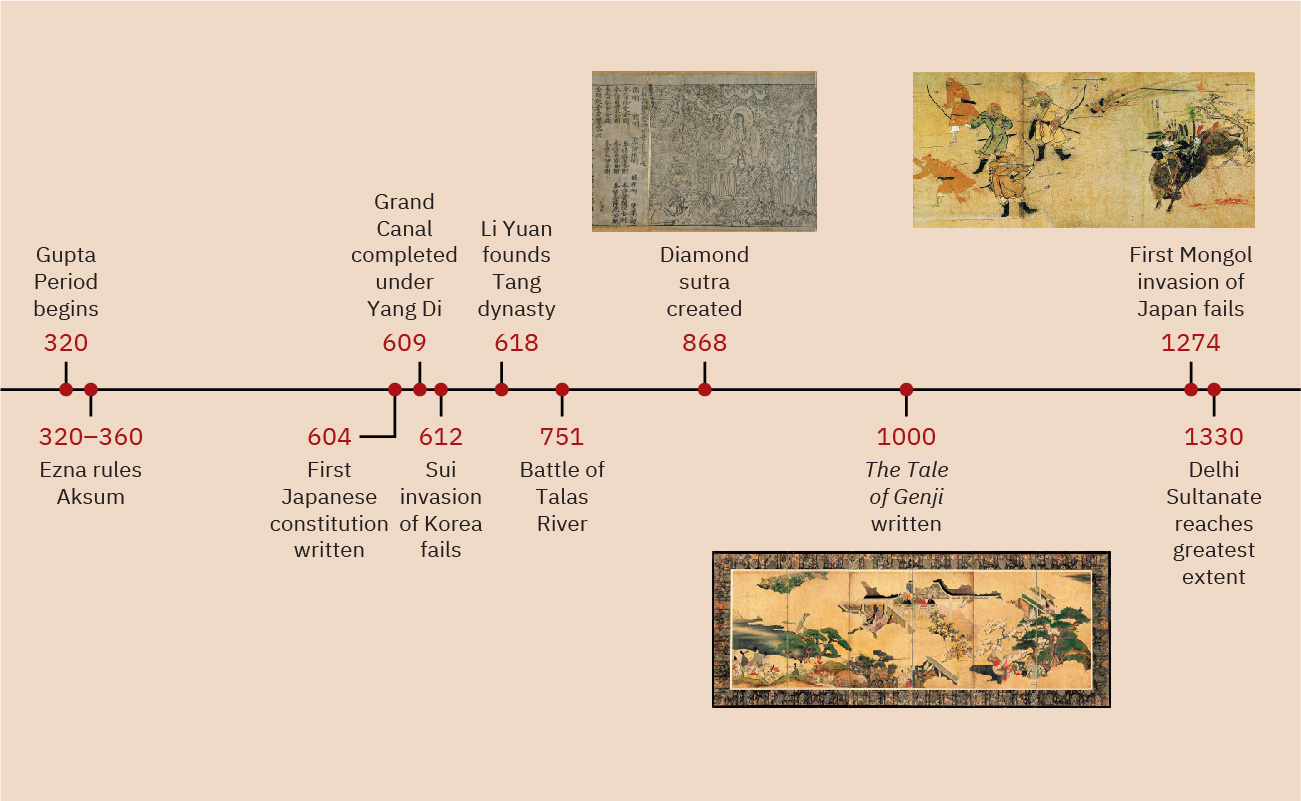
Timeline: India, the Indian Ocean Basin, and East Asia.年表:インド・インド洋世界・東アジア
(credit “868”: modification of work “Jingangjing” by British Library/Wikimedia Commons, Public Domain; credit “1000”: modification of work “Scenes from the three chapters of The tale of Genji [Genji monogatari]” by Art Gallery of South Australia/Wikimedia Commons, Public Domain; credit “1274”: modification of work “Mōko Shūrai Ekotoba 2” by Unknown/Wikimedia Commons, Public Domain) · Public Domain
Figure 12.2 (credit “868”: modification of work “Jingangjing” by British Library/Wikimedia Commons, Public Domain; credit “1000”: modification of work “Scenes from the three chapters of The tale of Genji [Genji monogatari]” by Art Gallery of South Australia/Wikimedia Commons, Public Domain; credit “1274”: modification of work “Mōko Shūrai Ekotoba 2” by Unknown/Wikimedia Commons, Public Domain)
図12.2 (「868年」の出典:British Library/Wikimedia Commons「Jingangjing」を改変、パブリックドメイン。「1000年」の出典:Art Gallery of South Australia/Wikimedia Commons「Scenes from the three chapters of The tale of Genji [Genji monogatari]」を改変、パブリックドメイン。「1274年」の出典:作者不詳/Wikimedia Commons「Mōko Shūrai Ekotoba 2」を改変、パブリックドメイン。)