第13章ローマ後の西欧と十字軍運動The Post-Roman West and the Crusading Movement
Introductionはじめに
Harun al-Rashid Receiving a Delegation of Charlemagne.カール大帝の使節団を迎えるハールーン・アッラシード
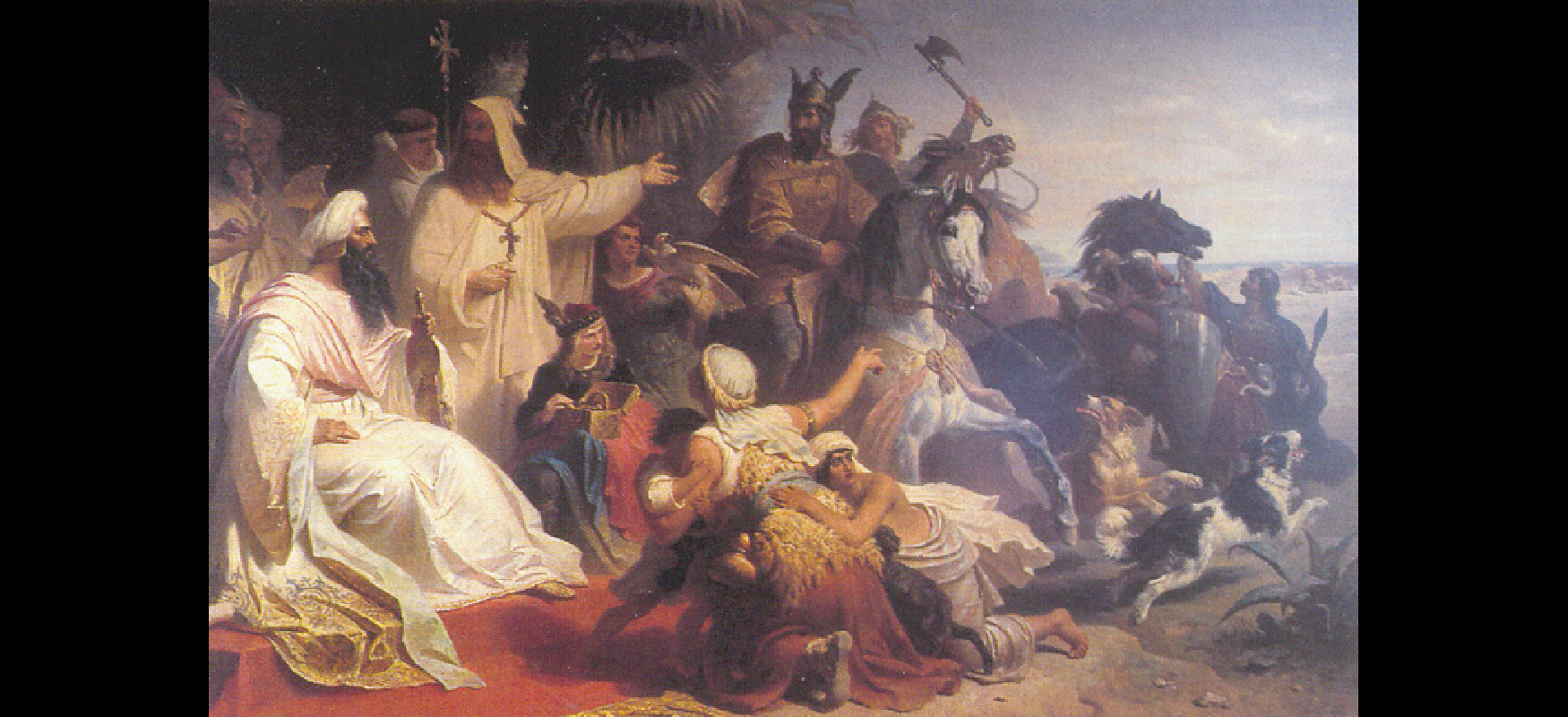
(credit: modification of work “Harun al-Rashid receiving a delegation of Charlemagne in Baghdad” by Maximilianeum Foundation/Wikimedia Commons, Public Domain) · Public Domain
Figure 13.1 The nineteenth-century German artist Julius Köckert painted this imaginary scene in which representatives of the Frankish Christian ruler Charlemagne (on horseback) meet with the Islamic ruler Harun al-Rashid (seated at left). Both leaders helped shape the history of western Afro-Eurasia in the post-Roman world. (credit: modification of work “Harun al-Rashid receiving a delegation of Charlemagne in Baghdad” by Maximilianeum Foundation/Wikimedia Commons, Public Domain)
図13.1 19世紀のドイツ人画家ユリウス・ケッケルトが描いた想像上の場面。キリスト教徒のフランク王カール大帝の代表者たち(騎乗)が、イスラームの支配者ハールーン・アッラシード(左に座る)と会う。二人の指導者は、ローマ後の世界におけるアフロ・ユーラシア西部の歴史を形づくった。(出典:Maximilianeum Foundation/Wikimedia Commons「Harun al-Rashid receiving a delegation of Charlemagne in Baghdad」を改変、パブリックドメイン)
Western Afro-Eurasia faced a number of challenges in the early Middle Ages, the period from about 500 to 1000 CE. With the collapse of Roman authority came a time of political instability and insecurity. Cities declined, and institutions of learning weakened. Western Europe became increasingly rural. Because there was no longer a strong centralized state to develop and police the roads, travel became more difficult and more dangerous, harming commerce. However, this is not the whole story. Trade and urban life flourished in the early Islamic kingdoms, which eventually extended from Spain to India. The Byzantine Greeks maintained some classical traditions, and their capital in Constantinople was a center of global trade for centuries. Germanic kings sought to form new alliances with Christian leaders and participate in world trade and diplomacy.
英語のヒント
およそ500~1000年の中世初期、アフロ・ユーラシア西部は多くの課題に直面した。ローマの権力が崩れると、政治が不安定になり、安全も脅かされる時代が来た。都市は衰え、学問の施設は弱体化し、西ヨーロッパはますます農村的な社会となった。道路を整備し、治安を守る強力な中央集権国家がなくなったため、移動は難しく危険になり、商業が損なわれた。しかし、それがこの時代のすべてではない。初期のイスラーム諸国では、交易と都市生活が栄え、やがてその領域はスペインからインドまで広がった。ビザンツのギリシア人は古典古代の伝統の一部を維持し、首都コンスタンティノープルは何世紀にもわたって世界的な交易の中心地だった。ゲルマン系の王たちは、キリスト教指導者と新たな同盟を結び、世界の交易や外交に加わろうとした。
Perhaps no figure better exemplifies the merging of cultures in western Europe than Charlemagne, a Germanic ruler who reigned from 768 to 814. Charlemagne dreamed of reviving the Roman world in terms of territory, education, and art. Despite his belief in spreading Christianity through conquest, he sent embassies to Muslim leaders and even received the sumptuous gift of an elephant from the Abbasid ruler Harun al-Rashid in 802 (Figure 13.1). It might be tempting to see this period as one of just conflict, but as Charlemagne’s reign demonstrates, it was also a dynamic time of merging cultures and social transformation.
英語のヒント
768~814年に在位したゲルマン系の支配者カール大帝ほど、西ヨーロッパでの文化の融合をよく示す人物はいないかもしれない。カール大帝は、領土、教育、美術の面で、ローマ世界をよみがえらせることを夢見ていた。征服によってキリスト教を広めるべきだと信じていたが、ムスリムの指導者にも使節を送った。802年には、アッバース朝の支配者ハールーン・アッラシードから、象という豪華な贈り物まで受け取った(図13.1)。この時代を争いばかりの時代とみなしたくなるかもしれない。しかしカール大帝の治世が示すように、文化が融合し、社会が変わる、活力ある時代でもあった。
Timeline: The Post-Roman West and the Crusading Movement.年表――ローマ後の西欧と十字軍運動
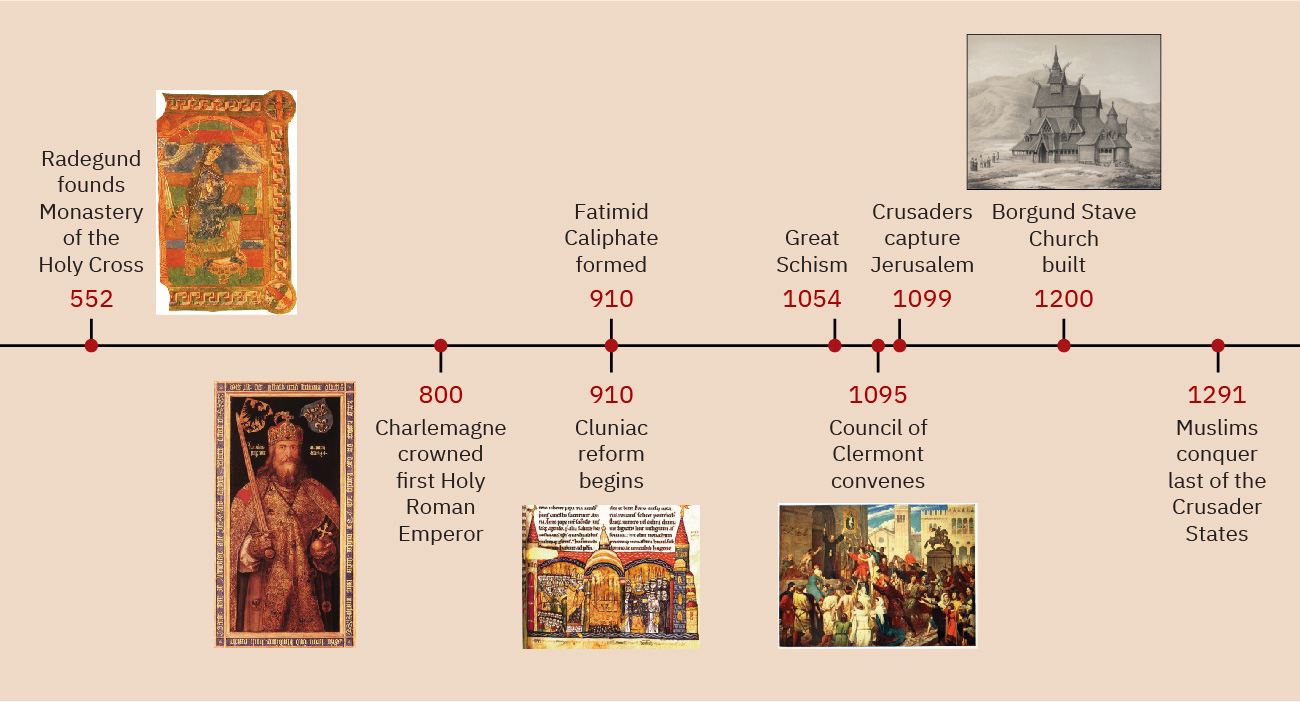
(credit “552”: modification of work “Saint Radegonde” by Poitiers Municipal Library/Wikimedia Commons, Public Domain; credit “800”: modification of work “Emperor Charlemagne and Emperor Sigismund” by Germanisches Nationalmuseum/Wikimedia Commons, Public Domain; credit “910”: modification of work Consécration de Cluny III par Urbain II” by Bibliothèque Nationale de France/Wikimedia Commons, Public Domain; credit “1095”: modification of work “Peter the Hermit Preaching the First Crusade” by Cassell’s History of England, Vol. 1 (of 8)/Wikimedia Commons, Public Domain; credit “1200”: modification of work “Franz Wilhelm Schiertz Borgunds Kirke i Lærdal i Sogn” by Norge fremstillet i Tegninger fra Digitalarkivet/Wikimedia Commons, Public Domain) · Public Domain
Figure 13.2 (credit “552”: modification of work “Saint Radegonde” by Poitiers Municipal Library/Wikimedia Commons, Public Domain; credit “800”: modification of work “Emperor Charlemagne and Emperor Sigismund” by Germanisches Nationalmuseum/Wikimedia Commons, Public Domain; credit “910”: modification of work Consécration de Cluny III par Urbain II” by Bibliothèque Nationale de France/Wikimedia Commons, Public Domain; credit “1095”: modification of work “Peter the Hermit Preaching the First Crusade” by Cassell’s History of England, Vol. 1 (of 8)/Wikimedia Commons, Public Domain; credit “1200”: modification of work “Franz Wilhelm Schiertz Borgunds Kirke i Lærdal i Sogn” by Norge fremstillet i Tegninger fra Digitalarkivet/Wikimedia Commons, Public Domain)
図13.2 (552年の画像:Poitiers Municipal Library/Wikimedia Commons「Saint Radegonde」を改変。800年の画像:Germanisches Nationalmuseum/Wikimedia Commons「Emperor Charlemagne and Emperor Sigismund」を改変。910年の画像:Bibliothèque Nationale de France/Wikimedia Commons「Consécration de Cluny III par Urbain II」を改変。1095年の画像:Cassell’s History of England, Vol. 1 (of 8)/Wikimedia Commons「Peter the Hermit Preaching the First Crusade」を改変。1200年の画像:Norge fremstillet i Tegninger fra Digitalarkivet/Wikimedia Commons「Franz Wilhelm Schiertz Borgunds Kirke i Lærdal i Sogn」を改変。いずれもパブリックドメイン)
Locator Map: The Post-Roman West and the Crusading Movement.位置図――ローマ後の西欧と十字軍運動
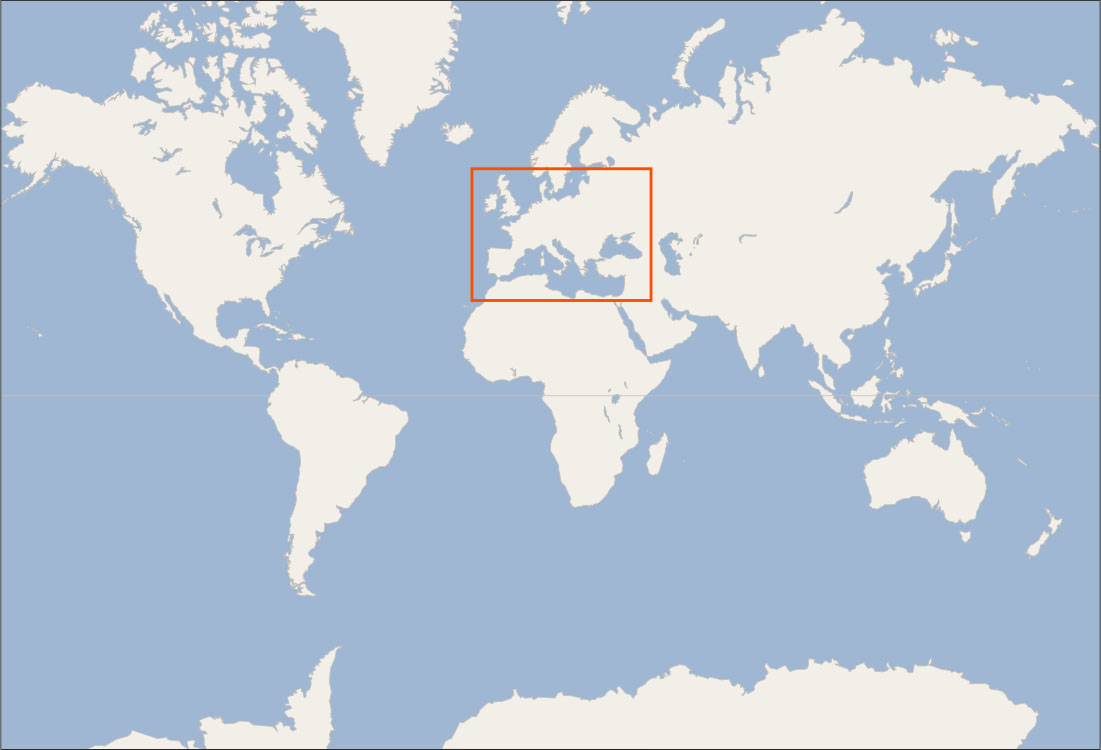
(credit: modification of work “World map blank shorelines” by Maciej Jaros/Wikimedia Commons, Public Domain) · Public Domain
Figure 13.3 (credit: modification of work “World map blank shorelines” by Maciej Jaros/Wikimedia Commons, Public Domain)
図13.3 (出典:Maciej Jaros/Wikimedia Commons「World map blank shorelines」を改変、パブリックドメイン)