第13章ローマ後の西欧と十字軍運動The Post-Roman West and the Crusading Movement
13.4 The Crusading Movement13.4 十字軍運動
Learning Objectives学習の目標
By the end of this section, you will be able to:
この節を学び終えると、次のことができるようになる。
Describe the centrality of the city of Jerusalem to Judaism, Christianity, and Islam
ユダヤ教、キリスト教、イスラームにとって、エルサレムが中心的な意味を持つことを説明する。
Explain how the Crusader States in the Middle East complicated the relationships between the Christian churches of the east and west
中東の十字軍国家が、東西キリスト教会の関係を、どのように複雑にしたかを説明する。
Discuss the Muslim and indigenous Middle Eastern reaction to the crusading movement
ムスリムと、中東に元から暮らしていた人々が、十字軍運動にどう反応したかを論じる。
Explain how the crusading movement developed after the First Crusade
第1回十字軍以後、十字軍運動がどのように展開したかを説明する。
The call to crusade had profound consequences for Islamic and Christian societies. The military fortunes of the crusaders were watched carefully by Muslims and Christians alike, and while the success of the First Crusade was shocking to everyone, to Christians it was also a clear sign of God’s favor. The flaws in the crusading movement grew or became better known over time, however. Fewer Christians joined later crusades, even though the legend and romance of the venture became more popular in the European imagination.
英語のヒント
十字軍への呼びかけは、イスラーム社会とキリスト教社会に、重大な結果をもたらした。ムスリムもキリスト教徒も、十字軍の戦況を注意深く見守った。第1回十字軍の成功は誰にとっても衝撃だったが、キリスト教徒にとっては、神の加護の明らかな印でもあった。しかし時がたつにつれ、十字軍運動の欠点は大きくなり、あるいは広く知られるようになった。遠征の伝説や冒険物語が、ヨーロッパ人の想像の中でますます人気を集める一方、後の十字軍に加わるキリスト教徒は少なくなった。
Jerusalem and the Holy Landエルサレムと聖地
Judaism, Christianity, and Islam all have a concept of pilgrimage. Sacred journeys can be undertaken to enhance a person’s connection with God, as an act of penance, or in gratitude. In many ways, they are meant to be transformative.
英語のヒント
ユダヤ教、キリスト教、イスラームには、いずれも巡礼という考え方がある。神とのつながりを深めるため、罪を償う行為として、あるいは感謝を表すために、聖なる旅に出ることがある。多くの意味で、巡礼は、その人自身を変えるものとされる。
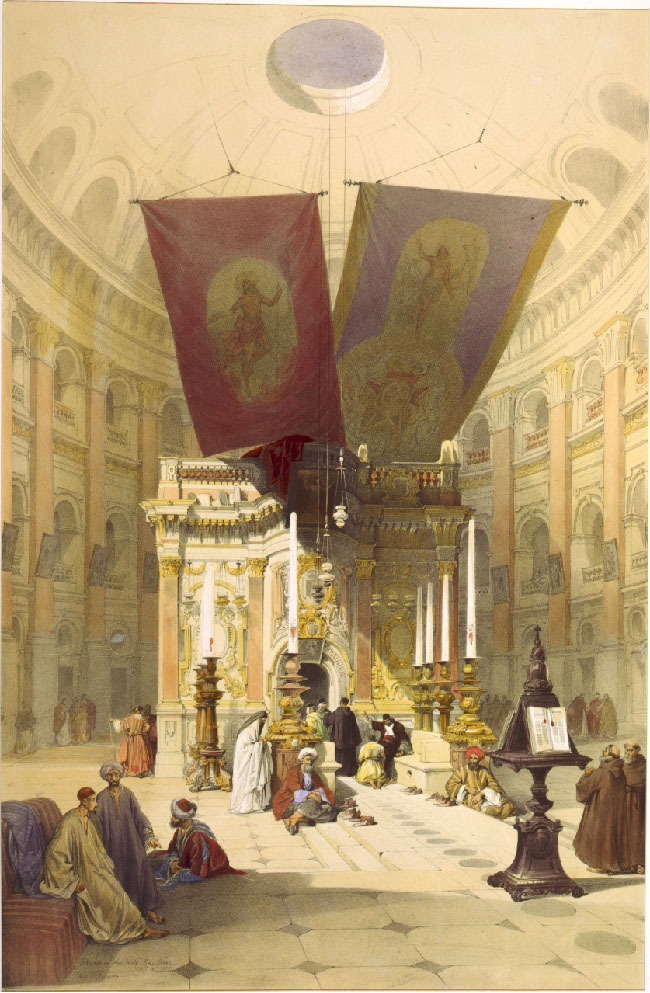
Jerusalem drew pilgrims from the three monotheistic religions. Pilgrimage had been obligatory for Jewish people until the destruction of the Second Temple in 70 CE, but even after that time, the city continued to play a special role in Jewish life. In the earliest decades of the first century, it had also become the location for some of the most dramatic and important scenes in the life of Jesus and the early Christian community. In the time of Constantine, a church had been built over the site of what was believed to be Jesus’s tomb, called the Holy Sepulchre. As the place where it is believed Jesus was crucified and resurrected, Jerusalem was bound up with the most essential Christian beliefs. Even in the ancient world, Christians undertook pilgrimages to this holiest of cities (Figure 13.18).
英語のヒント
エルサレムは、三つの一神教から巡礼者を引き寄せた。紀元70年に第二神殿が破壊されるまで、ユダヤ人にとって巡礼は義務だった。それ以後も、この都はユダヤ人の生活に特別な役割を持ち続けた。1世紀の初めの数十年間には、イエスの生涯と初期キリスト教共同体にとって、きわめて劇的で重要な出来事の舞台にもなった。コンスタンティヌスの時代、イエスの墓と信じられる場所の上に教会が建てられた。その墓は、聖墳墓と呼ばれる。イエスが十字架に掛けられ、復活したと信じられる場所として、エルサレムはキリスト教の最も根本的な信仰と、固く結び付いていた。古代のうちから、キリスト教徒は、この最も神聖な都へ巡礼した(図13.18)。
Shrine of the Holy Sepulchre, Jerusalem.エルサレムの聖墳墓の祠堂
(credit: “Shrine of the Holy Sepulchre April 10th 1839 / David Roberts” by Library of Congress Prints and Photographs Division/Wikimedia Commons) · Public Domain
Figure 13.18 This nineteenth-century lithograph of the interior of the Church of the Holy Sepulchre depicts the Shrine of the Holy Sepulchre. Christians believe the shrine contains both the tomb in which Jesus was buried and the rock thought to have sealed it. (credit: “Shrine of the Holy Sepulchre April 10th 1839 / David Roberts” by Library of Congress Prints and Photographs Division/Wikimedia Commons)
図13.18 聖墳墓教会の内部を描いた19世紀の石版画。聖墳墓の祠堂が描かれている。キリスト教徒は、この祠堂の中に、イエスが葬られた墓と、その入り口をふさいだとされる石があると信じる。(出典:Library of Congress Prints and Photographs Division/Wikimedia Commons「Shrine of the Holy Sepulchre April 10th 1839 / David Roberts」)
Mecca, in the Arabian Peninsula, is the holiest city in Islam and the site of the annual pilgrimage called the hajj. The Al-Aqsa Mosque, built on the old Temple Mount in Jerusalem, is the third holiest site in the faith, and it is believed to be mentioned several times in the Quran as “the furthest shrine.” Muhammad is said to have made a special journey to be able to pray in Jerusalem and to be allowed to glimpse God before he continued his mission to convert others to Islam. Another shrine, called the Dome of the Rock, was also built near the Al-Aqsa Mosque, which is associated with Muhammad’s journey and with the biblical Abraham, an important figure to Muslims, Christians, and Jews alike. Jerusalem, then, was a city unlike others in its spiritual appeal to people of different faiths.
英語のヒント
アラビア半島のメッカは、イスラームで最も神聖な都市であり、毎年行われるハッジという巡礼の目的地である。エルサレムのかつての神殿の丘に建つアル=アクサー・モスクは、イスラームで3番目に神聖な場所とされる。また、クルアーンで「最も遠い聖所」として何度か言及されていると信じられている。ムハンマドは、人々をイスラームに導く使命を続ける前に、エルサレムで祈り、神を垣間見ることを許されるため、特別な旅をしたとされる。アル=アクサー・モスクの近くには、岩のドームという別の聖所も建てられた。この場所は、ムハンマドの旅と、ムスリム、キリスト教徒、ユダヤ人に共通して重要な、聖書のアブラハムと結び付いている。このように、エルサレムは、異なる信仰を持つ人々の精神を引き付ける、ほかにない都市だった。
In Christian Europe, the reforms of the church emphasized the earthly life of Jesus, and the idea of being able to see and touch the physical land where he walked filled the imagination of both the clergy and the laity. The image of heaven as a “heavenly Jerusalem” in the writing of monks and nuns heightened the common desire to see the earthly Jerusalem. The report that the Fatimid caliph al-Hakim had destroyed the Church of the Holy Sepulchre outraged Christians, even though his son permitted its rebuilding. It is no coincidence, then, that the term medieval people most often associated with the crusading movement (before the term “crusade” was coined) was pilgrimage, or more specifically, armed pilgrimage.
英語のヒント
キリスト教ヨーロッパでは、教会改革が地上におけるイエスの生涯を強調した。そのため、イエスが歩いた実際の土地を見て、触れることができるという考えは、聖職者と一般信徒の想像力を満たした。修道士や修道女が書いた文章の中の、「天上のエルサレム」という天国のイメージも、地上のエルサレムを見たいという人々の願いを強めた。ファーティマ朝のカリフ、ハーキムが聖墳墓教会を破壊したとの報告は、キリスト教徒を激怒させた。息子が再建を許可したにもかかわらず、である。したがって、中世の人々が、crusade という語が作られる前に、この運動と最もよく結び付けた言葉が「巡礼」、より正確には「武装巡礼」だったのは、偶然ではない。
The First, Second, and Third Crusades第1回・第2回・第3回十字軍
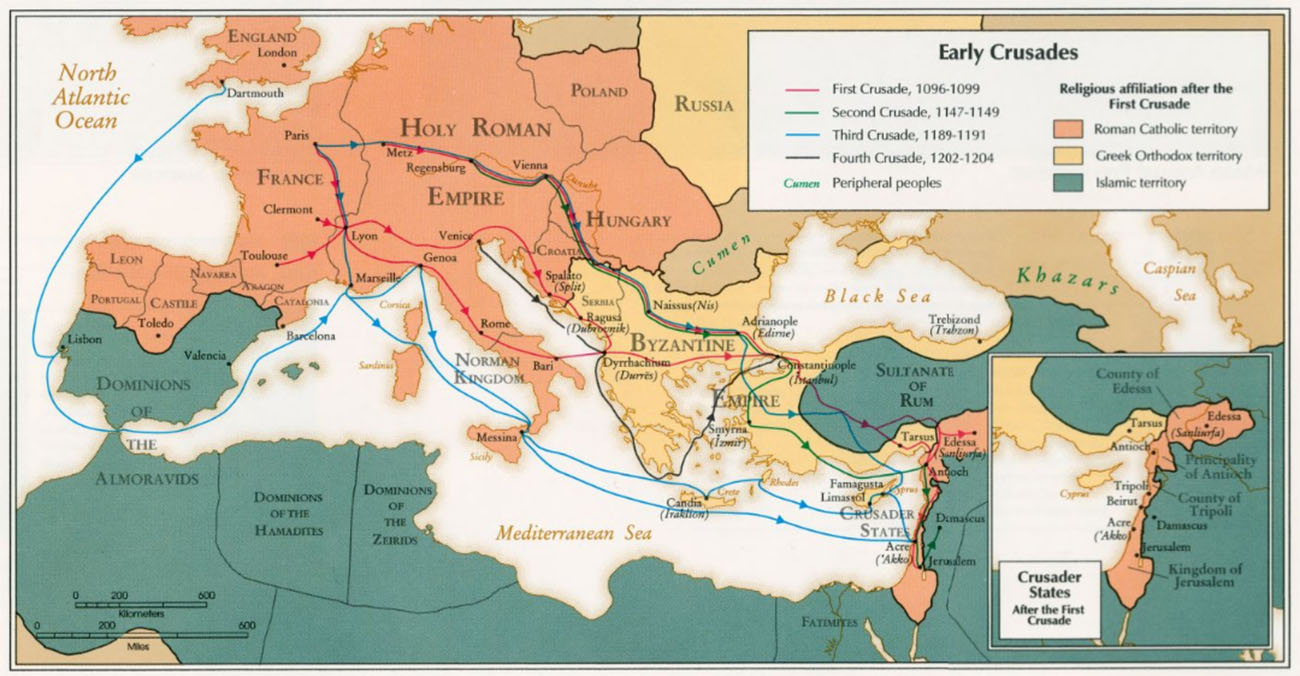
Historians have categorized the different crusades and given them numbers for convenience and to distinguish between various developments within the crusading movement (Figure 13.19). The Crusades were rarely well organized, however, and one of the challenges they all faced was trying to move people from one end of Europe to the other. For example, during the First Crusade, the followers of Peter the Hermit arrived in Constantinople first. They did not wait for other groups to arrive and were ferried over to Anatolia (the Asian part of today’s Turkey) by Alexios, the Byzantine ruler. The Turks destroyed this army, and very few survived to return to Constantinople. Later crusaders understood that gathering intelligence in Constantinople was crucial to avoiding Peter’s fate.
英語のヒント
歴史家は、便宜のため、また十字軍運動のさまざまな展開を区別するため、各遠征を分類し、番号を付けてきた(図13.19)。しかし十字軍がよく組織されていることはまれだった。いずれの遠征も、ヨーロッパの一端から他端へ、人々を移動させるという難題に直面した。たとえば第1回十字軍では、隠者ピエールの一団が、最初にコンスタンティノープルへ到着した。彼らはほかの集団を待たず、ビザンツ皇帝アレクシオスによって、アナトリア、現在のトルコのアジア側へ船で渡された。テュルク人はこの軍を壊滅させ、生き延びてコンスタンティノープルへ戻れた者は、わずかだった。後の十字軍は、ピエールと同じ運命を避けるためには、コンスタンティノープルで情報を集めることが不可欠だと理解した。
Routes of the Early Crusades.初期の十字軍の経路
(credit: “Early Crusades” by United States. Central Intelligence Agency/Norman B. Leventhal Map Center Collection at the Boston Public Library) · Public Domain — U.S. government work
Figure 13.19 The First through Fourth Crusades all faced logistic and other challenges and met with varying degrees of success. (credit: “Early Crusades” by United States. Central Intelligence Agency/Norman B. Leventhal Map Center Collection at the Boston Public Library)
図13.19 第1回から第4回までの十字軍は、いずれも物資の輸送や兵站などの問題に直面し、その成果もさまざまだった。(出典:United States. Central Intelligence Agency/Norman B. Leventhal Map Center Collection at the Boston Public Library「Early Crusades」)
The bulk of the First Crusade was directed by powerful aristocrats whose armies were better organized and prepared to fight than Peter’s, even if most of its participants were not the most senior nobles of Western society. Alexios promised them aid in exchange for the return of Byzantine territory held by Muslims, which most initially agreed to. The crusaders crossed Anatolia and, after laying a bloody siege with little help from the Byzantines, took control of the port of Antioch, an ancient seat of Christianity in the Holy Land. After their victory, they felt Alexios was undeserving of either the city or their fidelity. The city was thus given to a Norman crusader who had no intention of delivering it to Alexios, straining the relationships between the crusaders and the Byzantine Empire.
英語のヒント
第1回十字軍の主力を率いたのは、有力な貴族たちだった。参加者の大半は西方社会の最上位の貴族ではなかったが、その軍はピエールの軍より組織され、戦闘の準備も整っていた。アレクシオスは、ムスリムが支配しているビザンツ領の返還と引き換えに、支援を約束した。十字軍の大半は、当初、この条件に同意した。十字軍はアナトリアを横断し、ビザンツ側の助力をほとんど得ないまま、流血を伴う包囲戦を行い、港を持つアンティオキアを占領した。聖地における古くからのキリスト教の中心地である。勝利の後、彼らは、アレクシオスには、この都市を受け取る資格も、自分たちの忠誠を得る資格もないと考えた。そこで都市は、アレクシオスに引き渡すつもりのない、ノルマン人の十字軍指導者に与えられた。これが、十字軍とビザンツ帝国の関係を緊張させた。
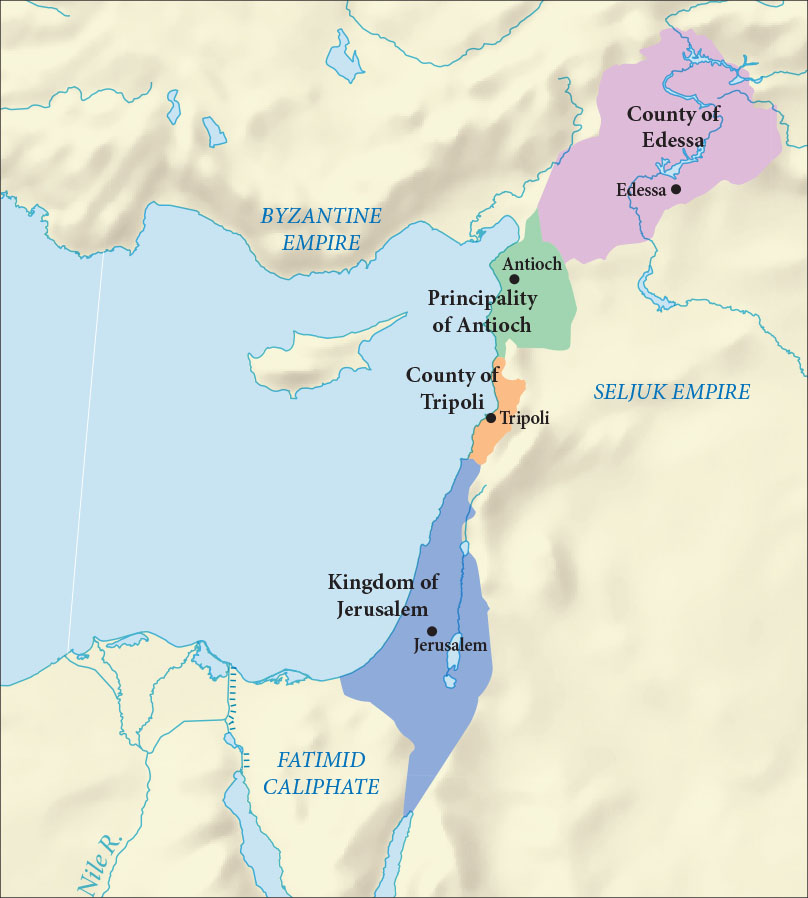
The First Crusade finally reached Jerusalem in the summer of 1099. Before attacking the city, the crusaders fasted and walked around its walls as penitents, an act that shows the blending of pilgrimage with armed conflict. The crusaders then took the city, and in an act that shocked Muslims and Christians alike, they massacred the Muslim and Jewish inhabitants. The crusading armies then took other important cities in the area, and to secure their control they established the four Crusader States: the County of Edessa, the Principality of Antioch, the County of Tripoli, and the Kingdom of Jerusalem. These Crusader States were also called Outremer (literally “overseas”) by the French, and they claimed Jerusalem as their capital (Figure 13.20). Of all the Crusades, this was the only one that accomplished its objective.
英語のヒント
第1回十字軍は、ついに1099年の夏、エルサレムに着いた。都市を攻撃する前に、十字軍の人々は断食し、悔い改める者として城壁の周りを歩いた。巡礼と武力紛争が混ざり合っていたことを示す行動である。十字軍はその後、都市を奪い、ムスリムとユダヤ人の住民を虐殺した。この行為は、ムスリムにもキリスト教徒にも衝撃を与えた。十字軍の軍勢は、周辺のほかの重要都市も占領し、支配を固めるため、エデッサ伯国、アンティオキア公国、トリポリ伯国、エルサレム王国という、四つの十字軍国家を建てた。フランス人は、これらをウトラメール、文字通りには「海の向こう」とも呼んだ。これらの国家は、エルサレムを自分たちの首都とした(図13.20)。すべての十字軍の中で、目的を達成したのは、この遠征だけだった。
The Crusader States.十字軍国家
(attribution: Copyright Rice University, OpenStax, under CC BY 4.0 license) · CC BY 4.0
Figure 13.20 The four Crusader States, or Outremer, were the territories seized by members of the First Crusade: the County of Edessa, the Principality of Antioch, the County of Tripoli, and the Kingdom of Jerusalem. (attribution: Copyright Rice University, OpenStax, under CC BY 4.0 license)
図13.20 ウトラメールとも呼ばれる四つの十字軍国家は、第1回十字軍の参加者が奪った土地に成立した。エデッサ伯国、アンティオキア公国、トリポリ伯国、エルサレム王国である。(権利表記:Copyright Rice University, OpenStax、CC BY 4.0)
Despite the surprising success of the First Crusade, Outremer suffered some critical problems from the beginning. The crusaders had alienated the Byzantine Empire by not returning to it important cities like Antioch or lands in the Middle East as they had promised. The European aristocrats and knights were eager to acquire lands for themselves, which meant they often fought with each other even when faced with a common enemy. And while there was always at least a trickle of warriors who made it to Outremer, the elite remained in desperate need of soldiers to defend their new territories.
英語のヒント
第1回十字軍は予想外の成功を収めたが、ウトラメールは当初から、重大な問題を抱えた。十字軍は、約束したアンティオキアなどの重要都市や中東の土地を返さず、ビザンツ帝国との関係を悪化させていた。ヨーロッパの貴族や騎士は、自分自身の土地を得ることに熱心で、共通の敵に直面していても、しばしば互いに争った。ウトラメールへたどり着く戦士は、常に少しずつでもいたが、支配層は、新しい領土を守る兵士の不足に、切実に悩み続けた。
The Muslims’ confusion about the nature and goals of the crusaders, as well as internal conflicts among them, initially dampened their political and military response. The Muslims adapted quickly, however, especially the Seljuks who prevented many of the newly arriving knights from ever reaching Outremer. A Turkic aristocrat named Imad al-Din Zengi began to cultivate the image of a holy warrior opposing the crusaders. While he spent most of his career ruthlessly scheming against other Muslim rulers, he managed to take the city of Edessa, in the northernmost of the Crusader States. He was praised as a defender of Islam, but he was assassinated before he could continue his campaign against the crusaders. The loss of Edessa posed a serious threat to the remaining Crusader States, however, and prompted the pope to call the Second Crusade.
英語のヒント
ムスリムは、十字軍が何者で、何を目指しているのかを、当初は理解できずにいた。ムスリム内部の争いもあり、政治・軍事面の対応は鈍った。しかし彼らはすぐに適応した。特にセルジューク勢力は、新たに来る騎士の多くが、ウトラメールへたどり着くのを阻んだ。テュルク系の貴族、イマード・アッディーン・ザンギーは、十字軍と対決する聖なる戦士という、自分のイメージを育て始めた。生涯の大部分を、ほかのムスリム支配者を相手に、容赦なく策謀を巡らせて過ごしたが、十字軍国家の最北端にあるエデッサを、奪うことに成功した。イスラームの擁護者として称賛されたものの、十字軍への戦いを続ける前に、暗殺された。エデッサの喪失は、残る十字軍国家への深刻な脅威となり、教皇による第2回十字軍の呼びかけを促した。
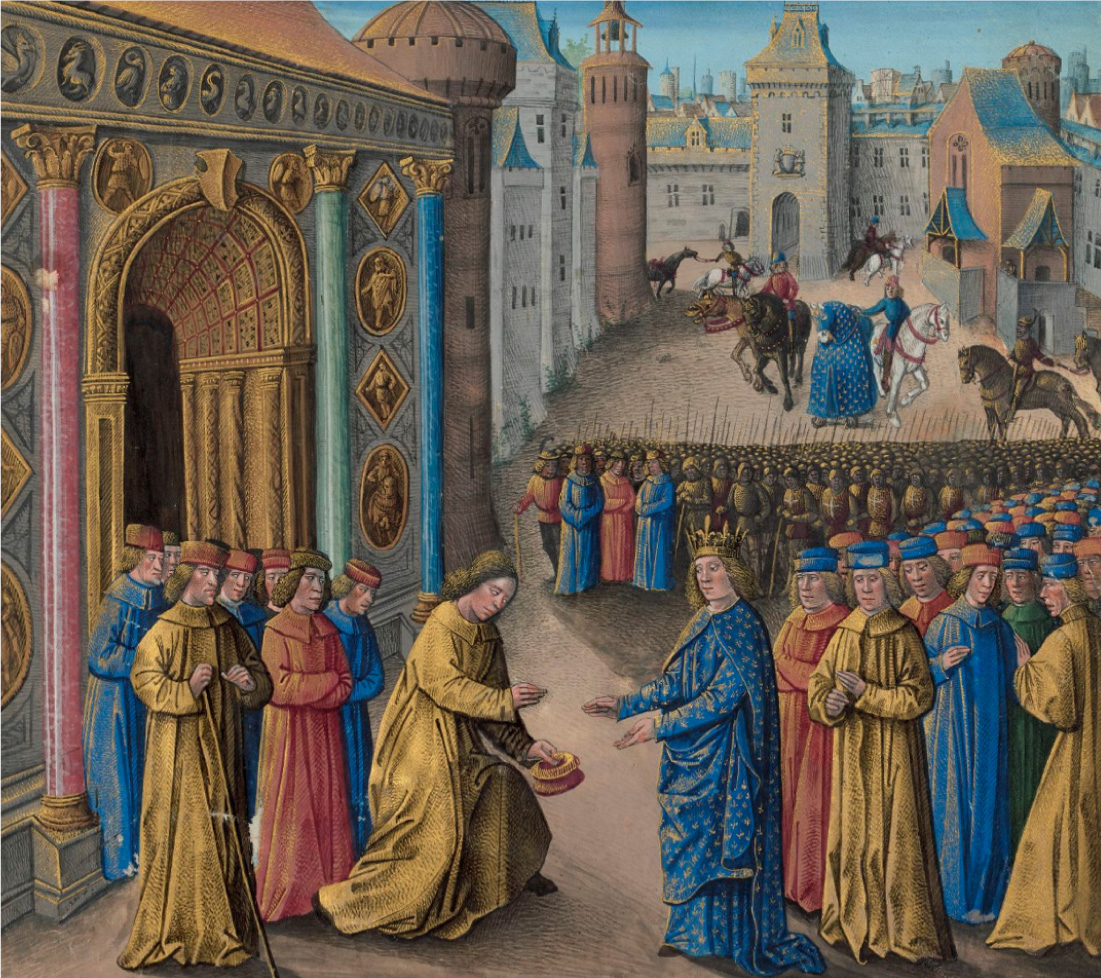
The Second Crusade, from 1147 to 1149, was heralded by a new generation of preachers like Bernard of Clairvaux who inspired believers to “take up the cross.” Bernard also wrote the rules for the Knights Templar, one of the new crusading orders, religious orders of monks devoted to protecting Christian pilgrims and fighting to support Outremer. This crusade was led by powerful rulers, including King Louis VII of France and King Conrad III of Germany (Figure 13.21). The armies of the Second Crusade were defeated in Anatolia in separate battles, and few soldiers reached the Holy Land. The kings accomplished very little, and many blamed the Byzantine emperor, who had learned to be distrustful of European armies. Bernard of Clairvaux was humiliated and apologized to the pope, claiming the sins of the crusaders had caused the defeat. It was a disaster that seemed as complete as the First Crusade had looked miraculous.
英語のヒント
1147〜1149年の第2回十字軍を前もって宣伝したのは、クレルヴォーのベルナルドゥスのような、新しい世代の説教者だった。彼らは信徒に、「十字架を取る」ように呼びかけた。ベルナルドゥスは、新たな十字軍の修道会の一つ、テンプル騎士団の規則も書いた。これらは、キリスト教徒の巡礼者を保護し、ウトラメールを支えるために戦う、修道士の団体だった。この十字軍を率いたのは、フランス王ルイ7世やドイツ王コンラート3世を含む、有力な支配者たちだった(図13.21)。第2回十字軍の軍勢は、アナトリアで別々の戦闘に敗れ、聖地へ到達した兵士は少なかった。王たちは、ほとんど成果を挙げられなかった。多くの人々は、ヨーロッパの軍隊を警戒するようになっていたビザンツ皇帝を責めた。ベルナルドゥスは面目を失い、敗北の原因は十字軍の参加者の罪だったと主張して、教皇に謝罪した。第1回十字軍の成功が奇跡のように見えたのと同じほど、完全な破局に思われた。
King Louis VII on Crusade.十字軍に参加したルイ7世
(credit: “Raymond Of Poitiers Welcoming Louis VII in Antioch” by Passages d’Outremer/Wikimedia Commons, Public Domain) · Public Domain
Figure 13.21 This illustration from a fifteenth-century chronicle of the Crusades shows King Louis VII, in blue and wearing a gold crown, being welcomed to Antioch during the Second Crusade. (credit: “Raymond Of Poitiers Welcoming Louis VII in Antioch” by Passages d’Outremer/Wikimedia Commons, Public Domain)
図13.21 15世紀の十字軍年代記の挿絵。第2回十字軍の際、アンティオキアで歓迎されるルイ7世を描く。ルイは青い衣を着て、金の王冠をかぶっている。(出典:Passages d’Outremer/Wikimedia Commons「Raymond Of Poitiers Welcoming Louis VII in Antioch」、パブリックドメイン)
After this loss, the situation for Outremer only became more dire. Imad al-Din Zengi’s successors were well liked, even by crusaders, and they strove to unite the Muslim princes in jihad. The most famous of these successors was Salah al-Din, or Saladin in the Christian world. He was known for being humane, fair-minded, and, in Christians terms, chivalrous. He expanded his territory from Syria into Egypt and founded a new dynasty called the Ayyubids from the ashes of the Shia Fatimid Caliphate. He also took up his religious calling to wage jihad against the crusaders. In 1187, after years of gathering allies and eroding the military power of Outremer, he destroyed the crusaders at the Battle of the Horns of Hattin (in today’s Israel). Within months, Jerusalem fell to Saladin.
英語のヒント
この敗北の後、ウトラメールの状況は、いっそう厳しくなった。イマード・アッディーン・ザンギーの後継者たちは、十字軍の人々からさえ好意を持たれ、ムスリムの諸侯をジハードのもとに統合しようと努めた。最も有名な後継者が、サラーフ・アッディーン、キリスト教世界でいうサラディンである。彼は人道的で、公平であり、キリスト教徒の言葉でいえば、騎士道精神を持つ人物として知られた。サラディンは、シリアからエジプトへ領土を広げ、シーア派のファーティマ朝カリフ国の崩壊後に、新たなアイユーブ朝を建てた。また十字軍へのジハードという、宗教上の務めも引き受けた。何年にもわたり、味方を集め、ウトラメールの軍事力を削った末、1187年、現在のイスラエルにあるハッティーンの角の戦いで、十字軍を壊滅させた。数か月のうちに、エルサレムもサラディンの手に落ちた。
The Christians’ response was the Third Crusade (1189–1192). This crusade was prompted both by the fear that Outremer was about to be wiped off the map and by the desire to retake Jerusalem. Kings from England, the Holy Roman Empire, and France as well as other powerful princes answered the call. When they arrived in the last remaining Christian outposts in the Middle East, they quickly fell to squabbling with each other and the aristocracy of Outremer. As a result, the Christians were able to conquer the island of Cyprus and the coastline of the Holy Land but were unable to move farther inland. Eventually, Richard I of England, known in popular stories as Richard the Lionhearted, negotiated a treaty with Saladin that left Jerusalem under Muslim control but allowed Christian pilgrims to freely visit the city. Both Saladin and Richard were praised as examples of chivalric virtue in Europe and heroes of their respective religions. But this was one of the last successes the crusaders were to have in the Holy Land.
英語のヒント
キリスト教徒は、第3回十字軍(1189〜1192年)で応じた。背景には、ウトラメールが地図から消えようとしているという恐れと、エルサレムを奪い返したいという願いの、両方があった。イングランド、神聖ローマ帝国、フランスの王や、そのほかの有力な君主が呼びかけに応じた。中東に残る最後のキリスト教徒の拠点へ到着すると、彼らはすぐに、互いに、そしてウトラメールの貴族とも、言い争い始めた。その結果、キリスト教徒はキプロス島と聖地の海岸部を征服できたものの、さらに内陸へ進むことはできなかった。やがて、物語の中で獅子心王として知られるイングランド王リチャード1世は、サラディンと条約を結んだ。エルサレムをムスリムの支配下に残す代わりに、キリスト教徒の巡礼者が自由に訪れることを認めるものだった。サラディンとリチャードは、ヨーロッパでは騎士道の美徳の模範として、それぞれの宗教では英雄として称賛された。しかし、これは、十字軍が聖地で得ることになる、最後の成功の一つだった。