第13章ローマ後の西欧と十字軍運動The Post-Roman West and the Crusading Movement
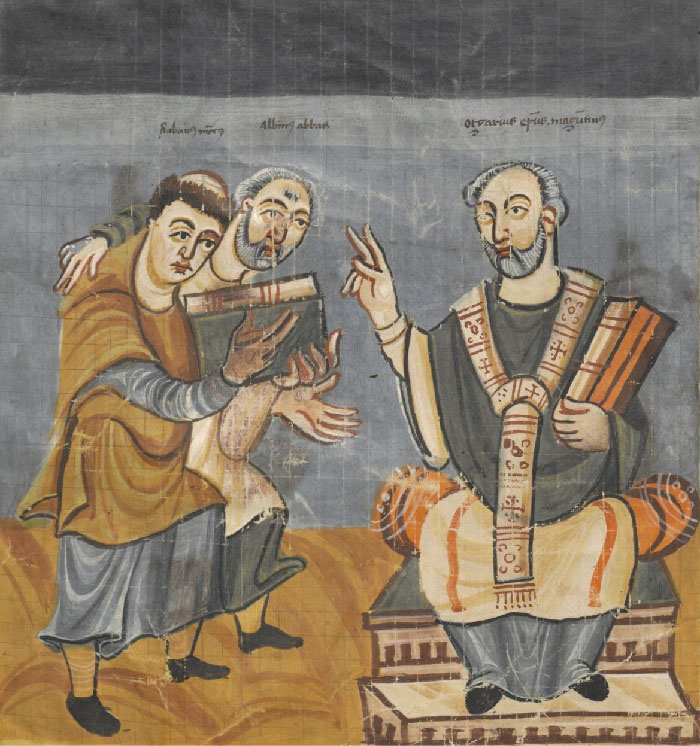
Like Theodoric, Charlemagne was more than a conqueror. He hoped to revive Roman institutions, reform the church, and convert people to Christianity. The period of intellectual activity and reorganization of educational and religious institutions that began in his reign is often called the Carolingian Renaissance, meaning a “rebirth” of culture and learning (and “Carolingian” being a reference to Charlemagne). The Carolingian aristocracy supported the building of new palaces and monasteries and promoted artists to decorate these buildings as well as to illustrate (or “illuminate”) books, and the increased emphasis on learning was a way to ensure that the court of the Carolingians was filled with highly educated advisers and associates (Figure 13.6).
英語のヒント
テオドリックと同じく、カール大帝は単なる征服者ではなかった。ローマの制度を復興し、教会を改革し、人々をキリスト教に改宗させようと望んだ。その治世に始まった、知的活動と教育・宗教機関の再編の時期は、カロリング・ルネサンスと呼ばれることが多い。「ルネサンス」は文化と学問の「再生」を意味し、「カロリング」はカール大帝に由来する。カロリング朝の貴族たちは、新しい宮殿や修道院の建設を支え、建物を装飾し、書物に絵や装飾を施す芸術家たちを後援した。こうした写本の装飾は「彩飾」と呼ばれる。また学問をいっそう重視することは、宮廷を、十分な教育を受けた助言者や協力者で満たすための手段でもあった(図13.6)。
In Praise of the Holy Cross.『聖十字架讃美』
(credit: “Raban Maur (left), supported by Alcuin (middle), dedicates his work to Archbishop Otgar of Mainz (Right)” by De laudibus sanctae crucis/Österreichischen Nationalbibliothek/Wikimedia Commons, Public Domain) · Public Domain
Figure 13.6 This page from the ninth-century poetry collection In Praise of the Holy Cross shows its author, the Frankish monk and teacher Rabanus Maurus (left), presenting the book to Otgar, archbishop of Mainz (seated at right). The connection between books, clergy, and art is a hallmark of cultural works from the Carolingian era. (credit: “Raban Maur (left), supported by Alcuin (middle), dedicates his work to Archbishop Otgar of Mainz (Right)” by De laudibus sanctae crucis/Österreichischen Nationalbibliothek/Wikimedia Commons, Public Domain)
図13.6 9世紀の詩集『聖十字架讃美』の1ページ。著者であるフランク人の修道士・教師ラバヌス・マウルス(左)が、マインツ大司教オトガル(右に座る人物)へ本を献呈する姿が描かれる。書物、聖職者、美術の結び付きは、カロリング朝時代の文化作品の特徴である。(出典:De laudibus sanctae crucis/Österreichischen Nationalbibliothek/Wikimedia Commons「Raban Maur (left), supported by Alcuin (middle), dedicates his work to Archbishop Otgar of Mainz (Right)」、パブリックドメイン)
Intellectuals and monks flocked to Charlemagne’s court, where they put their talents to use copying the classical works of ancient Greek and Roman authors and serving in the emperor’s administration. One of the most important of these scholars was Alcuin of York, an Anglo-Saxon who perfected the Carolingian minuscule script. This standard form of handwriting was clearer and easier to read than earlier Roman and Merovingian forms. Carolingian scholars also popularized punctuation marks, like the sentence-ending period. These innovations made it easier for people to learn Latin and contributed to the revival of classical education.
英語のヒント
知識人や修道士がカール大帝の宮廷へ集まり、その才能を生かして古代ギリシア・ローマの著作家の古典を写し、皇帝の行政組織で働いた。その中で特に重要な学者の一人が、アングロ・サクソン人のヨークのアルクインで、カロリング小文字体を完成させた。この標準化された筆写書体は、それ以前のローマやメロヴィング朝の書体より明瞭で、読みやすかった。カロリング朝の学者たちは、文末のピリオドなどの句読点も広めた。こうした工夫によって、人々はラテン語を学びやすくなり、古典教育の復興も進んだ。
Charlemagne was also a globally minded ruler. He corresponded with the Byzantine rulers, received gifts from the Abbasid caliph, and facilitated the trade of enslaved people taken on his eastern frontier with Al-Andalus (modern Spain).
英語のヒント
カール大帝は、広い世界に目を向ける支配者でもあった。ビザンツの支配者たちと書簡を交わし、アッバース朝のカリフから贈り物を受け取った。また、東方の国境地帯で捕らえて奴隷にした人々を、アル=アンダルス(現在のスペイン)と取引することも促進した。
The Collapse of the Carolingian Empire and the Rise of Feudal Societyカロリング帝国の崩壊と封建社会の成立
Charlemagne’s empire did not last. The emperor was succeeded by his son Louis the Pious, who continued the revival of learning and was deeply involved in church reform. Members of the church’s hierarchy, like the monk Benedict of Aniane, believed that both spiritual and administrative matters had declined, so Louis gave Benedict authority to reform all monasteries in the Frankish empire by promoting the strict observance of rules about what monks could eat and when and how they should work and pray. Carolingian reformers took inspiration from the monks of Ireland, who brought with them both their ascetic style of religious practice and their handsomely copied books of classical literature. The reform of the monasteries thus helped to preserve Carolingian cultural developments and classical learning.
英語のヒント
カール大帝の帝国は、長続きしなかった。後を継いだ息子ルイ敬虔王は、学問の復興を続け、教会改革にも深く関わった。アニアーヌの修道士ベネディクトゥスのような、教会の指導的立場にある人々は、信仰面でも運営面でも衰退が起きていると考えた。そこでルイは、フランク帝国内のすべての修道院を改革する権限を、ベネディクトゥスに与えた。修道士が何を食べてよいか、いつ、どのように働き、祈るべきかを定めた規則の厳格な遵守を、推し進めさせたのである。カロリング朝の改革者たちは、アイルランドの修道士たちから着想を得た。彼らは、禁欲的な修行のあり方と、美しく筆写した古典文学の書物を持ち込んだ。こうして修道院の改革は、カロリング朝の文化的成果と古典の学問を守る助けとなった。
Louis’s religious and intellectual projects were influential, but the weaknesses of the Carolingian state worked against him. He was not viewed as the imposing warrior his father had been, so soldiers looked elsewhere for glory and loot. And his sons, impatient to rule, rebelled against him in his lifetime. They eventually forced him to abdicate, and under the principle of partible inheritance, in 843 they divided the empire among them in an agreement called the Treaty of Verdun.
英語のヒント
ルイの宗教・学問上の事業は影響力を持ったが、カロリング国家の弱点は、彼に不利に働いた。父のような威厳ある戦士とは見られず、兵士たちはほかの場所に栄光と戦利品を求めた。また、統治を待ちきれない息子たちは、彼が生きている間に反乱を起こした。やがて息子たちは父を退位に追い込み、分割相続の原則に従い、843年のヴェルダン条約という合意によって、帝国を自分たちの間で分割した。
The Frankish empire became three territories: the Kingdom of the West Franks (west of the Rhine River), the Kingdom of the East Franks (east of the Rhine), and a middle region called Lotharingia that included Italy. None of Louis’s sons found the settlement acceptable, and their need for more land to reward their supporters ensured further conflict. When they died, their own sons faced diminished holdings, and an ever-increasing need to wage war ensured that the stability of the kingdoms weakened. Thus, Charlemagne and Louis’s efforts to resurrect the Roman Empire as a Christian state guided by Germanic leaders crumbled.
英語のヒント
フランク帝国は、ライン川の西にある西フランク王国、東にある東フランク王国、そしてイタリアを含むロタリンギアと呼ばれる中間地域の、三つの領域になった。ルイの息子たちは誰もこの取り決めに満足せず、支持者に報いるため、さらに土地を必要としたことが、新たな争いを確実なものにした。彼らが死ぬと、その息子たちは、さらに小さくなった所領を受け継いだ。戦争を行う必要性が高まる一方で、王国の安定は損なわれていった。こうして、ゲルマン人の指導者たちが導くキリスト教国家としてローマ帝国を復興しようとした、カール大帝とルイの努力は崩れ去った。
These internal problems were worsened by external ones, especially new invaders emboldened by the collapse of Carolingian strength. From the east came nomadic raiders, the Magyars, a non-Germanic people who migrated from the steppes of central Asia. At the end of the ninth century, they settled in what is today Hungary, and from there they launched devastating raids for plunder into Germany. Only in 955 did the German king Otto the Great manage to break the power of the Magyars at the Battle of Lechfeld. From the south, the fragmentation of Islamic political unity led petty rulers to raid the now-weakened coasts of Christian Europe. North African dynasties like the Aghlabids pushed into Sicily in the ninth century, and by 846, Islamic raiders had sacked churches on the outskirts of Rome.
英語のヒント
こうした内側の問題をさらに悪化させたのが、外からの問題だった。とりわけ、カロリング朝の力が崩れたことで勢いづいた、新たな侵入者たちである。東から来たのはマジャル人という遊牧の襲撃者だった。ゲルマン系ではなく、中央アジアのステップから移動してきた人々である。9世紀末、マジャル人は現在のハンガリーに定住し、そこからドイツへ、略奪を目的とする破壊的な襲撃を行った。その勢力をドイツ王オットー大帝が打ち破ることができたのは、955年のレヒフェルトの戦いになってからだった。南方では、イスラーム世界の政治的統一が崩れたため、小規模な支配者たちが、弱体化したキリスト教圏ヨーロッパの沿岸を襲うようになった。アグラブ朝など北アフリカの王朝は9世紀にシチリアへ進出し、846年までには、イスラーム勢力の襲撃者がローマ郊外の教会を略奪していた。
Perhaps more famous today than the Magyars and Islamic raiders were the Norse who raided northern Europe from Scandinavia, called the Vikings. The peoples of Scandinavia, who spoke Germanic languages, had a culture similar to that of the Germanic peoples who settled in the Roman Empire. For example, Scandinavians were polytheistic, worshipping gods like Odin and Freyja who were similar to earlier Germanic deities like Wodan and Frigg. The aristocracy practiced polygyny (having many wives), and local chieftains rewarded their followers with lands and gifts. The growth of the population in the eighth century and the relative lack of arable land in Scandinavia compelled groups of Danes, Norwegians, and Swedes to travel in search of plunder. Some went eastward, using their shallow-drought ships (ships that could navigate rivers), and made trading connections along the Dnieper River, establishing settlements at Kiev that eventually became one of the first Russian states. They reached Constantinople, and some served as the personal bodyguard to the Byzantine ruler. These Vikings were known as Varangians, and they settled in eastern Europe. Although violent, they were also traders, interested in paving the way for new settlements and connections beyond western Europe.
英語のヒント
マジャル人やイスラーム勢力の襲撃者より、今日よく知られているのは、おそらくスカンディナヴィアから北ヨーロッパを襲ったノース人、すなわちヴァイキングだろう。スカンディナヴィアの人々はゲルマン系の言語を話し、ローマ帝国内に定住したゲルマン人に似た文化を持っていた。たとえば多神教徒で、オーディンやフレイヤのような神々を崇拝した。これらは、ウォーダンやフリッグのような、以前のゲルマンの神々に似ていた。貴族は複数の妻を持ち、地方の首長は、従う者に土地や贈り物を与えて報いた。8世紀の人口増加と、スカンディナヴィアの耕地の相対的な不足によって、デーン人、ノルウェー人、スウェーデン人の集団は、略奪の獲物を求めて旅立った。一部は、川を航行できる喫水の浅い船で東へ進み、ドニエプル川沿いに交易のつながりを作った。キーウに築いた拠点は、やがて初期のロシア国家の一つになった。彼らはコンスタンティノープルに達し、中にはビザンツの支配者の近衛兵になった者もいた。こうしたヴァイキングはヴァリャーグと呼ばれ、東ヨーロッパに定住した。暴力的でありながら、商人でもあり、西ヨーロッパの外に新しい拠点やつながりを築く道を開こうとしていた。
In the west, the arrival of the Norse raiders was less benign. They attacked in small groups that could travel far upriver and surprise settlements, destroy them, and be gone before resistance could be organized. They specifically targeted churches and monasteries, not only for their loot but also because they lacked defenses. Vikings destroyed the monastery of Lindisfarne in the Anglo-Saxon kingdom of Northumbria, which had been a celebrated center of learning. Their reputation for ferocity may have been exaggerated by clerical authors, but the sudden nature of the violent raids, and the inability of Frankish or Anglo-Saxon armies to defeat them, instilled fear in the population of western Europe.
英語のヒント
西方では、ノース人の襲来は、もっと有害なものだった。彼らは小集団で川の上流まで進み、集落を不意打ちし、破壊し、抵抗の準備が整う前に姿を消すことができた。とりわけ教会や修道院を狙った。財宝があるだけでなく、防備が手薄だったからである。ヴァイキングは、アングロ・サクソン人のノーサンブリア王国にあるリンディスファーン修道院を破壊した。そこは、名高い学問の中心地だった。その凶暴さに関する評判は、聖職者の著述家たちが誇張したのかもしれない。それでも、突然襲いかかる暴力と、フランク軍やアングロ・サクソン軍が撃退できないという事実は、西ヨーロッパの人々に恐怖を植え付けた。
Eventually, the Norse raiders began to settle in regions rather than just raid them. In 865, a substantial army of Vikings invaded Britain and destroyed most of the Anglo-Saxon kingdoms except for Wessex. In 911, they settled in northern France, establishing the duchy of Normandy. By the end of the tenth century, Vikings had also established settlements throughout the British Isles, including Ireland and Scotland, farther west in Iceland and Greenland, and even (though briefly) in North America. Not just raiders, they promoted trade throughout northern Europe and beyond, extending their trading routes to the Byzantine Empire and the Abbasid Caliphate. Like the earlier Germanic peoples, they eventually converted to Roman Christianity, and their kings began to build more centralized kingdoms that enabled them to curb the violence of the raiders. Their conversion did not mean a wholesale abandonment of their existing culture and tradition. Early Scandinavian churches were decorated with images of heroes and villains from Norse mythology. This overlap of tradition and innovation reflects the persistence of cultural exchange between Germanic peoples and Greek and Roman cultures that created the foundation for medieval society.
英語のヒント
やがてノース人の襲撃者たちは、土地を襲うだけでなく、そこへ定住し始めた。865年には大規模なヴァイキング軍がブリテンへ侵入し、ウェセックスを除くアングロ・サクソンの王国の大半を滅ぼした。911年にはフランス北部に定住し、ノルマンディー公国を築いた。10世紀末までには、アイルランドやスコットランドを含むブリテン諸島全体にも拠点を設け、さらに西のアイスランドやグリーンランド、短期間ながら北アメリカにも進出した。単なる襲撃者ではなく、北ヨーロッパ各地とその外で交易を促進し、交易路をビザンツ帝国やアッバース朝まで広げた。以前のゲルマン人と同じく、彼らもやがてローマのキリスト教に改宗した。王たちは、より中央集権的な王国を築き、襲撃者たちの暴力を抑えることができるようになった。改宗は、従来の文化や伝統を全面的に捨てることを意味しなかった。初期のスカンディナヴィアの教会は、北欧神話の英雄や悪役の姿で装飾された。伝統と新しいものが重なるこのあり方は、ゲルマン人とギリシア・ローマ文化の交流が続いていたことを示す。その交流が、中世社会の基盤を作ったのである。
In the ashes of the Carolingian world, medieval Europe embraced a social system called feudalism that emerged from the basic need for security and was defined by unequal relationships. Looking to protect their territories and their peasants, lords began to grant lands to fighters as their fiefs, whose produce the warriors could enjoy so long as they served the lord. For their part, fighters became vassals of the lord, sworn to perform service in exchange for the land. This service was chiefly military in nature, but it could also include other obligations like advising the lord and attending his court when called. Bishoprics and monasteries behaved the same way; abbots and abbesses could be lords who were owed service and also owed service to greater lords.
英語のヒント
カロリング世界の焼け跡で、中世ヨーロッパは封建制と呼ばれる社会制度を受け入れた。安全を確保するという基本的な必要から生まれ、不平等な関係によって特徴付けられる制度だった。自らの領域と農民を守ろうとして、領主たちは、戦士に封土として土地を与え始めた。戦士は領主に仕える限り、その土地の生産物を受け取ることができた。戦士の側は領主の封臣となり、土地と引き換えに奉仕することを誓った。その奉仕は主に軍事的なものだったが、助言をしたり、呼ばれたときに領主の宮廷へ出仕したりする義務を含むこともあった。司教座や修道院も同じように振る舞った。男性・女性の修道院長が、奉仕を受ける領主であると同時に、より大きな領主に奉仕する立場になることもあった。
While feudalism was not a political system, warriors owed service to lords who owed service to the king, who in theory was the largest landowner in the kingdom and the guarantor of rights and privileges. For example, the late Carolingian king Charles the Simple granted the Duchy of Normandy to the Viking leader Rollo, so long as Rollo protected northern France from other Vikings. However, the need to placate their feudal lords ensured that kings gave away lands and privileges, often weakening them and driving them to look for ways to maximize their resources. They might consider advantageous marriages, for example, in which women were expected to bring a dowery of property or money. In other cases, crushing rebellious vassals was a way of taking back needed land.
英語のヒント
封建制は政治制度ではなかったが、戦士は領主に奉仕し、領主は王に奉仕した。王は、理論上は王国内最大の土地所有者で、権利と特権の保証者だった。たとえば、カロリング朝後期のシャルル単純王は、ヴァイキングの指導者ロロが、ほかのヴァイキングからフランス北部を守ることを条件に、ノルマンディー公国を与えた。しかし王は、配下の封建領主をなだめるため、土地と特権を手放さざるをえなかった。それが王を弱め、資源をできるだけ増やす方法を探させることも多かった。たとえば有利な婚姻を考える場合があった。女性は、財産や金銭を持参金として持ち込むことを期待された。反抗する封臣を打ち負かし、必要な土地を取り戻す場合もあった。
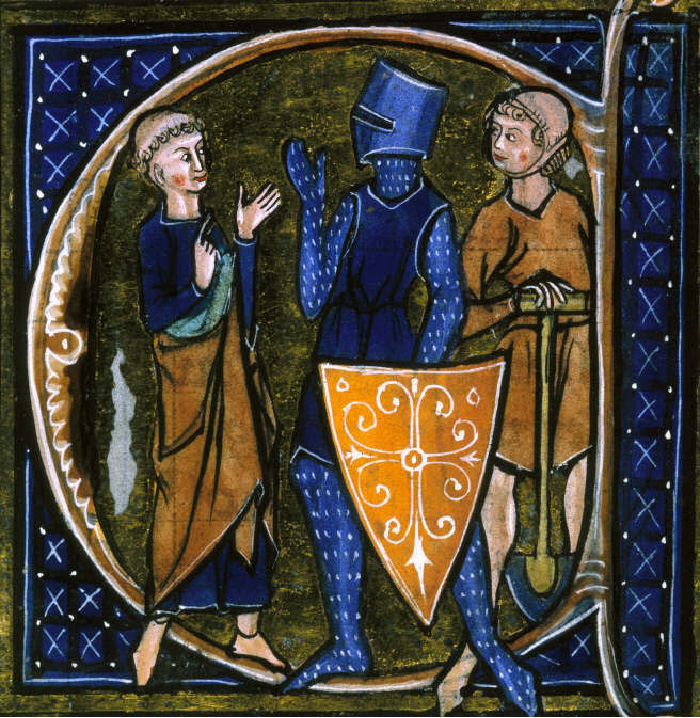
On their fiefs, the warriors oversaw the work of agricultural laborers. Some laborers might own their own land and be self-directed, but most in western Europe were unfree, servile laborers called serfs who were tied to the land. They were not enslaved and could not be bought or sold, but they occupied the lowest rung of the social ladder, could be physically abused by the lord, were forced to provide labor and goods for the lord, and rarely had any rights a lord was obligated to acknowledge. All these limitations existed despite the serfs’ being the largest class of people in European society at the time (Figure 13.8).
英語のヒント
戦士たちは、自分の封土で農業労働者の仕事を監督した。自分の土地を持ち、自らの判断で働く者もいたが、西ヨーロッパの大半は、農奴と呼ばれる不自由な従属労働者で、土地に縛り付けられていた。農奴は奴隷ではなく、売買することはできなかったが、社会の最下層を占めた。領主から身体的な虐待を受けることがあり、労働や物品の提供を強制され、領主が認めなければならない権利も、ほとんど持っていなかった。当時のヨーロッパ社会で最大の階層でありながら、農奴にはこうした制約がすべて課されていた(図13.8)。
Medieval European Society.中世ヨーロッパの社会
(credit: “Cleric-Knight-Workman/MS Sloane 2435, folio 85” by British Library/Wikimedia Commons, Public Domain) · Public Domain
Figure 13.8 This illuminated initial letter from a thirteenth-century French manuscript shows the key members of the medieval European social order: a member of the clergy, a warrior, and a laborer (left to right). (credit: “Cleric-Knight-Workman/MS Sloane 2435, folio 85” by British Library/Wikimedia Commons, Public Domain)
図13.8 13世紀フランスの写本にある彩飾頭文字。中世ヨーロッパの社会秩序を構成する主要な人々として、左から聖職者、戦士、労働者が描かれている。(出典:British Library/Wikimedia Commons「Cleric-Knight-Workman/MS Sloane 2435, folio 85」、パブリックドメイン)