第13章ローマ後の西欧と十字軍運動The Post-Roman West and the Crusading Movement
Experiencing the Crusades十字軍の時代を生きる
Despite the relatively brief existence of the Crusader States, they offered an example of Christians, Muslims, and Jewish people living and working together in a Christian kingdom surrounded by hostile states. Initially, however, the ignorance and religious bigotry of the crusaders led them to expel populations of Muslims or Jewish people from holy sites or places of strategic importance. In several cases, they perpetrated violent expulsions, killing civilians.
英語のヒント
十字軍国家の存続期間は比較的短かったが、敵対する国々に囲まれたキリスト教王国で、キリスト教徒、ムスリム、ユダヤ人が、共に暮らし、働く一つの例となった。しかし当初、十字軍の無知と宗教的な不寛容は、聖所や戦略上重要な場所から、ムスリムやユダヤ人の住民を追い出すことにつながった。武力で追放し、民間人を殺した例も複数あった。
European Catholics also found in the conquered areas native Christian populations with a variety of different creeds. In most cases, these Christians were permitted to stay, but eventually, conflict over religious authority developed as Catholic bishops were named (by the pope or by the Latin Patriarch of Jerusalem) as heads of communities with few Catholics. The Christians of the Middle East had also been acculturated by centuries of living under Muslim rule, which meant the Christianity of the east looked very different from that practiced in Europe. In some communities, Christians spoke Arabic, dressed like their Muslim neighbors, and worshipped in ways different from those of Catholics in Europe. The Greek Orthodox Byzantines were unhappy with the establishment of a well-organized religious rival in the Holy Land. Many native communities distrusted the crusaders not because they were of a different religion but because they arrived with brutality and did not share the cultural practices of the area.
英語のヒント
ヨーロッパのカトリック教徒は、征服地で、さまざまな信条を持つ、現地のキリスト教徒にも出会った。ほとんどの場合、彼らは住み続けることを許された。しかしやがて、カトリック信徒がほとんどいない共同体の長に、教皇またはエルサレムのラテン総大司教が、カトリックの司教を任命したため、宗教的権威をめぐる争いが起きた。中東のキリスト教徒は、何世紀にもわたりムスリムの支配下に暮らし、その文化の影響を受けていた。そのため、東方のキリスト教は、ヨーロッパで実践されるものとは、ずいぶん違って見えた。アラビア語を話し、近隣のムスリムに似た服装をし、ヨーロッパのカトリック教徒とは異なる形で礼拝する共同体もあった。ギリシア正教を信じるビザンツの人々も、聖地に、よく組織された宗教上の競争相手が成立したことを、不快に思った。現地の多くの共同体が十字軍を信用しなかったのは、別の宗教だったからではない。残忍なふるまいをし、その土地の文化的慣行を共有しなかったからだった。
Despite the initial violence by crusaders that scarred and scattered some Jewish and Muslim communities, policies of toleration and protection emerged. These had less to do with the crusaders’ growing familiarity with the religious and ethnic groups in Outremer and more to do with the lack of settlers from Europe. Lords needed workers, and if they could not be had, then native communities had to be preserved, not brutalized. Even when Europeans began to adopt local cultural habits and grew familiar with Islamic practices, distrust of the unfamiliar remained common on all sides. The Islamic poet and warrior Usama ibn Munqidh, for example, could count Christians among his friends, but he admonished his readers never to trust the “Franks,” or the newly arrived crusaders, whose ignorance he highlighted in his writing.
英語のヒント
十字軍による最初の暴力は、一部のユダヤ人やムスリムの共同体に傷を残し、人々を離散させた。それでも、やがて寛容と保護の政策が現れた。その主な理由は、十字軍がウトラメールの宗教・民族集団をよく知るようになったことよりも、ヨーロッパからの入植者が足りなかったことにあった。領主には働き手が必要だった。外から確保できないなら、現地の共同体を痛めつけるのではなく、存続させる必要があった。ヨーロッパ人が現地の文化や習慣を取り入れ、イスラームの慣行になじんでも、未知のものへの不信は、どの側にも広く残った。たとえばムスリムの詩人で戦士でもあるウサーマ・イブン・ムンキズは、キリスト教徒にも友人を持った。しかし読者には、「フランク人」、すなわち新たに到着した十字軍の人々を、決して信用するなと戒め、著作の中で彼らの無知を強調した。
The crusaders organized their government in feudal terms, but the native populations never became serfs owing service to their lords. Instead, they paid their taxes in cash or in goods. This form of payment was based on existing practices, and in many ways, the crusaders left rural agricultural production unchanged. Christian landlords used forms of taxation and village administration similar to those their Muslim predecessors had, and they relied on Muslim scribes and interpreters given the diversity of the people and languages in the region. Islamic and Jewish communities maintained their own schools and legal institutions. Despite the earlier violence and ongoing religious and ethnic tensions, the desire for trade and prosperity helped ease some of the tensions between the crusaders and native communities.
英語のヒント
十字軍は封建的な仕組みで統治を組織したが、現地の住民は、領主に労働奉仕を負う農奴にはならなかった。代わりに、現金や物品で税を納めた。この支払い方は、もともとの慣行に基づいており、十字軍は多くの点で、農村の生産のあり方を変えずに残した。キリスト教徒の地主は、以前のムスリム支配者と似た課税や村落行政の方法を使った。また、地域の人々と言語が多様だったため、ムスリムの書記や通訳を頼った。イスラームとユダヤ教の共同体は、独自の学校や法制度を維持した。初期の暴力や、その後も続く宗教・民族間の緊張にもかかわらず、交易と繁栄への欲求は、十字軍と現地共同体の緊張を、ある程度和らげる助けとなった。
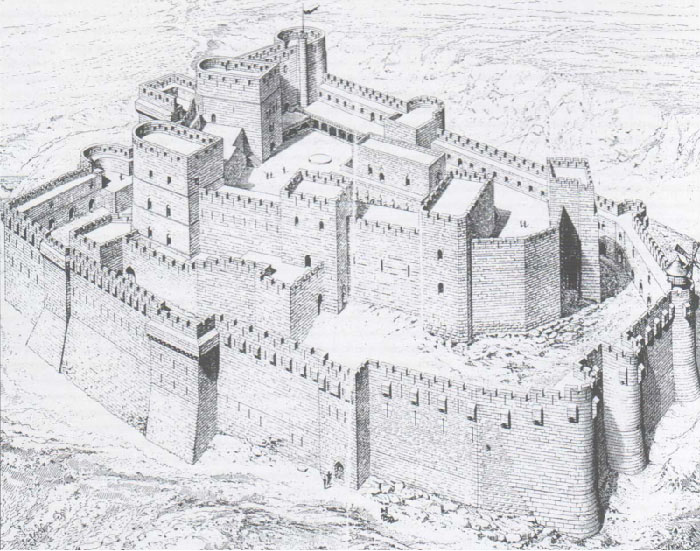
The lack of settlers from Europe ensured that the number of soldiers in Outremer was small. This was why the church promoted the crusading orders, and why the crusaders built imposing fortresses and castles, like the famous Krak des Chevaliers in Syria, that could be defended by a relatively small number of soldiers (Figure 13.22). Some European families, especially aristocrats with a family connection, went on sending crusaders, such as the dukes of Burgundy who continued to support the crusading movement. Many crusaders wrote letters to loved ones describing the military engagements in which they had taken part, often using provocative language to cast Muslims in a negative light. Often their expectation was that they would return home, and many pilgrims and crusaders did so rather than settling in the Holy Land.
英語のヒント
ヨーロッパからの入植者が少なかったため、ウトラメールの兵士も少数にとどまった。これが、教会が十字軍の騎士修道会を奨励した理由であり、十字軍が、比較的少ない兵で守れる、堂々とした要塞や城を築いた理由でもある。シリアの有名なクラック・デ・シュヴァリエは、その一つだった(図13.22)。ヨーロッパの一部の家、とりわけ十字軍と縁のある貴族の家は、参加者を送り続けた。十字軍運動を支え続けたブルゴーニュ公家などが、その例である。多くの十字軍参加者は、家族や愛する人に手紙を書き、参加した戦闘を伝えた。その際、ムスリムを悪く描くため、感情をあおる言葉を使うことも多かった。彼らは、やがて帰郷するつもりでいることが多く、多くの巡礼者や十字軍参加者は、聖地に定住せず、実際に帰っていった。
Krak des Chevaliers.クラック・デ・シュヴァリエ
(credit: “The Krak des Chevaliers as it was in the Middle-Ages” by Guillaume Rey : Étude sur les monuments de l’architecture militaire des croisés en Syrie et dans l’île de Chypre (1871)/Wikimedia Commons, Public Domain) · Public Domain
Figure 13.22 This is a nineteenth-century artist’s drawing of the compact fortress of Krak des Chevaliers in Syria, built to be defensible by a small number of fighters. (credit: “The Krak des Chevaliers as it was in the Middle-Ages” by Guillaume Rey : Étude sur les monuments de l’architecture militaire des croisés en Syrie et dans l’île de Chypre (1871)/Wikimedia Commons, Public Domain)
図13.22 シリアの、まとまりのよい要塞クラック・デ・シュヴァリエを描いた19世紀の絵。少数の兵でも守れるように造られていた。(出典:Guillaume Rey, Étude sur les monuments de l’architecture militaire des croisés en Syrie et dans l’île de Chypre (1871)/Wikimedia Commons「The Krak des Chevaliers as it was in the Middle-Ages」、パブリックドメイン)
While European settlers in Outremer remained few, other types of Europeans kept the cities and ports busy, both during the period of the Crusader States and after their fall. In addition to pilgrims, administrators, and scholars, merchants from the Italian city-states like Venice and Genoa benefited from the crusading movement. They profited by shipping pilgrims and fighters to Outremer and wrested lucrative concessions to establish their mercantile outposts in cities like Constantinople, Antioch, and Acre. Their contact with the trading emporiums of the Middle East connected Europe to the trade routes that extended across Afro-Eurasia and increased Europeans’ consumption of spices, silk, lacquerware, and ceramics from China.
英語のヒント
ウトラメールに定住するヨーロッパ人は少ないままだったが、別の目的で訪れるヨーロッパ人は、十字軍国家の時代にも、その崩壊後にも、都市や港に活気を与え続けた。巡礼者、行政官、学者に加え、ヴェネツィアやジェノヴァなど、イタリアの都市国家の商人も、十字軍運動から利益を得た。商人たちは、巡礼者や戦士をウトラメールへ運んで利益を上げ、コンスタンティノープル、アンティオキア、アッコンなどに商業拠点を設ける、有利な特権を獲得した。中東の交易都市とのつながりは、ヨーロッパを、アフロ・ユーラシア全域に広がる交易路へと結び付けた。ヨーロッパでは、中国からの香辛料、絹、漆器、陶磁器の消費が増えた。
These trading connections were not the only result valued by the Italian merchants. They were also eager for better knowledge of the peoples and geography of the lands, with an eye to establishing direct trading contacts with the distant civilizations that produced luxury goods Europeans began to demand. The best example is the fourteenth-century merchant and explorer Marco Polo, who followed the land routes to China. The Italian merchants kept up their trade and contact with different Islamic kingdoms, and the wealth of their mercantile cities inspired the kings of Europe to patronize their own merchants and explorers to help them capitalize on the riches of the world that flowed into the Mediterranean. This age of exploration and trade was accelerated by European experiences in the Crusades.
英語のヒント
イタリア商人が重視した成果は、こうした交易のつながりだけではなかった。彼らは、人々や土地の地理について、さらに詳しい知識を得ることも求めた。ヨーロッパ人が欲し始めた高級品を生産する、遠方の文明と、直接取引することを見据えていたのである。最もよく知られた例が、陸路をたどって中国へ向かった、14世紀の商人・探検家マルコ・ポーロである。イタリア商人は、さまざまなイスラーム王国との交易や接触を保った。商業都市の富は、ヨーロッパの王たちを刺激し、地中海へ流れ込む世界の富を利用するため、自国の商人や探検家を支援するようにさせた。こうした探検と交易の時代は、ヨーロッパ人の十字軍での経験によって、進展を速めた。