第13章ローマ後の西欧と十字軍運動The Post-Roman West and the Crusading Movement
The Battle of Manzikert and the Call from the Eastマンジケルトの戦いと東方からの呼びかけ
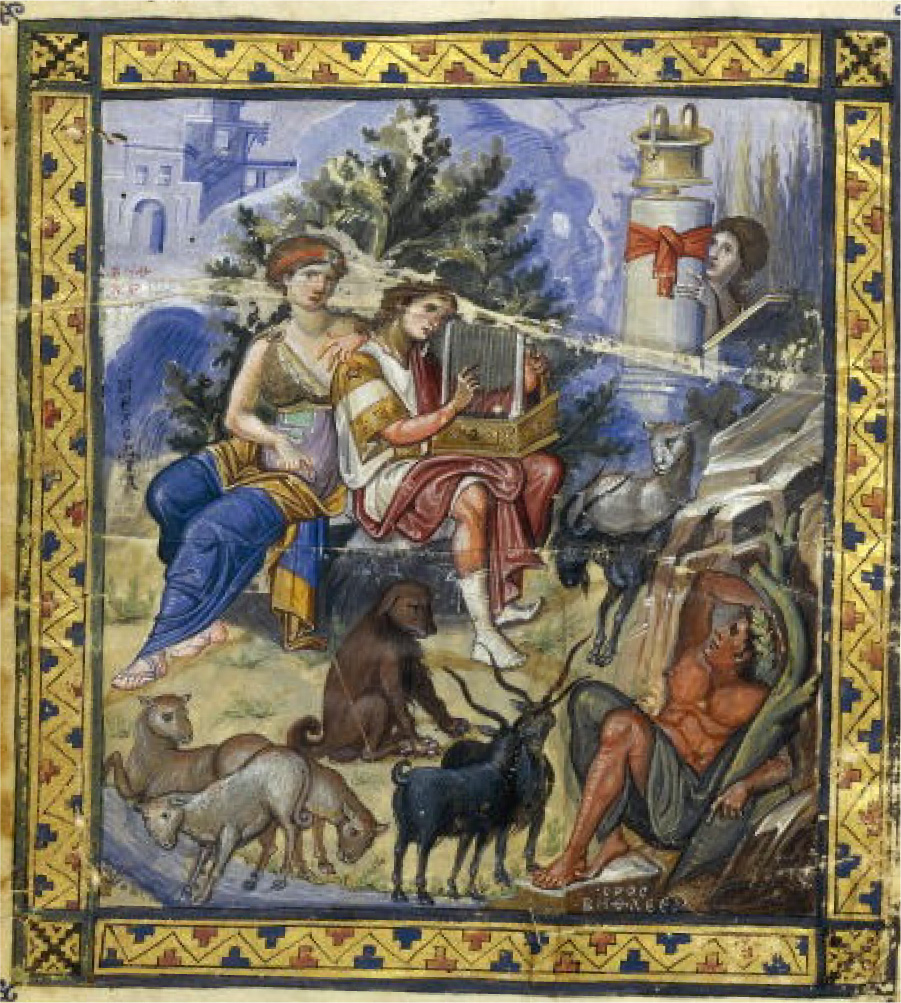
While the Islamic world was undergoing the devolution of Abbasid power, the Byzantine Empire could not take advantage of its weakness. The Byzantines had experienced an earlier period of cultural and military dominance under the powerful Macedonian dynasty (867–1025), whose warrior-emperors had been able to push back against Muslims to the east and Slavic peoples to the west. The resulting stability had brought a period of cultural production and innovation sometimes called the Macedonian Renaissance. Its artwork later influenced Italian art and anticipated developments in the Italian Renaissance (Figure 13.15).
英語のヒント
イスラーム世界でアッバース朝の権力が地方へ移っていた間も、ビザンツ帝国はその弱体化を利用できなかった。それ以前には、強力なマケドニア王朝(867~1025年)のもとで、文化的・軍事的優位を享受した時期があった。その戦う皇帝たちは、東のムスリムや、西のスラヴ系民族を押し戻すことができた。そこから生まれた安定は、「マケドニア・ルネサンス」と呼ばれることもある、文化の創造と革新の時期をもたらした。その美術は、後のイタリア美術に影響し、イタリア・ルネサンスの発展を先取りした(図13.15)。
The Macedonian Renaissance.マケドニア・ルネサンス
(credit: “Paris Psalter” by Bibliothèque nationale de France/Wikimedia Commons, Public Domain) · Public Domain
Figure 13.15 This image is from a tenth-century illuminated manuscript made in Constantinople and called the Paris Psalter (for its current location). It depicts the biblical King David (seated with harp) composing psalms or sacred songs. The realism of the setting and the individualized faces and postures were innovations of the art of the Macedonian era. (credit: “Paris Psalter” by Bibliothèque nationale de France/Wikimedia Commons, Public Domain)
図13.15 コンスタンティノープルで作られた10世紀の彩飾写本からの図。現在の所蔵地にちなんで『パリ詩篇』と呼ばれる。竪琴を持って座る聖書のダビデ王が、詩篇、すなわち聖歌を作る姿を描く。場面の写実性や、一人一人異なる顔と姿勢は、マケドニア朝時代の美術の新しい特徴だった。(出典:Bibliothèque nationale de France/Wikimedia Commons「Paris Psalter」、パブリックドメイン)
At the end of the Macedonian period, the Byzantine emperor’s ability to navigate the economic and military situation deteriorated. Ineffective rulers and conflict over successors to the Macedonian dynasty rendered the empire less militarily capable. The Byzantines also lost control of their overseas territories, especially southern Italy and Sicily, which had been sources of trade and revenue. Islamic and Italian navies began to dominate trade in the Mediterranean. As direct trade between the Christian West and the Islamic world increased, the economic position of the Byzantine Empire as an intermediary began to decline. Byzantine rulers attempted to establish marriage alliances with Slavic rulers and even Norman adventurers who were active in Sicily and southern Italy. Although such allies were eager to associate themselves with the prestige of the Byzantine Empire, they were just as likely to gain it by attacking the empire and carving out a state for themselves. All around them, the Byzantine emperors saw inconstant allies and ferocious enemies.
英語のヒント
マケドニア朝時代の終わりには、ビザンツ皇帝が経済・軍事情勢を乗り切る力は低下した。力不足の支配者や、王朝の後継をめぐる争いが、帝国の軍事能力を損なった。ビザンツは海外領土、特に交易と収入の源だったイタリア南部とシチリアの支配も失った。イスラーム勢力とイタリアの海軍が、地中海の交易を支配し始めた。キリスト教の西方世界とイスラーム世界の直接交易が増えると、仲介者としてのビザンツの経済的地位は低下した。ビザンツの支配者は、スラヴ系の君主や、シチリア・イタリア南部で活動するノルマン人の冒険者とさえ、婚姻による同盟を結ぼうとした。こうした同盟相手は、ビザンツ帝国の威信と自分たちを結び付けようと熱心だったが、帝国を攻撃し、自分たちの国家を切り取ることで、その威信を得ようとすることも、同じようにありえた。ビザンツ皇帝は、気まぐれな同盟相手と激しい敵に、周りを囲まれていた。
The challenges the Byzantine Empire faced were not limited to external rivals. Its rulers faced the same problem as the Abbasid caliphs: powerful actors within their own empire who sought to exploit the weaknesses of the rule to enrich their families. Macedonian emperors such as Basil II had issued legislation to curb the power of these elites, called the dynatoi, by ensuring they were taxed heavily, and their massive estates were broken up and distributed to the peasants who served in the armies. Basil was succeeded by less competent or less secure emperors who were compelled to rely on the dynatoi for support and reversed his policies. This harmed the peasant backbone of the army and emboldened the elite, who rewarded the patronage of the emperors with schemes to control or replace them. Like the Abbasids, the rulers then had to balance external threats and challenges with internal ones in a complex search for stability.
英語のヒント
ビザンツ帝国の難題は、外敵に限られなかった。アッバース朝のカリフと同じ問題、すなわち国内の有力者が統治の弱みに付け込み、自分の家を富ませようとする問題に直面した。バシレイオス2世のようなマケドニア朝の皇帝は、ディナトイと呼ばれるこれらの有力者の力を抑える法律を出した。重い税を課し、広大な所領を分割して、軍に従事する農民へ分配しようとしたのである。しかしバシレイオスの後を継いだ皇帝たちは、能力が劣るか、立場が不安定で、ディナトイの支援に頼らざるをえなかった。そのため政策を逆転させた。軍の背骨だった農民を傷つけ、有力者を勢いづかせた。皇帝の保護を受けた有力者たちは、その皇帝を操るか、取り替える策略で応じた。こうして支配者たちは、アッバース朝と同じように、安定を探る複雑な過程で、外からの脅威や難題と、内側のそれとを、同時に扱わなければならなかった。
One of the dynatoi became Emperor Romanos IV in 1068. Romanos was a capable general who wanted to reverse the empire’s losses to the Seljuks. The neglect of the army by previous emperors meant that he had to rely on foreign mercenaries, who did not get along with each other and who plundered Byzantine territory if they were not paid on time. Romanos had some earlier successes against the Seljuks, whose raids under Alp Arslan had become bloody and bitter affairs. He hoped to take back strategic areas in eastern Anatolia while Alp Arslan was fighting the Fatimids.
英語のヒント
ディナトイの一人は、1068年に皇帝ロマノス4世となった。有能な将軍で、セルジューク朝に奪われた領土を取り戻そうとした。以前の皇帝たちが軍を放置したため、外国人傭兵に頼らざるをえなかった。傭兵たちは互いに折り合いが悪く、給金が期日通りに支払われないと、ビザンツ領を略奪した。ロマノスは、セルジューク朝に対して、それ以前にいくつかの成功を収めていた。アルプ・アルスラーンのもとで、その襲撃は流血の激しいものになっていた。彼がファーティマ朝と戦っている間に、アナトリア東部の戦略上重要な地域を奪い返そうと望んだ。
Alp Arslan was not as far away as Romanos had hoped, however, and the armies met near the town of Manzikert. Some of Romanos’s mercenaries abandoned him before the battle, and at a decisive moment, he was betrayed by his own aristocratic rivals who failed to protect the army during a retreat. Romanos was then captured by the Seljuks, and instead of executing him—the typical fate for one considered a dangerous foe—to humiliate him, Alp Arslan spared the emperor’s life and set him free, after he agreed to concede territory and pay a hefty ransom.
英語のヒント
しかしアルプ・アルスラーンは、ロマノスが期待したほど遠くにはいなかった。両軍はマンジケルトの町の近くで遭遇した。ロマノスの傭兵の一部は戦闘前に離反し、決定的な局面では、自国の貴族の対抗者に裏切られた。彼らは、退却中の軍を守らなかったのである。ロマノスはセルジューク軍の捕虜となった。危険な敵とみなされた者の典型的な運命は処刑だったが、アルプ・アルスラーンは、処刑によって屈辱を与える代わりに命を助けた。そして、領土を譲り、多額の身代金を払うことに同意させた後、解放した。
The military defeat might not have been disastrous, but problems within the empire exacerbated the loss. Romanos was deposed and killed by his own aristocracy, and for the next twenty years, the Byzantine rulers struggled to restore order to their empire. One of Romanos’s successors, Alexios I, called on the popes for assistance against the Seljuks. He was expecting a mercenary force, but instead Pope Urban II framed the conflict between Byzantine and Seljuk as a fight between religions, culminating in the crusading movement.
英語のヒント
この軍事的敗北だけなら、破滅的なものにはならなかったかもしれない。しかし帝国内部の問題が、敗北の影響を悪化させた。ロマノスは自国の貴族たちによって廃位され、殺された。その後20年間、ビザンツの支配者たちは、帝国の秩序を回復するために苦闘した。後継者の一人アレクシオス1世は、セルジューク朝に対抗する援助を、教皇たちに求めた。期待していたのは傭兵部隊だったが、教皇ウルバヌス2世は、ビザンツとセルジュークの対立を宗教間の戦いと位置付け、それが十字軍運動へとつながった。
Section Summaryこの節のまとめ
The Abbasid rulers had established their control over the Middle East and created a multiethnic, multireligious society that promoted trade, scholarship, and urbanization. By the tenth century, however, the caliphs’ sphere had been reduced to Syria and Iraq. Religious and political rivals like the Fatimids, who established the only Shia caliphate, weakened the Abbasids. The arrival of the Seljuk Turks helped to push back the Fatimids and dealt a devastating blow to the Byzantine Empire. The Seljuks enjoyed their status as protectors of the Abbasid realms, and like other conquerors before them, they eagerly embraced Persian culture, art, and literature. The Byzantine emperors, suffering a loss of prestige and territory, looked west in the hope that renewed alliances with the Germanic kingdoms could help restore their power in Anatolia.
英語のヒント
アッバース朝の支配者は、中東の支配を確立し、交易、学問、都市化を促す、多民族・多宗教の社会を作った。しかし10世紀までには、カリフの勢力圏はシリアとイラクに縮小していた。唯一のシーア派カリフ国を建てたファーティマ朝など、宗教的・政治的な対抗者がアッバース朝を弱めた。セルジューク・テュルクの到来は、ファーティマ朝を押し戻す助けとなり、ビザンツ帝国には壊滅的な打撃を与えた。セルジューク人は、アッバース朝領の保護者という地位を享受し、それ以前の征服者たちと同じく、ペルシアの文化、美術、文学を進んで受け入れた。威信と領土を失ったビザンツ皇帝は、西へ目を向けた。ゲルマン系の王国との同盟を再び結べば、アナトリアでの力を回復できると期待したのである。