第13章ローマ後の西欧と十字軍運動The Post-Roman West and the Crusading Movement
Later Crusadingその後の十字軍
The crusading movement continued after the Third Crusade, but enthusiasm waned. Pope Innocent III, one of the most powerful medieval popes, called for a new crusade in 1202. The crusaders wanted to avoid the overland routes through Anatolia that had been a problem from the start. They hoped to avoid the Byzantine Empire too, because tensions between crusader leaders and the Byzantine emperors had been worsened by religious conflict and accusations of betrayal. These crusaders ordered ships from Italian cities to carry them directly to the Holy Land. In return, the Venetian leader asked the crusaders to attack a port city named Zara on the Dalmatian coast, which was Christian but Venice’s rival. When the crusaders agreed, the pope was furious and excommunicated them.
英語のヒント
第3回十字軍の後も、十字軍運動は続いたが、熱意は衰えた。中世で最も強い力を持つ教皇の一人、インノケンティウス3世は、1202年、新たな十字軍を呼びかけた。参加者は、最初から問題だった、アナトリアを通る陸路を避けたいと考えた。ビザンツ帝国も避けるつもりだった。宗教対立や、裏切ったという非難が、十字軍の指導者とビザンツ皇帝との緊張を、悪化させていたからである。彼らは、聖地へ直接運んでもらうため、イタリアの都市に船を発注した。見返りとして、ヴェネツィアの指導者は、ダルマティア沿岸の港町ザラを攻撃するよう求めた。ザラはキリスト教の町だったが、ヴェネツィアの競争相手でもあった。十字軍が同意すると、教皇は激怒し、彼らを破門した。
The crusaders continued to Constantinople, where they became involved in the internal politics of the Byzantine Empire and attacked the city, sacking it after a complicated attempt to put a pro-crusader emperor on the throne. A city that had stood against countless enemies for nearly a thousand years had been crushed. The event marked a deep betrayal of the Greek Christians and of crusading ideals. While the Catholics established the short-lived Latin Empire of Constantinople, considerable damage had been done to the crusading movement and to relations between the Greek Orthodox and Catholic churches.
英語のヒント
十字軍は、さらにコンスタンティノープルへ進み、ビザンツ帝国の内政に巻き込まれた。十字軍に好意的な皇帝を即位させようとする、複雑な試みの末、都市を攻撃して略奪した。約1,000年間、数え切れない敵に抗してきた都市が、打ち砕かれたのである。この出来事は、ギリシアのキリスト教徒に対しても、十字軍の理想に対しても、深刻な裏切りだった。カトリック勢力は、短命に終わるコンスタンティノープルのラテン帝国を建てたが、十字軍運動と、ギリシア正教会・カトリック教会の関係には、大きな損害が残った。
Later calls for crusades were met with some enthusiasm, but the object of the fight became Egypt, recognized as an important base for controlling the Holy Land. Nevertheless, later crusades became increasingly French and less successful at accomplishing their goals, at least as far as establishing Christian control of the Holy Land went. The French crusader-king Louis IX led the Seventh and Eighth Crusades against Muslim rulers in North Africa and died of illness there. (He was later canonized as St. Louis.) When the port city of Acre in present-day Israel fell in 1291, the last of the Crusader States fell with it.
英語のヒント
その後の十字軍の呼びかけにも、ある程度の熱意は集まったが、攻撃対象は、聖地を支配する重要拠点とみなされたエジプトになった。それでも後の十字軍は、次第にフランスを中心とするようになり、少なくとも聖地にキリスト教徒の支配を確立するという点では、目的を達成できなくなった。フランスの十字軍王ルイ9世は、北アフリカのムスリム支配者に対する第7回・第8回十字軍を率い、現地で病死した。のちに列聖され、聖ルイとなった。現在のイスラエルにある港町アッコンが1291年に陥落すると、十字軍国家の最後の拠点も失われた。
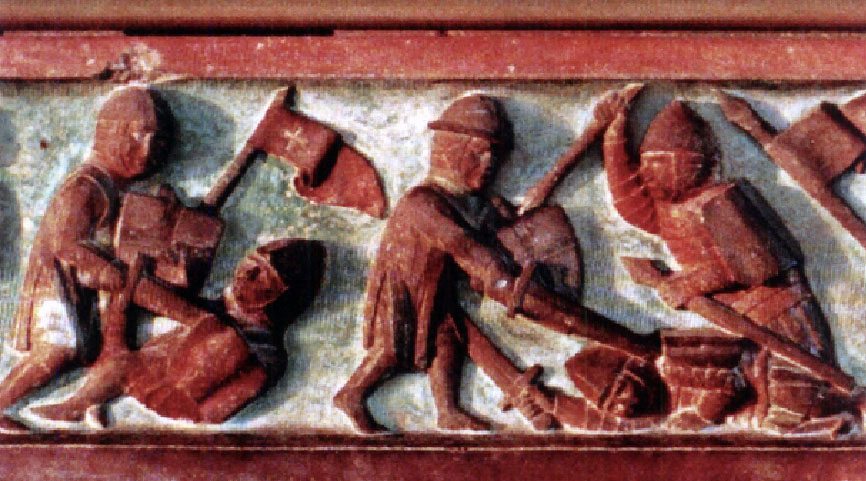
The crusading ideal was also transformed by practice and experience. The popes now called holy wars not just to liberate Jerusalem but to fight against the enemies of the church. Crusades were called against non-Christians in the Baltic regions, against heretics in France, and even against the pope’s personal enemies in Italy (Figure 13.23). Crusaders came to expect standard privileges like the indulgence, a means to reduce the penance owed for sinning by giving money directly to the church or paying for masses or other clerical services. They could also rely on the protection of their property and relief from feudal dues or taxes. Crusading become commonplace by the thirteenth century, and generations of families made going on crusade a family tradition. The popes frequently called on Christian knights and aristocrats to fight against Muslims in a conflict that now seemed to be waged everywhere, not just in the Middle East, and against non-Christians of all types. Conflict was never the sole characteristic of relationships between Christians, Muslims, and Jewish people in the medieval period, but the image of Muslims and Jewish people as perennial enemies of Christian culture that developed in the crusading era had a lasting negative impact in Europe and elsewhere, even to the present day.
英語のヒント
十字軍の理想も、実践と経験によって変わった。教皇たちは、エルサレム解放のためだけでなく、教会の敵と戦うためにも、聖戦を呼びかけるようになった。バルト海地域の非キリスト教徒、フランスの異端者、さらにはイタリアにいる教皇個人の敵を相手にも、十字軍が呼びかけられた(図13.23)。参加者は、一定の特権を当然のものとして期待するようになった。その一つが贖宥である。教会へ直接献金する、ミサやその他の聖職者の務めのために支払う、といった方法で、罪に対して課される償いを軽減する仕組みだった。財産の保護や、封建的な負担・税の免除も期待できた。13世紀には十字軍がありふれたものになり、何世代にもわたる家の伝統として、参加する家も現れた。教皇たちは、キリスト教徒の騎士や貴族に、ムスリムとの戦いへ加わるよう、繰り返し求めた。今や戦いは、中東だけでなく、至る所で行われているかのようだった。また、あらゆる種類の非キリスト教徒にも、攻撃が向けられた。中世のキリスト教徒、ムスリム、ユダヤ人の関係は、決して紛争だけで特徴付けられるものではなかった。しかし十字軍の時代に育った、ムスリムやユダヤ人をキリスト教文化の永遠の敵とするイメージは、ヨーロッパやほかの地域で、現代にまで続く悪影響を残した。
Crusade in the Baltics.バルト海地域の十字軍
(credit: “Lithuanians fighting Teutonic Knights” by Unknown/Wikimedia Commons, Public Domain) · Public Domain
Figure 13.23 This relief carving from the early fourteenth century shows Germanic knights, members of a crusading order, fighting against Lithuanians in the Baltic Crusades. (credit: “Lithuanians fighting Teutonic Knights” by Unknown/Wikimedia Commons, Public Domain)
図13.23 14世紀初めの浮き彫り。バルト海地域の十字軍で、騎士修道会に属するゲルマン系の騎士たちが、リトアニア人と戦う姿を描く。(出典:作者不詳/Wikimedia Commons「Lithuanians fighting Teutonic Knights」、パブリックドメイン)
Toward the end of the Middle Ages, the crusading ideal declined in popularity. This was due in part to the decline of the power of the papacy and in part to the revival of royal power in the fourteenth century. The Crusades had been launched by popular popes viewed as reformers and men of virtue. Over time, they came to seem more concerned about their own power and prestige and less like the hard-working clerics who had battled kings for the freedom of the church. In the early fourteenth century, the king of France accused the Knights Templar, one of the more popular crusading orders, of committing crimes such as blasphemy and apostasy (the rejection of Christianity). The order’s leaders were executed as heretics, and the popes disbanded the order, largely to please the French king.
英語のヒント
中世の終わりに近づくと、十字軍の理想は人気を失った。教皇権の衰えと、14世紀における王権の復活が、その一因だった。もともと十字軍を始めた教皇たちは、改革者であり、徳のある人物だとして支持されていた。しかし次第に、教会の自由のために王と戦う勤勉な聖職者というより、自分の権力や威信を気に掛ける存在に見えるようになった。14世紀初め、フランス王は、特に人気のある騎士修道会の一つ、テンプル騎士団を、神への冒瀆や背教、すなわちキリスト教の放棄などの罪で告発した。指導者たちは異端者として処刑され、教皇たちは、主としてフランス王の意向に沿うため、騎士団を解散した。
While Christian kingdoms expanded in the Baltic regions and in the Iberian Peninsula, the rise of powerful Islamic kingdoms in the Middle East, like the Mamluks in Egypt and later the Ottoman Turks in Anatolia, ensured that crusades to control Jerusalem became impractical. Kings and aristocrats turned their attention to building up nation-states and warring against their dynastic rivals at home. The rhetoric of crusade still colored fights between Christians and non-Christians, but these conflicts often served the political goals of kings and monarchs willing to deal with the papacy in return for its blessing.
英語のヒント
バルト海地域やイベリア半島では、キリスト教の王国が拡大した。しかし中東では、エジプトのマムルーク朝や、のちにアナトリアで興ったオスマン・テュルクのような、強力なイスラーム国家が台頭したため、エルサレムを支配するための十字軍は、現実的でなくなった。王や貴族は、国民国家を築き、故国で王朝の競争相手と戦うことへ、関心を向けた。十字軍を説く言葉は、その後もキリスト教徒と非キリスト教徒の戦いを色付けしたが、これらの紛争は、多くの場合、教皇の祝福と引き換えに教皇庁と取引する、王や君主の政治的な目標に役立った。