第11章イスラームとカリフ国家の台頭The Rise of Islam and the Caliphates
Introductionはじめに
The Prophet Abraham.預言者アブラハム
Figure 11.1 This illustration from al-Biruni’s fourteenth-century history called al-Athar al-Baqiyah depicts the prophet Abraham destroying idols that were being worshipped instead of the one God. Abraham holds an important place as a common ancestor in Jewish, Christian, and Muslim traditions. (credit: Centre for Research Collections, University of Edinburgh, shelfmark Or.Ms.161, folio number f.88v., used with permission)
図11.1 ビールーニーの14世紀の歴史書『アル=アーサール・アル=バーキヤ』のこの挿絵は、唯一の神に代えて崇拝されていた偶像を壊す預言者アブラハムを描く。アブラハムは、ユダヤ教・キリスト教・イスラームの伝統において、共通の祖先として重要な位置を占める。(出典:エディンバラ大学研究コレクションセンター、請求記号Or.Ms.161、葉番号f.88v、許可を得て使用。)
The modern monotheistic religions of Judaism, Christianity, and Islam have a great deal in common with one another, including a number of traditions and beliefs. At the center of these shared traditions is the worship of one god, but the leadership of the prophets—individuals who were chosen to receive messages to humankind from God—is shared, too. Perhaps no prophetic figure is quite as central in all three faiths as the prophet Abraham (Figure 11.1). Abraham was a patriarch of the Israelites in Jewish and Christian tradition, a common ancestor known for his intense commitment to the worship of the one God in the scripture, the book of Genesis. In one of the best-known stories from the scripture featuring him, he was willing to sacrifice his own son if necessary in order to obey his God. Islamic tradition holds that he is also the ancestor of all the Arabs, and the house of worship he constructed in Mecca, in western Arabia, has become a revered site of pilgrimage for Muslims around the world.
英語のヒント
現代の一神教であるユダヤ教、キリスト教、イスラームには、数々の伝統や信仰など、多くの共通点がある。共通の伝統の中心には唯一の神への崇拝があるが、神から人類への言葉を受け取る者として選ばれた人々、すなわち預言者の導きも共有されている。3つの信仰のすべてにおいて、預言者アブラハムほど中心的な預言者は、おそらくほかにいない(図11.1)。ユダヤ教とキリスト教の伝統では、アブラハムはイスラエルの民の族長であり、共通の祖先である。聖書の『創世記』では、唯一の神への崇拝に深く身をささげた人物として知られる。彼が登場する特に有名な物語の一つでは、神に従うためなら、必要に応じて自分の息子さえ犠牲にする覚悟を示した。イスラームの伝統によれば、彼はすべてのアラブ人の祖先でもある。アラビア西部のメッカで彼が建てた礼拝所は、世界中のムスリムにとって崇敬される巡礼地となっている。
Timeline: The Rise of Islam and the Caliphates.年表:イスラームとカリフ国家の台頭
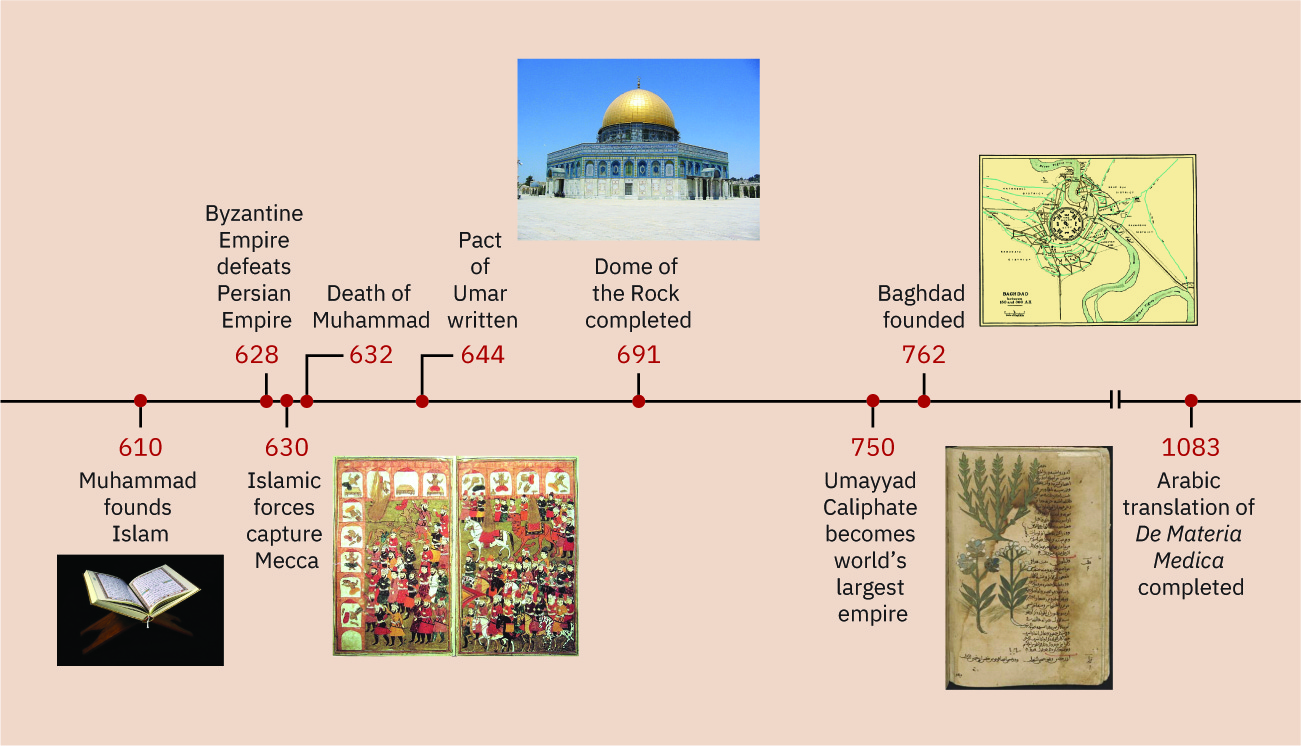
(credit “610”: modification of work “Qur'an and Rehal” by “sayyed shahab-o- din vajedi”/Wikimedia Commons, CC BY 4.0; credit “630”: modification of work “Muhammad destroying idols” by Histoire Geographie 5ieme Nathan/Wikimedia Commons, Public Domain; credit “691”: modification of work “Exterior of Dome of the Rock or Masjid Al Sakhrah, in Jerusalem” by Thekra A. Sabri/Wikimedia Commons, CC BY 2.0; credit “762”: modification of work “Baghdad 150 to 300 AH” by www.muhammadanism.org/Wikimedia Commons, Public Domain; credit “1083”: modification of work “Kitāb al-Ḥašāʾiš fī hāyūlā al-ʿilāg al-ṭibbī Or. 289” by Universitaire Bibliotheken Leiden/Leiden University Libraries, CC BY) · CC BY 4.0 + Public Domain + CC BY 2.0 + CC BY
Figure 11.2 (credit “610”: modification of work “Qur'an and Rehal” by “sayyed shahab-o- din vajedi”/Wikimedia Commons, CC BY 4.0; credit “630”: modification of work “Muhammad destroying idols” by Histoire Geographie 5ieme Nathan/Wikimedia Commons, Public Domain; credit “691”: modification of work “Exterior of Dome of the Rock or Masjid Al Sakhrah, in Jerusalem” by Thekra A. Sabri/Wikimedia Commons, CC BY 2.0; credit “762”: modification of work “Baghdad 150 to 300 AH” by www.muhammadanism.org/Wikimedia Commons, Public Domain; credit “1083”: modification of work “Kitāb al-Ḥašāʾiš fī hāyūlā al-ʿilāg al-ṭibbī Or. 289” by Universitaire Bibliotheken Leiden/Leiden University Libraries, CC BY)
図11.2 (出典:610年=「sayyed shahab-o- din vajedi」/Wikimedia Commons「Qur’an and Rehal」を改変、CC BY 4.0。630年=Histoire Geographie 5ieme Nathan/Wikimedia Commons「Muhammad destroying idols」を改変、パブリックドメイン。691年=Thekra A. Sabri/Wikimedia Commons「Exterior of Dome of the Rock or Masjid Al Sakhrah, in Jerusalem」を改変、CC BY 2.0。762年=www.muhammadanism.org/Wikimedia Commons「Baghdad 150 to 300 AH」を改変、パブリックドメイン。1083年=ライデン大学図書館「Kitāb al-Ḥašāʾiš fī hāyūlā al-ʿilāg al-ṭibbī Or. 289」を改変、CC BY。)
Locator Map: The Rise of Islam and the Caliphates.位置図:イスラームとカリフ国家の台頭
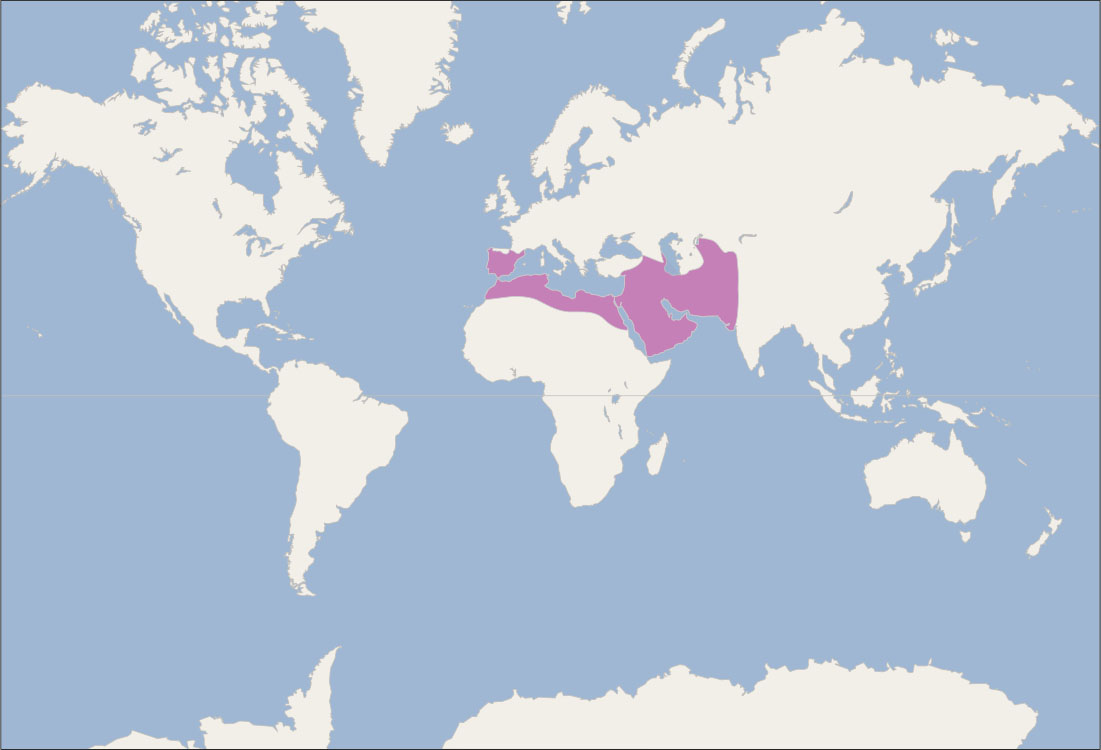
(credit: modification of work “World map blank shorelines” by Maciej Jaros/Wikimedia Commons, Public Domain) · Public Domain
Figure 11.3 (credit: modification of work “World map blank shorelines” by Maciej Jaros/Wikimedia Commons, Public Domain)
図11.3 (出典:Maciej Jaros/Wikimedia Commons「World map blank shorelines」を改変、パブリックドメイン。)