第11章イスラームとカリフ国家の台頭The Rise of Islam and the Caliphates
The Islamic Prophet Muhammadイスラームの預言者ムハンマド
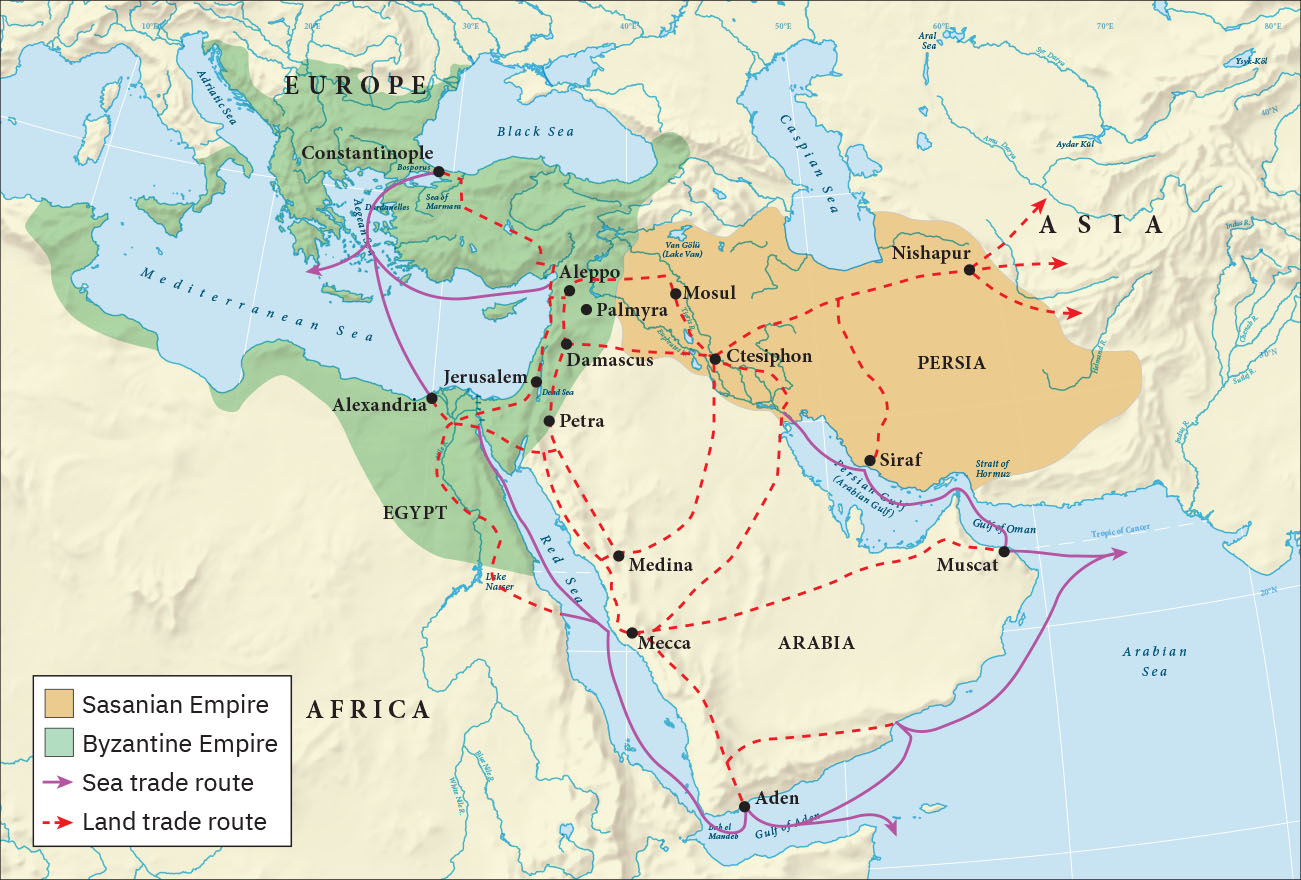
Muslim tradition tells us that Muhammad was a merchant from a prominent Arab tribe called Quraysh in the Hijaz region. Born in the city of Mecca, he spent his early life engaged in the trade that passed along the north–south trade routes through his city, a hub that had become a waystation and a good place to conduct business (Figure 11.11). The tribe of Quraysh dominated leadership and trade in the region in large part because its members were the protectors of the sacred Kaaba, which in this period, we are told, had become a house of idol worship, a center of polytheism among the Arabs. Long-distance trade of luxury goods could be risky because of raiding that occurred along trade routes, and the Kaaba had become a sanctuary where fighting was illicit, making it a safe place to conduct business. The Quraysh were enriched as the stewards of this important sanctuary and had a keen interest in protecting its role in society.
英語のヒント
ムスリムの伝承によると、ムハンマドはヒジャーズ地方の有力なアラブ部族、クライシュ族に属する商人だった。メッカに生まれ、若いころは、町を通る南北の交易路を行き来する商取引に従事した。メッカは中継地となり、商売に適した交易の中心地となっていた(図11.11)。クライシュ族が地域の指導権と交易を握った大きな理由は、その人々が聖なるカアバの守護者だったことにある。伝承によれば、当時のカアバは偶像崇拝の家、アラブ人の多神教の中心となっていた。ぜいたく品の長距離交易は、交易路での襲撃があるため、危険を伴うことがあった。しかしカアバは戦闘を禁じた聖域となっており、安全に商売のできる場所だった。クライシュ族はこの重要な聖域の管理者として富み、社会におけるその役割を守ることに強い関心と利害をもっていた。
Mecca as a Trade Hub.交易の中心地としてのメッカ
(attribution: Copyright Rice University, OpenStax, under CC BY 4.0 license) · CC BY 4.0
Figure 11.11 Muslim sources tell us that Muhammad’s tribe, the Quraysh, made the city of Mecca an important waystation for those trading luxury goods by land and sea. (attribution: Copyright Rice University, OpenStax, under CC BY 4.0 license)
図11.11 ムスリムの史料によると、ムハンマドの属したクライシュ族は、陸路・海路でぜいたく品を取引する人々にとって、メッカを重要な中継地にした。(帰属:© Rice University、OpenStax、CC BY 4.0)
According to Muslim belief, in the year 610 the middle-aged Muhammad, who had traveled to a cave just outside Mecca for contemplation, received contact from God through the intermediary of the angel Gabriel (Jabrīl in Arabic). Muhammad was told to recite the first revelations of a scripture that became the Muslim holy book, the Quran. He returned home amazed and surprised by what he had experienced. As a well-traveled and successful trader in the region, he had much to lose from undertaking a religious mission with a novel message. For one thing, a new religion would threaten the balance of power within his Arab tribe by plainly rejecting the polytheism that many in the community practiced and the financial benefits that came with the Kaaba. However, Muhammad essentially abandoned a financially stable and comfortable life as a merchant to embrace what he believed was required by God: becoming a preacher and working to save the souls of his family and kin from a coming day of judgment.
英語のヒント
ムスリムの信仰によれば、610年、中年になったムハンマドは、思索のためメッカ郊外の洞窟へ行き、天使ガブリエル(アラビア語でジブリール)を介して神からの接触を受けた。後にムスリムの聖典クルアーンとなる文書の、最初の啓示を朗誦するよう命じられた。彼は、自分の経験に驚き、心を揺さぶられながら帰宅した。広く旅をし、この地域で成功していた商人として、新しい教えを携えた宗教的使命を引き受ければ、失いかねないものは多かった。まず、新しい宗教は、共同体の多くが実践する多神教と、カアバがもたらす経済的利益をはっきり拒むため、自分のアラブ部族内の勢力均衡を脅かすことになった。それでもムハンマドは、商人としての経済的に安定した快適な生活を、事実上捨てた。神に求められたと信じる務めを受け入れるためである。すなわち説教者となり、来る審判の日から家族や親族の魂を救おうと働くことだった。
There has been much disagreement throughout history over who was the first man to convert to Islam after hearing Muhammad’s message, but there is no debate among Muslim sources about who was the first person to do so: his first wife Khadija. As a successful merchant in her own right—who had lifted Muhammad’s standing in their community by marrying him and bringing him into her caravan business—Khadija too would have had much to lose in supporting the new religion. The earliest biographer of Muhammad, Ibn Ishaq, described the critical support she provided Muhammad by saying, “[Quotation omitted for rights reasons.]”
英語のヒント
ムハンマドの教えを聞いてイスラームへ改宗した最初の男性が誰だったかについては、歴史を通じ多くの議論があった。しかし最初の人間が誰だったかについて、ムスリムの史料には異論がない。最初の妻ハディージャである。ハディージャは、自分自身の力で成功した商人だった。ムハンマドと結婚して自らの隊商事業に加えることで、共同体における彼の地位を引き上げていた。彼女にも、新しい宗教を支えることで失いかねないものが多くあったはずである。ムハンマドの最初期の伝記作者イブン・イスハークは、彼女が与えた不可欠な支援を、次のように記した。〔権利の関係で割愛〕
While many of Muhammad’s confidants and family members embraced Islam shortly after the revelations began and continued, his career as a prophet, especially the first twelve years, was fraught with challenge. His preaching of monotheism upset the political status quo and was often resisted. The support of his family, especially his wives, was critical to his success as a preacher, and the guidance of Khadija was especially significant. Tradition suggests that when Muhammad thought he might be mad as the revelations first came to him, it was she who convinced him to trust and embrace his new calling.
英語のヒント
啓示が始まり、その後も続くなか、ムハンマドの親しい相談相手や家族の多くは、早くからイスラームを受け入れた。しかし預言者としての活動、特に最初の12年間は、困難に満ちていた。一神教の説教は既存の政治的な秩序を揺さぶり、しばしば抵抗を受けた。説教者として成功するには、家族、とりわけ妻たちの支援が不可欠だった。なかでもハディージャの導きが重要だった。伝承によれば、最初の啓示を受けたムハンマドが、自分は気がふれたのかもしれないと考えたとき、新たな召命を信じて受け入れるよう説得したのは、彼女だった。
In 622, Muhammad’s twelfth year of prophecy, his community fled persecution and increasing aggression by the polytheist Meccans. They were invited to join another community of Arabs in a city called Yathrib, later known as Medina, “the city” or more specifically “the prophet’s city.” There they were welcomed among other Arab tribes, including some practicing Judaism. This hijra, meaning “emigration,” was a watershed moment for Muhammad’s early community. At a low ebb and without any certainty of survival, Islam now changed from a small religion mostly confined to Mecca to a larger community united by Muhammad that solidified its place in world history. The hijra holds such importance in the history of Islam that the Islamic lunar calendar counts 622 CE as its first year. (Dates in the Muslim calendar, used by many around the world today, are often labeled in English with AH, for “After the Hijra.”)
英語のヒント
622年、ムハンマドが預言者として活動を始めて12年目に、その共同体は、多神教を信じるメッカの人々による迫害と激しさを増す攻撃から逃れた。別のアラブ人共同体から、ヤスリブという町へ迎え入れると招かれたのである。この町は後にメディナ、すなわち「町」、より具体的には「預言者の町」と呼ばれるようになった。そこでは、ユダヤ教を実践する人々を含む、ほかのアラブ部族に歓迎された。「移住」を意味するこのヒジュラは、ムハンマドの初期共同体にとって転機となった。勢いが衰え、生き残れる確証もなかったイスラームは、主にメッカに限られた小さな宗教から、ムハンマドが結び付ける、より大きな共同体へ変わり、世界史上の地位を固めた。ヒジュラはイスラーム史で非常に重要なため、イスラームの太陰暦では西暦622年を元年とする。今日、世界中の多くの人々が使うムスリムの暦の年には、英語では、After the Hijra(ヒジュラ後)を表すAHという略号を付けることが多い。
Muhammad’s Communityムハンマドの共同体
While the narrative of Islam under Muhammad’s leadership centers on Arabs and Arab society in the seventh century, many factors influenced his message, his leadership, and the growth of the community of Muslims, called the ummah. The Muslim emigration to Medina was one step in a wider process as Muhammad sought shelter for his community, an opportunity to spread the message of Islam outside his region, and ultimately the unification of Arab tribes into a confederacy the region had never seen.
英語のヒント
ムハンマドの指導下のイスラームの物語は、7世紀のアラブ人とアラブ社会を中心に展開する。しかし、彼の教えや指導、ウンマと呼ばれるムスリム共同体の成長には、多くの要因が影響した。ムスリムのメディナへの移住は、より大きな過程の一段階だった。ムハンマドは、共同体を守る避難先、自分の地域の外へイスラームの教えを広める機会、そして最終的には、この地域にそれまでなかったような連合へアラブ部族を統合することを求めていた。
Even before fleeing Mecca, some from Muhammad’s community sought refuge and support wherever they could find it as they attempted to expose more of the region to the monotheistic message of Islam. One support was found across the Red Sea, in East Africa in the Christian Kingdom of Aksum. There, the Negus—the leader of Aksum in what is modern-day Ethiopia—provided shelter for Muslims fleeing Meccan persecution and allowed them to practice their faith under his protection. Many remained there until they were able to return to Muhammad and emigrate to Medina, too. This support from the Aksumites was important to the survival of Islam, and in fact the decision by some early Muslims to seek refuge in Ethiopia is sometimes referred to as “the first hijra.”
英語のヒント
メッカから逃れる前にも、ムハンマドの共同体の一部は、見つけられる場所ならどこにでも避難先と支援を求めた。同時に、地域のより多くの人々に、イスラームの一神教の教えを伝えようとしていた。支援者の一つは紅海の対岸、東アフリカのキリスト教国アクスムに見いだされた。そこで、現在のエチオピアにあったアクスムの支配者ネグスが、メッカの迫害から逃れるムスリムを保護し、その庇護のもとで信仰を実践することを認めた。多くはその地にとどまり、後にムハンマドのもとへ戻り、自らもメディナへ移住できるようになるのを待った。アクスム人によるこの支援は、イスラームの存続に重要だった。実際、初期ムスリムの一部がエチオピアに避難先を求めたことを、「最初のヒジュラ」と呼ぶことがある。
In Medina, the previously polytheist Arabs, Jewish Arabs, and Muhammad’s ummah formed an alliance for their common defense. Muhammad served first as an arbiter of disputes between the tribes and, soon after, as the city’s de facto leader. Under his guidance, the community devised the Constitution of Medina as a means to solidify the agreement between the tribes and their mutual responsibility to protect their city and its people from outside attack. Later Muslim rulers saw the constitution as a blueprint for the creation of a religious society that tolerated those of other faiths while supporting the worship of the one God, mutual defense for the community, and Muhammad’s leadership.
英語のヒント
メディナでは、それまで多神教を信じていたアラブ人、ユダヤ教徒のアラブ人、ムハンマドのウンマが、共同防衛のために同盟を結んだ。ムハンマドは、まず部族間の争いの調停者となり、まもなく町の事実上の指導者となった。その指導のもとで共同体は、部族間の合意と、町およびその住民を外からの攻撃から守る相互の責任を確かなものにするため、メディナ憲章を定めた。後のムスリムの支配者は、この憲章を宗教社会を作るためのひな型とみなした。その社会は、唯一の神への崇拝、共同体の相互防衛、ムハンマドの指導を支えながら、異なる信仰をもつ人々も受け入れるものだった。
The constitution stated that “[Quotation omitted for rights reasons.]” It goes on to explain that the Jewish Arabs of the tribe of Banu Awf “[Quotation omitted for rights reasons.]” The phrases most commonly used in the constitution to describe Muhammad’s followers are “Muslims” (“those who have submitted to God”) and “believers” (al-Mu’minun). For this reason, some historians have described the earliest ummah as a “community of believers” that was open to most monotheists. In these earliest decades of Islam, Muhammad’s new community had much in common with the monotheistic Jewish people and Christians, and we find little evidence of the distinctive Muslim identity that formed over the next several centuries.
英語のヒント
憲章は次のように述べた。〔権利の関係で割愛〕。さらに、バヌー・アウフ族のユダヤ教徒のアラブ人について、次のように説明する。〔権利の関係で割愛〕。憲章でムハンマドの信徒を指す際に特によく使われる語は、「ムスリム」(神に服従した者)と「信じる者」(アル=ムウミヌーン)である。このため、一部の歴史家は最初期のウンマを、大半の一神教徒に開かれた「信じる者の共同体」と表現している。イスラームの最初の数十年には、ムハンマドの新しい共同体は、一神教を信じるユダヤ教徒やキリスト教徒と多くを共有していた。その後の数世紀に形づくられる、独自のムスリムとしての自己認識については、この時期には証拠がほとんど見いだせない。
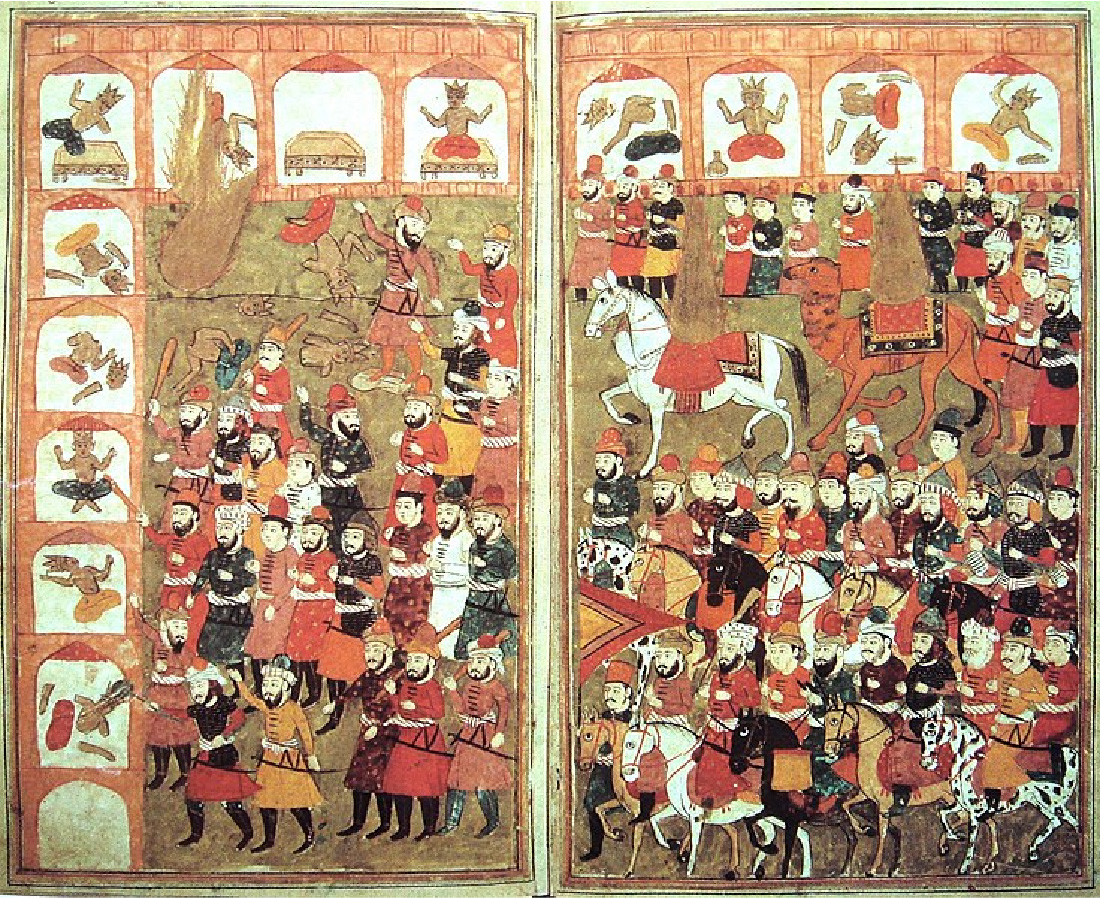
The even-handed approach to members of this new ummah was critical to the ultimate success of Muhammad and his community. Much of the last ten years of Muhammad’s life was spent with this new Muslim community in Medina, engaged in conflict with their former brethren in Mecca. Fighting between the two sides was fierce, and there were also tensions within Medina and the early ummah as Muhammad’s followers grew in number and prominence at the expense of other Arabs in the city, in particular, the Jewish contingent. Many on both sides were related by blood even if their religious beliefs had altered. Muhammad’s community continued to grow and win more supporters until, on the eve of battle outside Mecca in 630, his former tribe of Quraysh surrendered, and the population of the city converted to Islam. Muhammad and his followers were then able to return to Mecca, where he entered the holy sanctuary of the Kaaba, now filled with the polytheist idols worshipped by the Arabs, and smashed them all, echoing a famous story about the biblical prophet Abraham (Figure 11.12). From the perspective of Muslims, the original house of Abraham, which had always been dedicated to the worship of the one God, was now cleansed.
英語のヒント
この新しいウンマの構成員を公平に扱う方針は、ムハンマドと共同体の最終的な成功に不可欠だった。ムハンマドは生涯の最後の10年の多くを、メディナの新たなムスリム共同体とともに過ごし、メッカにいるかつての同胞と争った。両者の戦闘は激しく、メディナと初期ウンマの内部にも緊張があった。ムハンマドの信徒の人数と存在感が増すにつれ、町のほかのアラブ人、特にユダヤ教徒の集団が、その分だけ立場を損なったためである。信仰が変わっていても、双方の多くは血縁で結ばれていた。ムハンマドの共同体は成長を続け、支持者を増やした。そして630年、メッカの外での戦いを目前にして、かつて彼が属したクライシュ族は降伏し、町の住民はイスラームへ改宗した。ムハンマドと信徒はメッカへ帰れるようになった。彼は聖域カアバへ入ると、そこを満たしていた、アラブ人が崇拝する多神教の偶像をすべて打ち壊した。その行為は、聖書の預言者アブラハムの有名な物語を思い起こさせる(図11.12)。ムスリムの見方では、もともと唯一の神への崇拝にささげられていたアブラハムの家が、いま清められたのである。
Cleansing the Sanctuary of Mecca.メッカの聖域を清める
(credit: “Muhammad destroying idols” by Histoire Geographie 5ieme Nathan/Wikimedia Commons, Public Domain) · Public Domain
Figure 11.12 In this early nineteenth-century depiction from Kashmir, India, the Muslim army triumphantly enters the sanctuary of Mecca to destroy the idols kept there, which are shown on the top and left edges of the scene. Muhammad is not himself depicted in the image, though the National Library of France, which holds this work, indicates he is depicted as a flame. (credit: “Muhammad destroying idols” by Histoire Geographie 5ieme Nathan/Wikimedia Commons, Public Domain)
図11.12 19世紀初め、インドのカシミールで制作された絵。ムスリムの軍が勝ち誇ってメッカの聖域へ入り、そこに保管されていた偶像を壊そうとしている。偶像は画面の上端と左端に描かれる。ムハンマド本人は人物像としては描かれていないが、作品を所蔵するフランス国立図書館は、炎によって表されていると説明している。(出典:Histoire Geographie 5ieme Nathan/Wikimedia Commons「Muhammad destroying idols」、パブリックドメイン。)
Muhammad had succeeded in uniting the majority of Arab tribes of western Arabia under his leadership. He spent the next two years continuing to expand his community and spreading the message of Islam, until his death from natural causes in the year 632.
英語のヒント
ムハンマドは、アラビア西部のアラブ部族の大部分を、自らの指導のもとに統合することに成功した。その後の2年間も共同体を広げ、イスラームの教えを伝え続け、632年に自然死した。