第11章イスラームとカリフ国家の台頭The Rise of Islam and the Caliphates
11.3 Islamization and Religious Rule under Islam11.3 イスラーム化とイスラーム下の宗教的統治
Learning Objectives学習の目標
By the end of this section, you will be able to:
この節を学ぶと、次のことができるようになる。
Explain how the Abbasids established themselves as the dominant state in the Middle East
アッバース朝が中東の支配的な国家としての地位をどのように確立したかを説明する。
Discuss the formation of sects within the Islamic community
イスラーム共同体内部の宗派の形成を論じる。
Analyze how Islam influenced the religious and cultural experience of people living under Abbasid rule
アッバース朝の支配下で暮らす人々の宗教と文化に、イスラームがどのような影響を及ぼしたかを分析する。
The Rashidun and Umayyads played an important role in articulating the new religion of Islam while establishing the Islamic state in the Middle East. But the dynasty that followed them in 750 CE was the one that solidified Islam’s place in the region and in world history. While the Abbasid caliphate did not greatly extend the borders of the Islamic state, its achievements included overseeing and building on the transmission of ancient knowledge that had gone unseen in much of world history until then. The Abbasids presided over what was arguably the end of antiquity in the Middle East and its transition to the Middle Ages, becoming one of the most important powers of their time. They also faced the fracturing of their authority over the outlying provinces, and the growth within Islam of distinct sects with different theological beliefs and goals.
英語のヒント
正統カリフとウマイヤ朝は、中東でイスラーム国家を築くと同時に、新しい宗教であるイスラームの教えを明確にするうえで重要な役割を果たした。しかし、この地域と世界史におけるイスラームの位置を確かなものにしたのは、西暦750年にその後を継いだ王朝だった。アッバース朝はイスラーム国家の領域を大きく広げたわけではない。その業績には、古代の知識の伝承を支え、それをさらに発展させたことが含まれる。それまでの世界史には、このような知識の伝承はあまり見られなかった。アッバース朝は、中東が古代を終えて中世へ移ったといえる時代を主導し、当時もっとも重要な勢力の一つとなった。同時に、辺境の諸州に対する権力が分裂していくことや、教義上の信念と目標を異にする宗派がイスラーム内部で成長することにも直面した。
The Abbasid Caliphateアッバース朝
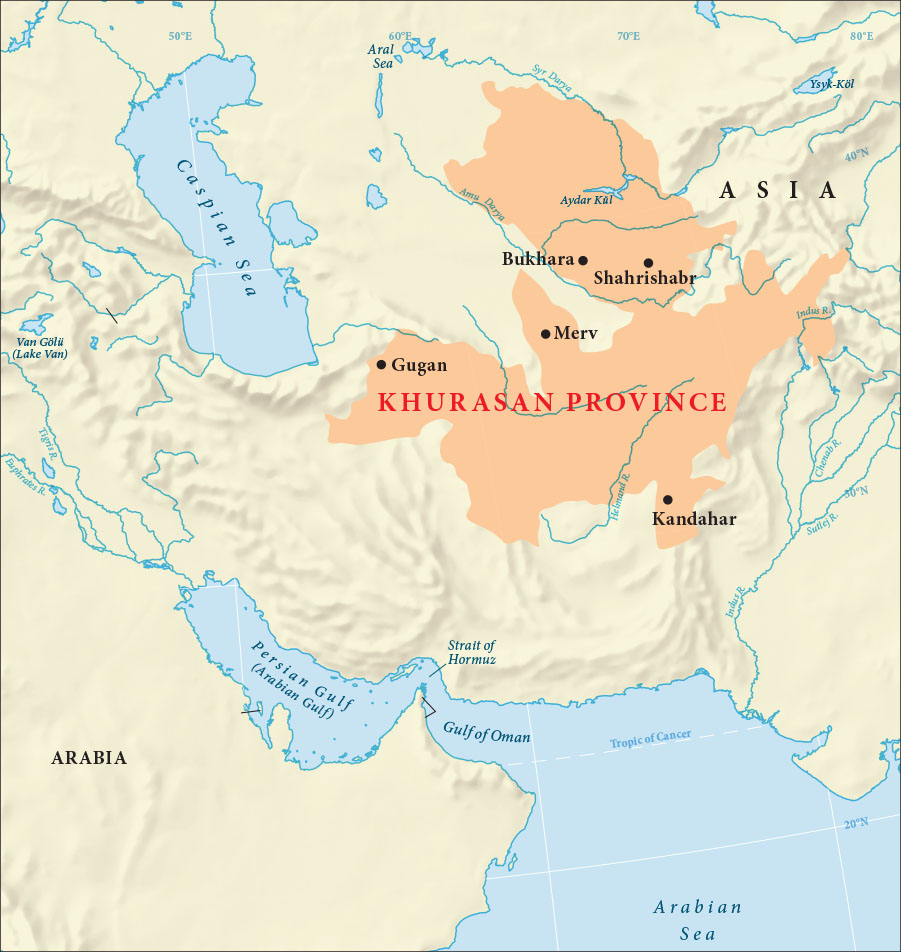
The last decades of Umayyad rule were defined by factionalism and infighting. Arab tribes vied for power and influence, while non-Arab converts to Islam became increasingly frustrated over being marginalized, especially in the far east of the empire. There, in the province of Khurasan, Arab-Muslims had settled after the conquests, often intermarrying with the Indigenous Persians (Figure 11.18). By the mid-eighth century, several generations of these mixed-ethnicity Muslims had come to feel disenfranchised in the region, and Khurasan became a hotbed of revolutionary activity. Many who were frustrated with Umayyad rule and ready for a change met to imagine a more open Islamic community, one in which all ethnicities could enjoy the full benefits of Islamic society, and marginalized groups like the supporters of the fourth caliph Ali and his family would have more opportunity.
英語のヒント
ウマイヤ朝支配の最後の数十年は、派閥争いと内部抗争に特徴付けられる。アラブの諸部族が権力と影響力を競い合う一方、イスラームに改宗した非アラブの人々は、自分たちが周辺に追いやられていることに不満を強めていた。とくに帝国のはるか東方で、それが顕著だった。そこにあるホラーサーン州では、征服後にアラブ系ムスリムが定住し、現地のペルシア人と結婚することも多かった(図11.18)。8世紀半ばには、数世代を経た混合した出自のムスリムが、自分たちはこの地域で政治的な権利を奪われていると感じるようになっていた。ホラーサーンは革命運動の温床となった。ウマイヤ朝の支配に不満を抱き、変化を望む人々が集まって、より開かれたイスラーム共同体を構想した。そこでは、あらゆる民族がイスラーム社会の恩恵を十分に享受でき、第4代カリフのアリーとその家族の支持者など、周辺に追いやられた集団にも、より多くの機会が与えられるはずだった。
Khurasan Province.ホラーサーン州。
(attribution: Copyright Rice University, OpenStax, under CC BY 4.0 license) · CC BY 4.0
Figure 11.18 The province of Khurasan (shaded orange) made up the northeastern extent first of the Sasanian Empire and then of the realm of the early Islamic caliphates. Discontent among the mixed-ethnicity Muslims living there grew during the eighth century. (attribution: Copyright Rice University, OpenStax, under CC BY 4.0 license)
図11.18 ホラーサーン州(橙色)は、初めはササン朝、次いで初期のイスラーム・カリフ政権の北東部を構成した。8世紀には、この地に住む混合した出自のムスリムの間で不満が高まった。(帰属表示:Copyright Rice University, OpenStax、CC BY 4.0ライセンス)
This revolutionary group championed the right of the family of Muhammad to hold the position of caliph. Its members supported the claims of the descendants of Ibn Abbas, a first cousin of Muhammad, and thus came to be known as the Abbasids. In 749, after several years of growing dissatisfaction, they rose in rebellion against the Umayyads, overthrowing Islam’s first dynasty within a year and establishing themselves as the new rulers of the Middle East. Abbasids claimed the title of caliph from the year 750 through to the early sixteenth century, although the power they sought waxed and waned over time.
英語のヒント
この革命集団は、ムハンマドの家族がカリフの地位に就く権利を擁護した。集団の人々はムハンマドのいとこイブン・アッバースの子孫の主張を支持し、そこからアッバース家の支持者として知られるようになった。不満が数年にわたって高まったのち、749年にウマイヤ朝に対して反乱を起こした。1年以内にイスラーム最初の王朝を倒し、中東の新たな支配者となった。アッバース家は750年から16世紀初頭までカリフの称号を主張し続けたが、その手にしようとする権力は、時代とともに強まったり衰えたりした。
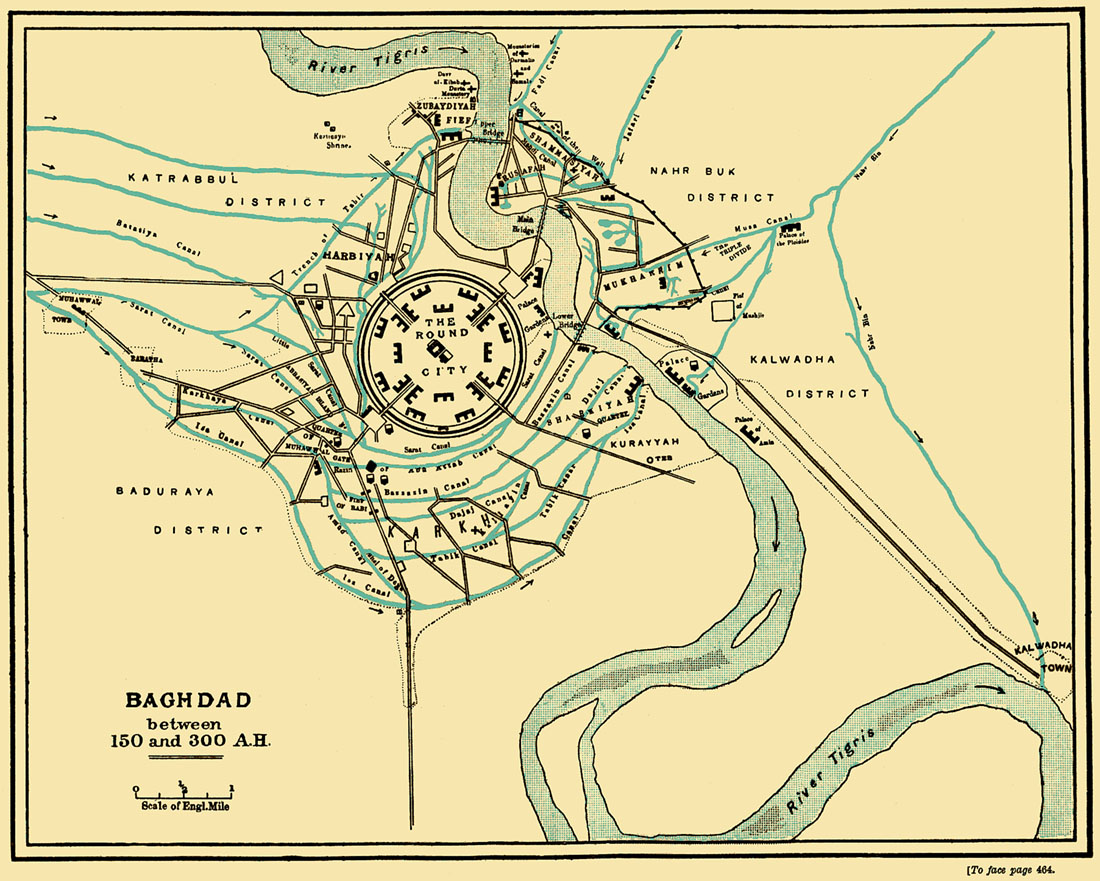
Shortly after coming to power, the Abbasids of the eighth century reoriented the focus of the Islamic world, pulling it away from Arabia and closer to the East by founding their new capital, Baghdad, in central Iraq (Figure 11.19). Especially with the prominence of Khurasan and the Islamic East in the rise of the Abbasids, shifting the capital city closer to the East also made a great deal of sense. Baghdad was a planned city intended to take advantage of the immense wealth and talent the Islamic state had accumulated over almost a century and a half of conquest and consolidation under the Umayyads. It was built on the banks of the Tigris River in Mesopotamia, a land that had supported some of the earliest human civilizations because of its remarkable fertility. As the Abbasid state grew wealthier and more powerful, Baghdad became a prominent center of trade and culture, and the city sprawled outward along the banks of the river and into the fertile farmland that surrounded it.
英語のヒント
8世紀のアッバース朝は、権力を握るとまもなく、イラク中部に新しい首都バグダードを建設した。これによってイスラーム世界の重心を、アラビアから離して東方へ近づけたのである(図11.19)。王朝の成立にホラーサーンとイスラーム圏の東方が大きく貢献したことを考えれば、首都を東寄りに移すことには十分な理由があった。バグダードは計画都市だった。原著は、イスラーム国家がウマイヤ朝のもとでほぼ1世紀半に及ぶ征服と統合を通じて蓄えた、莫大な富と人材を生かすために設計されたと述べている。この都市はメソポタミアのティグリス川の岸に築かれた。その土地はきわめて肥沃で、人類最古の文明のいくつかを支えてきた場所でもあった。アッバース朝が豊かで強大になるにつれて、バグダードは交易と文化の有力な中心地になった。市街は川岸に沿い、周囲の肥沃な農地へも広がっていった。
Baghdad between 767 and 913 CE (150 and 300 AH).西暦767〜913年(ヒジュラ暦150〜300年)のバグダード。
(credit: “Baghdad 150 to 300 AH” by www.muhammadanism.org/Wikimedia Commons, Public Domain) · Public Domain
Figure 11.19 The Abbasid capital in Baghdad was designed to be the greatest city in the region, if not the world. As this map from the 1880s shows, it was constructed with a circular layout, and those who lived inside the walls of the main city, closest to the caliph’s palace, enjoyed special prestige. (credit: “Baghdad 150 to 300 AH” by www.muhammadanism.org/Wikimedia Commons, Public Domain)
図11.19 アッバース朝の首都バグダードは、世界最大とまではいかなくとも、この地域で最大の都市となるよう設計された。1880年代に作られたこの地図が示すように、都市は円形の配置で建設された。中心市街の城壁内、とくにカリフの宮殿に近い場所に住む人々は、特別な威信を享受した。(クレジット:“Baghdad 150 to 300 AH”、www.muhammadanism.org/Wikimedia Commons、パブリックドメイン)
The decision to move the focus of Islamic rule further east also signaled a significant shift in the region’s politics and economics. The inhabitants of the former Persian Empire had played an integral role in helping the Abbasids to rise, and they became a major power base for the dynasty as it advanced. Persian language, culture, and traditions came to exert a greater influence on early Islamic society, especially at the court in Baghdad. And as Baghdad overtook traditional Mediterranean cities such as Alexandria, Antioch, Constantinople, Damascus, and Jerusalem in prominence, the center of trade moved further east along the Silk Roads that connected with the Indian Ocean world and a continually growing China.
英語のヒント
イスラーム統治の重心をさらに東へ移す決定は、地域の政治と経済の大きな変化も示していた。旧ペルシア帝国の住民はアッバース家の台頭を支えるうえで欠かせない役割を果たし、王朝の発展とともに、その重要な支持基盤になった。初期イスラーム社会、とくにバグダードの宮廷では、ペルシア語、ペルシアの文化や伝統の影響力が大きくなった。バグダードがアレクサンドリア、アンティオキア、コンスタンティノープル、ダマスクス、エルサレムといった従来の地中海世界の都市を重要性で上回るにつれ、交易の中心も東へ移った。それはインド洋世界と、成長を続ける中国につながるシルクロードに沿った移動だった。